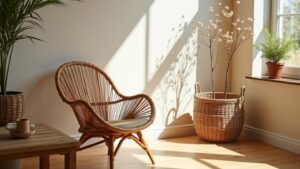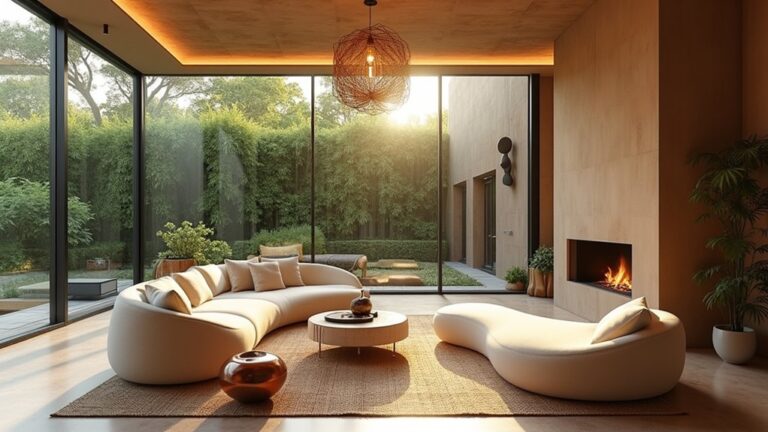
In 2025, you’ll see home décor shifting toward biophilic designs with living walls and sustainable materials like recycled glass countertops. Smart tech will blend invisibly into your space, while neo-traditional elements mix heritage with modern styles. Expect multifunctional furniture for flexible living, wellness-focused sanctuary rooms, and bold color blocking techniques. Artisanal craftsmanship will add unique character, and immersive textures will create sensory-rich environments. These trends reflect our growing desire for homes that nurture both planet and personal wellbeing.
The Essentials
- Biophilic design will dominate with living green walls, organic materials, and water features that improve wellbeing and air quality.
- Smart home technology will become invisible through ambient tech, touch-responsive surfaces, and projection systems replacing traditional screens.
- Multifunctional furniture will revolutionize spaces with convertible pieces, modular designs, and hidden storage for flexible living.
- Sustainable and recycled materials will feature prominently in furniture, textiles, and decor items supporting circular economy principles.
- Neo-traditionalism will blend heritage elements with contemporary design through updated classic furniture styles and artisanal craftsmanship.
Biophilic Design: Bringing Nature Indoors
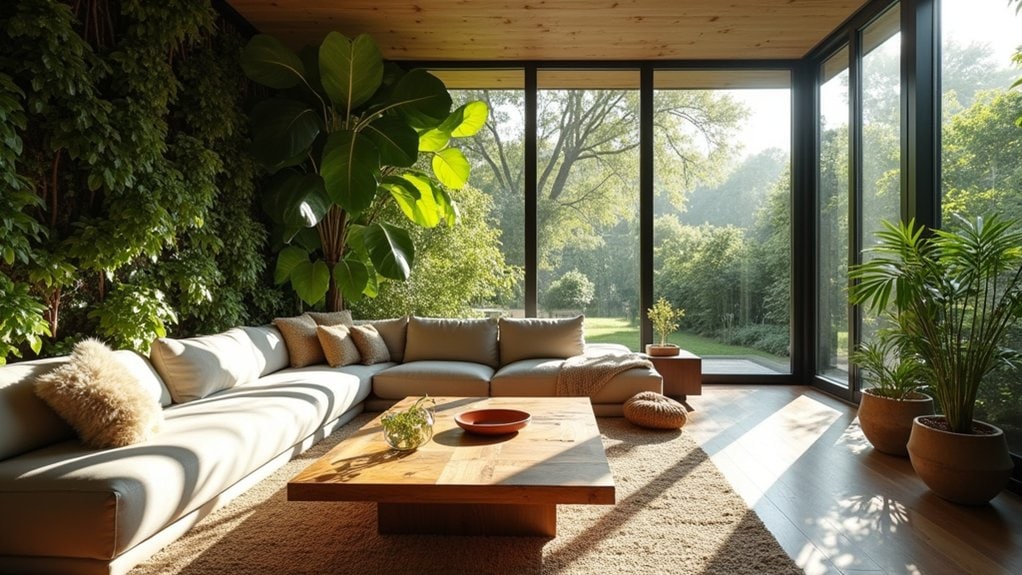
As we move deeper into the decade, biophilic design isn’t just a passing trend—it’s becoming vital to how we create spaces that feel good to live in. You’ll notice more homes incorporating living green wall designs that serve as natural art while purifying your air.
Try adding clusters of air purifying plants in unexpected corners. Maybe a snake plant near your workspace or a pothos trailing from your kitchen shelf? These sustainable indoor plants thrive with minimal care.
Natural light incorporation remains important—consider removing heavy drapes that block sunshine. Pair this approach with eco-friendly furnishings crafted from sustainable materials.
You’ll love how organic textures like rattan, jute, and unfinished woods can transform a sterile room into a nature-inspired haven. The rough edges and imperfections? That’s what makes your space feel authentically alive.
Sustainable Materials and Circular Economy Solutions
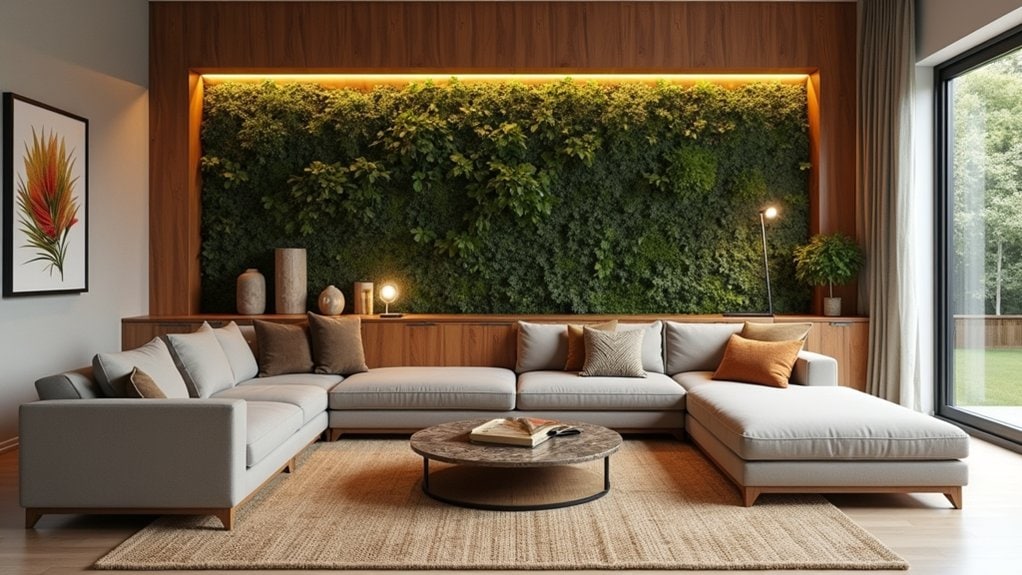
While our homes embrace nature’s beauty through biophilic design, the materials themselves are undergoing a revolution in 2025.
You’ll notice recycled materials everywhere this year—from countertops made of crushed glass to furniture crafted from ocean plastic. These aren’t just eco-friendly alternatives; they’re becoming the new standard. I think what’s really interesting is how manufacturers are getting creative with waste.
Eco-friendly textiles are also having a moment. You can now find curtains made from recycled water bottles that honestly feel better than traditional fabrics. Maybe it’s worth replacing your old throw pillows with ones made from organic hemp or reclaimed cotton?
The circular economy approach means your furniture might be designed for disassembly when you’re ready for something new. No more landfill guilt!
Neo-Traditionalism: Heritage Meets Modern Sensibilities
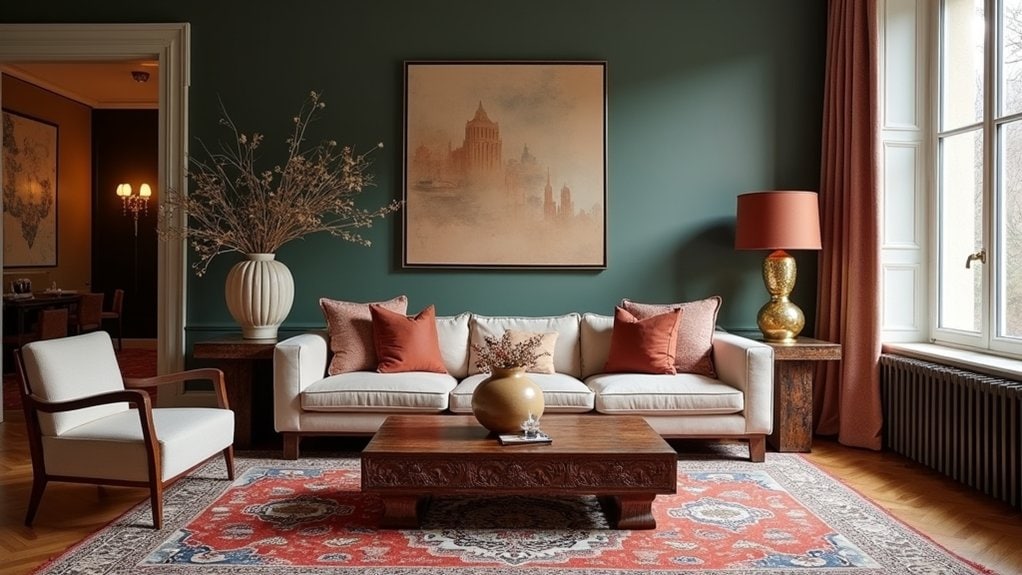
Neo-traditionalism has emerged as one of the most fascinating design movements of 2025, bridging our collective nostalgia with contemporary practicality. You’ll notice how this trend incorporates heritage motifs that might remind you of your grandparents’ home, but with cleaner lines and modern interpretations that feel fresh.
When shopping for neo-traditional pieces, look for:
- Reinterpreted classics – think Windsor chairs with unexpected color treatments or wingback sofas with tech-friendly features
- Heritage motifs in updated colorways – traditional damask or toile patterns in neon or monochromatic schemes
- Handcrafted items with modern functionality – ceramic vessels that double as wireless chargers
You’re not just decorating with the past—you’re bringing its best elements forward. Maybe that’s why so many people find this trend comforting yet thrilling at the same time.
Wellness-Focused Spaces and Sanctuary Rooms
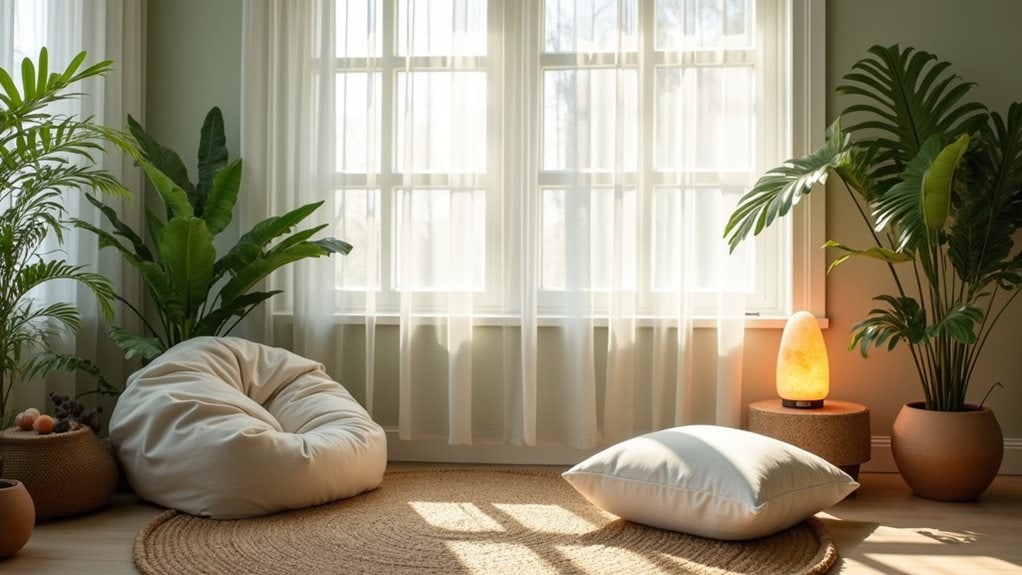
You’ll notice wellness taking center stage in 2025 homes, with biophilic elements like living walls and natural materials appearing in unexpected places—even bathrooms and hallways are getting the nature treatment. Creating your own meditation corner doesn’t require much space, just a comfortable cushion, maybe some soft lighting, and a little thought about placement away from household traffic. These sanctuary spaces aren’t just trendy additions but practical responses to our increasingly digital lives, giving you somewhere to actually unplug and reset when everything gets too overwhelming.
Biophilic Elements Everywhere
As our homes increasingly become the last refuge from our hectic world, biophilic design is set to dominate 2025’s decor scenery in a profound way. You’ll find nature-inspired decor extending beyond just houseplants to become integrated into your home’s very structure. Natural materials like cork, bamboo, and stone are making their way into everything from furniture to accent pieces.
Here’s what you’ll see more of:
- Living green walls that double as air purifiers and stunning focal points
- Biophilic lighting that mimics natural sunlight patterns and connects you to outdoor rhythms
- Organic shapes in furniture and decor that echo nature’s imperfect beauty
Maybe the most thrilling part is how these elements aren’t just beautiful—they’re actually proven to reduce stress. I’ve noticed my own mood improves when surrounded by these natural touches.
At-Home Meditation Corners
The complementary relationship between biophilic design and wellness-focused spaces comes naturally in 2025’s most coveted homes. We’re seeing dedicated meditation corners becoming essential, not just luxury add-ons.
You’ll want to carve out even a small nook with mindful design elements—think floor cushions, soft lighting, and maybe a small fountain. I converted my unused guest room corner last month, and honestly, it’s changed my morning routine completely.
These tranquil spaces don’t require massive renovations. A room divider, noise-canceling elements, and natural textures can transform any awkward corner into your sanctuary.
What makes these spaces work is their intentional separation from work areas. Your meditation corner should feel distinct—somewhere your mind recognizes as a place to breathe, reset, and just be.
Smart Home Integration That Disappears Into Design
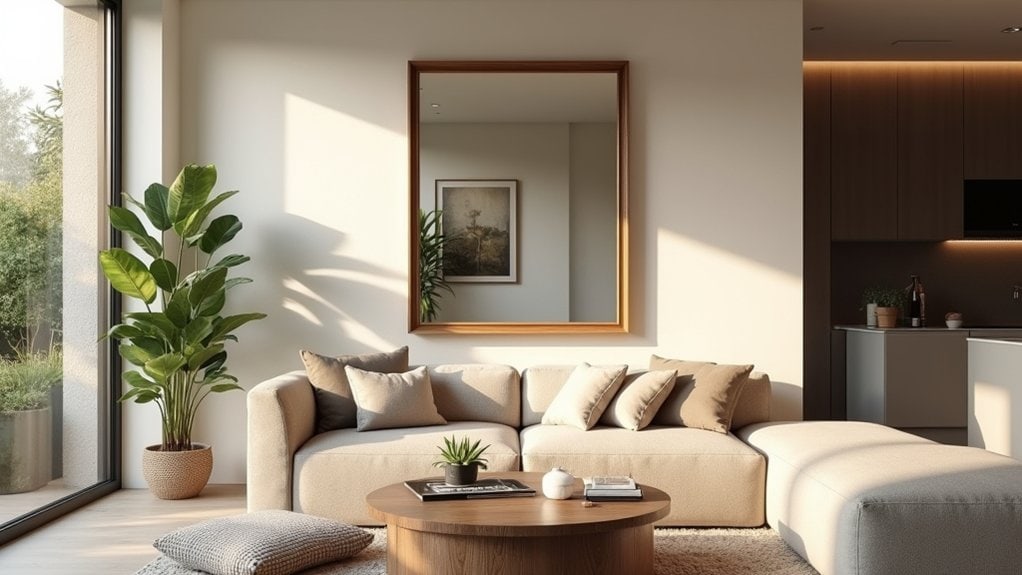
You’ll notice the smartest homes in 2025 won’t actually look “smart” at all – technology is finally disappearing into the design itself. Think fabric-embedded speakers that look like wall art, voice-activated lighting systems hidden within architectural elements, and maybe even temperature controls that respond to your presence without any visible thermostats. These invisible tech solutions create spaces that feel warm and personal while still offering all the convenience you’ve come to expect from connected living.
Ambient Tech Blends In
Gone are the days when smart home technology meant clunky devices and obvious gadgets disrupting your carefully curated aesthetic. In 2025, we’re seeing ambient tech that truly blends into your living space. Smooth amalgamation is the key—think walls that change color based on your mood or time of day without a single visible control panel.
Your home’s ambient lighting will now respond to your presence naturally, almost like it’s reading your mind. Maybe that’s a bit much, but it’s getting close!
Here are the standout ambient tech trends:
- Invisible speakers embedded within wall textures
- Touch-responsive surfaces that replace traditional switches
- Projection mapping that transforms plain walls into lively displays
You’ll notice these technologies work for you without demanding your attention—they’re there when needed, invisible when not.
Voice-Controlled Aesthetic Elements
While ambient tech effortlessly blends into our living spaces, voice-controlled elements are taking this disappearing act to new heights. You’ll notice smart assistants now come embedded in decorative objects you’d never suspect—think artwork that adjusts lighting when you request it or decorative vases that can control your music.
The game-changer is how natural voice interactions have become. No more robotic commands! You can casually ask your living room to “make things cozier” and watch as your entire aesthetic shifts—curtains adjusting, lighting warming, maybe even scents changing through hidden diffusers.
What’s interesting is how personal these systems get. They learn your preferences over time, so eventually, you might just need to say “evening mode” and everything adjusts perfectly to your taste.
Invisible Tech Solutions
The future of home technology isn’t about showcasing your gadgets but rather making them vanish completely. You’ll find your living spaces looking cleaner and more intentional as smart furniture and everyday objects quietly handle the tech heavy lifting. Think of it as your home working for you without constantly reminding you of its capabilities.
Here’s what you’ll see (or rather, won’t see) in 2025:
- Charging surfaces disguised as ordinary countertops and tables
- Smart furniture with built-in assistants that respond to touch rather than voice
- Projection systems that replace traditional screens, appearing only when needed
The smooth incorporation of technology means you’ll interact with your environment more naturally. I’ve noticed my own home feels more peaceful when the tech isn’t constantly demanding my attention.
Japandi Evolution: The Next Chapter of Minimalist Warmth
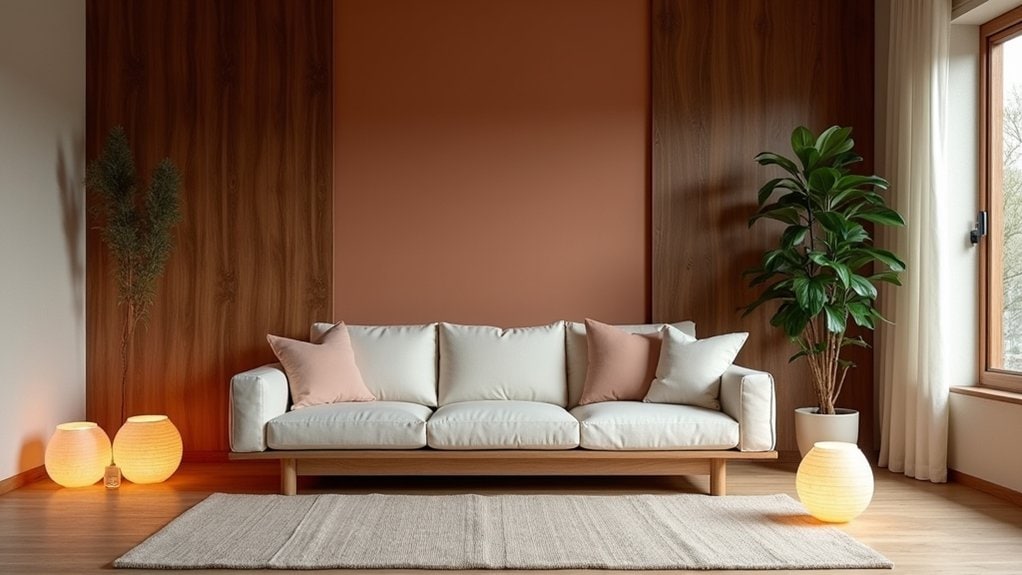
As Japandi design shifts into 2025, we’re seeing an exhilarating evolution that pushes beyond its original parameters. This fusion of Japanese and Scandinavian aesthetics continues to prioritize minimalist warmth while embracing new cultural influences.
You’ll notice natural materials taking center stage—think bamboo paired with bleached oak for unexpected textural contrasts. The soft color palettes have expanded to include muted terracottas and sage greens that create genuinely cozy environments.
What’s really thrilling, I think, is how functional simplicity remains the core philosophy but with more fluid expressions. Many homes now feature multi-purpose spaces with hidden storage that feels almost… intuitive.
Sustainable design practices have become non-negotiable in authentic Japandi spaces. This timeless elegance isn’t just about looks—it’s about creating thoughtful environments that actually improve your daily life.
Bold Color Blocking and Architectural Paint Techniques
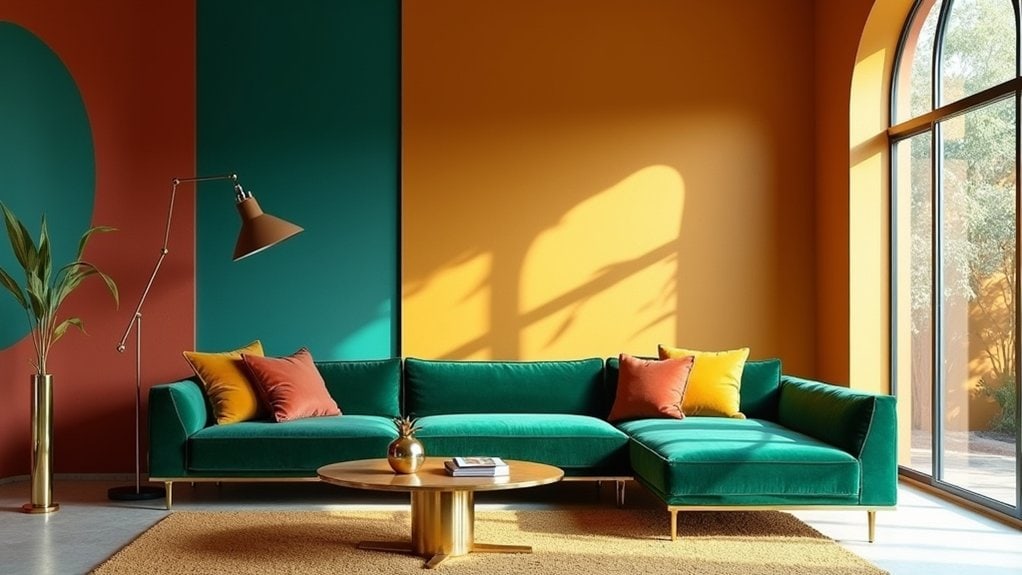
You’ll notice walls getting much more dramatic in 2025, with geometric divisions creating bold statements through contrasting colors that define separate zones within a room. Your ceiling might actually become the standout feature, with paint techniques that draw the eye upward and create unexpected visual interest where most people forget to look. These sculptural color blocks aren’t just about aesthetics—they’re redefining how you experience your space by using paint to create architectural elements without any construction.
Geometric Wall Divisions
Geometric patterns are revolutionizing wall designs in 2025, moving beyond basic accent walls into sophisticated architectural statements. You’ll notice how these intentional divisions create spatial interactions that transform ordinary rooms into visually striking spaces. Rather than painting a full wall one color, designers are now sectioning walls into geometric zones that interact with your furniture placement.
Try these geometric approaches to instantly modernize your home:
- Angular color blocking with thin metal dividers
- Hexagonal sections that extend partially up walls
- Asymmetrical triangular divisions in complementary tones
The beauty of geometric wall divisions is how they can actually make smaller spaces feel larger by playing with perspective. I’ve seen a narrow hallway completely transformed by diagonal divisions. Maybe you’ll find that these patterns work best in spaces where you want to direct attention or create movement.
Contrasting Ceiling Treatments
While wall divisions create visual interest at eye level, the ceiling offers an equally powerful canvas for design expression in 2025. You’ll notice designers are embracing bold ceiling murals that transform overlooked spaces into conversation pieces. Think abstract color washes or nature-inspired scenes that draw your eye upward.
Architectural beams are making a comeback too, but with a twist. Instead of traditional wood tones, they’re being painted in contrasting colors against ceiling backgrounds. I’ve seen this in a friend’s renovated loft—teal beams against a soft cream ceiling—and it completely transformed the space.
You might find this approach intimidating, but start small. Maybe try color blocking in a guest bathroom or home office before committing to your main living spaces. What unexpected ceiling treatment would complement your home’s personality?
Sculptural Color Zones
Color has transcended traditional boundaries in 2025 home design, becoming architectural in its own right through sculptural color zones. You’ll notice how painting techniques now create colorful focal points that define living spaces without physical walls. Think about dividing your open floor plan with bold color blocking—maybe a coral dining area that visually separates from your navy living space.
Try these approaches to create vibrant spatial divisions:
- Paint irregular geometric shapes that extend from walls onto ceilings or floors
- Use contrasting hues to frame shifting areas between rooms
- Apply textured paint techniques to add dimension to color blocks
What I find fascinating is how these painted zones actually change your perception of a room’s size and flow. They’re not just decorative—they’re transforming how we interact with our homes.
Artisanal Craftsmanship and Handmade Statement Pieces
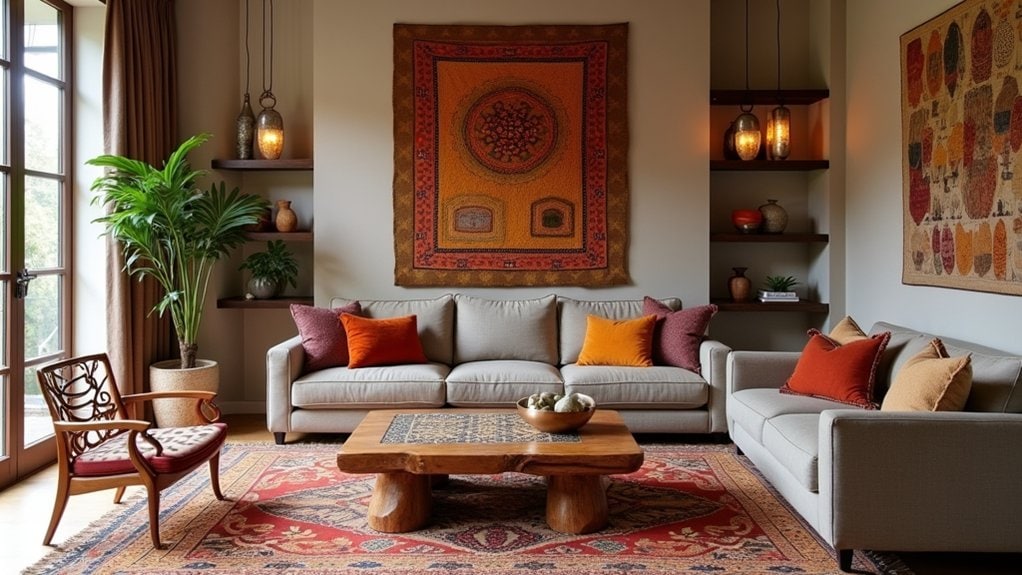
As mass production gives way to authenticity, artisanal craftsmanship is making a powerful comeback in 2025’s home decor environment. You’ll notice a growing appreciation for items with visible human touch—perhaps a ceramic vase with slight asymmetry or a hand-loomed textile with charming irregularities.
These statement decor pieces tell stories that factory-made items simply can’t. Look for artisan techniques like Japanese kintsugi or Mexican embroidery finding their way into modern homes. Many homeowners are actually commissioning local craftspeople to create custom furniture that reflects personal values.
What’s interesting is how these pieces don’t need to dominate a room. Even small handcrafted objects—a wooden bowl, maybe, or hand-blown glass pendants—can transform a space while supporting traditional crafts that might otherwise disappear.
Multifunctional Furniture for Flexible Living
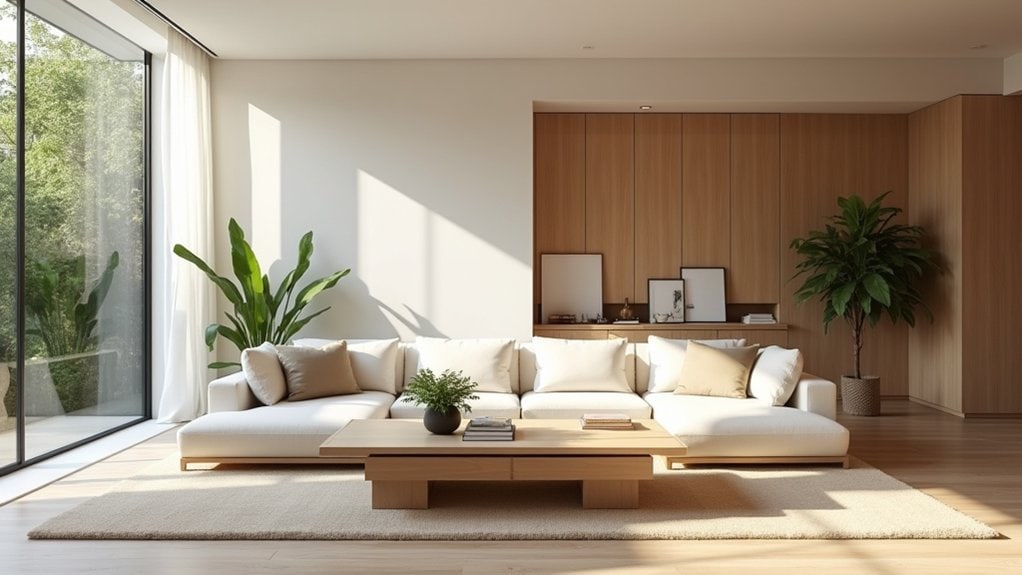
Since living spaces continue to shrink in urban areas, multifunctional furniture has evolved from convenient to essential in 2025. You’ll find that convertible furniture offers clever space-saving solutions while maintaining style. I’ve noticed more people embracing adaptable designs that transform with their daily needs.
Here are the standout trends in versatile configurations:
- Modular sofas with hidden storage that convert to guest beds
- Dining tables that adjust in height and expand to accommodate different group sizes
- Wall systems with fold-down desks, creative storage, and media centers
These dual-purpose pieces make compact living more practical. When shopping for flexible arrangements, look for items that serve at least two functions. Maybe consider how your existing furniture might adapt? Fluid functionality isn’t just smart—it’s necessary for today’s ever-changing home environments.
Immersive Textures and Sensory-Rich Materials
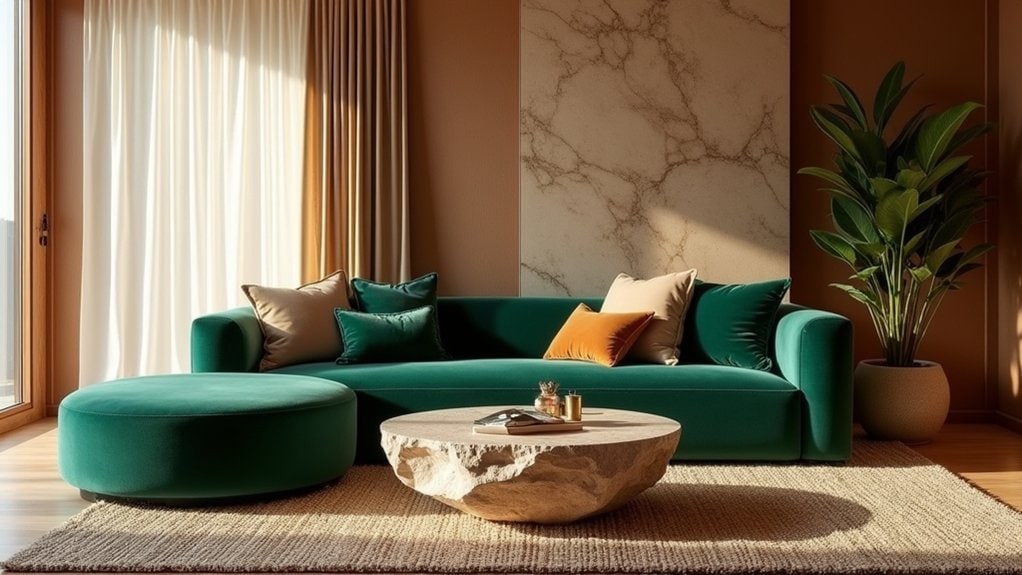
Beyond functionality, today’s homes embrace tactile experiences that stimulate our senses. You’ll find textural contrasts becoming the focal point in 2025 interiors – think plush bouclé sofas against sleek marble tables or rough-hewn wooden elements paired with polished metals.
Sensory layering is really taking center stage too. Maybe you’ve noticed how designers are combining materials that invite touch? Velvet cushions, cork wall panels, and woven jute rugs create spaces that feel alive with dimension.
I’ve recently touched a wallpaper that mimics tree bark – surprisingly realistic! These tactile elements aren’t just visually interesting; they actually affect your mood and comfort level at home.
What textures make you feel most at ease? Consider incorporating materials that respond to temperature changes or even subtle scents into your space.
Frequently Asked Questions
How Much Should I Budget for a 2025 Trend-Focused Room Renovation?
For your trend-focused renovation, you’ll need $5,000-$15,000 depending on room size. Your budget breakdown should prioritize renovation essentials like quality statement pieces, sustainable materials, and smart home incorporation. Don’t forget labor costs!
Which 2025 Decor Trends Work Best in Small Apartments?
You’ll love multifunctional furniture in your small apartment, as it optimizes space while staying on-trend. Add minimalist accessories for character without clutter. Vertical gardens and smart lighting also work wonders in compact spaces.
Are Any 2025 Trends Specifically Suited for Rental Properties?
You’ll find rental-friendly materials like peel-and-stick wallpaper and temporary fixtures perfect for your rental. Incorporate modular furniture, freestanding storage solutions, and plant-based decor that won’t damage walls or require landlord approval.
How Quickly Will These 2025 Design Trends Become Outdated?
You’ll find most 2025 design trends have varying longevity. Sustainable elements might last 5-10 years, while trendier items fade in 1-3 years. Focus on trend sustainability by selecting timeless elements you truly love.
Which Home Decor Retailers Are Leading These 2025 Trend Movements?
You’ll notice IKEA, West Elm, and Anthropologie leading retailer strategies for 2025 decor trends. They’re investing heavily in trend forecasting, collaborating with designers, and launching sustainable collections that’ll shape your future home aesthetic choices.
Final Thoughts
You’ll find home decor in 2025 isn’t just about aesthetics—it’s about creating spaces that truly support your lifestyle. Maybe try incorporating just one trend that resonates with you first. A single biophilic element or multifunctional piece can transform how you experience your home. What matters most isn’t following every trend, but designing a space that feels right for you and reflects what you care about.