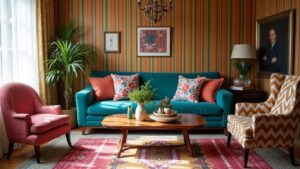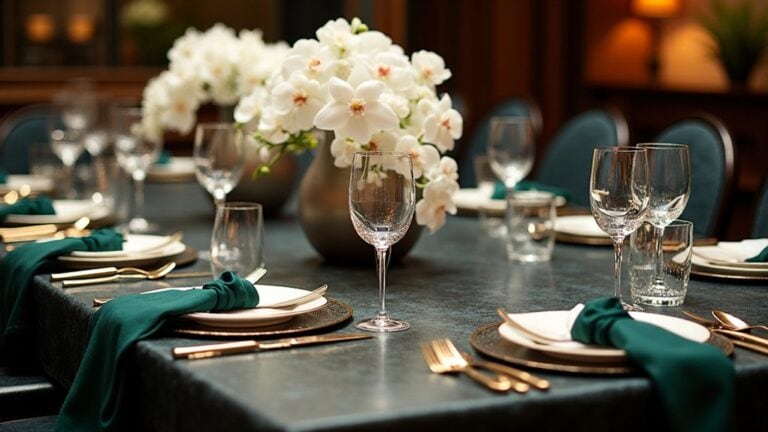
You can transform your table setting by embracing minimalist designs with clean lines and neutral bases, or try mixing patterns and textures for an eclectic look. Consider incorporating natural elements like potted herbs or unique materials as conversation-starting centerpieces. Monochromatic schemes with varying textures create depth, while personalized place cards add thoughtful touches. Don’t forget about strategic lighting—beyond just candles—to set the mood and highlight your carefully curated elements. The right combination will elevate your dining experience.
The Essentials
- Create minimalist table settings with neutral bases and varying textures for an elegant, uncluttered look.
- Mix contrasting colors and patterns in your tableware for visual impact and conversation starters.
- Incorporate nature-inspired centerpieces using organic materials like driftwood, succulents, or potted herbs.
- Add personalized touches with creative name tags, keepsakes, or meaningful small details at each place setting.
- Layer different lighting elements at various heights to enhance the atmosphere and highlight table features.
Minimalist Elegance: Clean Lines and Purposeful Design
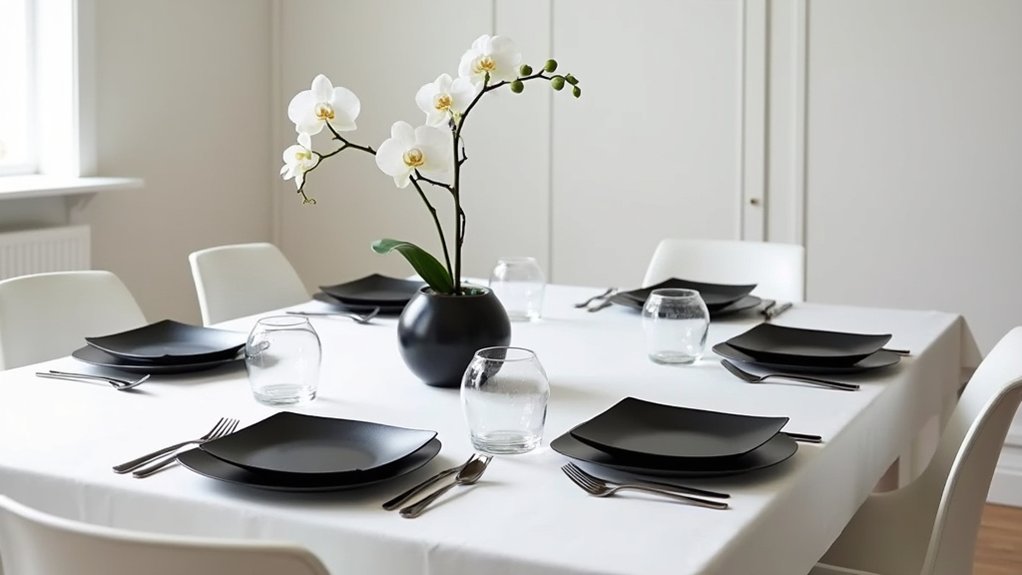
When it comes to minimalist table settings, less truly is more.
You’ll want to focus on creating a clean aesthetic that feels intentional rather than sparse. Choose a neutral base—white plates against a natural linen tablecloth—and add just one or two elements that make a statement.
I’ve found that selecting a single, unusual centerpiece works better than cluttering the table with multiple decorations.
Maybe a sculptural vase or an architectural candle holder?
The functional beauty of minimalism means everything serves a purpose. Your water glasses, silverware, and serving pieces should look good while performing their jobs perfectly.
Think about the negative space too—that emptiness between objects actually helps highlight what’s there.
Don’t you find that your eye appreciates those thoughtful pauses?
Mix-and-Match Tableware: Breaking Traditional Rules
You’ll find that mixing contrasting colors—like pairing deep navy with lively coral—instantly creates visual impact that traditional matching sets just can’t deliver.
Texture adds another dimension to your tablescape, where matte ceramics alongside glossy glassware or woven placemats create an effortlessly curated look that’s uniquely yours.
When you thoughtfully incorporate different patterns (maybe floral plates with striped napkins), you’re not just setting a table; you’re creating conversation starters that reflect your personal style without trying too hard.
Contrasting Colors Create Impact
Color revolution happens at your dining table when you dare to break the matchy-matchy tableware tradition.
Try bold combinations that spark conversation—cobalt blue plates against mustard yellow placemats or ruby glasses paired with emerald napkins. These unexpected pairings create visual energy that transforms an ordinary meal into something special.
Color psychology plays a huge role here.
I’ve noticed that warm colors like red and orange actually stimulate appetite, while cooler blues and greens create a more relaxed dining atmosphere. Maybe mix both?
You don’t need to buy all new stuff either.
Start with what you have. Add a contrasting runner, different colored napkins, or those funky salad plates you love but never use.
What colors make you happy when you’re eating? That’s probably the best place to start.
Texture Adds Visual Interest
Beyond bold colors, texture brings your table to life in ways you mightn’t expect. Try mixing rough stoneware plates with delicate crystal glasses, or pair smooth porcelain with nubby linen napkins. This textural variety creates depth that flat, uniform settings simply can’t achieve.
You’ll find that tactile materials invite your guests to engage with the table before they even taste the food. I’ve noticed people actually smile when they touch an interesting napkin ring or run their fingers over a handmade ceramic bowl.
Don’t worry about perfect matching, either. A slightly imperfect handmade plate next to a mass-produced glass somehow works better than you’d think.
Maybe it’s because our eyes crave that contrast? Whatever the reason, playing with texture makes your table feel more thoughtful and honestly, more interesting.
Patterns Spark Conversation
Traditional matching dish sets are stepping aside as pattern mixing takes center stage in modern table settings.
You’ll find that combining different designs actually creates visual rhythm that draws the eye—and starts conversations naturally.
Try pairing floral salad plates with striped dinner plates, or combine geometric patterns with organic ones.
I’ve seen people mix heirloom china with modern pieces to wonderful effect. It’s really about finding patterns that complement rather than match perfectly.
Your guests will notice these unexpected combinations, giving you easy conversation starters throughout the meal.
“Where did you find these amazing plates?” might lead to stories about that little shop you discovered on vacation.
Don’t worry about perfection.
Sometimes the most interesting tables happen when you break the rules a bit and trust your eye.
Nature-Inspired Table Elements: Bringing the Outdoors In
Natural elements transform a dining table from merely functional to genuinely inviting. You don’t need elaborate decorations when organic materials can do the talking for you.
Try placing small potted herbs as centerpieces—they smell amazing and guests can actually use them to garnish their meals. I’ve found that botanical accents work in any season.
Wooden chargers or stone coasters bring earthy texture that plastic just can’t match. Maybe collect interesting branches, pine cones, or smooth river rocks on your next walk? They’re free and add personal meaning to your table.
Fresh flowers are always lovely, but have you considered dried grasses or preserved leaves? They last longer and create a more relaxed atmosphere.
What elements from your local environment might inspire your next gathering?
Monochromatic Magic: Single-Color Schemes With Textural Variety
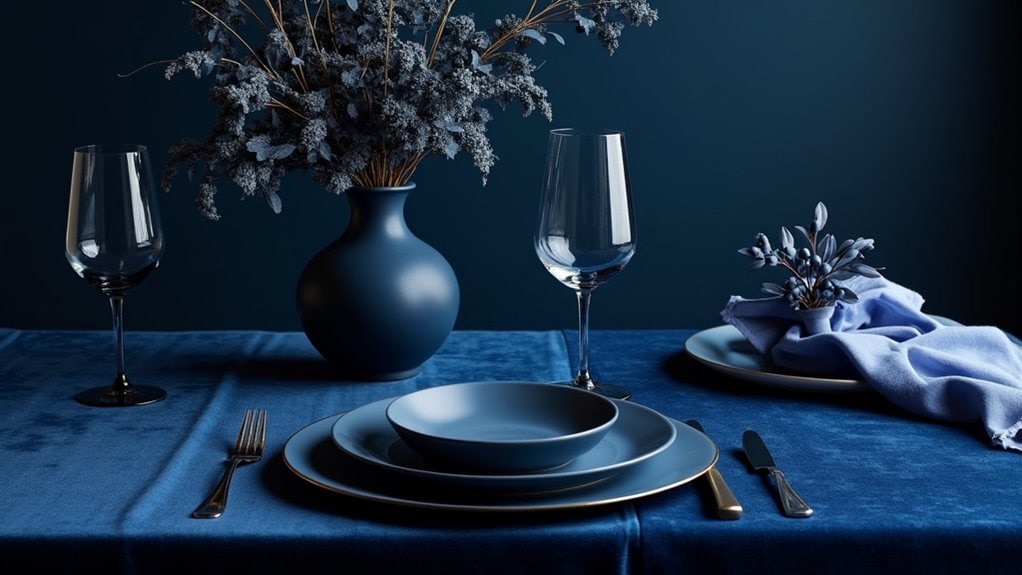
You’ll find that working with a single color doesn’t have to be boring when you layer various shades and tones across your table setting.
Try combining matte and glossy finishes of the same hue—maybe navy blue ceramic plates atop shimmering cobalt placemats with dusty indigo napkins.
What really makes a monochromatic table pop isn’t just the color itself, but the contrasting textures that create depth and interest even without a rainbow of colors.
Layering Tonal Shades
While many hosts focus on mixing bold colors for drama, there’s something undeniably elegant about embracing a single color palette across your table setting.
Instead of stark contrast, try working with varying shades of the same hue to create tonal harmony that feels sophisticated yet approachable. I’ve found that layered dimensions emerge naturally when you combine, say, three to four different blues—from navy napkins to powder blue plates and maybe a periwinkle table runner.
You’ll want to arrange items so lighter shades catch the eye against deeper backgrounds. This technique works wonderfully with neutrals too. Think creamy whites against oatmeal linens and taupe accessories.
It’s actually easier than juggling multiple colors, but gives your table that intentional, designer look without seeming like you tried too hard. Who knew monochromatic could feel so rich?
Textural Contrast Focus
Texture becomes the true star when you’re working with a single color family. When everything shares similar hues, you’ll need something else to create visual interest – that’s where tactile elements come into play.
Mix matte and glossy finishes within your table setting. Maybe pair smooth porcelain plates with nubby linen napkins, or add hand-blown glassware alongside rough ceramic serving bowls.
I find that wooden elements bring warmth to a monochromatic palette.
Don’t forget your centerpiece! A collection of different-sized candleholders in varying finishes creates immediate textural harmony.
Or try arranging flowers in vases with contrasting surfaces – sleek mercury glass next to concrete containers works surprisingly well.
What unexpected textures could you incorporate into your next table setting? That’s where your personal style truly shines.
Statement Centerpieces That Spark Conversation
The centerpiece stands as the heart of any memorable table arrangement. When guests gather around your table, you’ll want something that draws them in and gets them talking.
Try working with unique materials like driftwood paired with succulents or vintage bottles filled with single stems—these unexpected combinations make bold statements without trying too hard.
You don’t need to spend a fortune, either. I’ve found that clustering objects you already own in new ways can be just as striking.
Maybe arrange three different-height candles on a mirrored tray, or display seasonal fruits in a handmade bowl.
What makes a centerpiece truly special? It’s when it reflects something about you.
Your travel souvenirs, family heirlooms, or even a quirky collection can transform your table into a conversation starter.
Personalized Place Settings: Small Touches That Delight Guests
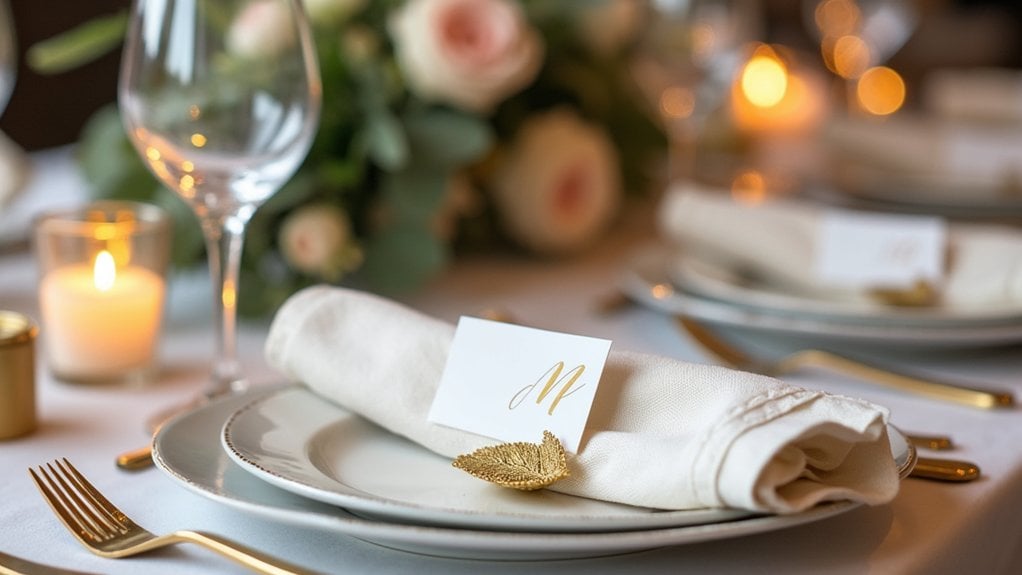
Moving beyond the centerpiece, personalized place settings add intimacy to your table arrangement that guests won’t forget.
Custom name tags don’t need to be complicated—try writing names on small river stones, wooden slices, or even pretty leaves for a natural touch.
I’ve found that leaving unique keepsakes at each setting really makes people feel special.
Maybe wrap silverware in fabric that guests can take home, or place tiny potted succulents that double as both decoration and gift.
You could also personalize based on what you know about each guest.
Remember how Sarah mentioned loving that local honey? A tiny jar makes a thoughtful placement marker.
What about adding old photos of you with each guest?
These small, thoughtful details transform a dinner into an experience they’ll appreciate.
Lighting Design: Setting the Mood Beyond Candles
While candles create wonderful ambiance, modern lighting options can completely transform your dining experience beyond the traditional flicker.
You’ll find that strategically placed ambient lighting can highlight your table’s best features while creating depth in the room.
Try suspending modern fixtures at different heights above your table—I’ve seen this create an almost magical effect when done right.
Maybe add a small lamp on your buffet or sideboard to cast a soft glow that complements your main lighting.
Color-changing LED strips tucked under a glass tabletop? That’s something I tried last year, and my guests couldn’t stop talking about it.
You can also place battery-operated light sources within centerpieces for unexpected brightness.
What unique lighting have you experimented with at your table recently?
Frequently Asked Questions
How Do I Arrange Seating for Guests With Dietary Restrictions?
Ask about guest preferences beforehand to plan dietary accommodations. Place guests with restrictions near serving areas for easier access. Use discreet place cards to identify special meals without drawing unwanted attention to their needs.
What Table Setting Etiquette Still Matters for Modern Entertaining?
When entertaining today, you’ll find dining etiquette still matters. Proper place settings, sending timely invitations, acknowledging dietary needs, and expressing gratitude to hosts remain essential courtesies that elevate your modern gathering experience.
How Can I Create Instagram-Worthy Table Settings on a Budget?
You’ll create Instagram-worthy tables without breaking the bank using DIY centerpieces from backyard cuttings or seasonal items. Hunt for unique thrift store finds like vintage plates and glassware to add character to your settings.
Should Table Settings Match the Food Being Served?
Yes, you’ll create harmony when your table settings match your cuisine. Consider color coordination with your dishes and theme alignment with the meal’s origin. It’s an easy way to elevate your dining experience.
How Do I Store Delicate Tableware to Prevent Damage?
You’ll prevent damage to delicate tableware by using proper storage solutions. Invest in tableware protection like felt dividers, padded cases, and stackable containers. Don’t overcrowd pieces and store them away from high-traffic areas.
Final Thoughts
You don’t need fancy tableware or elaborate decorations to create a stunning table. Start with what you already have—maybe those mismatched plates actually work together! Then add your personal touch. A simple branch, a color theme, or custom place cards can transform an ordinary meal into something special. It’s really about creating a space where your guests feel welcome and the conversation flows naturally.