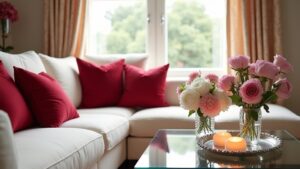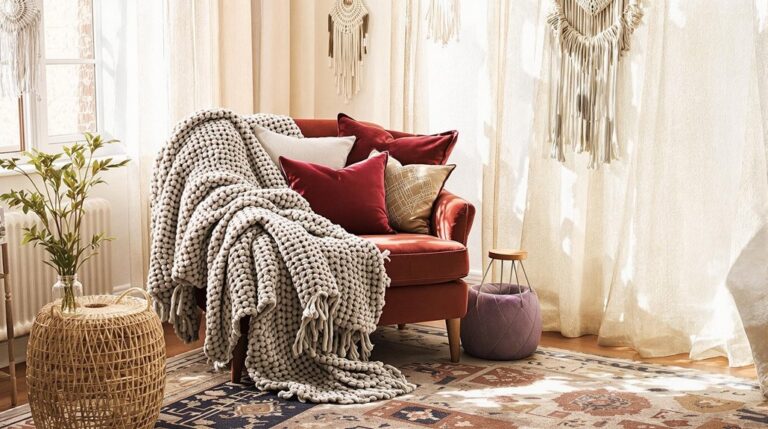
You know those moments when you walk into a room and immediately feel your shoulders drop? That’s what the right textiles can do. Your home should comfort you after a rough day—not just look nice in photos. I’ve found that adding just one quality throw blanket or changing out stiff pillows for softer ones can transform how a space feels to live in. Maybe it’s worth considering how your current textiles make your body respond when you’re actually using them, not just passing through.
The Essentials
- Layering various textures like plush rugs, upholstered furniture, and chunky throws creates depth and warmth in any space.
- Mixing natural and synthetic fibers balances comfort, durability, and authenticity while fitting your room’s color palette.
- Seasonal textile rotations adapt comfort throughout the year, with lightweight linens for summer and heavier fabrics for winter.
- Textiles develop character over time, adding personality to spaces and encouraging a more curated home environment.
- Strategic textile placement transforms ordinary corners into cozy nooks that evoke specific emotions like calmness or energy.
The Psychology of Textile Comfort in Home Design
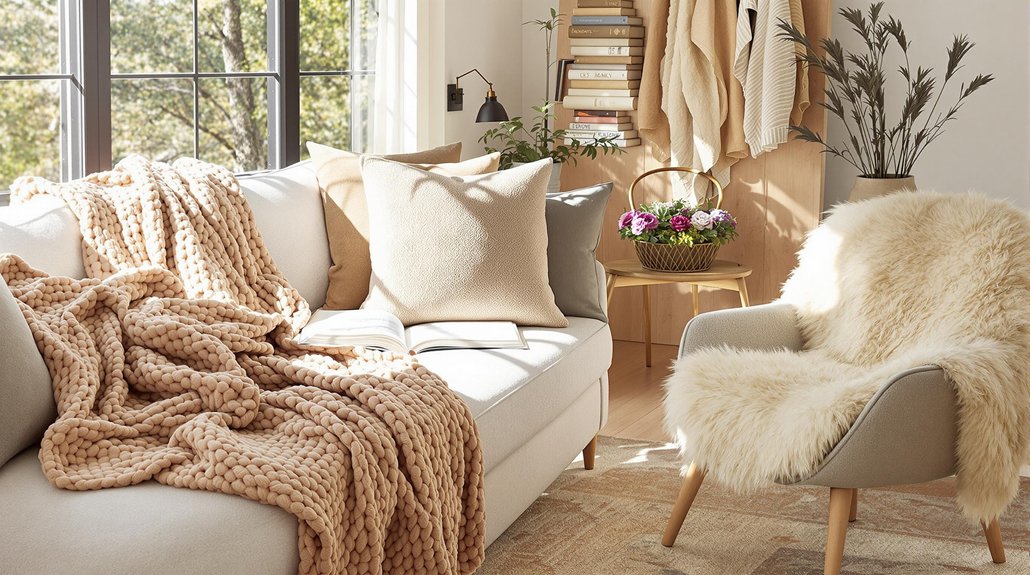
When you first walk into a room, your brain is already processing countless signals about how comfortable and welcoming that space feels – and textiles play a surprisingly powerful role in this perception.
You’re not just seeing fabrics; you’re feeling them emotionally. Soft blankets, plush pillows, and woven rugs aren’t merely decorative—they’re cozy elements that actively create a stress-free environment. We’re drawn to textiles that remind us of comfort, maybe a grandparent’s quilt or that perfect hotel bed you still think about.
Design for emotion means considering what feelings you want your space to evoke. Do you need a calming retreat after stressful days? Or perhaps a lively, energizing space? Your textile choices—their textures, weights, colors—directly impact your psychological well-being, often more than you realize.
Weighted Blankets: The Science Behind the Embrace
Although the concept seems simple at first glance, weighted blankets have revolutionized how we think about comfort and sleep quality. The science is actually fascinating—these blankets apply gentle, distributed pressure across your body, triggering what experts call deep touch pressure stimulation.
You’ll find this sensation creates an almost immediate calm in your nervous system. When you’re nestled in your cozy spot with a weighted blanket, your body often releases serotonin and reduces cortisol levels. Pretty amazing, right?
What I love about today’s weighted blankets are the thoughtful design details. You can find options that complement your decor while still delivering that therapeutic hug. Maybe try one in your reading nook or bedroom—just make sure you select about 10% of your body weight for the best results.
Layering Textures for Depth and Warmth
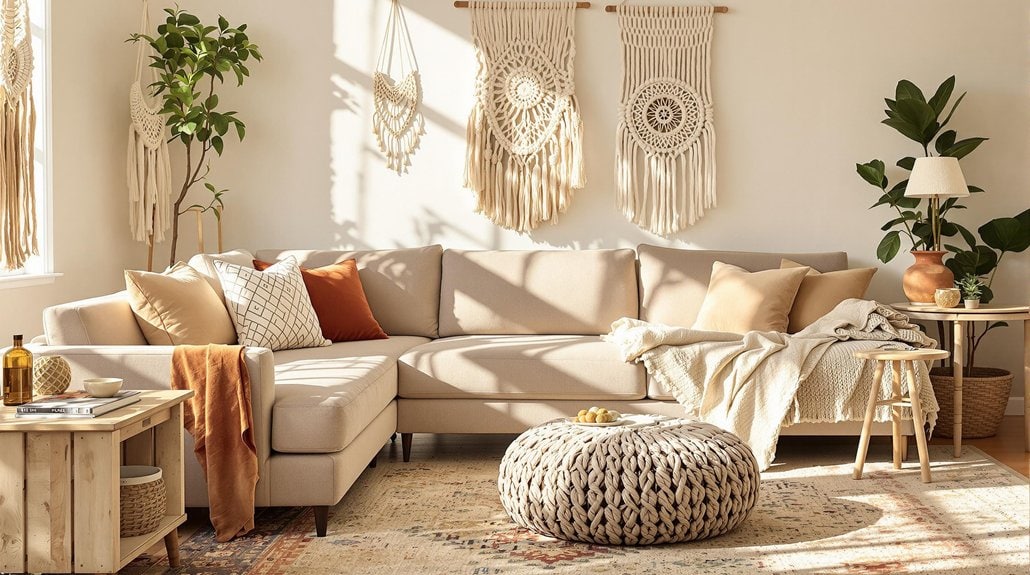
Layering fabrics and textiles creates a dimension that even the most beautiful weighted blanket can’t achieve on its own. You’ll transform an ordinary corner into a cozy reading nook by thoughtfully combining different textures. Start with a plush area rug, then add a soft upholstered chair draped with a chunky knit throw. Maybe toss in velvet pillows next to nubby linen ones for contrast.
The key to creating the coziest spot in your home is varying not just colors but tactile experiences. When layering textures, think about what feels good against your skin. That silk pillow might look pretty, but would you actually want to rest your cheek on it? I’ve found that mixing natural fibers like cotton, wool, and linen creates spaces that feel lived-in and inviting rather than too perfect or untouchable.
Natural Fibers vs. Synthetic: Finding Your Perfect Touch
As you consider which textiles to bring into your home, the choice between natural and synthetic fibers deserves careful thought. Natural materials like cotton, wool, and linen not only feel authentic against your skin but also connect your physical space to natural elements in subtle ways.
Synthetic options have come a long way, though. You’ll find microfiber throws that might actually feel softer than cotton alternatives, and they’re usually more affordable too.
Think about how each fabric complements your color palette. Maybe you want that raw silk pillow that catches light differently throughout the day? Or perhaps you need something more practical—like stain-resistant synthetics for a home with kids or pets.
I’ve found that mixing both often works best. Natural fibers where you touch them, synthetics where you need durability.
Seasonal Textile Rotations for Year-Round Coziness
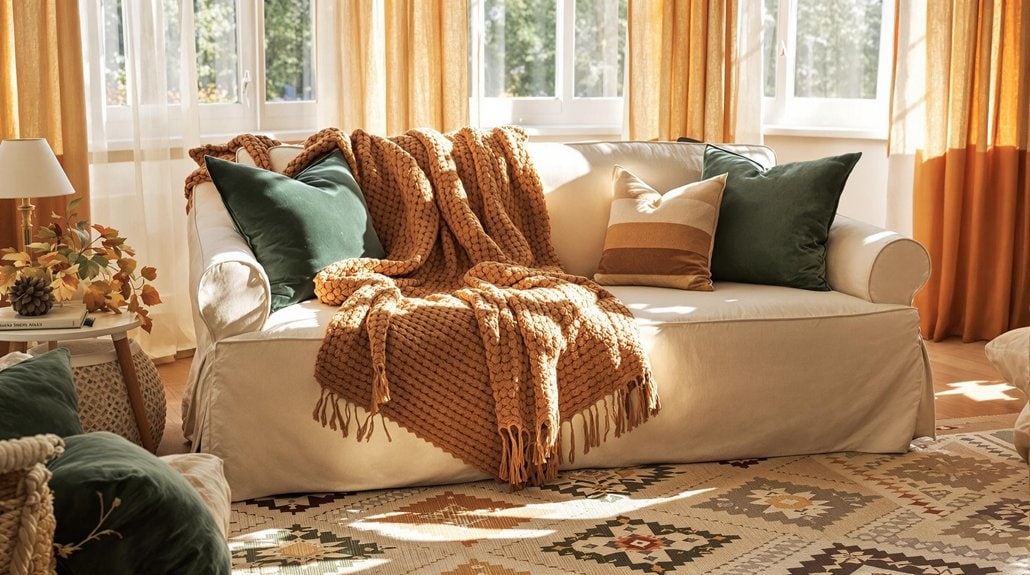
Just like the fibers you choose, your textile collection should shift with the seasons. Summer’s light linens and cottons feel wrong once the first frost hits, when you’ll want heavier throws draped over that cozy chair in the corner.
I’ve found that smart decor choices happen when you plan ahead. Maybe store winter’s heavy wool blankets in vacuum bags come April, replacing them with breathable cotton or bamboo throws that don’t trap heat.
Fall is perfect for introducing a pop of color through burnt orange pillows or rust-colored throws. Winter calls for chunky knits and faux fur, while spring welcomes lighter patterns with floral touches.
You don’t need an entirely new collection each season—just thoughtful rotations of a few key pieces that transform the feel of your space.
Global Textile Traditions That Prioritize Comfort
Where have indigenous cultures been mastering the art of comfort through textiles for centuries before our modern obsession with thread counts? Look to the Moroccan Berbers, who’ve crafted plush rugs that feel amazing underfoot while you curl up in a comfortable chair with a book. Or consider Japanese indigo textiles, which complement soft lighting to create spaces that feel both grounding and peaceful.
You’ll notice many traditional textiles draw from the beauty of nature – Peruvian alpaca throws, Indian kantha quilts made from recycled saris, or Scandinavian sheepskins that make any space instantly cozier. I’ve found that adding just one authentic piece can transform your room’s feeling completely.
Maybe that’s what makes these traditions so enduring – they weren’t just decorative. They solved real comfort problems people faced in their environments.
Investment Pieces: When to Splurge on Quality Fabrics
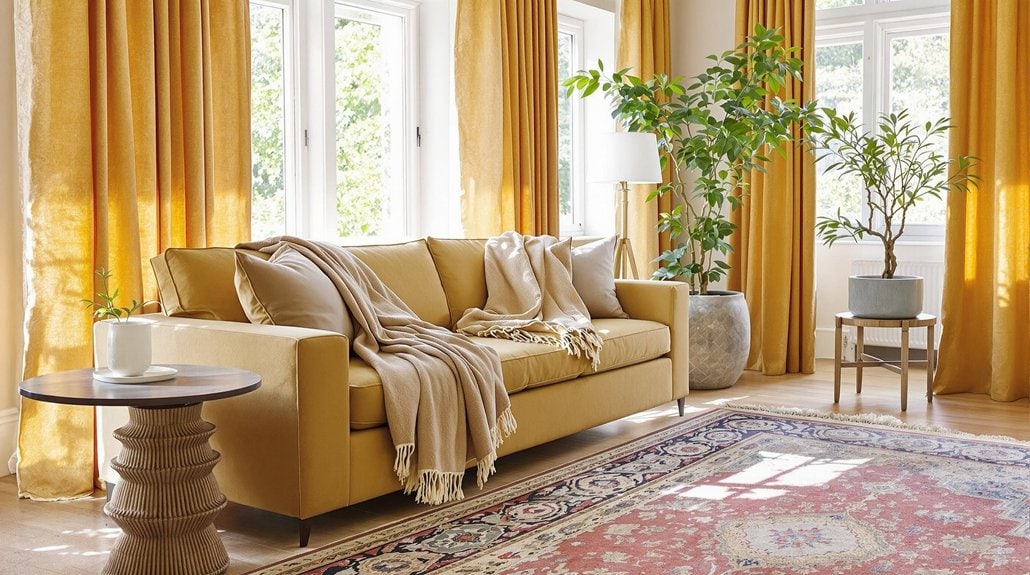
While budget-friendly textiles have their place, knowing when to invest in quality fabrics can save you money and frustration in the long run. Think about items you’ll spend quality time with—your bedroom duvet, the living room sofa, or window treatments in high-traffic areas.
Consider investing in a statement throw that functions as a piece of art but also provides warmth on chilly evenings. I’ve found that vintage pieces often deliver exceptional quality at reasonable prices, especially wool blankets and hand-loomed textiles that have already proven their durability.
High-quality natural fibers might cost more initially, but they’ll hold their shape, resist pilling, and actually improve with age. Maybe ask yourself: is this something you’ll touch or use daily? If yes, it’s probably worth the extra investment.
Color Psychology in Textile Selection
Have you ever noticed how different colors in your home can completely shift your mood? That’s not by accident. When you’re selecting textiles, you’re actually crafting a beautiful color story that affects how you feel in your space.
Cool colors like blues and greens tend to create calm, peaceful environments—perfect for bedrooms where you need to unwind. I’ve found that swapping out my bright red throw pillows for soft blue ones actually helped me sleep better, funny enough.
Warmer tones bring energy and warmth to gathering spaces. Maybe try introducing rust-colored or amber textiles to living areas where you want conversation to flow.
The key isn’t following trends but understanding how colors make you feel. What colors help you relax? Which ones energize you? Let your personal responses guide your choices.
Sustainable Textiles That Feel Good Inside and Out
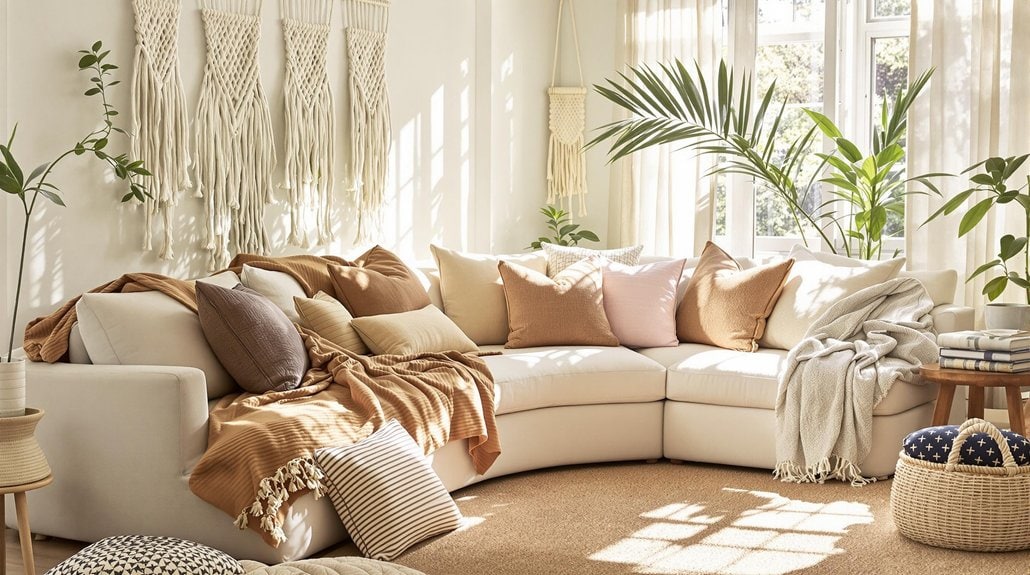
As our homes become extensions of our values, sustainable textiles aren’t just trendy—they’re revolutionary for both your space and the planet. When you wrap yourself in an organic cotton throw or walk barefoot across a jute rug, you’re experiencing a tangible connection to nature that synthetic materials simply can’t provide.
Sustainable textiles integrate effortlessly into your everyday life while offering benefits you’ll notice right away:
- Lower chemical exposure for better indoor air quality
- Durability that often surpasses conventional options
- Natural textures that add depth and character to rooms
- Ethical production that lets you sleep better at night
You’ll find these materials feel different—maybe rougher sometimes, but often with a realness that’s missing from mass-produced textiles. They age beautifully too, developing character rather than just wearing out.
Frequently Asked Questions
How Do I Remove Stubborn Stains From Delicate Textiles?
For stubborn stains on delicate textiles, you’ll want to blot (don’t rub) with mild soap and cold water. Test an inconspicuous area first, and consider enzyme cleaners for protein-based stains. Avoid harsh chemicals.
Can Textile Choices Affect Allergies and Respiratory Conditions?
Yes, your textile choices greatly impact allergies and respiratory conditions. Opt for natural, hypoallergenic fabrics like cotton and linen. Avoid synthetic materials that trap dust mites and allergens. Wash bedding weekly in hot water.
What’s the Best Way to Store Seasonal Textiles?
You’ll preserve seasonal textiles best by storing them clean, folded, and sealed in breathable cotton bags or acid-free boxes. Keep them in cool, dry spaces away from direct sunlight. Don’t forget mothballs or cedar blocks!
How Often Should Throw Pillows and Covers Be Replaced?
You should replace throw pillows every 1-3 years if they’re showing wear or flattening. Pillow covers can last longer with regular washing, but consider renewing them annually to keep your space looking current.
Are There Textiles Specifically Designed for Homes With Pets?
Yes, you’ll find pet-friendly textiles that resist hair, scratches, and stains. Look for microfiber, leather, indoor-outdoor fabrics, and performance materials like Crypton that are durable and easy to clean.
Final Thoughts
You’ve got the power to transform your home into a safe haven with the right textiles. Maybe start with just one special piece—that ultra-soft throw that makes movie nights better, or the rug your feet seek out on cold mornings. Trust your touch. What feels good against your skin probably feels good for your mind too. Your space should wrap around you at day’s end, not just look pretty in photos.