Cottagecore’s comeback reflects our desire to escape digital overwhelm with touches of rural simplicity. You can embrace it subtly by incorporating natural textures like linen tea towels or displaying a few handcrafted items against neutral walls. Try adding small botanical arrangements, vintage-inspired textiles, or an earthy color palette of sage greens and terracottas. Position your desk near a window and add potted herbs for a gentle pastoral influence without transforming your entire space. The balance between modern function and rustic charm awaits.
The Essentials
- Cottagecore has reemerged as a response to modern digital overwhelm, offering nostalgic comfort through simple, nature-connected living.
- Incorporate subtle cottagecore elements through earthy color palettes featuring sage greens, terracottas, and muted yellows.
- Add texture through strategic placement of handcrafted items like pottery, woven baskets, or vintage-inspired textiles.
- Create small botanical displays with wildflowers or herbs near windows instead of overwhelming floral arrangements.
- Balance modern functionality with pastoral charm by selecting a few statement pieces rather than completely transforming your space.
Understanding the Roots of Modern Cottagecore Aesthetics

While the aesthetics of cottagecore seem like a recent social media phenomenon, its roots actually stretch back through centuries of rural idealization and agrarian nostalgia.
When you look at cottagecore origins, you’ll find connections to Victorian pastoral romanticism and even earlier folklore traditions. People have always sort of idealized country living, maybe because it feels like an escape from whatever complications their era brings.
The aesthetic evolution is pretty fascinating too. What you’re seeing now on Pinterest isn’t really new—it’s just repackaged with modern sensibilities. Think about those countryside paintings from centuries ago, the way they portrayed simple farm life as something pure and meaningful. Sound familiar?
You might notice similar patterns in the 1970s back-to-land movement or even Depression-era homesteading. We keep returning to these rural ideals when modern life feels too complicated.
Cottagecore in Contemporary Interior Design: Finding Balance
You’ll find today’s cottagecore style works best when you’re balancing modern functionality with pastoral charm through thoughtful touches like wooden beams against clean walls or vintage accessories on contemporary furniture. Try working with an earthy palette—warm terracottas, sage greens, and muted yellows—that creates a sense of calm while still feeling current and not costume-y. Layering different textures, maybe mixing a chunky knit throw with linen curtains and ceramic accents, adds depth to your space without overwhelming it.
Modern Meets Pastoral Charm
Although embracing cottagecore might conjure images of purely rustic spaces straight from a fairytale, today’s interpretation finds harmony between pastoral charm and modern practicality. You don’t need to choose between clean lines and cozy touches—they actually work beautifully together.
The key to this modern-pastoral blend is thoughtful selection. Maybe pick just a few statement pieces rather than overwhelming your space. I’ve found this approach works well in my own apartment.
Try incorporating these elements:
- Natural materials like wood and linen alongside sleek metal accents
- Vintage-inspired textiles on modern furniture frames
- Pastoral influences through botanical prints in contemporary frames
- Handcrafted items displayed on minimalist shelving
- Traditional patterns reimagined in unexpected color palettes
This balanced approach gives you the warmth of cottagecore without sacrificing your modern aesthetics.
Earthy Palette Applications
When transforming your space with cottagecore elements, color becomes your most versatile tool. You don’t need to go all-in with florals and frills—sometimes the right earthy tones create that perfect pastoral feel without overwhelming your home. Try incorporating sage green, terracotta, or muted mustard as accent colors against neutral backgrounds.
Nature-inspired colors work particularly well in spaces where you spend quiet moments. I’ve found that my reading nook feels completely different with just a few clay-colored pillows and a warm beige throw. Maybe experiment with an ombre effect on curtains or bedding that shifts through different earth shades?
Remember that lighting affects how these colors appear. That perfect mushroom brown might look fantastic during daylight but a bit flat under artificial lighting at night.
Layered Textures Approach
The magic of cottagecore interiors comes alive through thoughtfully layered textures that create depth without clutter. You’ll find that combining different surface qualities brings warmth to your space naturally. Think about how a chunky knit throw casually draped over a linen couch just feels right—this intuitive mixing of layered fabrics creates dimension.
When approaching texture combinations, consider these elements:
- Natural woven items (baskets, rattan, macramé)
- Soft textiles (wool, cotton, linen)
- Rustic woods with visible grain
- Matte ceramics and earthenware
- Plants that add living texture
Don’t feel like you need perfect harmony—maybe that slightly mismatched pillow actually adds character? The best cottagecore spaces feel collected over time, not purchased as a set. You want textures that invite touch and create comfort without trying too hard.
Botanical Elements: Bringing Nature Indoors Without Overdoing It
While grand botanical displays can overwhelm your cottagecore space, you’ll find more charm in small-scale plant arrangements thoughtfully placed on windowsills or tucked into corner nooks. Botanical art offers another way to bring nature indoors—maybe a framed pressed flower collection or vintage plant illustrations that add character without requiring watering. You can even rotate these natural elements seasonally, switching between dried lavender bundles in summer and pine cone arrangements when the weather turns cool.
Small-Scale Plant Arrangements
Bringing nature indoors doesn’t require a full-blown indoor jungle or elaborate greenhouse setup. Small-scale plant arrangements give you that cottagecore feeling without overwhelming your space. I’ve found that thoughtful plant pairings create more visual impact than random collections.
Try these mini arrangement ideas:
- Vintage teacups with succulents on a windowsill
- Small herb trio in painted terracotta pots
- Hanging glass terrarium designs with air plants
- Thrifted china creamer with a single stem cutting
- Mason jar with seasonal wildflowers on your desk
You’ll notice these smaller arrangements are easier to maintain too. Maybe rotate them seasonally? I think changing them gives you something to look forward to as the months pass. The beauty of cottagecore is in these little touches that feel personal rather than mass-produced.
Botanical Art Accents
Botanical art provides a perfect middle ground for nature lovers who can’t quite keep plants alive—trust me, I’ve killed my share of “unkillable” houseplants. You can easily add natural elements to your space with vintage botanical prints or nature illustrations. Look for pieces featuring local flora for a more personal connection.
Try grouping small prints together for impact, or make a statement with one larger piece. I found some amazing fern illustrations at a flea market last year that completely transformed my reading nook.
And don’t limit yourself to traditional frames. Hang prints with wooden clips and twine for a more casual vibe. Maybe even try pressing your own flowers or leaves between glass frames? It’s surprisingly easy and adds that authentic cottagecore touch without making your home look like a garden exploded inside.
The Art of Vintage-Inspired Textiles in Modern Spaces

When contemporary spaces embrace vintage-inspired textiles, they’re not just decorating—they’re telling stories. You’ll find that vintage patterns breathe life into modern rooms that might otherwise feel a bit cold or impersonal. I’ve noticed that textile layering creates depth, maybe even a sense of history in a space that’s brand new.
Want to incorporate these textiles without going overboard? Try these approaches:
- Start small with vintage-patterned throw pillows on a modern sofa
- Layer a handwoven table runner over a sleek dining table
- Mix old and new with antique quilts on contemporary bedframes
- Use vintage tea towels as bathroom hand towels for unexpected charm
- Frame remnants of beautiful old textiles as wall art
The contrast between old and new creates tension that makes spaces feel lived-in rather than staged.
Soft Lighting Techniques for a Cozy Ambiance
Just as the right textile can transform a room, light shapes how we feel in our spaces. You’ve probably noticed how harsh overhead lighting can make even the coziest room feel like a waiting room. Instead, try layering your light sources at different heights—table lamps, floor lights, maybe even some string lights draped across a shelf.
Soft shadows create depth and mystery, something you won’t get from bright LEDs. I love placing small lamps in unexpected corners. And don’t underestimate candle glow! Group a few pillar candles of different heights on a vintage plate for instant cottagecore charm without going overboard.
For everyday use, warm-toned bulbs (around 2700K) work wonders. They mimic that golden hour sunlight we all look better in, don’t you think?
Creating a Subtle Cottagecore Kitchen

While many people think cottagecore kitchens require a complete renovation, transforming your cooking space doesn’t need to be dramatic or expensive. Focus on adding elements that feel handcrafted and lived-in rather than overhauling everything at once.
Display your most cherished kitchen tools in ways that make them look intentional. Maybe hang that cast iron pan your grandmother gave you, or showcase wooden spoons in a vintage crock.
Try incorporating these subtle touches:
- Linen tea towels draped casually over an oven handle
- A small herb garden on your windowsill
- Mason jars filled with pantry staples
- A handwritten recipe card framed on the wall
- A wooden cutting board left out as decor
Experiment with rustic recipes that fill your kitchen with comforting scents. Fresh bread works wonders!
Sustainable Practices That Align With Cottagecore Values
Although cottagecore aesthetic often gets attention for its visual charm, at its heart lies a deep connection to sustainable living practices that reach far beyond pretty aesthetics.
You can embrace these values by making small, meaningful changes in your daily routines. Start by seeking out eco-friendly materials for your home projects—maybe that’s choosing natural fibers like linen, wool, or cotton instead of synthetics.
Local sourcing is another cornerstone of cottagecore living. Try visiting farmers markets for your produce, or even grow some herbs on your windowsill if you don’t have garden space. I’ve found that even growing a small pot of basil makes cooking more satisfying and reduces plastic packaging waste.
What sustainable practices might work best with your living situation? Sometimes the simplest changes—like mending clothes instead of replacing them—align perfectly with cottagecore values.
Mixing Contemporary Furniture With Rustic Accents

You don’t need to completely overhaul your space to embrace cottagecore—just thoughtfully mix your existing contemporary pieces with a few well-chosen rustic elements. Try adding a weathered wooden coffee table next to your modern sofa, or maybe drape a handmade quilt over that sleek accent chair you love. These small changes create a charming tension between old and new, letting you enjoy the comfort of modern furniture while still capturing that cozy, nostalgic cottagecore feel.
Balance Modern With Vintage
Despite its vintage charm, cottagecore doesn’t mean you have to live in a time capsule. Finding that sweet spot between old-world coziness and modern functionality is what makes this style truly livable. I’ve found that pairing contemporary furniture with carefully chosen vintage accents creates spaces that feel both fresh and nostalgic.
Try these approaches to balance the old with the new:
- Install modern lighting fixtures over an antique dining table
- Place a sleek sofa against a wall with floral vintage wallpaper
- Mix contemporary artwork with ornate thrifted frames
- Add tech-friendly furniture that incorporates charging stations
- Use modern textiles in traditional patterns for pillows and throws
Small Changes, Big Impact
Making the shift to cottagecore doesn’t require a complete home overhaul or maxing out your credit card. Sometimes it’s the little touches that transform a space most effectively.
Try creating cozy corners with what you already own—maybe that throw pillow with floral embroidery paired with a chunky knit blanket draped over your modern armchair. I’ve found that mixing one statement vintage find, like an antique tea set or distressed wooden stool, with your existing furniture creates perfect tension between old and new.
Replace sleek cabinet handles with ceramic knobs. Add a small collection of pressed flowers in simple frames above your desk. Even swapping out harsh overhead lighting for a couple of warm table lamps can instantly soften your contemporary space and bring that cottagecore feeling without going overboard.
Color Palettes That Evoke Pastoral Charm
The heart of cottagecore aesthetic lives in its color palette, where soft hues and natural tones create that irresistible pastoral charm we’re all craving. You don’t need to overhaul your entire home—just incorporate these muted hues thoughtfully. I’ve found that pastoral textiles in cream, sage, and dusty rose instantly transform a space.
Try these nature-inspired colors to bring cottagecore into your home:
- Earthy terracotta and clay tones
- Soft sage and moss greens
- Faded blues reminiscent of vintage linens
- Warm honey and wheat yellows
- Muted lavender and wildflower purples
These colors work because they’re grounded in what you’d actually see in a countryside setting. Maybe start with just one wall or a few accent pieces. You’ll be surprised how quickly these gentle tones can shift the mood of your space.
Minimalist Approaches to Handcrafted Decor

While many assume cottagecore requires cluttered spaces filled with trinkets, a minimalist approach to handcrafted decor often creates the most authentic and livable pastoral aesthetic.
You don’t need dozens of items to capture that cottagecore feel. Try selecting just one or two pieces of handcrafted pottery for your kitchen counter – maybe a butter dish or spoon rest that shows the potter’s fingerprints. These singular items tell a story without overwhelming your space.
The same goes for woven baskets. Instead of collecting many, choose a single well-made basket that serves a real purpose, like holding blankets or firewood. I’ve found this approach works better for everyday living. When each piece has room to breathe, you actually notice and appreciate the craftsmanship more, don’t you think?
Seasonal Cottagecore Touches That Aren’t Permanent
This minimalist philosophy extends perfectly into how you can change your cottage-inspired space throughout the year. You don’t need to commit to permanent decor choices when seasonal touches can bring that cottagecore feeling without overwhelming your space.
Try these temporary ideas that pack a cottagecore punch:
- Seasonal wreaths made from dried flowers in summer or pine cones in winter
- Nature inspired centerpieces using whatever’s abundant outside—maybe acorns in fall, citrus in winter
- Swappable pillow covers with botanical prints or muted patterns
- Mason jars filled with seasonal flowers or battery-operated string lights
- Lightweight cotton table runners that reflect the colors of the current season
These temporary touches let you experiment with cottagecore aesthetics without committing to a complete aesthetic overhaul. Just switch them out when you’re ready for something fresh!
Digital Meets Pastoral: Cottagecore in Home Offices and Tech Spaces
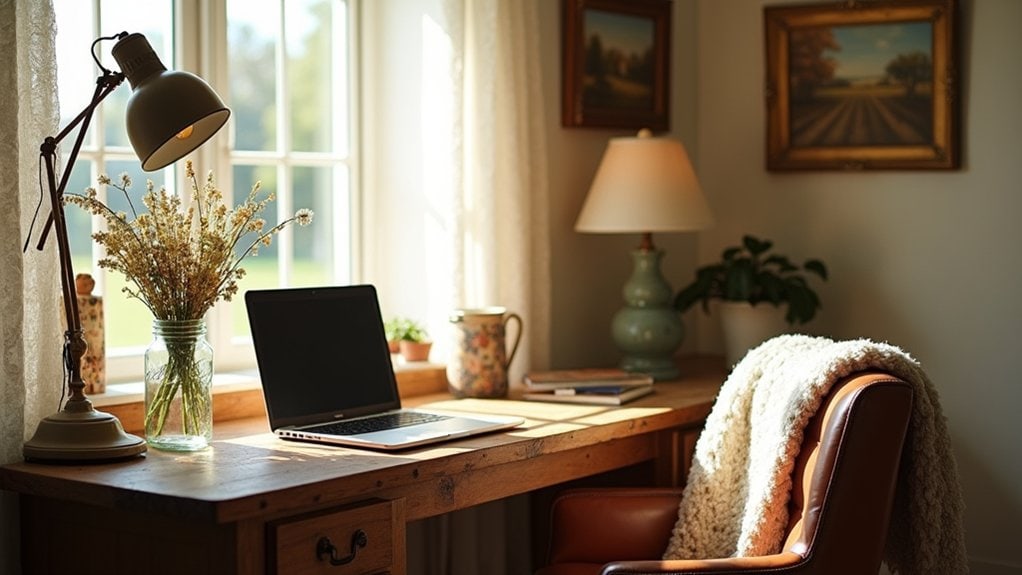
Modern workspaces need not sacrifice aesthetic charm for functionality, especially as remote work becomes increasingly common. You can blend digital environments with cottagecore elements fairly easily. Try positioning your desk near a window, then add small potted herbs or ferns for workspace greenery that’s both pretty and practical.
Replace harsh lighting with warm lamps or string lights. Maybe frame vintage botanical prints above your monitor? I’ve found that natural materials work wonders too—a wooden desk organizer or woven basket for cables creates instant digital nostalgia without feeling forced.
Don’t forget textiles. A knitted chair cushion or soft linen curtains soften the tech-heavy vibe. Even your screensaver can participate—landscapes and gardens make a nice change from corporate logos when you’re between tasks.
Frequently Asked Questions
How Much Does a Complete Cottagecore Renovation Typically Cost?
You’re looking at $15,000-$50,000 for a complete cottagecore renovation. Your budget renovations could focus on key elements like floral wallpaper and vintage furniture. The cost breakdown varies depending on your home’s size and existing conditions.
Can Cottagecore Work Well in Small Urban Apartments?
Yes, you can make cottagecore work in small apartments! Transform your urban space with windowsill herb gardens and potted plants. Add cozy textiles like floral cushions and crocheted throws to create that charming countryside feeling you’re craving.
Is Cottagecore Appropriate for Households With Young Children?
Yes, cottagecore’s perfect for families with little ones! You’ll find it’s naturally child friendly decor with its cozy textiles and rounded furniture. Plus, you can enjoy nature inspired activities like gardening and baking together.
How Do I Incorporate Cottagecore Without Appearing Outdated or Grandmotherly?
You’ll avoid grandmotherly vibes by balancing cottagecore with modern aesthetics. Mix in subtle touches like fresh flowers or vintage accessories alongside clean lines and neutral colors. Don’t overdo patterns—select statement pieces instead.
Are There Cultural Appropriation Concerns With Certain Cottagecore Elements?
Yes, you’ll want to exercise cultural sensitivity when using cottagecore elements. Consider the historical context of items like dreamcatchers or certain textiles that have specific cultural significance to marginalized or indigenous communities.
Final Thoughts
You don’t need to transform your home overnight to embrace cottagecore. Start small—maybe a vintage teacup holding wildflowers on your desk or soft linen curtains that catch the light just right. The beauty of this aesthetic is how it grows with you, changing as seasons shift. Trust your instincts. Your space should feel lived-in, a little imperfect, but completely yours. That’s what makes cottagecore real anyway.