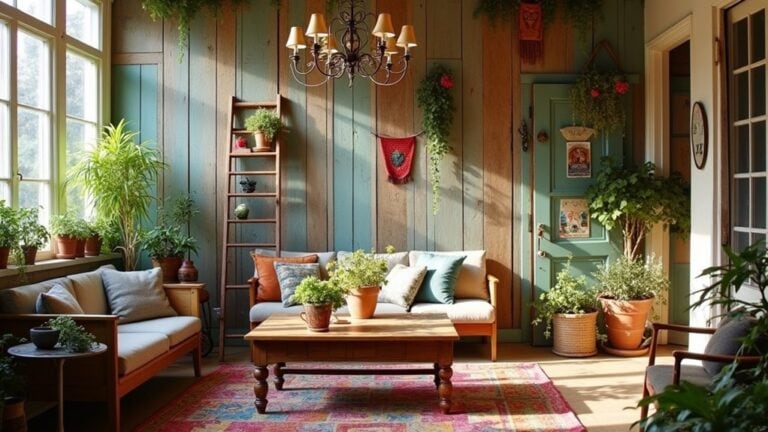
Upcycling transforms your home by training your eye to see possibilities in overlooked items. You can turn wooden pallets into statement furniture, repurpose ladders as vertical storage, or create unique lighting from everyday objects. Old textiles become art pieces while weathered materials add character to modern spaces. The beauty lies in mixing these creative finds with newer pieces—maybe start with a simple pallet coffee table or textile wall hanging. There’s hidden potential waiting in that forgotten corner of your garage.
The Essentials
- Transform wooden pallets into statement furniture pieces like coffee tables, bookshelves, and headboards with basic tools.
- Repurpose old ladders into versatile decor elements for shelving, plant displays, or hanging storage solutions.
- Create unique lighting fixtures from everyday objects like colanders, mason jars, and wine bottles for one-of-a-kind ambiance.
- Upcycle fabric remnants into patchwork pillows, wall hangings, and other textile treasures that add character to spaces.
- Balance upcycled and new pieces using the 70/30 rule and a limited color palette for a cohesive, stylish home.
The Creative Mindset: Seeing Potential in the Overlooked
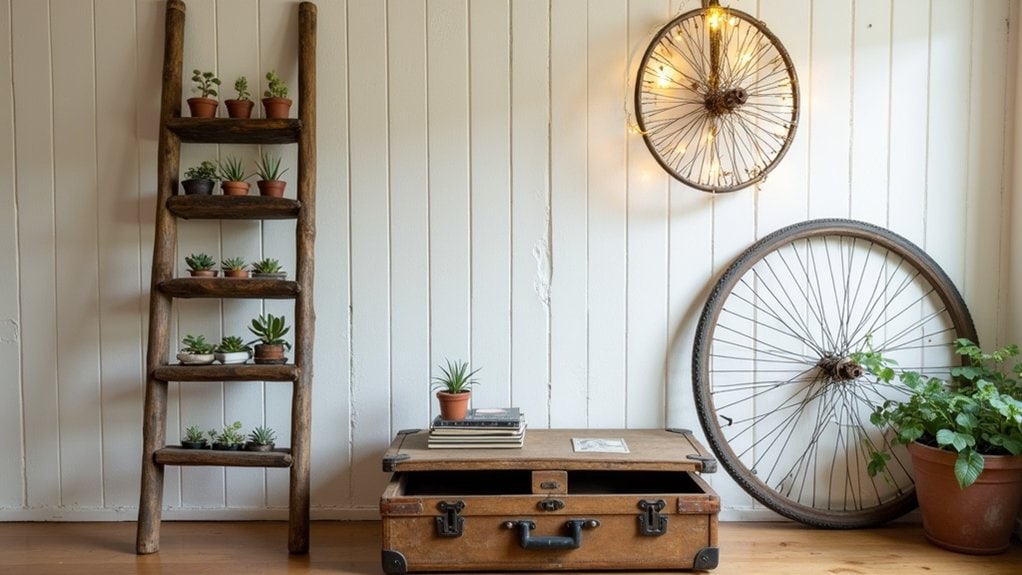
When you’re standing in front of that old wooden chair at a garage sale or eyeing the stack of vintage suitcases in your grandma’s attic, you’re not just looking at objects—you’re facing untapped creative potential.
This kind of creative observation takes practice. You’ll need to train your eye to look beyond what something is and imagine what it could be. That rusty metal watering can? Maybe it’s your next hanging planter. Those old shutters? They might make a perfect headboard.
Potential recognition happens when you pause and really ask yourself: “What if?” It’s about developing the habit of seeing possibilities where others see trash. What’s something in your home right now that you’ve overlooked? Try giving it a second glance today.
From Wood Pallets to Statement Furniture
You’ll be amazed at how those discarded wooden pallets can transform into stunning statement pieces for your home. With a bit of sanding and some creative thinking, you can turn these industrial cast-offs into a rustic coffee table that’ll become the centerpiece of your living room, a unique bookshelf that showcases your personality, or even a charming headboard that completely changes the feel of your bedroom. The beauty of pallet furniture isn’t just in its sustainability—it’s in how it tells a story of renewal while fitting perfectly with almost any décor style you already have.
Pallet Coffee Table Magic
Three wooden pallets can transform into your living room’s most eye-catching piece of furniture. No kidding! With some basic tools, sandpaper, and a Saturday afternoon, you’ll create something uniquely yours that guests will ask about.
Start by cleaning your pallets thoroughly—they’ve had previous lives, after all. Sand until smooth (your fingers will thank you later), and maybe add a steel brush treatment for that weathered look that really brings out the pallet aesthetics.
For coffee table functionality, consider adding casters for mobility or a glass top to create a smooth surface. You might even incorporate storage by leaving the middle section open.
I tried this last summer and honestly, it’s still my favorite piece. The best part? When you’re tired of it, you can always remake it into something else.
Bookshelf Design Innovations
Those same wooden pallets we talked about for coffee tables? They’re absolute gold for creating stunning bookshelves too. You can stack them vertically, secure them to walls, or arrange them in modular designs that fit your exact space.
I’ve found that pallet shelving gives you this raw, industrial vibe that works surprisingly well with both paperbacks and decorative pieces. The shelf styling options are practically endless – try painting alternating sections, leaving some natural, or maybe adding small potted plants between book clusters.
What I love is how you can start small – maybe just two pallets – and expand your shelving system as you need more space. The best part? When friends ask about your cool bookcase, you get to casually mention “Oh, I made that myself.” Trust me, it feels pretty great.
Headboard Rustic Transformation
While most people think of shipping pallets as purely utilitarian, they’re actually perfect raw material for creating a stunning headboard that’ll transform your bedroom. I’ve seen various headboard styles emerge from these humble beginnings, but the rustic finish is what really makes them special.
Start by dismantling the pallet—you’ll need a hammer, pry bar and maybe some patience. Sand everything thoroughly (nobody wants splinters while reading in bed, trust me). You can arrange the boards in different patterns—herringbone looks amazing if you’re feeling ambitious.
For rustic finishes, try whitewashing or using steel wool soaked in vinegar to age the wood naturally. Some folks add subtle LED lighting behind for that cozy glow. Whatever design you choose, your upcycled headboard will become the focal point your bedroom’s been missing.
Kitchen Transformations: Vintage Finds for Modern Cooking
When you step into your kitchen, the beating heart of your home, change doesn’t require ripping everything out and starting fresh. Sometimes the most character comes from thoughtfully selected vintage cookware or that quirky retro appliance you found at an estate sale last summer.
Try mixing eclectic dishware sets with modern pieces—those antique glassware goblets paired with your everyday plates create conversation starters at dinner parties. Maybe hang those thrifted textiles as unexpected wall art?
Farmhouse accents work surprisingly well in contemporary spaces. That old wooden crate? Perfect for storing sustainable utensils made from bamboo or reclaimed materials.
I’ve found rustic dining elements like weathered serving boards add warmth to sleek countertops. You’d be amazed how these imperfect treasures transform your kitchen into a space that feels both timeless and uniquely yours.
Glass, Metal, and Magic: Industrial Elements in Home Design
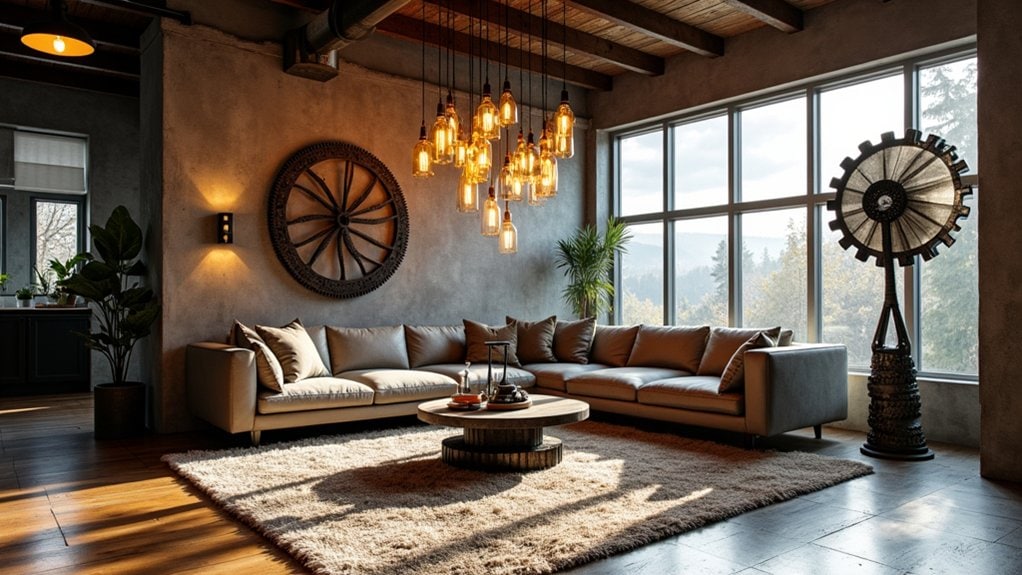
You’ll be amazed how raw-edged materials can transform your living space when you embrace their unfinished appeal—try leaving that metal coffee table unpolished or showcasing pipes as shelving brackets. Weathered metal finishes add character and history to even the most sterile rooms, especially when you pair them with softer textures for balance. Maybe it’s the contrast between old industrial elements and your everyday items that creates such visual interest, but there’s something undeniably compelling about incorporating these worn, practical pieces into your home.
Raw Edge Revival
The industrial aesthetic has roared back into our homes with raw, unfinished edges that tell a story of authenticity and character. You’ll notice it everywhere now – those live-edge wooden tables that preserve the natural contours of the tree, or concrete countertops with visible aggregate that actually look better with age.
Raw edge aesthetics aren’t just visually striking; they’re part of a larger movement toward sustainable furniture. That old barn door? Sand it down but keep the weathered patina for a coffee table that’s uniquely yours. Maybe leave those nail holes visible – they’re conversation starters, trust me.
What I love most is how these pieces bring texture to otherwise flat spaces. You can mix them with softer elements too. Ever tried pairing a rough-hewn bench with velvet pillows? The contrast works surprisingly well.
Weathered Metal Charm
While raw edges celebrate nature’s imperfections, weathered metal brings an entirely different kind of character to your space. There’s something almost magical about the patina that develops on metal over time—telling stories through rust patterns and worn finishes.
You’ll find weathered metal charm especially effective in rustic signage for your kitchen or entryway. Old farm signs or repurposed industrial markers add that lived-in feel without trying too hard. Maybe try mounting them slightly off-center for an effortless look.
Metal sculptures, even small ones, can become conversation pieces. I recently placed an old wrought iron piece in my living room corner, and it’s amazing how it draws the eye.
Don’t worry about perfection here—the beauty of weathered metal is in its flaws and history. Let it contrast with softer elements in your home.
Fabric Remnants and Textile Treasures
Forgotten fabric scraps and old textiles don’t need to languish at the bottom of your craft drawer. Transform them into stunning fabric patchwork pillows that add personality to any couch or bedroom. You’ll be surprised how those mismatched pieces create something uniquely yours when stitched together.
Try creating textile wallhangings from larger remnants – maybe that old curtain you’ve been meaning to repurpose? I’ve found that even beginners can manage a simple hanging with just basic sewing skills.
You know what’s great about fabric upcycling? It’s forgiving. Made a mistake? Just unpick and try again. Plus, there’s something satisfying about giving new life to materials that might have ended up, well… trash. What forgotten textiles are hiding in your closet right now?
Ladder Logic: Vertical Storage Solutions
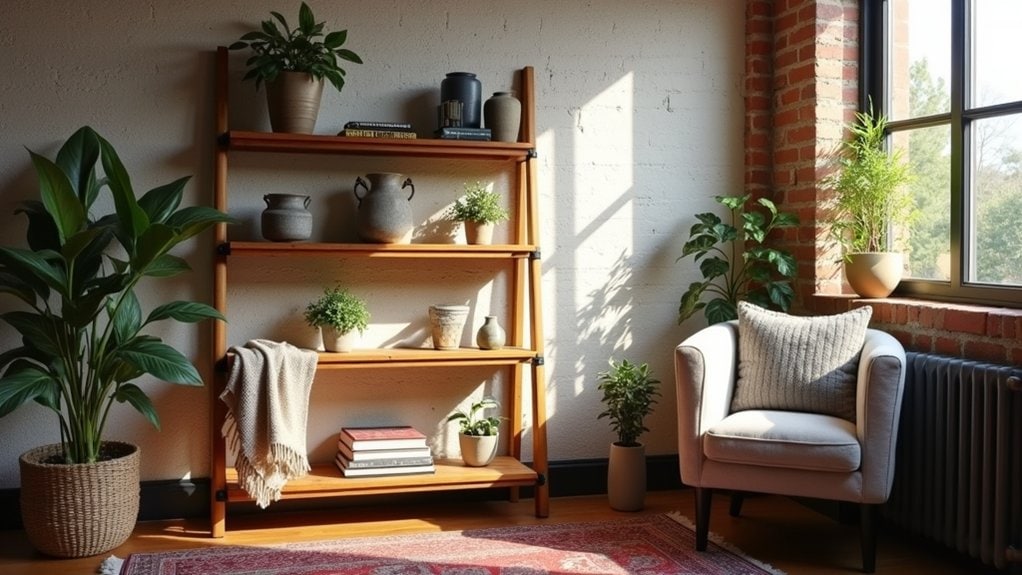
Speaking of giving things new life, old ladders have emerged as one of my favorite upcycling projects at home. You’d be surprised how versatile these forgotten tools can be when repurposed for ladder organization in tight spaces.
I transformed my grandfather’s wooden ladder into creative shelving for my bathroom last year. You can do this too! Consider these simple ideas:
- Mount a ladder horizontally on a wall for hanging plants or towels
- Lean a painted ladder against the wall as a blanket display
- Use each rung as a natural shelf for books or small décor items
- Attach the ladder to your ceiling for hanging pots and pans
The beauty of ladder storage is that it draws the eye upward, making even small rooms feel larger. Maybe you’ve got an old ladder gathering dust somewhere?
Lighting Innovations With Unexpected Materials
As we’ve seen with ladders, everyday objects can transform into unexpected design elements. When it comes to lighting, you don’t need to spend a fortune for stunning effects. Look around your home—what could become eco-friendly lighting?
I recently turned an old metal colander into a pendant lamp. The perforations created this amazing pattern on my walls! You’d be surprised how many unconventional sources make great lighting fixtures. Mason jars, wine bottles, even old musical instruments.
Try this: Take a collection of glass bottles in varying heights, insert string lights, and group them on a shelf. The colored glass diffuses light beautifully.
You’re not just saving money with these projects—you’re creating one-of-a-kind pieces no one else has. What forgotten items might you transform into lighting?
Outdoor Spaces: Weathered Items Finding New Purpose
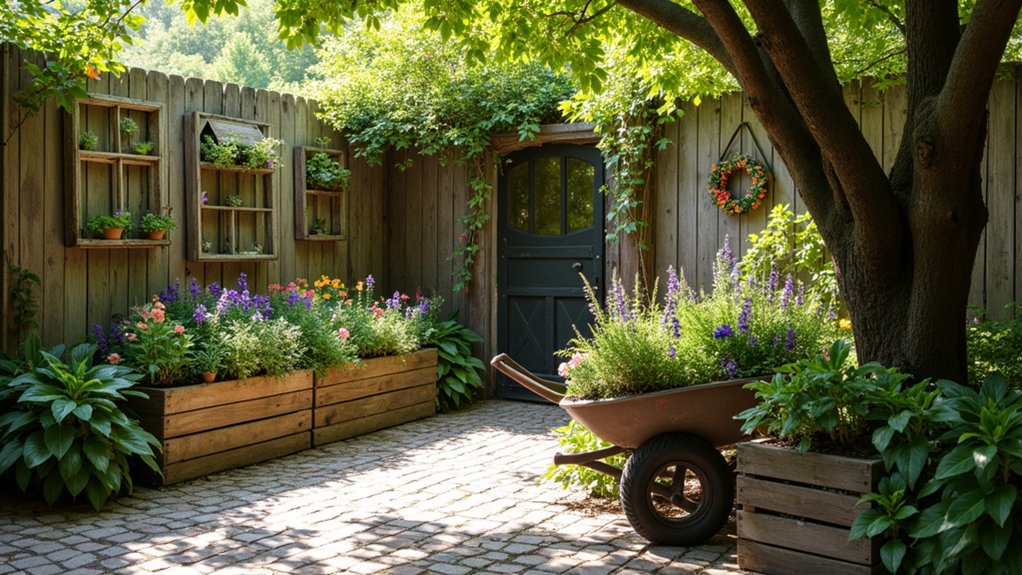
While our homes shelter us from the elements, outdoor spaces offer perfect opportunities to showcase items seasoned by those very elements. You’ll be amazed at how weathered objects gain character with time and exposure.
Try these ideas for your outdoor sanctuary:
- Transform driftwood into garden sculptures that twist and turn among your plants
- Convert old wooden ladders into vertical plant displays – I’ve seen this work beautifully in small patios
- Repurpose metal barrels as fire pits – just make sure they’re properly cleaned first
- Create rustic benches from fallen logs or reclaimed lumber
Weather-beaten shutters make great trellises for climbing plants too. And maybe that old wheelbarrow you thought was beyond repair? It could become your garden’s most eye-catching planter. Nature helps with the aging process while you provide the vision.
The Art of Mixing: Balancing Upcycled With New
How do you create a home that feels both eclectic and cohesive when mixing upcycled treasures with brand-new pieces? It’s easier than you might think.
Start with color coordination as your foundation. If your vintage wooden cabinet has warm tones, maybe add new throw pillows in complementary shades. I’ve found that limiting your palette to 3-4 colors works really well when blending old and new.
Texture harmony is just as important. That smooth, contemporary coffee table can balance perfectly with your rough-hewn upcycled bench—the contrast actually makes both pieces stand out.
Don’t worry about everything matching perfectly. Sometimes the most interesting spaces have a bit of tension between elements. Try the 70/30 rule: about 70% of one style (either upcycled or new) and 30% of the other.
Frequently Asked Questions
How Much Money Can I Save Through Upcycling Compared to Buying New?
You’ll save 70-90% through upcycling compared to buying new. The cost comparison is remarkable, offering significant budget benefits when you transform items you’d otherwise discard. You’re reducing expenses while being creative.
What Tools Are Essential for Beginners Starting Upcycling Projects?
You’ll need basic tools like a hammer, screwdriver set, sandpaper, and paintbrushes to start upcycling. Don’t forget essential supplies including wood glue, measuring tape, and safety gear for your creative changes.
How Do I Prepare and Clean Items Before Upcycling Them?
Before upcycling, you’ll need to thoroughly clean items using appropriate cleaning techniques like soap, vinegar or specialized cleaners. Remove old finishes, sand surfaces, and fix damage—these preparation methods guarantee your alteration will last and look professional.
Are There Safety Concerns When Upcycling Certain Materials?
Yes, beware of toxic materials when upcycling. You’ll need to avoid lead paint, treated wood, and certain plastics. Always prioritize children’s safety by sealing finished projects and keeping hazardous tools out of reach.
How Can I Sell or Monetize My Upcycled Creations?
You can monetize your creations through various market strategies. List items on online platforms like Etsy or Instagram. You’ll also find success at local craft fairs, consignment shops, or by creating your own website.
Final Thoughts
You’ll never look at “junk” the same way again. When you start seeing potential in old items around your house, that’s when the magic happens. Trust me, I’ve turned an old dresser into a kitchen island—not perfect, but definitely unique.
Try something small first. Maybe repaint that forgotten side table? You don’t need to transform your entire home overnight. Just start somewhere, and watch how your creativity grows.