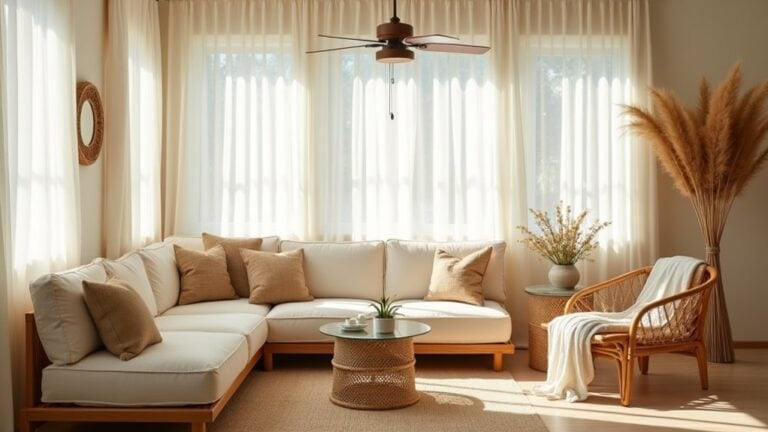
For hot weather living, you’ll want lightweight, breathable fabrics that help regulate temperature. Linen and cotton percale are perfect for bedding—they release heat and feel cool against your skin. Try replacing heavy rugs with natural jute or sisal that don’t trap warmth. Bamboo fabrics offer sustainable cooling that wicks moisture away better than cotton. Light cotton or sheer curtains improve airflow while filtering harsh sunlight. These simple textile swaps can transform your space into a cooler summer sanctuary.
The Essentials
- Linen textiles release heat and allow skin to breathe, making them ideal summer fabrics for bedding and upholstery.
- Cotton percale sheets provide a crisp, cool touch against skin and improve temperature regulation during hot nights.
- Natural fiber rugs like jute and sisal don’t trap heat, allowing rooms to breathe better than synthetic alternatives.
- Moisture-wicking performance fabrics pull sweat away from the body, enhancing comfort in humid conditions.
- Lightweight cotton or sheer curtain panels filter sunlight while promoting air circulation throughout living spaces.
Linen: The Summer Essential for Breezy Elegance
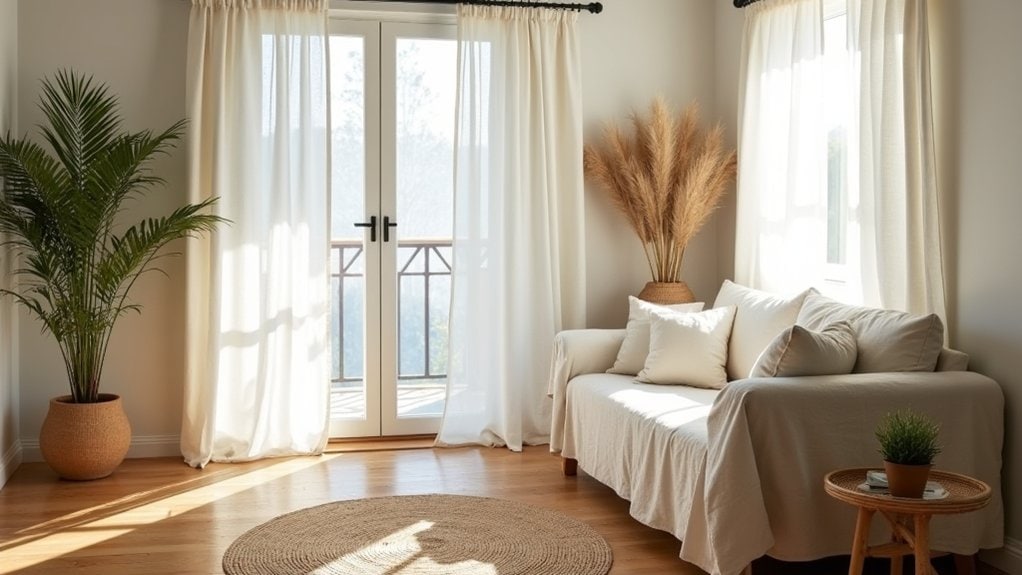
When summer temperatures climb, linen becomes your wardrobe’s best ally against the heat. This natural fiber actually releases heat rather than trapping it, letting your skin breathe when you need it most. You’ll feel the difference immediately.
Don’t worry about those characteristic wrinkles—they’re part of linen’s charm. For linen care, a gentle wash and hang-dry works best. Maybe skip the iron if you’re embracing that relaxed summer vibe.
Linen colors have evolved beyond just natural beige. You’ll find everything from soft pastels to rich terracottas that complement your seasonal mood. I’ve found that a pale blue linen shirt feels almost cooling on the hottest days.
What makes linen special for you? Its texture improves with age, making each piece a long-term investment in comfort.
Cotton Percale: Crisp Comfort for Hot Nights
While linen keeps you cool during the day, your comfort shouldn’t end when the sun goes down. That’s where cotton percale truly shines. You’ve probably felt the difference without knowing what it was called—that crisp, cool touch against your skin on a muggy night.
The cotton percale benefits extend beyond just feeling nice. Its tight weave creates a smooth surface that actually helps regulate your body temperature. I’ve found it’s remarkably durable too, getting softer with each wash without losing that distinctive crispness.
Don’t worry about being stuck with plain white, either. Cotton percale patterns have come a long way—from subtle geometric designs to lively botanicals. Maybe try starting with something simple? A striped percale sheet set could transform your summer sleeping experience without overwhelming your bedroom’s aesthetic.
Bamboo Fabrics: Sustainable Cooling for Modern Homes

You’ll love how bamboo fabrics pull moisture away from your skin on those sticky summer nights, keeping you noticeably cooler than traditional bedding. The range of textures available now is pretty impressive—from silky-smooth lyocell blends to slightly nubby weaves that feel good against bare skin. What’s great is you can match your bamboo textiles to your home’s style, whether you’re into crisp modern aesthetics or something with a bit more natural character.
Bamboo’s Moisture-Wicking Properties
Among all the natural cooling fabrics available today, bamboo stands out for its remarkable moisture-wicking abilities that can transform your hot weather living experience. When you’re sweating through another scorching afternoon, bamboo bedding pulls moisture away from your skin much faster than cotton, keeping you noticeably drier.
One of the key bamboo benefits is its micro-gaps in the fiber structure that enhance breathability. You’ll feel the difference immediately when you touch bamboo sheets – they’re surprisingly cool to the touch.
For practical bamboo applications, start with your bedroom. Maybe replace your cotton sheets with bamboo ones? I’ve found they’re particularly good for those who tend to sleep hot. The moisture-wicking works all night, so you won’t wake up feeling damp and uncomfortable.
Textural Variety Options
Bamboo fabric offers an impressive range of textural options beyond just its cooling properties, making it a versatile choice for modern homes. You’ll find everything from silky-smooth sheets to slightly rougher, more substantial weaves that add character to your living spaces.
Try incorporating woven wall art made from bamboo fibers for a stunning focal point that’s both eco-friendly and temperature-regulating. These pieces often have this amazing dimensional quality that catches light differently throughout the day.
For those slightly cooler evenings, textured throw blankets made from bamboo are perfect. They’re lightweight enough that you won’t overheat, but still provide that cozy feeling we all want sometimes. I’ve found they work really well draped over a chair or sofa—functional and decorative at the same time.
Lightweight Curtain Options to Beat the Heat
You’ll find natural fiber sheers are your best friend when summer temperatures start climbing—they filter harsh sunlight while still allowing air to circulate through your rooms. If you’re looking for an affordable option that works surprisingly well, simple cotton drop cloth alternatives from hardware stores can be transformed into elegant curtains with just a quick hem. They’re actually lighter than you might expect and give your space that casual, breezy feeling that makes hot weather more bearable.
Natural Fiber Sheers
Sunlight filters differently through natural fiber sheers, creating a diffused glow that’s both beautiful and functional during hot summer months. You’ll notice how these curtains transform harsh rays into gentle natural light that won’t overheat your space. I’ve found linen sheers work amazingly well—they breathe better than synthetic options.
Consider bamboo or cotton blends too. They come in subtle sheer patterns that add texture without blocking airflow. Maybe try layering them? I once used two lightweight cotton panels instead of one heavier curtain, and my living room stayed noticeably cooler.
What’s great is how versatile they are. You can leave them up year-round, but they’re perfect for those sweltering days when you want some privacy without trapping heat inside. Worth every penny, honestly.
Drop Cloth Alternatives
While natural sheers offer that perfect diffused light, there’s another approach worth exploring that won’t strain your budget. Drop cloths aren’t just for painting anymore! You’ll find these canvas alternatives at most hardware stores for a fraction of what you’d pay for traditional curtains.
Look for breathable blends that combine cotton with lighter materials—they hang better and don’t feel as stiff as pure canvas. I’ve used them in my guest room, and honestly, they’re pretty impressive once washed a few times to soften them up.
You might consider dyeing them if the natural color isn’t your thing. Maybe even try tea-staining for that subtle, lived-in look? They block just enough sun while still allowing air to circulate, keeping your rooms noticeably cooler during those sweltering summer days.
Natural Jute and Sisal: Floor Coverings That Don’t Trap Heat
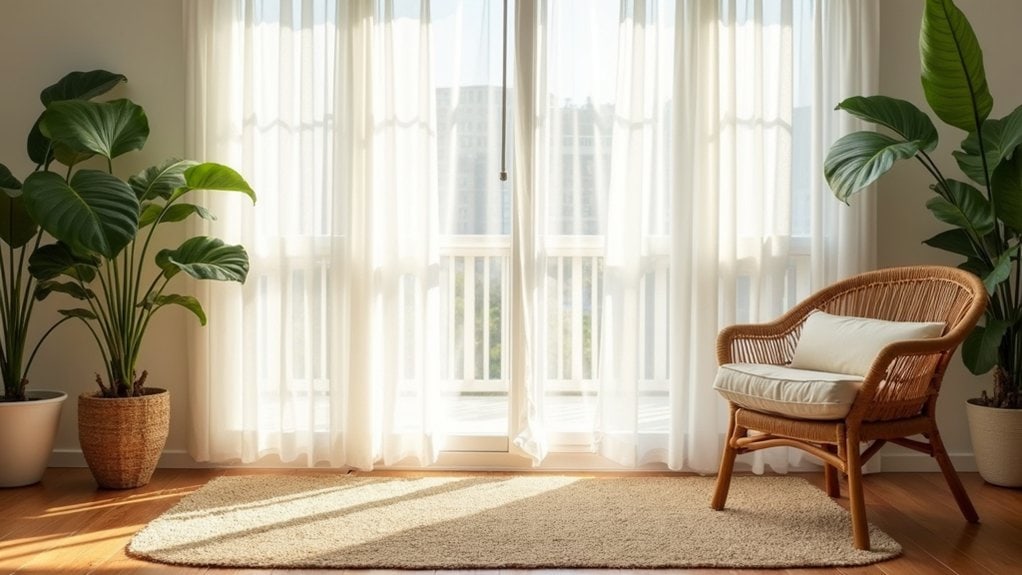
When summer heat makes your home feel like an oven, the right flooring can make a surprising difference in comfort. Natural floor coverings like jute and sisal don’t trap heat the way synthetic carpets do, allowing your rooms to breathe.
Jute sustainability is a real bonus too—these rugs are biodegradable and often made from renewable resources. I’ve found they feel cooler underfoot when temperatures climb. You might notice they’re not as soft as wool, but that’s actually perfect for hot climates.
Sisal durability makes it ideal for high-traffic areas. Even with kids running around, these rugs hold up remarkably well. Have you considered layering a smaller cotton rug over sisal for bedrooms? This gives you the cooling benefits while adding comfort where you need it most.
Breathable Upholstery Choices for Summer Seating
When your legs stick to leather furniture on a hot day, you’ll wish you’d invested in natural fiber upholstery that stays cooler to the touch. You can transform your summer seating experience with breathable options like linen, cotton, or even moisture-wicking performance fabrics that help keep sweat at bay during those muggy afternoons. Slipcovers might be your easiest solution—just swap them seasonally for something lighter, and you’ll notice the difference right away when lounging during those unbearable heat waves.
Natural Fibers Cool Best
As summer temperatures climb, your furniture choices become just as important as the clothes you wear. Natural fibers aren’t just trendy—they’re functional lifesavers when the heat becomes unbearable. Cotton, linen, and jute upholstery allow air to circulate around your body, preventing that sticky feeling you get from synthetic materials.
You’ll notice the difference immediately when you sit on a cotton slipcover versus polyester. Trust me, I switched my sofa covers last summer and couldn’t believe how much cooler it felt. Plus, these natural fiber benefits extend beyond comfort—they’re central to sustainable living practices too.
Maybe consider bamboo-blend fabrics for your accent chairs? They’re surprisingly soft and regulate temperature really well. What natural fabrics are already working in your space?
Moisture-Wicking Fabric Benefits
Beyond natural materials, moisture-wicking upholstery offers a game-changing solution for summer comfort. You’ll notice the difference immediately when you sit on moisture-managing fabrics after swimming or on particularly humid days. Unlike traditional upholstery that feels sticky against your skin, these advanced textiles pull sweat away from your body.
Look for performance fabrics labeled with moisture management technology when shopping for summer furniture. Many outdoor brands now bring this technology indoors, and honestly, it’s about time. I’ve found my wicking sofa cushions don’t develop that musty smell even when the kids plop down after running through the sprinkler.
Fabric breathability matters too. You want materials that allow air circulation beneath you. Have you considered how much cooler you feel when air can move freely around your body?
Slipcover Season Solutions
Though summer heat demands fabric flexibility, many homeowners don’t realize how slipcovers can transform the comfort level of their living spaces. Let’s face it—furniture that feels great in winter can become unbearably sticky when temperatures rise.
You’ll want to ponder natural slipcover materials like cotton, linen, or cotton-linen blends. These breathe better than synthetics and won’t trap heat against your skin. I’ve found that linen, while a bit wrinkly sometimes, actually feels cooler to the touch.
For slipcover styles, you’ve got options. Relaxed fits allow more air circulation, while tailored styles give a cleaner look. Maybe try white or natural colors that reflect rather than absorb heat? You can even rotate seasonal slipcovers—I switch mine out every May and suddenly my living room feels ten degrees cooler.
Silk: The Unexpected Cool-Touch Luxury
While many associate silk with formal wear and luxury occasions, this remarkable natural fiber deserves recognition as one of summer‘s most surprisingly practical textiles. You’ll notice how silk actually feels cool against your skin, wicking away moisture during those unbearably humid days.
Silk styles have evolved beyond just fancy pillowcases. Consider draping lightweight silk throws across your sofa or introducing silk accent pillows that won’t trap heat like synthetic fabrics do. Maybe even try silk curtains that billow gently with summer breezes?
Basic silk care isn’t as complicated as you might think. Most pieces can be hand-washed in cool water with mild detergent. Just avoid wringing them out—press between towels instead. I’ve found that letting silks air-dry naturally preserves their cooling properties for years.
Performance Fabrics for Indoor-Outdoor Summer Living

As summer socializing spills from living rooms to patios, performance fabrics have transformed how we decorate shifting spaces. You’ll find these textiles aren’t just durable—they’re actually beautiful now, blending effortlessly between your indoor and outdoor environments.
The latest performance fabric advancements include solution-dyed acrylics that won’t fade in harsh sunlight, yet feel soft against your skin when you’re lounging. I’ve noticed they’re much improved from the stiff versions from years ago.
Current outdoor living trends embrace textural variety. Try mixing woven rope details with smooth performance velvet (yes, it exists!). You can toss these pillows around without worry—most repel stains and dry quickly after unexpected rain.
Want the best of both worlds? Look for removable slipcovers in performance fabrics. You’ll thank yourself when that fruity cocktail inevitably spills.
Layering Light Textures for Visual Depth Without Warmth
When summer heat intensifies, creating visual interest doesn’t have to mean adding heavy elements. You can achieve textured layering without making your space feel warmer. Try pairing gauzy curtains with a lightweight jute rug—they’ll add dimension while keeping things breezy.
Maybe mix in some linen throw pillows with different weaves? I’ve found that varying sheens works wonderfully too—like combining matte cotton with subtly glossy silk accents.
Seasonal styles this year embrace contrast through texture rather than color. You can stack a few thin bamboo trays or arrange wispy dried grasses in a simple vase. What about layering a delicate cotton throw over a rattan chair?
The key is choosing materials that let air circulate while still giving your eye something interesting to notice.
Seasonal Textile Swaps That Make the Biggest Impact
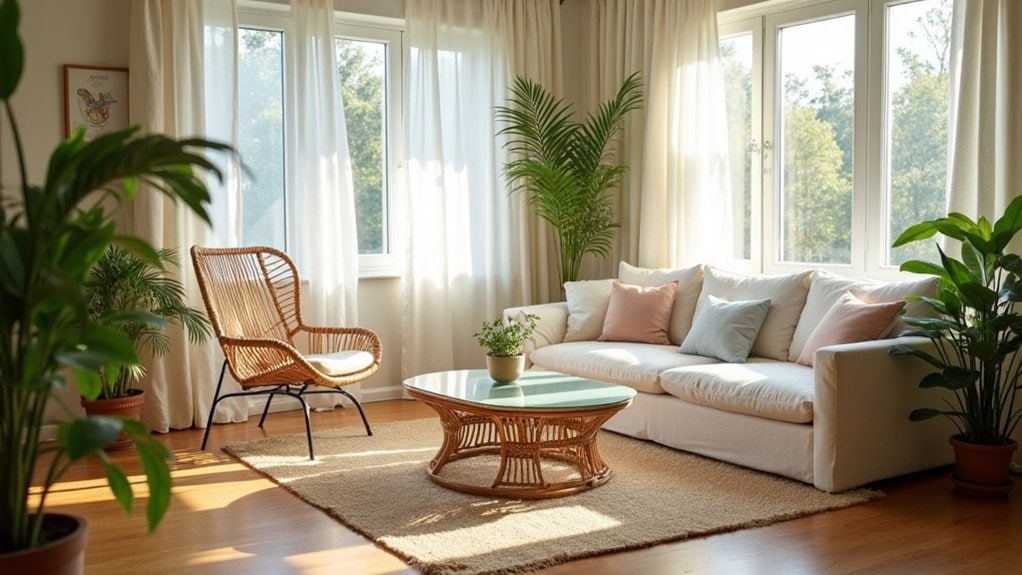
Summer’s arrival signals the perfect moment for strategic textile swaps throughout your home. The heaviest impact comes from changing out those bigger items—replace thick rugs with natural fiber options like sisal or jute. You’ll feel the difference immediately.
Trade flannel bedding for crisp percale cotton or cooling linen sheets. Maybe even consider bamboo—it’s surprisingly effective at regulating temperature.
Curtains matter more than you’d think! Swap heavy drapes for lightweight cotton or sheer panels that catch the breeze. This year’s seasonal patterns trend toward botanical prints and watercolor effects.
Don’t forget your sofa. Remove those cozy winter throws and replace with light cotton blankets in this season’s color trends—I’m loving the muted corals and sage greens that work so well in warmer months.
Heat-Reflecting Window Treatments for Ultimate Temperature Control
While fabrics and textiles make a significant difference in your summer comfort, nothing impacts your home’s temperature quite like your windows. Those glass panes can turn your living room into a greenhouse if you’re not careful!
Heat reducing shades are probably your best defense against the summer sun. I’ve found that cellular or honeycomb blinds trap air between your window and room, creating a nice barrier against heat transfer. You might want to take into account white or light-colored options that reflect sunlight back outdoors.
Energy-saving blinds are worth the investment, trust me. Look for ones with thermal backing or blackout features. You can even find motorized versions that automatically adjust throughout the day as the sun moves. What’s your current window situation? Maybe it’s time for an upgrade that’ll keep you cool and lower those energy bills.
Frequently Asked Questions
How Do I Prevent Lightweight Fabrics From Fading in Strong Sunlight?
You’ll prevent fading by applying fabric treatments with UV protection to your lightweight fabrics. Close curtains during peak sunlight hours, rotate textiles regularly, and consider UV-resistant sprays for added protection against harsh rays.
What’s the Best Way to Clean Delicate Summer Textiles?
For gentle cleaning of delicate summer textiles, you’ll want to hand wash using mild detergent in cool water. Don’t wring them out—instead, press between towels and air dry. Textile care labels provide specific instructions.
How Can I Prevent Mold Growth on Natural Fibers in Humid Climates?
To prevent mold on natural fibers, you’ll need mold resistant treatments like boric acid solutions. Guarantee proper ventilation strategies by using fans and dehumidifiers. Don’t forget to regularly air out textiles when humidity spikes.
Are There Stylish Pet-Friendly Options for Hot Weather Textiles?
You’ll find many stylish pet-friendly fabrics perfect for hot weather. Consider microfiber, indoor/outdoor textiles, or performance fabrics that resist claws, repel fur, and clean easily while keeping your home cool and fashionable.
How Much Does Seasonal Home Decor Typically Cost to Update Annually?
You’ll spend $200-$500 annually revitalizing your seasonal decor, depending on your budget and how closely you follow decor trends. Small updates like pillows and accessories cost less than furniture-level alterations.
Final Thoughts
When hot weather strikes, your textile choices really do matter. You’ll feel the difference immediately when you swap heavy fabrics for lighter alternatives. Try replacing those dense curtains with breezy linens, or maybe switch to cotton percale sheets tonight—you might actually sleep through the heat. The best part? These simple changes don’t sacrifice style. What summer textile swap might make your home feel ten degrees cooler right now?