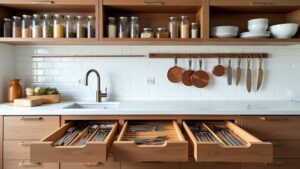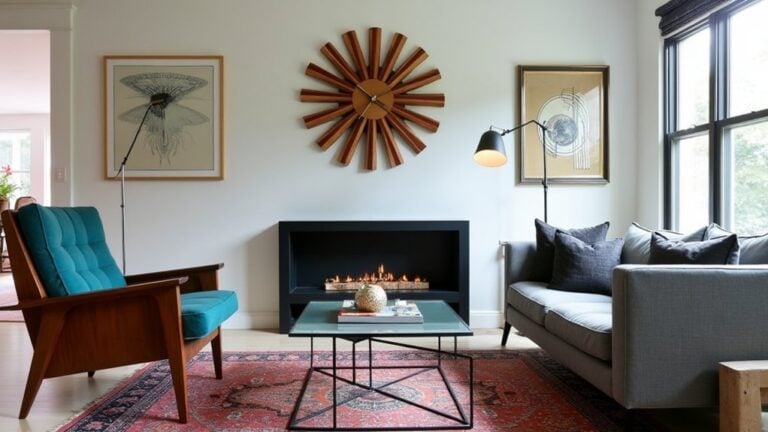
Mixing vintage with modern creates visual tension that actually enhances both styles. You’ll want to position statement pieces against minimalist backgrounds, letting each item tell its own story. Trust your instincts when selecting pieces that resonate with you personally—don’t rush the collection process. Consider using neutral color palettes as a foundation, then add accents that reference both eras. Imperfections in vintage items aren’t flaws; they’re character that brings warmth to contemporary spaces. The contrast between old and new might just become your signature design element.
The Essentials
- Position vintage statement pieces against minimalist modern backgrounds to create visual tension and highlight their unique characteristics.
- Establish a neutral color palette that allows both vintage and contemporary elements to coexist harmoniously within the same space.
- Incorporate vintage mirrors and lighting fixtures as transitional elements that bridge different design eras effectively.
- Select pieces that tell personal stories rather than following trends, creating spaces that feel collected over time.
- Embrace imperfections in vintage items as they add character, history, and authenticity to otherwise pristine modern interiors.
The Art of Contrast: Balancing Vintage Character With Modern Simplicity

When you place a weathered wooden farm table next to a sleek, minimalist sofa, something magical happens. The contrast creates a visual tension that brings both pieces to life in a way they couldn’t achieve alone. That’s the essence of eclectic style—finding harmony in difference.
You don’t need to match everything perfectly. In fact, it’s probably better if you don’t. Try pairing industrial metal shelving with delicate vintage glassware, or maybe a mid-century chair with a contemporary area rug.
The goal isn’t perfection but timeless elegance that feels collected over time. Your space should tell your story. What vintage pieces speak to you? Which modern elements do you naturally gravitate toward?
Curating Your Timeline: Finding Vintage Pieces That Speak to You
Treasure hunters know that the most meaningful vintage pieces aren’t just random old things—they’re objects that resonate with your personal history and aesthetic sensibilities. When you’re building your collection, trust your gut. That brass lamp that reminds you of your grandmother’s house? Grab it, even if it needs some TLC.
Consider what stories you want your space to tell through vintage aesthetics. Maybe you’re drawn to mid-century modern because it reminds you of family gatherings, or perhaps Victorian details speak to your love of literature.
Don’t rush the process. I’ve found my best pieces when I wasn’t actively looking. That chipped enamel kettle I now use as a planter? It caught my eye at a yard sale I almost skipped. Personal storytelling happens when you collect over time, not overnight.
Conversation Starters: Positioning Statement Pieces in Contemporary Settings
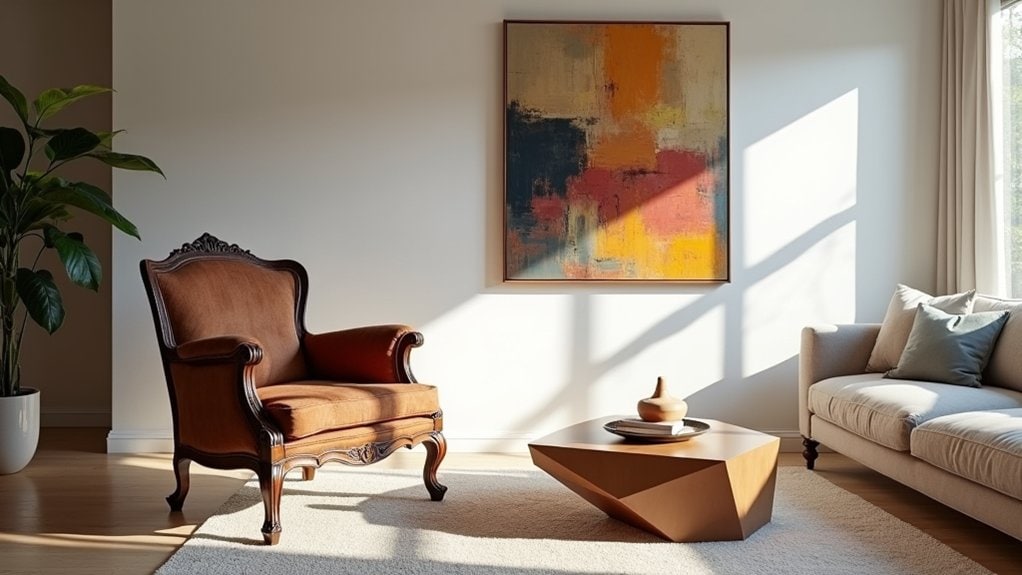
While decorating with vintage objects adds character to any space, strategic placement transforms ordinary finds into extraordinary focal points. You’ll want to position statement pieces where they create natural contrast against modern elements.
Try placing that mid-century credenza against a minimalist white wall, or maybe let your antique brass lamp stand proudly on a sleek glass side table. I’ve found that vintage mirrors work almost anywhere—they reflect light and somehow bridge different design eras effortlessly.
Contemporary settings actually benefit from these interruptions of uniformity. You know that feeling when a room feels too perfect, too catalog-ready? That’s when you need something with history, something slightly imperfect.
Think about sightlines, too. What do you notice first when entering a room? That’s where your most interesting vintage piece belongs.
Breathing New Life: Restoring and Repurposing Heritage Finds
Discovering those perfect vintage pieces is only half the journey. What happens when that stunning mid-century cabinet has water damage, or your thrifted brass lamp needs rewiring? That’s where restoration tips come in handy.
You don’t need to be an expert to breathe new life into heritage finds. Start small—maybe clean brass hardware with lemon and salt, or gently sand scratched wooden surfaces. I’ve found that patience matters more than perfect technique.
Upcycling techniques can transform items that aren’t quite salvageable in their original form. That cracked ceramic bowl? Turn it into a planter. Old wooden ladders make fantastic bookshelves.
Remember that imperfections tell a story. Sometimes a gentle cleaning is all you need—preserving patina adds character that new items just can’t replicate. What’s your next restoration project?
Creating Harmony: Color Palettes That Bridge Decades of Design
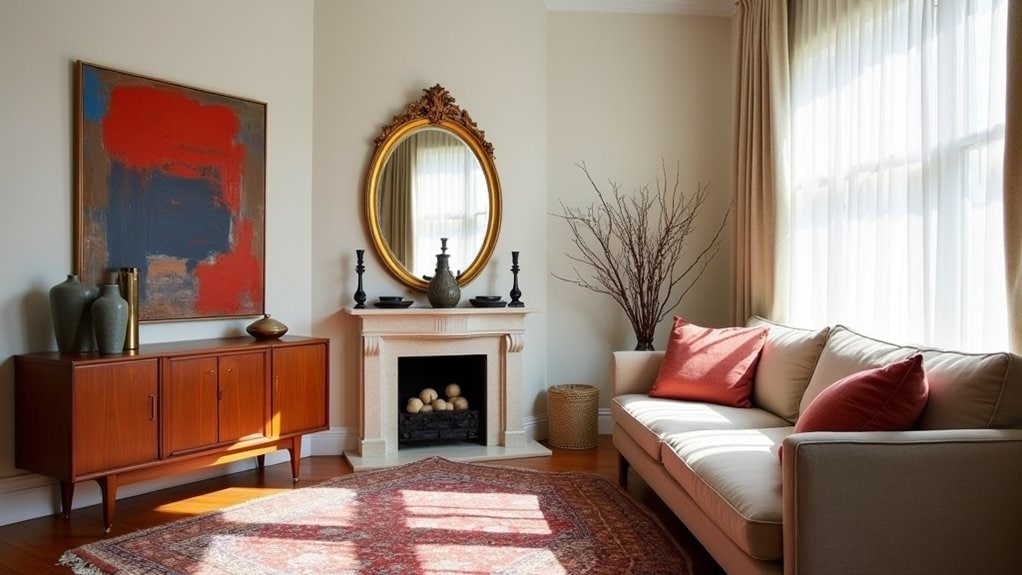
Matching vintage pieces with modern décor often presents a color challenge that can make or break your space. You’ll want to find that sweet spot where your grandmother’s mahogany sideboard doesn’t clash with your sleek white sofa.
Try building around neutral backgrounds—whites, grays, or taupes—then introduce color accents that reference both eras. I’ve found that muted teals or burnt oranges work surprisingly well. Maybe it’s because they have roots in multiple design periods?
Remember basic color theory when mixing decades: complementary colors create energy, while analogous palettes feel more cohesive. You don’t need perfect design cohesion, though. Sometimes the most interesting rooms have a bit of tension. What vintage color are you struggling to integrate right now?
Frequently Asked Questions
How Do I Authenticate Vintage Pieces Before Purchasing?
You’ll need to conduct provenance research on any vintage item you’re considering. Don’t hesitate to request expert appraisals, examine markings, verify signatures, and ask sellers for documentation of authenticity before purchasing.
What’s the Best Cleaning Method for Delicate Vintage Textiles?
For delicate vintage textiles, you’ll want to use gentle washing techniques like hand cleaning with mild soap in cool water. Always test a small area first and avoid harsh chemicals for proper fabric care.
How Can I Incorporate Vintage Electronics That No Longer Function?
You can repurpose non-working vintage electronics as decorative objects. Transform radios into bookshelves, TVs into planters, or display them as art pieces that celebrate nostalgic aesthetics while creating unique repurposed decor for your home.
Are There Vintage Trends to Avoid in Modern Spaces?
Avoid overly trendy vintage items like shag carpeting, avocado appliances, and bulky entertainment centers. They’ll make your space feel outdated rather than curated. Instead, choose classic pieces with clean lines that complement your modern aesthetic.
How Do I Prevent Vintage Furniture From Damaging Modern Flooring?
You’ll prevent furniture damage by using furniture pads under vintage pieces. Apply protective coatings to furniture legs, and don’t drag heavy items. Regular checks guarantee your modern flooring stays pristine beneath those charming antiques.
Final Thoughts
You’ve got this blending thing down now. Trust your eye when mixing those vintage treasures with your modern pieces. Maybe next weekend, try moving that old lamp to a different corner or pairing your grandmother’s side table with something sleek.
The best spaces tell your story—bits of history nestled against your present life. What vintage find are you still searching for? That’s the fun part.