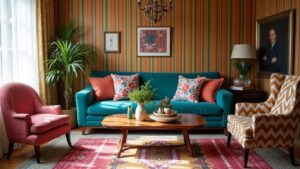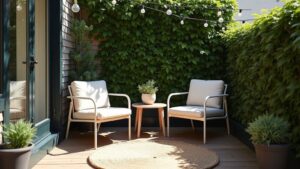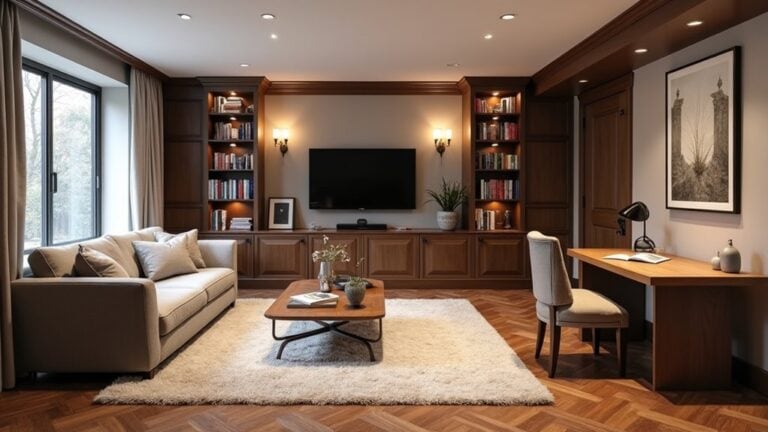
To style a multi-use basement or den, start by measuring your space carefully and creating a simple floor plan. Choose adaptable furniture like sectional sofas and storage ottomans that serve multiple functions. Layer your lighting with recessed fixtures, task lamps, and wall sconces to brighten the underground space. Define different zones using rugs and varied textures. Don’t forget adjustable storage solutions that can evolve with your needs. The right combination of these elements creates a flexible space that works for everything from movie nights to work-from-home days.
The Essentials
- Create a flexible floor plan with distinct zones for different activities like watching TV, working, or hosting guests.
- Choose multi-functional furniture like sectional sofas, storage ottomans, and convertible coffee tables.
- Layer lighting with ambient, task, and accent fixtures to compensate for limited natural light.
- Implement smart storage solutions including adjustable shelving and furniture with hidden compartments.
- Use rugs, color palettes, and varying textures to visually separate and define different functional areas.
Assess Your Space: Planning for Multi-Functionality
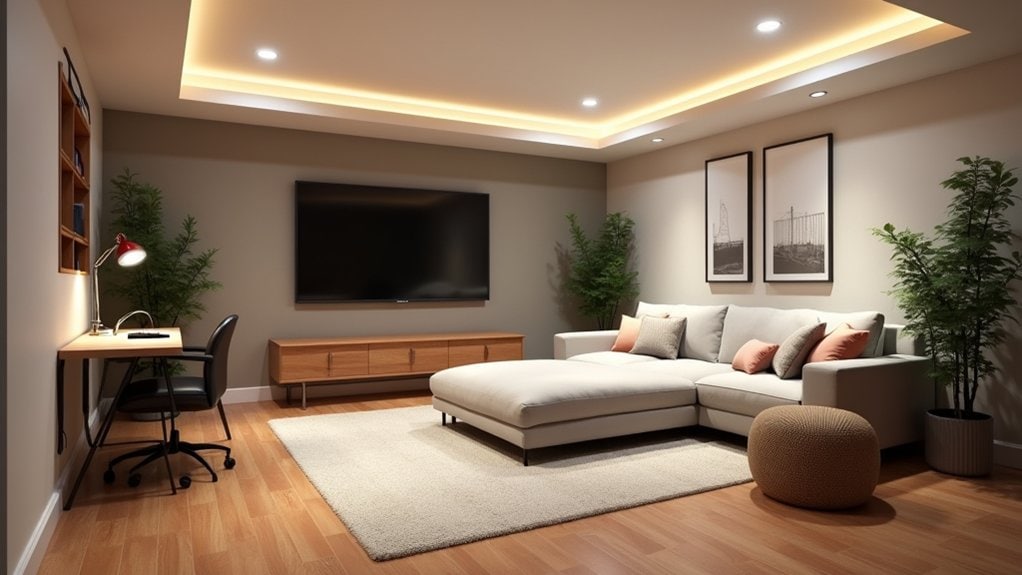
Before you rush into decorating your basement or den, take some time to really assess what you’re working with. Grab a measuring tape and get accurate space measurements—trust me, I’ve made the mistake of buying furniture that was too big more times than I’d like to admit.
Think about how you actually use the room. Do you need a TV area plus a workspace? Maybe a guest sleeping area too? Layout enhancement isn’t just designer talk—it’s about making your space work for your real life.
Draw a quick floor plan. It doesn’t have to be perfect. Mark windows, doors, outlets, and any weird architectural features that might affect furniture placement. What activities do you want to accommodate? Sometimes I find it helps to observe how you naturally gravitate to different areas of the room.
Furniture Selection for Adaptable Living Areas
Three key pieces of furniture can transform your basement or den from an afterthought into your home’s most versatile space. Start with a sectional sofa that can be rearranged—trust me, modular furniture is worth the investment when your teen wants friends over one day and you need a movie night setup the next.
Add a coffee table with storage or one that converts to a desk. I’ve found these dual-purpose pieces save so much space in my own basement.
Finally, consider ottomans. They work as seating, footrests, or even casual tables in a pinch.
When planning adaptable layouts, try creating zones rather than filling the entire space. Maybe leave that corner empty—you’ll probably need it for something unexpected later.
Lighting Strategies to Transform Underground Spaces
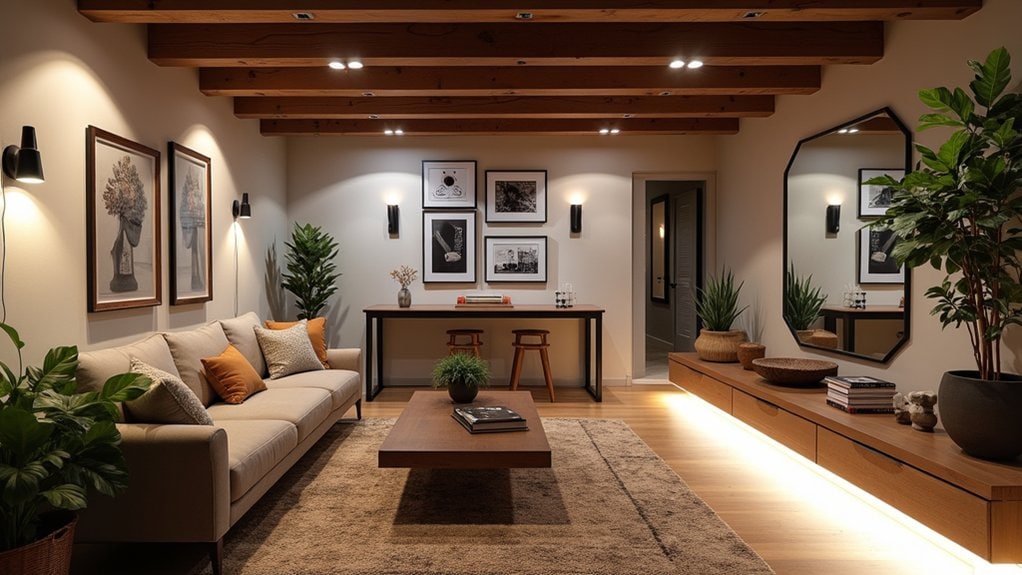
Unlike upstairs rooms with ample natural light, basement spaces require thoughtful lighting strategies to avoid feeling cave-like and unwelcoming.
You’ll want to create layers of ambient lighting to mimic natural daylight. Try recessed ceiling fixtures spread evenly throughout the space, maybe supplemented with uplighting in corners. I’ve found that wall sconces work wonders too.
Don’t forget task lighting for specific activities. If you’re setting up a reading nook, add a good floor lamp. For a desk area, an adjustable desk lamp makes all the difference. My basement office felt so much better once I added proper task lighting!
Consider light temperature too. Cooler whites can actually make the space feel more like daytime, while warmer tones create coziness for evening use. What activities will you be doing in your basement?
Storage Solutions That Maximize Flexibility
When designing a basement or den, clever storage solutions become essential since these spaces often serve multiple functions throughout the year. You’ll want to invest in adjustable shelving units that can be reconfigured as your needs change – maybe wall-mounted options that don’t eat up precious floor space.
Multifunctional furniture is your best friend here. I’ve found ottomans with hidden storage to be lifesavers for quickly tucking away game controllers or throw blankets when guests arrive. Consider cabinets with doors that can hide visual clutter but keep items accessible.
What about those awkward corners? Try custom-built storage that works with, not against, your unique space. Rolling carts can be particularly useful too – you can wheel them out when needed and tuck them away when you want more open floor area.
Design Elements That Create Distinct Zones
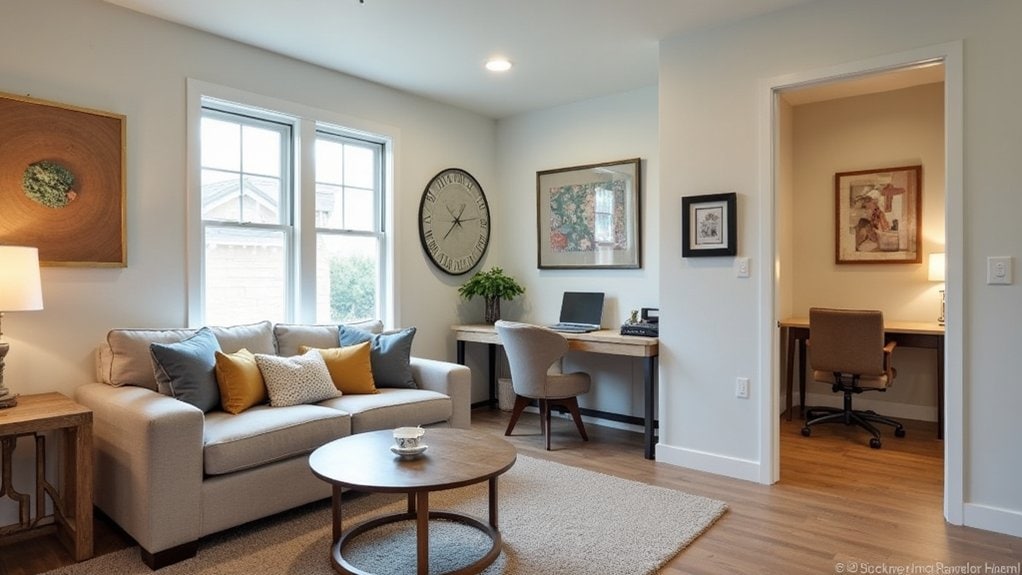
Now that your storage is sorted, let’s talk about defining different areas within your basement or den. Creating distinct zones helps your space feel organized and purposeful, even in a smaller footprint.
Start with color palettes that subtly shift between areas. Maybe a cool blue for your TV area that evolves to warmer tones in a reading nook? You don’t need walls to make this work.
Rugs are fantastic zone-definers. I’ve found that placing furniture legs on the edges of a rug creates a natural boundary without feeling forced.
Texture combinations matter too. Try mixing soft fabrics in lounging spaces with more structured elements in work areas. Different lighting fixtures for each zone also help—I think pendant lights over game tables and softer lamps near seating areas create immediate visual cues about how to use each space.
Frequently Asked Questions
What’s the Ideal Humidity Level for a Comfortable Basement Den?
You’ll want to maintain 40-50% humidity in your basement den for comfort. Use humidity control devices to prevent excess moisture. Effective moisture management helps avoid mold and creates a healthier, more pleasant environment.
How Can I Soundproof My Basement Without Major Construction?
You’ll reduce noise by installing acoustic panels on walls and using soundproof curtains over windows. Add rugs on hard floors, seal door gaps with weatherstripping, and place bookshelves against shared walls for better sound absorption.
Are Certain Flooring Materials Better for Basement Moisture Concerns?
You’ll want vinyl flooring for basements as it’s waterproof and durable. Always install moisture barriers underneath any flooring type to prevent damage from ground moisture. Luxury vinyl plank offers both protection and style.
What’s the Best Way to Hide Exposed Ductwork and Pipes?
You’ll find creative concealment options like decorative solutions that embrace the industrial look, boxed-in soffits, fabric draping, or custom-built shelving around pipes. Paint ductwork dark colors to make them visually recede.
How Do I Integrate a Home Theater System Without Overwhelming the Space?
You’ll want to mount your TV and speakers on walls to save space. Consider a compact soundbar and recessed lighting. Hide components in slim furniture. Your home theater shouldn’t dominate—it should complement your living area.
Final Thoughts
Your basement or den has so much potential. With the right furniture, smart lighting, and flexible storage, you’ll transform that overlooked space into something you actually use every day. Remember, you don’t need to get it perfect right away. Start with your primary needs, then adapt as you go. What matters most is creating a space that works for your life—not some picture-perfect magazine spread. How might you use your space tomorrow?