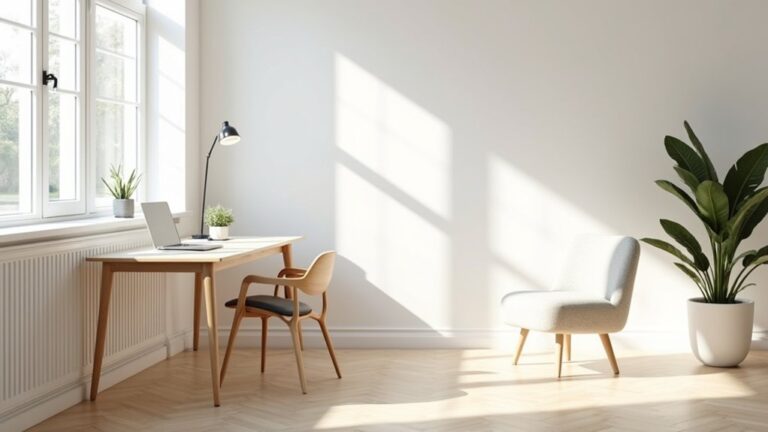
Start your year fresh by transforming your home office into a minimalist haven. Clear your desk of everything but the essentials, and embrace a neutral color palette to reduce visual distractions. Consider multi-functional furniture that saves space, and tame those tangled cables with simple management solutions. Add a small plant for natural warmth, and create distinct zones for different tasks. You’ll be amazed how these small changes can dramatically improve your focus and productivity.
The Essentials
- Declutter your desk completely, keeping only essential tools within reach and utilizing wall storage for visual clarity.
- Adopt a calming neutral color palette with varying textures in the same color family to reduce visual distractions.
- Invest in multi-functional furniture like fold-down desks and storage ottomans to maximize limited space.
- Minimize technology by selecting only essential devices and implementing hidden solutions like wireless chargers.
- Create distinct functional zones within your office space to separate work, storage, and conversion areas.
Declutter Your Desk: The Foundation of Minimalism
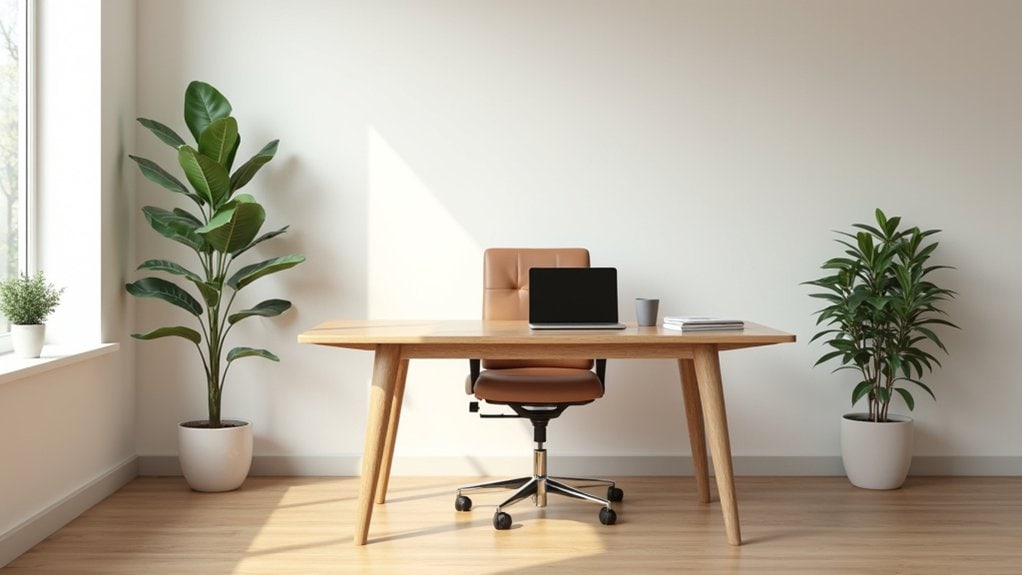
When you first approach a minimalist home office, decluttering your desk isn’t just helpful—it’s essential. Start by removing everything from your workspace and honestly evaluating what you actually use daily.
I’ve found that proper desk organization begins with ruthless decisions. Maybe that stack of “I’ll read it later” papers needs to go. Keep only your essential tools within reach—a good pen, notebook, and whatever specific items your work demands.
Try the one-touch rule: handle each paper only once, deciding immediately whether to file, act on, or toss it.
What about digital clutter? Your computer desktop deserves the same treatment as your physical one. Clear those random downloads and create a simple folder system that actually makes sense to you.
Neutral Color Palettes for Mental Clarity
When you’re creating your minimalist workspace, you’ll find that neutral colors aren’t just trendy—they’re actually calming for your brain. You don’t need a rainbow of colors to make your office interesting; instead, try playing with different textures like a smooth desk surface against a nubby wool chair or a sleek lamp next to a textured wall hanging. A palette of whites, beiges, grays, and soft blacks creates a cohesive backdrop that lets you focus on your work rather than being distracted by your surroundings.
Monochromatic Serenity
Although many home office designs embrace bold colors, there’s something incredibly powerful about a monochromatic neutral palette. You’ll find that limiting your workspace to shades of a single color creates a calming atmosphere that helps you focus on what matters. I’ve noticed my productivity actually increases when I’m not visually distracted by competing colors.
Monochrome decor doesn’t have to be boring. Maybe try:
- Varying textures in the same color family (think linen curtains with wool throw and smooth desk surface)
- Different tones of the same hue for subtle depth
- Natural materials that complement your base shade
You’d be surprised how peaceful a workspace becomes when everything harmonizes in a single color story. It’s like your brain can finally exhale.
Texture Over Color
Expanding on the monochromatic approach, texture becomes your secret weapon when working with neutral palettes. Instead of bold colors competing for attention, you’ll find mental clarity through tactile materials that engage your senses subtly.
Try layering a nubby wool throw over your office chair against smooth leather. Maybe add a rattan basket for storage next to a glossy ceramic lamp. This texture layering creates visual interest without visual noise.
I’ve found that my productivity actually improves when surrounded by varied textures rather than varied colors. Your eyes aren’t constantly processing different hues, but your environment still feels rich and intentional.
The trick is balance. Too many rough textures can feel chaotic. Mix in some smooth surfaces to create contrast that feels… well, just right for your workspace.
Multi-functional Furniture That Maximizes Space
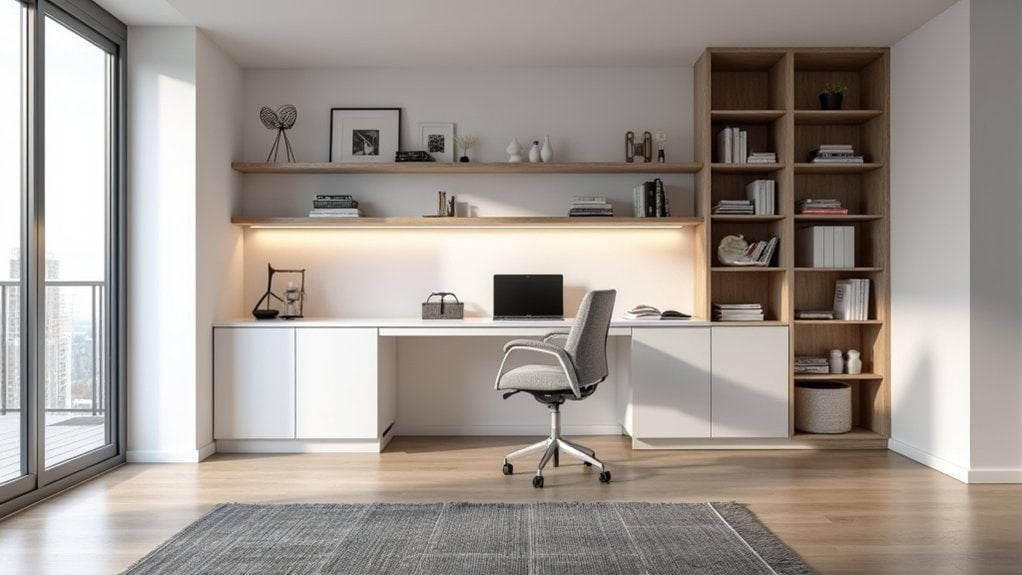
Because space comes at a premium in most home offices, multi-functional furniture quickly becomes your best ally. Think beyond traditional desks and chairs. The right versatile designs can transform a tiny corner into a productive workspace that adapts to your changing needs.
Look for these space saving solutions that pull double-duty:
- Fold-down desks that can be tucked away when not in use, freeing up floor space for other activities
- Storage ottomans that work as extra seating, footrests, or even impromptu tables when you have visitors
- Nesting tables you can spread out during busy projects, then stack together when you need room to breathe
I’ve found that investing in one amazing convertible piece works better than cramming multiple single-purpose items into a small space.
Cable Management Solutions for a Clean Aesthetic
Nothing ruins a sleek minimalist office setup faster than a tangled mess of cables snaking across your workspace. You’ll want to contemplate wall-mounted cable tracks or under-desk baskets to corral those unsightly cords that connect all your devices. Cord-concealing furniture is another smart option if you’re serious about maintaining that clean, distraction-free aesthetic you’re working toward.
Wall-Mounted Cable Tracks
Every home office eventually faces the same enemy: cable clutter. Wall-mounted cable tracks offer a streamlined design solution that keeps your cords organized and off your desk. You’ll find these simple plastic or metal channels easy to install along baseboards or the underside of your desk. I tried them last year and was surprised how much cleaner my workspace felt afterward.
For effective cable organization, consider these options:
- J-channel raceways that attach to walls with adhesive backing – perfect if you’re renting and can’t make permanent changes
- Paintable cord covers that blend into your wall color for a nearly invisible look
- Hinged tracks that open from the side, making it easy to add or remove cables when you switch devices
Your eyes naturally seek simplicity, and tidy cables deliver just that.
Under-Desk Cable Baskets
Three key advantages make under-desk cable baskets essential for any minimalist office setup. First, they completely eliminate cable visibility, transforming that chaotic tangle into a clean workspace. Second, they’re incredibly accessible when you need to add or remove something—way easier than crawling behind furniture! Third, they create this amazing under desk organization system that frees up valuable surface area.
I installed one last month and honestly can’t believe I waited so long. You simply mount the basket beneath your desk, gather your cables, and—poof—everything’s hidden but still within reach when needed.
Some baskets even come with dividers for sorting different cable types. Maybe get one slightly larger than you think you’ll need? Trust me, we always end up with more cables than expected.
Cord-Concealing Furniture
While style matters in minimalist design, the furniture you select plays an equally important role in maintaining that clean, uncluttered aesthetic—especially when it comes to hiding cables. Cord management doesn’t need to be an afterthought when you’re choosing your desk or shelving. Many furniture designers now integrate clever cord management solutions directly into their pieces.
- Desks with built-in cable ports and hidden channels that guide wires from your devices to power outlets
- Media consoles or credenzas with rear cutouts and internal cord routing systems that keep power strips tucked away
- Standing desks with integrated wire management trays that move with the desk as you adjust its height
You’ll find these furniture design advancements make a huge difference in your daily workflow. I’ve noticed my productivity actually improves when I’m not constantly fighting tangled cords under my desk.
Mindful Technology Integration
Although technology drives our workday, it doesn’t need to overwhelm your minimal office space. Consider how each device serves your specific needs before adding it to your desk. I’ve found that mindful apps can actually help you maintain a clutter-free digital environment—try one that blocks notifications during focus periods.
Schedule regular digital detox moments throughout your day. Maybe disconnect for 15 minutes between meetings or turn off your second monitor when you’re not actively using it.
Think about hidden technology, too. Wireless chargers tucked under desk surfaces, voice assistants that eliminate the need for physical reminders, or even smart lighting that adjusts automatically. What technology truly enhances your workflow versus what’s just… there? Sometimes the most minimal tech setup is the one you’ve thoughtfully curated, not the one with the fewest pieces.
Strategic Storage to Eliminate Visual Noise
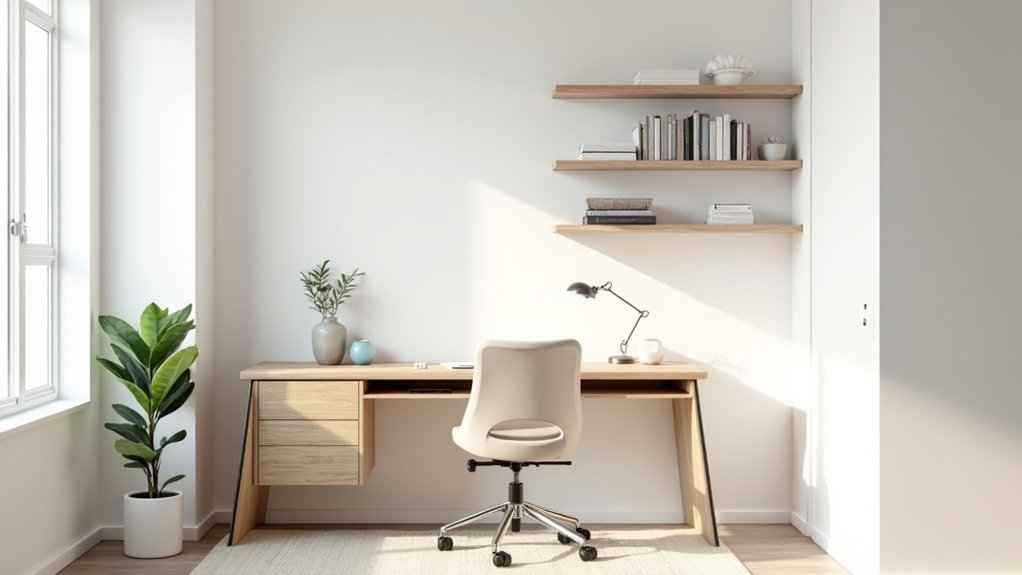
When your desk becomes cluttered with papers, supplies, and random objects, your mind can’t help but get distracted by the visual noise. Creating strategic storage solutions might be your most impactful minimalist move. You’ll need to think about what items you actually use daily versus what can be tucked away.
Consider implementing:
- Wall-mounted strategic shelving that keeps important items visible but off your work surface
- Clutter-free containers with simple labels to categorize similar items together
- Hidden storage solutions that maintain clean sightlines while keeping necessities accessible
I’ve found that even adding just one floating shelf above my desk freed up so much mental space. Maybe it sounds strange, but when I can’t see fifteen different objects competing for my attention, I’m actually able to focus on the task at hand.
Biophilic Elements: Nature-Inspired Minimalism
Nature offers the perfect blueprint for minimalist design that actually feels alive. When your workspace feels sterile or too rigid, biophilic design elements can bring balance without clutter. Try positioning your desk near a window with natural light, then add 1-2 small plants that thrive in your space’s conditions.
Nature incorporation doesn’t require much effort, honestly. A small jar of river stones, a piece of driftwood as a paperweight, or maybe a scenery photo in a simple frame can ground your space. I’ve found that natural materials like bamboo desk organizers or a wool rug add warmth without visual complexity.
The key is purposeful selection—each natural element should serve your wellbeing or functionality. How might bringing just one element of nature change how you feel in your workspace tomorrow?
Creating Intentional Zones in Limited Spaces
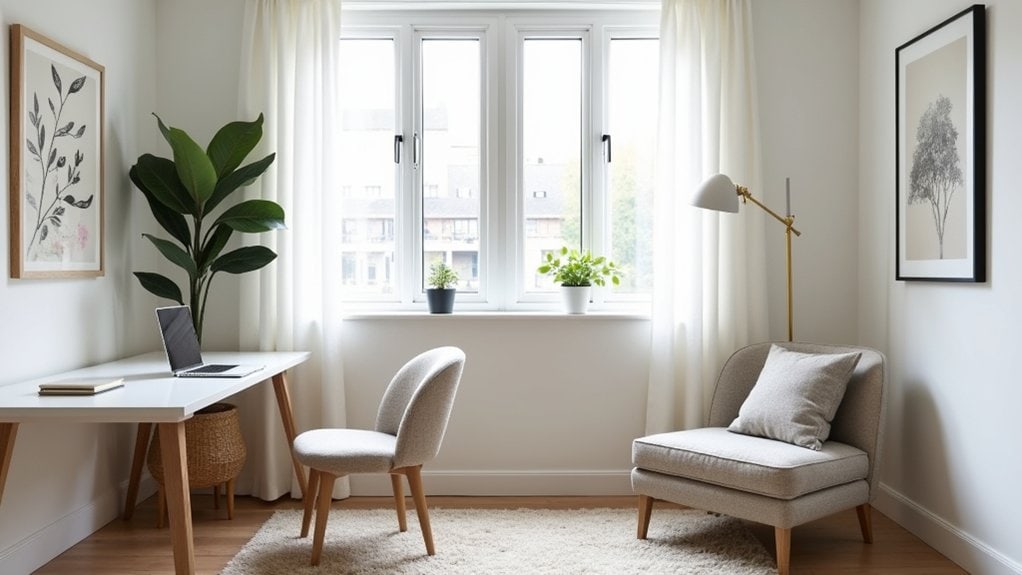
Limited square footage doesn’t mean you need to sacrifice functionality in your home office. The trick is mastering spatial organization through thoughtful zoning techniques that let you do more with less. I’ve found that dividing even the smallest space into purpose-driven areas can dramatically improve your productivity.
Consider creating these intentional zones:
- Work Zone – Position your desk where you’ll have minimal distractions, maybe facing a wall rather than a window if you’re easily distracted
- Storage Zone – Dedicate a specific area for supplies and files, keeping them accessible but out of your primary workspace
- Conversion Zone – Create a small buffer area that helps you mentally shift between “home” and “office” modes
You’d be surprised how these simple divisions can transform a cramped corner into a functional workspace without needing extra square feet.
Frequently Asked Questions
How Do I Create a Minimalist Office in a Shared Family Space?
Create your minimalist office in shared family space by designating a specific shared workspace area. Use multifunctional furniture like fold-down desks or storage ottomans. Keep supplies organized in attractive containers that complement your home’s aesthetic.
What’s the Ideal Budget for a Minimalist Home Office Makeover?
You’ll need $500-1,000 for a thoughtful minimalist office makeover. Prioritize budget allocation toward essential purchases like an ergonomic chair and functional desk. You can achieve simplicity without overspending on unnecessary accessories.
Can Minimalist Offices Still Incorporate Personal Style and Character?
You’ll create character through thoughtful personal touches like a favorite art piece or meaningful photo. Minimalism isn’t about erasing personality—it’s about curating design elements that matter most to you.
How Do I Maintain Minimalism With Ongoing Paperwork and Projects?
You’ll maintain minimalism by implementing smart paper organization systems. Use digital tools for project management whenever possible. Designate specific zones for active work and establish a regular decluttering routine to prevent accumulation.
What Lighting Options Work Best for a Minimalist Home Office?
You’ll benefit from maximizing natural light through unobstructed windows. Pair this with simple ambient lighting from sleek wall sconces or floor lamps. Avoid cluttered desk lamps that disrupt your minimalist aesthetic.
Final Thoughts
Your minimalist office doesn’t need to be perfect. Just start somewhere—maybe clearing your desk this weekend. I’ve found that even small changes, like hiding cables or adding a plant, can make working from home feel different. Better, actually. Remember, it’s about creating a space that works for you, not following strict rules. When your environment feels simpler, your work often follows. What small change will you make first?