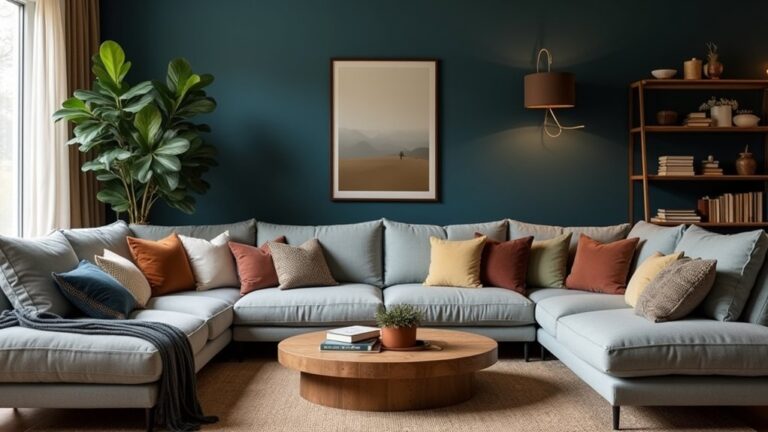
You’ve probably noticed how some living rooms just feel… off. Everyone’s on their phones, conversations die quickly, and that expensive furniture arrangement somehow makes people want to leave early.
It’s not about the money you spend or following design trends. There’s actually a science to why certain spaces kill conversation while others naturally draw people together. And once you understand these principles, you can transform any room into a place where real connection happens.
The Essentials
- Position chairs and sofas facing each other at 4-8 feet apart to promote eye contact and natural dialogue flow
- Use warm lighting (2700K-3000K) with dimmers and layer multiple light sources to create intimate, welcoming pockets throughout the room
- Remove or relocate the TV and incorporate flexible, modular furniture that easily adapts to different gathering sizes and conversation needs
- Display personal art, books, and meaningful objects at eye level near seating areas to spark authentic conversations and reveal shared interests
- Add tactile elements like velvet cushions, woven textures, and indoor plants to create a sensory-rich environment that encourages relaxation and openness
The Psychology of Space: Why Traditional Layouts Kill Conversation
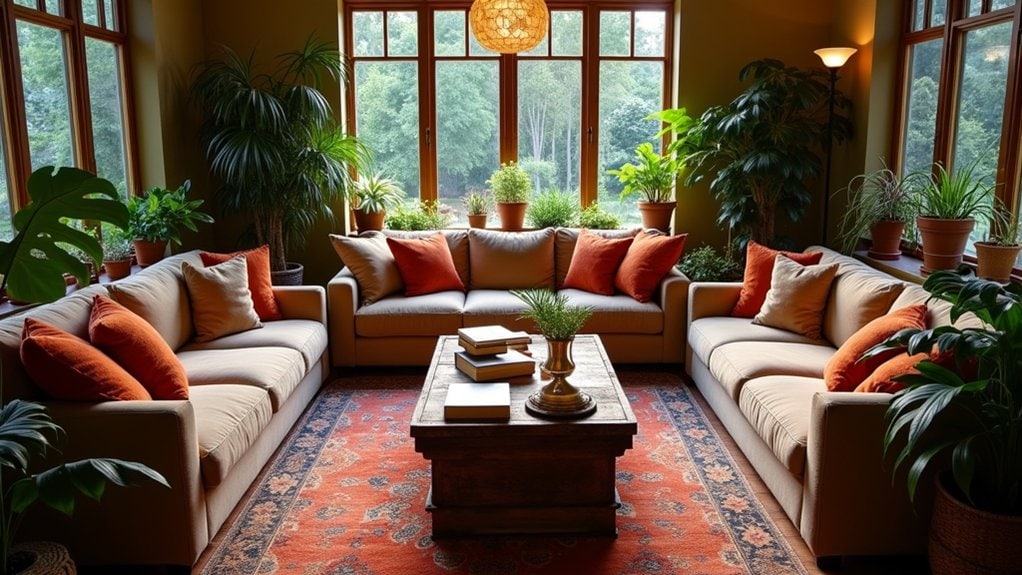
You’ve probably been in one of those living rooms where everyone sits in a straight line facing the TV. Nobody talks. Everyone stares ahead like they’re on a subway.
The spatial interplay of that setup actually works against you. When furniture points toward a screen instead of each other, you’re telling your brain this isn’t a place for connection. It’s… well, it’s just not working.
Layout psychology shows us something simple. People need to see faces to feel comfortable talking. Think about it—when’s the last time you had a great conversation while sitting side by side? Probably never.
Your living room’s arrangement either invites conversation or kills it. Most traditional setups do the second thing without you even realizing what’s happening.
Creating Intimate Seating Arrangements That Draw People In
You’ve probably noticed how some living rooms just naturally pull people together while others feel awkward no matter how you arrange yourself. The secret isn’t in expensive furniture—it’s about creating spaces that actually encourage eye contact and easy conversation. Think about it: when you position chairs and sofas to face each other instead of all pointing at the TV, add a few moveable ottomans or poufs that guests can pull up wherever they want, and maybe carve out a smaller nook with two chairs angled toward each other… suddenly your room feels less like a waiting area and more like a place where real conversations happen.
Face-to-Face Furniture Placement
When you walk into a room where all the furniture faces the TV, something feels off. You can’t really talk to anyone without craning your neck. It kills the social interactions before they even start.
Try arranging your seating to encourage open dialogue instead:
- Pull chairs away from walls—floating furniture creates better flow
- Angle sofas toward each other, not just the TV
- Mix seating heights—maybe a low ottoman with standard chairs
- Keep conversation distance around 4-8 feet apart
You’ll notice people naturally lean in when furniture supports real conversation. Think about your favorite restaurant booth—there’s a reason you remember those talks. When you position seats to face each other, even slightly, you’re basically saying “let’s connect.” The TV can wait.
Cozy Conversation Zones
After you’ve got your furniture facing the right direction, it’s time to think smaller. You want to create these little pockets where people actually want to sit and talk.
Start with cozy textiles—throw a soft blanket over that chair arm, add some pillows that make you want to sink in. Not too many though. You know that feeling when there’s nowhere to actually sit because of all the cushions?
Think about inviting aromas too. Maybe it’s a candle on the side table, or fresh flowers. Something subtle that makes the space feel… lived in.
Pull that ottoman closer. Add a small table for drinks. You’re basically building a nest where conversations happen naturally. Where people forget to check their phones.
Flexible Seating Options
Those cozy zones work great until your sister shows up with her three kids, or you’re hosting book club and suddenly need seats for twelve. That’s when flexible seating saves the day.
You’ll want furniture that moves with your life:
- Modular sofas that split apart for game night
- Ottoman clusters that work as seats or tables
- Nesting stools that tuck away when not needed
- Convertible benches with hidden storage inside
Think beyond traditional chairs. Movable chairs on casters roll wherever you need them. Floor cushions stack in corners but spread out for movie marathons. Even bean bag seating works—though maybe keep those for the kids’ area.
What about pouf tables? They’re basically ottomans pretending to be coffee tables. Pull them out when extra guests arrive, then push them back under later.
Lighting as a Mood Maker: Setting the Stage for Connection
You’ve probably noticed how different your living room feels when you switch from bright overhead lights to a few warm lamps—it’s like the whole space exhales. The temperature of your lighting (those warm yellows versus cool blues) actually affects how comfortable people feel opening up to each other, and honestly, most of us get this wrong. When you layer your lighting instead of relying on one harsh source, you’re basically creating pockets of warmth that naturally draw people together… kind of like how a campfire works.
Warm Vs Cool Tones
When you’re choosing between warm and cool lighting tones, you’re basically deciding what kind of emotional atmosphere you want to create in your living room.
Warm color psychology works like this—it pulls people in. Think about how you feel around a fireplace. That’s what warm tones do to a space. They make conversations flow easier somehow.
Cool tone effects? They’re different. Not bad, just… different. Here’s what each does:
- Warm tones (2700K-3000K): Create intimacy and comfort
- Cool tones (4000K-5000K): Boost alertness and focus
- Mixed lighting: Offers flexibility for different moods
- Dimmers: Let you adjust the vibe instantly
Most people default to cool white because it seems “cleaner.” But if connection’s your goal? You’ll want to lean warmer. Way warmer.
Layered Lighting Techniques
A single overhead light? That’s like trying to have a deep conversation under interrogation lighting. You need layers—table lamps, floor lamps, maybe some candles.
Think about ambient intensity. You want enough light to see faces clearly, but not so much that everyone feels exposed. Start with your dimmest source and build up. Those layered shadows actually help people relax. They create pockets of intimacy.
Try this: put a lamp in one corner, another across the room. Add a third light source at a different height. Now you’ve got dimension. People naturally gravitate toward the warmer pools of light, away from harsh brightness.
Ever notice how conversations flow better in restaurants with good lighting? That’s not an accident. You can recreate that feeling at home.
The Power of Removing Digital Distractions
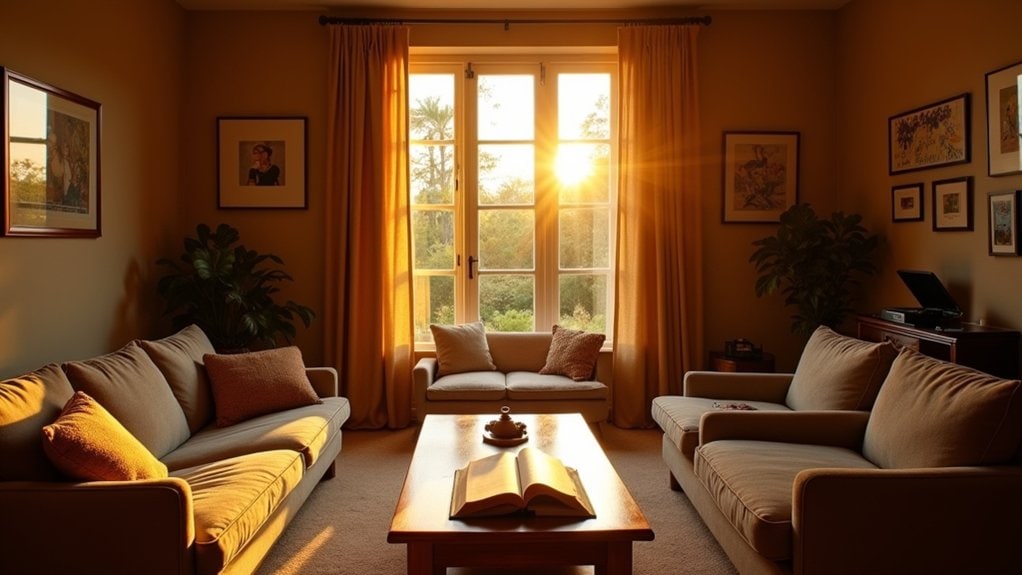
If you’re serious about creating a living room that brings people together, here’s something that might feel uncomfortable at first—consider getting the TV out of there.
Look, I know it sounds extreme. But think about what happens when you remove that black rectangle from your wall:
- Conversations actually happen face-to-face
- You notice when someone needs to talk
- Kids play instead of zone out
- Your evening becomes about mindful presence, not passive watching
You don’t have to go full digital detox. Maybe just relocate the TV to another room? Or hide it in a cabinet?
When screens aren’t the focal point, something shifts. People turn toward each other. They linger longer. The room becomes about connection, not consumption.
Incorporating Natural Elements That Spark Comfort and Openness
After you’ve cleared out the digital distractions, bringing nature inside might be the next best thing you can do for your living room. Indoor plants create oxygen and, well, they just make people feel better. Try adding wood accents through furniture or shelving—nothing fancy, just real timber that shows its grain.
Think about textured materials too. Maybe a jute rug or linen throw pillows? Organic shapes work better than harsh angles for conversation spaces. You want earthy colors that don’t shout.
Natural light changes everything. Can you rearrange furniture to catch more daylight? Even switching to warmer bulbs helps.
Sustainable design isn’t just trendy—it connects us to something bigger. Choose cozy textiles made from natural fibers. Your guests will sink in and actually want to stay.
Using Color and Texture to Encourage Warmth and Vulnerability
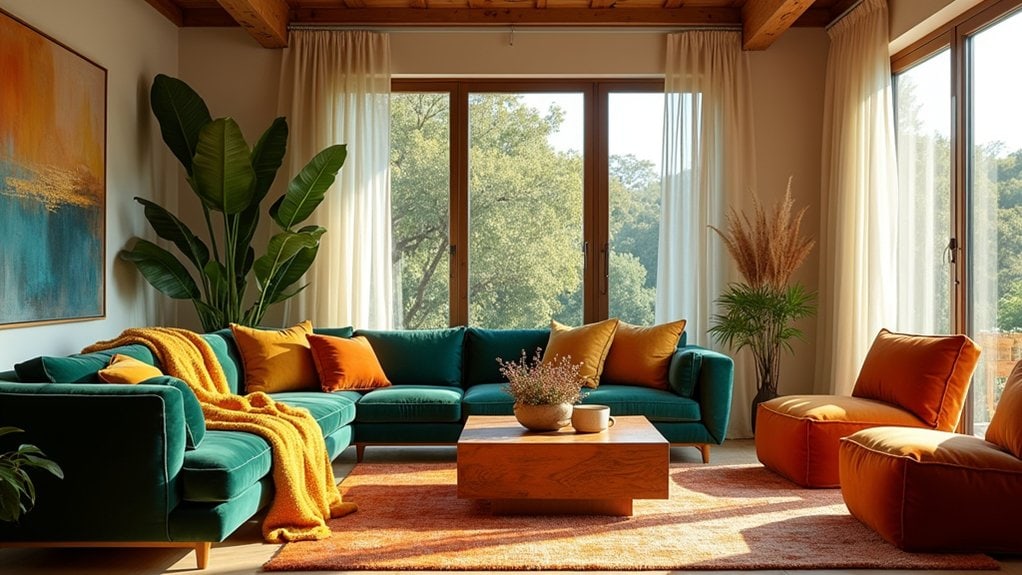
While natural elements ground your space, the colors and textures you choose can make people feel safe enough to really open up.
Think about color psychology here. Warm neutrals like terracotta or soft caramel create this… welcoming feeling. You want tactile experiences too—maybe a chunky knit throw that begs to be touched.
Consider adding:
- Velvet cushions in dusty rose or sage
- Woven baskets with visible texture
- Linen curtains that filter light softly
- A plush area rug underfoot
The goal? Layer these elements without overthinking it. When someone sinks into your sofa and runs their hand along that nubby fabric, they relax. Their guard drops a bit.
What textures make you want to stay and talk for hours?
Conversation Starters: Strategic Placement of Art, Books, and Personal Objects
How do you turn your living room into a conversation catalyst? Start by thinking about what catches your eye when you enter someone’s space. That’s where art placement matters.
Put intriguing pieces at eye level near seating areas. Not hidden in corners where nobody looks. Your book selection on open shelves? Mix genres that reveal different sides of you. Travel guides next to poetry, cookbooks beside philosophy.
Personal stories live in objects. That vintage camera from your grandfather, the ceramic bowl you made last summer—display them where guests naturally pause. Visual storytelling happens when you group things thoughtfully. Maybe create thematic collections on a single shelf.
The key is object significance. Each piece should mean something to you, because authentic enthusiasm is contagious. When you genuinely care about what’s displayed, conversations start themselves.
Flexible Furniture Solutions for Different Types of Gatherings
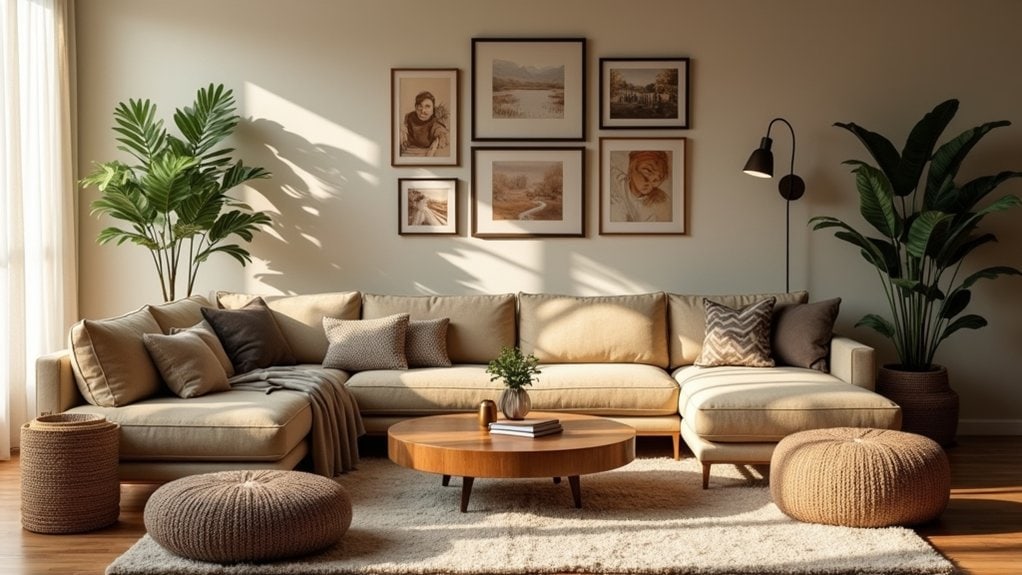
Your carefully curated conversation pieces won’t mean much if people can’t comfortably gather around them. That’s where smart furniture choices come in.
Think about your typical week. Maybe Tuesday it’s just you and your partner. Friday? Eight friends sprawled everywhere. You need pieces that adapt:
- Multi purpose ottomans that work as extra seating or footrests
- Adjustable tables that raise for dining, lower for games
- Lightweight chairs you can actually move without throwing out your back
- Modular sofas that separate into individual seats
The key is avoiding heavy, fixed layouts. You want furniture that moves with you, not against you. Ever tried rearranging for a party with a massive sectional? Yeah, exactly.
Start with one flexible anchor piece. See how it changes your space before committing to more.
Frequently Asked Questions
What’s the Ideal Room Size for Fostering Intimate Conversations?
You’ll find 12×15 feet creates perfect intimacy. This size lets you arrange cozy layouts with seating arrangements that bring people close without crowding. You can position chairs and sofas to encourage natural, comfortable conversation flow.
How Do I Balance Conversation Areas With Necessary Walkways?
You’ll want to create clear pathways around your furniture arrangement while keeping seating close enough for easy conversation flow. Leave 3-foot walkways between major pieces and position chairs within 8 feet of each other.
Should I Invest in Acoustic Treatments to Reduce Echo?
You’ll notice dramatic improvements with acoustic treatments if your room has hard surfaces causing echo. Consider soundproofing options like fabric panels, thick curtains, or decorative sound-absorbing art. Echo reduction creates clearer conversations and warmer ambiance.
How Can I Make Renters’ Spaces Feel Soulful Without Permanent Changes?
You’ll transform rental spaces through textiles layering – throw pillows, blankets, and rugs add warmth instantly. Create mood lighting with table lamps, string lights, and candles. These removable touches bring personality without risking your deposit.
What’s the Best Flooring Material for Creating a Warm Atmosphere?
You’ll find hardwood warmth creates an inviting foundation with its natural grain and rich tones. For ultimate coziness, layer soft rugs over wood floors. Carpet comfort works too—choose plush textures in warm, neutral shades.
Final Thoughts
You’ve got all these ideas now—rearranged seating, warmer lighting, maybe a few plants. But honestly? Start small. Move two chairs to face each other tonight. See what happens.
Your living room doesn’t need to be perfect. It just needs to feel like somewhere people want to stay and talk. Where conversations happen naturally, without forcing it.
What matters most is that when someone walks in, they feel welcomed. Like they belong there.