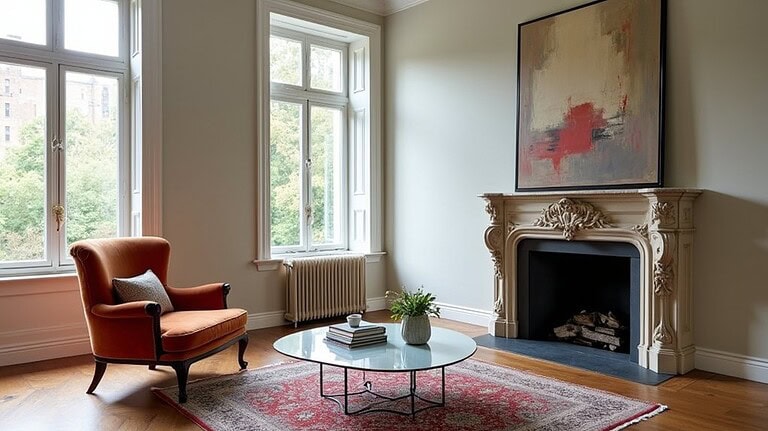
You’ve probably walked into a room and felt something was off — too polished, too cold, like nobody actually lives there. That’s often what happens when everything matches perfectly. Dropping a vintage piece into a modern space changes the energy. An old wooden chair next to a sleek sofa, for example, instantly adds something real. But getting that balance right isn’t always obvious, and there’s more to it than just picking something old.
The Essentials
- Choose one vintage statement piece to anchor the room, then build your modern design outward using it as a color and scale reference.
- Neutral foundations create common ground, allowing vintage and modern pieces to coexist without visual conflict or competing for attention.
- Strong silhouettes with clean lines and minimal excessive damage integrate vintage pieces most effectively into contemporary spaces.
- Ruthless editing is essential; each piece must earn its place, ensuring breathing room and preventing the space from feeling cluttered.
- Repeating a color, material, or shape from your vintage piece throughout the room creates harmony between old and new elements.
Which Rooms Benefit Most From Mixing Vintage and Modern?
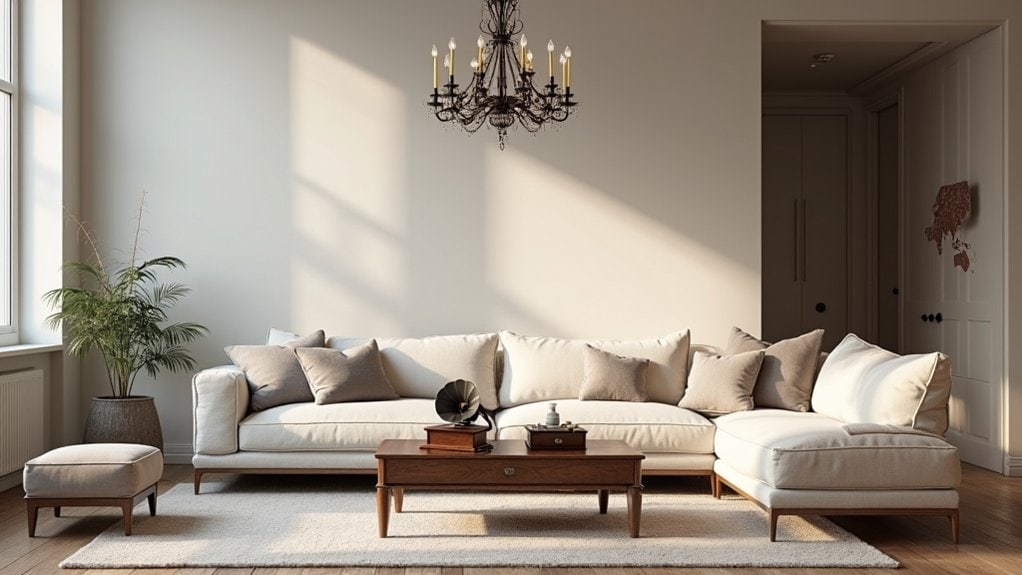
Honestly, almost any room can pull off a mix of vintage and modern, but some spaces just make it easier.
Your living room gives you the most flexibility. A vintage armchair next to a sleek sofa? It works. Your dining area handles it well too—think an old wooden table with modern chairs.
Your home office benefits from a vintage desk paired with contemporary lighting. Your bedroom can handle one or two older pieces without feeling cluttered.
But don’t overlook your entryway. A vintage mirror or console table sets the tone immediately.
Your kitchen and bathroom are trickier—vintage elements can feel out of place if you’re not careful. Your hallway? Honestly, it’s underused. A single vintage piece there goes a long way.
How to Spot Vintage Pieces Worth Styling in a Modern Space
So what actually makes a vintage piece worth bringing into a modern space?
Honestly, it comes down to a few things. First, look at the build quality. Older furniture often used solid wood and real hardware—stuff that holds up. That matters more than age alone.
Think about style evolution too. Does the piece reflect a shift in design thinking, or does it just look dated? There’s a difference.
Watch current vintage trends, but don’t chase them blindly. A trending mid-century lamp might not actually work in your space.
Ask yourself: does this piece have a strong silhouette? Clean lines usually translate well into modern rooms.
And check for wear. Some patina adds character. Too much damage just creates visual noise you’ll regret later.
The Design Rules That Make Vintage and Modern Work Together
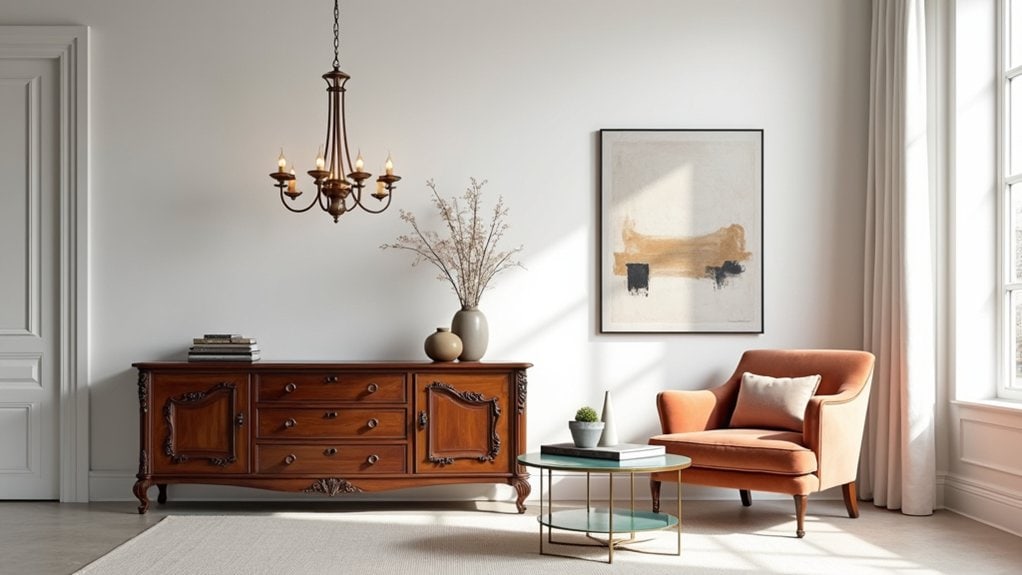
Once you’ve got a vintage piece you love, the real question is how you actually make it fit without the space looking like a jumble of mismatched eras. A neutral foundation — think warm whites, soft grays, or natural wood tones — gives both old and new pieces something to share, a kind of visual common ground. From there, it’s about contrast that feels intentional, not accidental, so you’re placing a sleek modern sofa next to a worn leather chair because they balance each other, not just because both fit in the room.
Balancing Contrast and Cohesion
Getting the balance right between vintage and modern pieces isn’t always obvious, and honestly, most people figure it out by trial and error more than any rulebook.
Style juxtaposition works when you let each piece breathe. Don’t crowd a mid-century chair next to three other statement items. Give it space. Design harmony comes from repetition—maybe it’s a color, a material, a shape that shows up in both the old and the new.
Ask yourself: does this room feel like it’s arguing with itself?
If yes, pull one thing back.
You don’t need everything to match. You need things to agree on at least one detail. That’s really the whole idea, even if it takes a few rearrangements to see it.
Anchoring With Neutral Foundations
Neutral foundations—think white walls, warm wood floors, concrete, linen—give both vintage and modern pieces somewhere to land without competing.
When you build around neutral color palettes, you’re not playing it safe. You’re actually giving your bolder pieces—an antique chair, a sleek chrome lamp—room to speak clearly.
Layered textures do the heavy lifting here. A jute rug under a mid-century sofa. Linen curtains beside a sharp industrial shelf. The contrast reads intentional rather than accidental.
Ask yourself: does your room feel busy because of the mix, or because the backdrop is already doing too much?
Strip it back. Neutral doesn’t mean boring—it means your vintage and modern pieces get to exist together without the walls arguing with them.
Start With One Vintage Statement Piece and Build Around It
The easiest way to start mixing vintage and modern decor is to pick one vintage piece that you actually love and let it anchor the room.
Maybe it’s an old dresser, a worn leather chair, or a lamp you found at an estate sale. Whatever it is, that vintage focal point becomes your starting reference.
From there, you build outward. Pull a color from it. Match its scale. Let your other choices respond to it.
Statement combination doesn’t have to be complicated. You’re not designing a museum. You’re just letting one older piece set a tone, then adding modern elements that feel comfortable next to it.
Does everything match perfectly? No. And honestly, it probably shouldn’t.
Why Vintage Pieces Make Modern Rooms Feel More Human
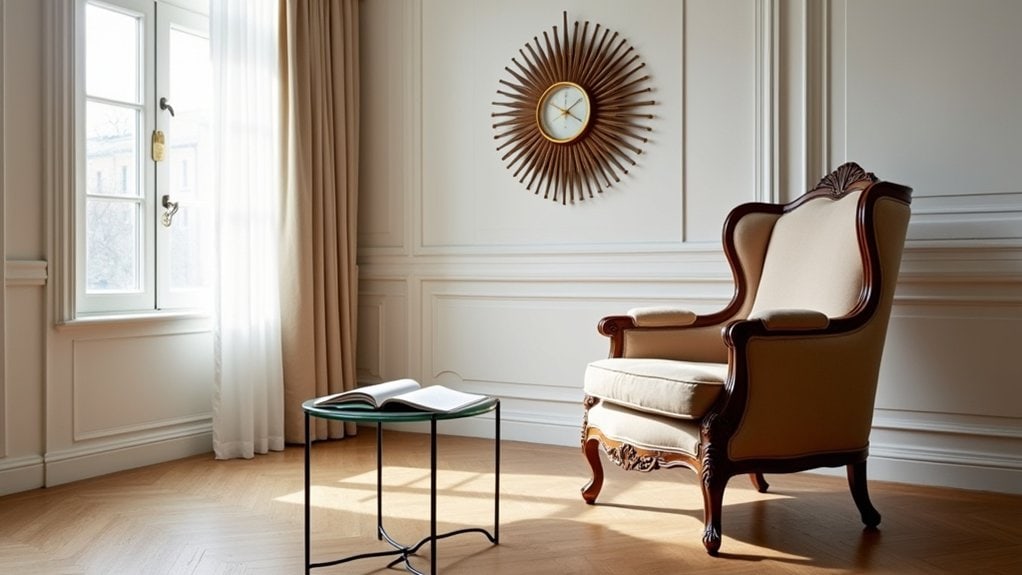
There’s something about a scratched wooden side table or a worn leather chair that a brand-new room just can’t fake—and you probably feel it even if you can’t quite explain why. Vintage pieces carry a kind of history that modern furniture doesn’t have yet, and that history makes a space feel lived in rather than staged. When you bring something old into a modern room, you’re really asking: who used this before me, and what did their life look like?
Warmth Through Imperfection
Something about walking into a perfectly modern room can feel a little cold—like you’re in a showroom instead of someone’s home. Everything matches too well. Nothing looks touched.
That’s where vintage pieces do something interesting. A scratched side table or a faded ceramic vase carries history. You can’t manufacture that. It’s not pristine, and that’s exactly why it works.
When you build a curated collection with both old and new, the imperfections in the vintage pieces actually soften the whole space. They give your eye somewhere to rest.
Think about the timeless charm of a worn leather chair next to a clean, minimal sofa. Does it clash? Maybe slightly. But it also feels lived-in. Real. Like someone actually chose those things—not just ordered a package deal.
Stories Objects Carry
That worn quality we talked about isn’t just visual.
It carries something heavier — history, memory, maybe someone else’s whole story. When you place a vintage lamp or an old wooden chair in a modern room, you’re adding sentimental value that a brand-new piece simply can’t manufacture.
People notice it. They pick things up. They ask questions.
That’s the storytelling potential working quietly in the background. Your grandfather’s drafting table sitting beside a clean, minimal desk setup — that contrast says something real about who you are.
Does every object in your space need to mean something? No.
But when even one or two pieces carry actual weight — emotional, historical, personal — the whole room starts to feel less like a showroom and more like somewhere a person actually lives.
How to Mix Vintage and Modern Without Looking Cluttered
Mixing vintage and modern pieces can easily tip into chaos if you’re not thoughtful about it. The trick isn’t really a trick—it’s restraint.
Start with color harmony. If your vintage dresser is warm oak and your modern sofa runs cool gray, those pieces will fight each other visually. Pick a palette and let both old and new live inside it.
Texture balance matters too. A sleek modern shelf next to a rough linen vintage throw works because the contrast feels intentional, not accidental.
And honestly? Edit ruthlessly. Not every vintage find deserves a spot. Ask yourself if it earns its place or just adds noise.
Less is usually right. Give each piece room to breathe.
Where to Find Vintage Pieces That Fit a Modern Space
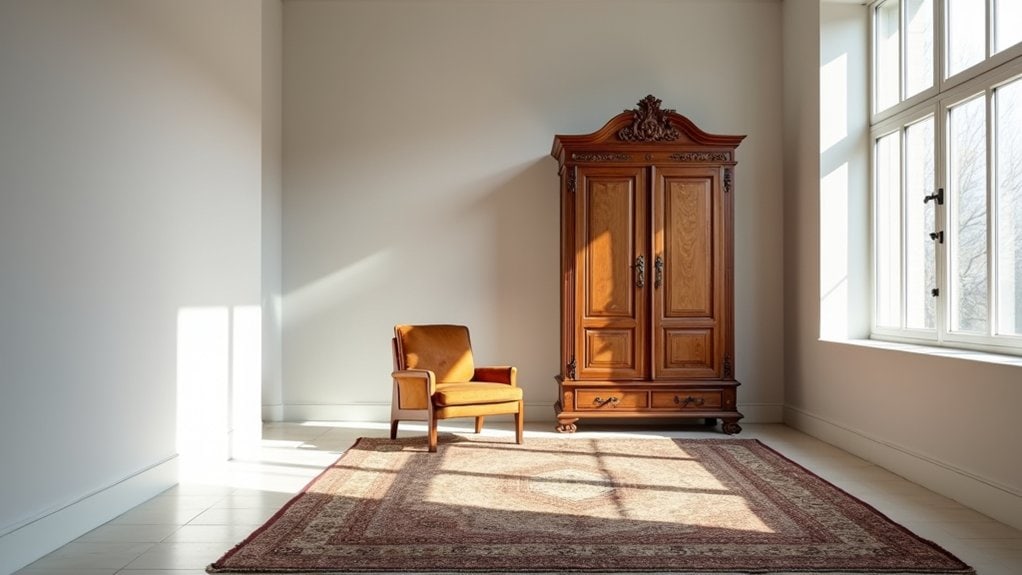
Where you look for vintage pieces matters almost as much as what you’re looking for.
Thrift store finds are honestly underrated—you’ll stumble across things you weren’t even searching for. Estate sales let you see pieces in context, which helps. Flea markets and vintage fairs take patience, but they’re worth a Saturday morning sometimes.
Online marketplaces like Chairish or Facebook Marketplace give you access to more variety, though photos don’t always tell the full story.
Antique shops tend to be pricier, but the curation saves you time.
And don’t overlook upcycling projects or DIY renovations—sometimes a thrifted frame or worn dresser just needs new hardware or paint.
Where do you usually start looking? That might actually shape what style you end up with.
Common Vintage and Modern Mixing Mistakes and How to Fix Them
Even with good instincts, it’s pretty easy to end up with a space that feels more cluttered than curated—or just kind of off in a way that’s hard to name.
Scale mismatch is usually the first problem. You bring home a chunky farmhouse table, and suddenly your sleek modern chairs look almost comically small next to it. Does the proportion feel right when you stand back?
Your color palette matters more than you’d think too. Vintage pieces often carry warm, muted tones that clash with cooler modern finishes. Try pulling one color from the vintage piece and repeating it somewhere else in the room.
And don’t overcrowd. You don’t need every great find you’ve collected. Editing is honestly the harder skill, but it’s what makes the difference.
Frequently Asked Questions
Can Vintage Pieces Negatively Impact a Modern Home’s Resale Value?
Vintage aesthetics won’t necessarily hurt your resale value. You’ll want to contemplate resale considerations carefully, though — guarantee vintage pieces complement your modern space rather than clutter it, as buyers respond best to thoughtful, balanced design choices.
How Do I Clean and Maintain Delicate Vintage Furniture Properly?
You’ll want to dust gently with soft cloths and avoid harsh chemicals. Use mild soap solutions for cleaning techniques, and apply furniture wax sparingly. Follow restoration tips like consulting professionals for significant damage to preserve your delicate vintage furniture’s integrity.
Should I Hire a Professional Designer to Mix Vintage and Modern?
You don’t necessarily need a professional designer, but hiring one can help you achieve aesthetic balance effortlessly. They’ll stay updated on design trends and expertly blend vintage pieces with modern elements to create your perfect space.
Are Vintage Pieces Generally More Expensive Than Modern Designer Furniture?
Vintage pricing trends vary widely—you’ll find bargains and splurges alike. When making designer furniture comparisons, you’ll notice modern pieces often cost more, but rare vintage finds can exceed those prices considerably.
Can Vintage Items Pose Safety or Health Risks in My Home?
Yes, vintage items can pose risks in your home. You’ll want to watch for hidden hazards like lead paint, asbestos, or toxic finishes in vintage materials. Always inspect and test pieces before you incorporate them into your living spaces.
Final Thoughts
Mixing vintage and modern isn’t really about following rules — it’s about what feels right in your space. You don’t need a perfectly curated collection. One or two pieces you actually love can shift the whole feel of a room.
Think about what you’re drawn to and why. Does it add something real, or is it just filling space?
Start small. See what happens.