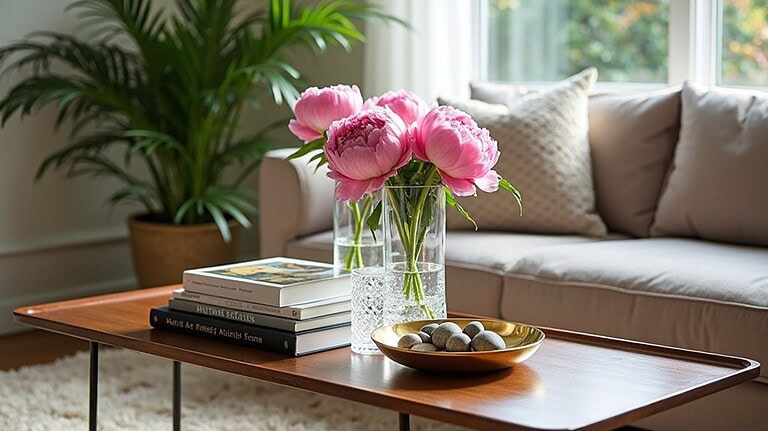
Your coffee table probably drives you a little crazy, even if you can’t explain why.
Maybe it feels cluttered, or weirdly empty, or just… off.
The thing is, most people style their coffee table without a real system — they just set stuff down and hope it works.
It usually doesn’t.
There’s actually a method to getting it right, and once you understand it, you’ll see exactly what’s been missing.
The Essentials
- Group objects in threes, mixing different heights, materials, and textures to create visual interest and natural eye movement across the table.
- Choose a coffee table sized at roughly two-thirds your sofa’s length to maintain proper visual scale and balance.
- Prioritize meaningful, purposeful items over purely decorative objects, removing anything broken, outdated, or lacking clear intent.
- Designate one empty spot on the table to provide visual rest and prevent the arrangement from feeling cluttered.
- Refresh your table seasonally by rotating items, updating color tones, and reassessing whether each piece still earns its place.
Why Your Coffee Table Always Looks Off

There’s a good chance your coffee table looks a little off, and you’re not totally sure why. You didn’t do anything wrong, exactly. But something feels unfinished.
Most of the time, it comes down to visual balance. You’ve got too much on one side, or everything’s the same height, or nothing actually relates to anything else.
Here’s a real question worth sitting with: does any of it reflect your personal style, or did you just set things down and leave them there?
That happens more than people admit.
You don’t need more stuff. You probably need to rethink what’s already there—how it’s grouped, how it’s scaled, and whether it actually means something to you.
Choose the Right Coffee Table Shape and Size
Before you start shopping, take a look at how much floor space your seating actually leaves open—because getting the size wrong is probably the most common mistake people make. A round table tends to work better in tighter spaces since there are no sharp corners cutting into the flow, while a rectangular one usually makes more sense in a longer, narrow room. It’s not a hard rule, but shape and size really do affect how the whole space feels.
Room Proportions Matter
Getting the size and shape of your coffee table right is honestly one of the most overlooked parts of furnishing a living room. Most people just pick what looks good in the store and hope for the best.
But scale considerations actually matter more than style here. A table that’s too small gets visually lost. Too large and it crowds the whole space.
A good rule is keeping your table about two-thirds the length of your sofa. That ratio helps with visual balance without you having to overthink it.
Also think about your room’s shape. Rectangular rooms often work better with rectangular tables. Round rooms or tighter spaces? A round or oval table might actually breathe easier there.
What does your current setup look like?
Shape Suits Space
Shape really does change how a room feels, maybe more than you’d expect. A round table in a tight space creates breathing room. A rectangular one anchors a longer sofa better. Shape versatility matters more than people give it credit for.
Ask yourself: what’s actually working against your layout right now?
Consider these shape-to-space matches for better space efficiency:
- Round tables soften small rooms and reduce sharp corners
- Rectangular tables align naturally with sectional or long sofas
- Square tables work surprisingly well with symmetrical seating arrangements
- Oval tables offer rectangular function without the hard edges
There’s no perfect formula here. But matching shape to your specific floor plan—not just style preference—makes a noticeable difference in how the room actually functions day to day.
Build Your Vignette With the Rule of Three
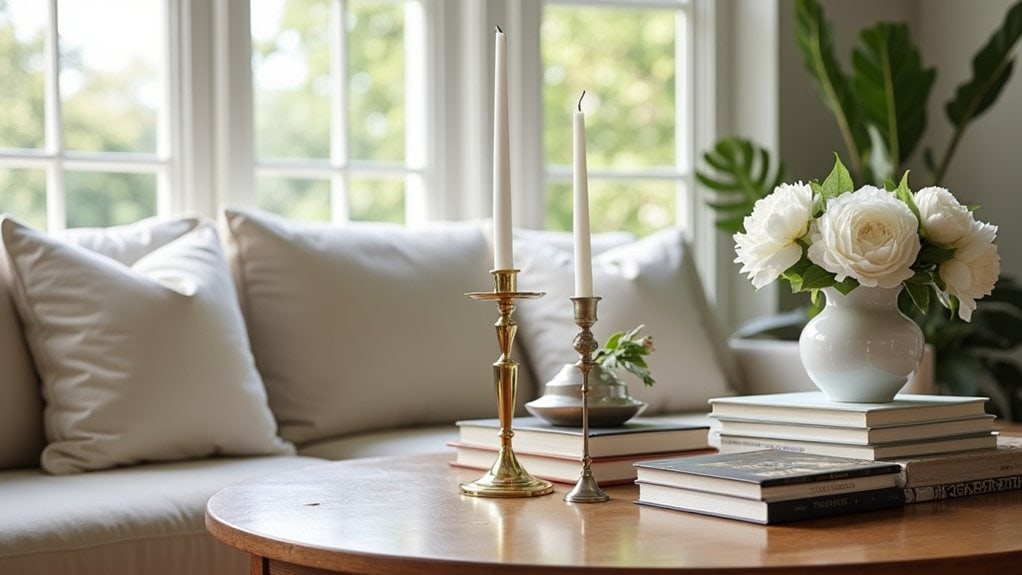
When it comes to arranging objects on your coffee table, grouping things in threes just works—it’s visually balanced without feeling too symmetrical or staged. Try placing a tall candle next to a medium-sized book stack and a small decorative object, so your eye has somewhere to travel. Have you ever noticed how a flat, same-height arrangement feels kind of dead, like nothing’s pulling your attention in?
Grouping Objects by Three
Three is kind of a magic number when it comes to styling a coffee table. Grouping objects in threes creates visual interest without feeling too chaotic or too sparse. It’s oddly satisfying — and it actually works.
Think about mixing:
- Object materials like wood, metal, and ceramic
- Heights — tall, medium, and low pieces
- Color combinations that complement but don’t perfectly match
- Textures that contrast each other naturally
You don’t need everything to match. A candle, a small stack of books, and a little tray? That’s already a solid trio. Ask yourself if your grouping feels balanced when you step back and look. Sometimes one swap — maybe swapping a material or shifting a color — makes a noticeable difference.
Varying Heights and Textures
Once you’ve got your trio of objects figured out, the next thing worth paying attention to is how those objects actually relate to each other in space.
Height variations matter more than people expect. If everything sits at the same level, the grouping falls flat — literally. Try stacking a book or two under something shorter to lift it up. Simple fix, real difference.
Textural contrasts help too. A smooth ceramic next to something woven or matte creates this quiet visual interest that’s hard to explain but easy to notice.
Ask yourself — does anything actually catch your eye when you look at the arrangement? If not, something’s probably too similar to something else nearby.
You don’t need perfection. Just enough contrast to keep it interesting.
Layer Heights, Textures, and Materials Like a Designer
Layering a coffee table well isn’t really about following a strict formula—it’s more about understanding how height, texture, and material work together to keep things visually interesting without feeling cluttered.
Think about layering techniques that create contrast without chaos:
- Stack a rough linen book under a smooth ceramic object
- Place a tall candle next to something flat and wide
- Mix metals with natural materials like wood or stone
- Use textural contrasts between soft and hard surfaces
Ask yourself: does your eye move across the table naturally, or does it stop at one spot?
You don’t need many items. Three to five pieces, varied in height and material, usually does more than a crowded arrangement ever could.
Coffee Table Objects That Always Look Intentional
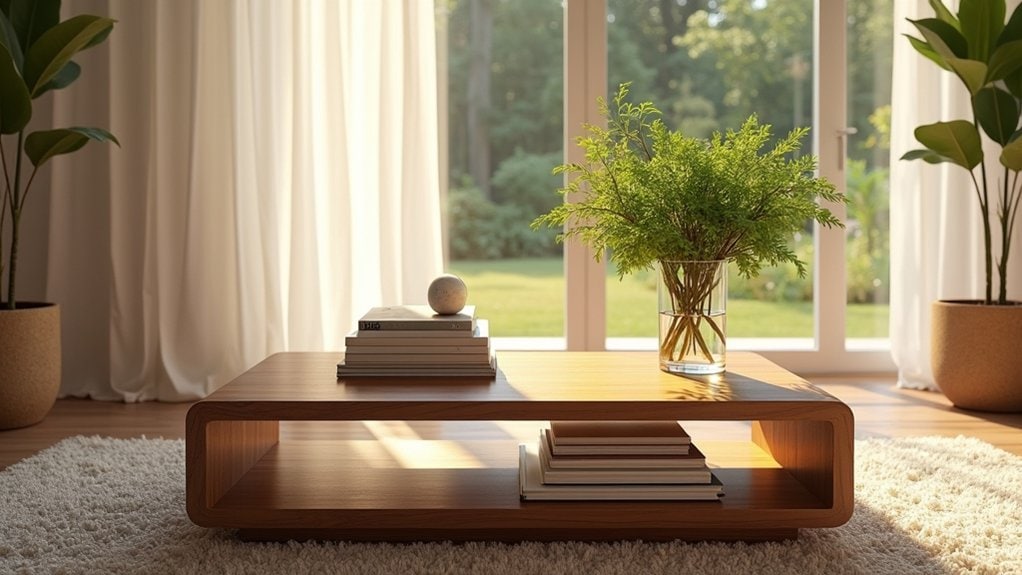
Some objects just tend to work on a coffee table, almost regardless of the overall style of the room. A stack of books, a small tray, a single candle — these pieces show up in intentional arrangements across wildly different homes. Why do they work? Probably because they suggest use. They feel like someone actually lives there.
When you’re building out your coffee table decor, lean toward objects with varied textures and at least one personal item. Something you actually own, not just bought to style.
A small plant, a ceramic bowl, a meaningful object from a trip — these feel considered without trying too hard.
Ask yourself: does this look like you placed it, or does it look like you thought about placing it? There’s a difference.
Refresh Your Coffee Table Styling Every Season
Those intentional objects you’ve built your arrangement around? They don’t have to stay forever.
Swapping out seasonal accents a few times a year keeps your coffee table from feeling stale. It doesn’t take much — even small shifts make a real difference.
Try rotating items based on what each season actually feels like to you:
- Spring: fresh greenery, lighter textures, simple ceramic pieces
- Summer: woven elements, bold colors, minimal clutter
- Fall: warm tones, candles, small natural objects like pinecones
- Winter: layered textures, metallic accents, cozy-feeling objects
Decorative trays make this easier. They let you swap grouped items quickly without rethinking the whole layout.
What feels right in October probably won’t feel right in April. Trust that instinct.
Style Your Coffee Table for Real Life, Not Just Photos
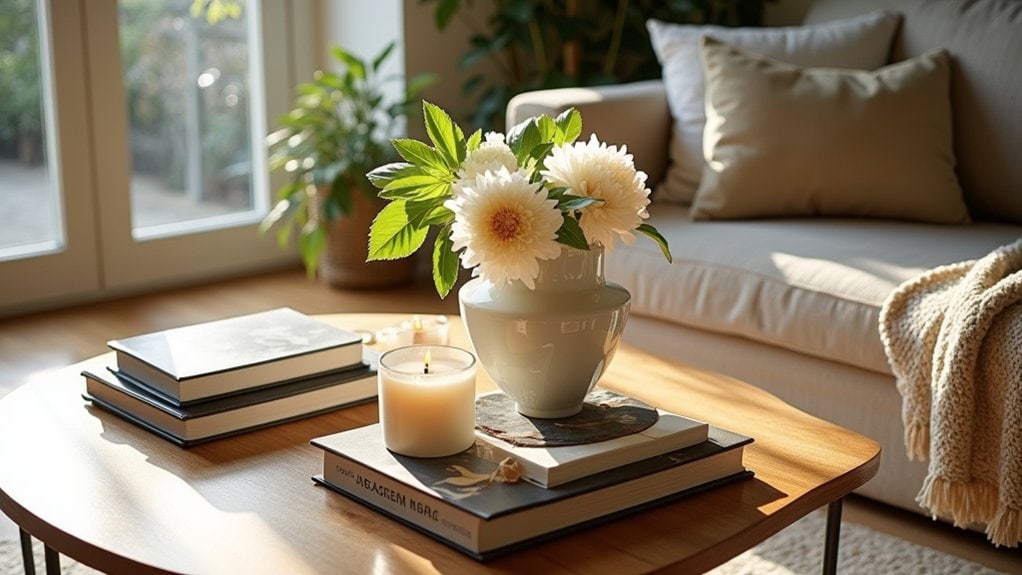
Your coffee table has to actually work for your life.
Functional decor sounds nice in theory, but what does it mean day-to-day? It means your remotes have a spot. Your coasters are actually reachable. You’re not moving a stack of books every time someone sets down a drink.
Practical aesthetics aren’t about making things look worse. They’re about making things work better without sacrificing style.
So ask yourself — does your current setup survive a movie night? A visit from kids? A rushed Tuesday evening?
If you’re constantly restyling before guests arrive, something’s off.
Keep what you genuinely use. Edit out what just looks good in photos. The best coffee table styling holds up when real life happens — and it usually does, fast.
Coffee Table Styling Mistakes You Can Fix Today
Most coffee table mistakes are easy to fix — you just have to actually notice them first.
Start by looking at your table like a stranger would. What jumps out? Clutter, probably. Or maybe everything blends into one forgettable pile.
Here are four quick fixes worth trying today:
- Ditch the color coordination mismatch — pick two or three tones and actually stick with them
- Remove anything broken, outdated, or just… sitting there without purpose
- Swap in seasonal themes occasionally — it keeps the space feeling current without a full redesign
- Create one clear empty spot so the eye has somewhere to rest
Does everything on your table earn its place? That’s the real question. You don’t need more stuff. You probably need less, arranged better.
Frequently Asked Questions
What Budget Should I Set for Coffee Table Styling Accessories?
Set your budget breakdown between $50–$150 for a well-styled look. Prioritize accessory priorities like a tray, books, and a plant first. You’ll stretch your dollars further when you shop secondhand or repurpose items you already own.
Can I Style a Coffee Table Without a Tray?
You can absolutely style a coffee table without a tray! Embrace creative arrangements by grouping coffee table essentials like books, candles, and decorative objects directly on the surface, letting each piece stand independently while maintaining visual balance.
How Do I Style a Coffee Table in a Small Apartment?
Choose small space solutions that don’t overwhelm your table. You’ll want to embrace minimalist decor by selecting two or three purposeful items, like a small plant, a candle, and one book, keeping it functional yet stylish.
Should My Coffee Table Styling Match My Overall Room Theme?
Yes, your coffee table styling should maintain theme consistency with your room’s overall design. You’ll want to guarantee color coordination between your decorative objects and surrounding furniture, creating a cohesive, harmonious space that feels intentional and visually balanced.
Where Can I Buy Affordable Coffee Table Styling Pieces Online?
You’ll find affordable coffee table styling pieces at online retailers like Amazon, Etsy, and Target. Score budget finds, unique accessories, and seasonal decor that’ll elevate your space without breaking the bank!
Final Thoughts
Your coffee table doesn’t need to be perfect — it just needs to feel like *you*.
Start small. Pick one thing you actually love and build around it. Don’t overthink the arrangement too much, because honestly, you’ll move things anyway.
The goal isn’t a styled photo. It’s a surface that works for your life and still looks good doing it.
That’s really all it needs to be.