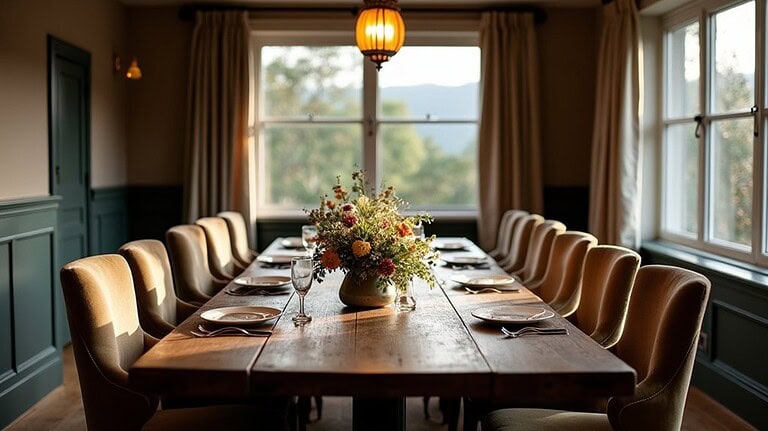
Your dining room has to pull double duty, and that’s actually harder than it sounds. One night it’s homework and takeout containers. The next, you’re seating eight people who’ll notice everything. So how do you style a space that handles both without feeling like a compromise? The details matter more than you think — and a few specific choices make all the difference.
The Essentials
- Choose an extendable dining table to comfortably accommodate daily meals and larger gatherings without permanently occupying extra space.
- Layer lighting with dimmers, overhead fixtures, and sconces to shift ambiance from casual dining to elegant entertaining.
- Select durable, easy-to-clean chair materials like leather or solid wood that balance comfort, style, and practicality.
- Use multifunctional furniture like sideboards or bar carts to keep clutter hidden while maintaining a polished, organized space.
- Maintain a neutral color base and swap seasonal accents like table runners or centerpieces to refresh the room effortlessly.
Start With a Dining Table That Works for Every Occasion
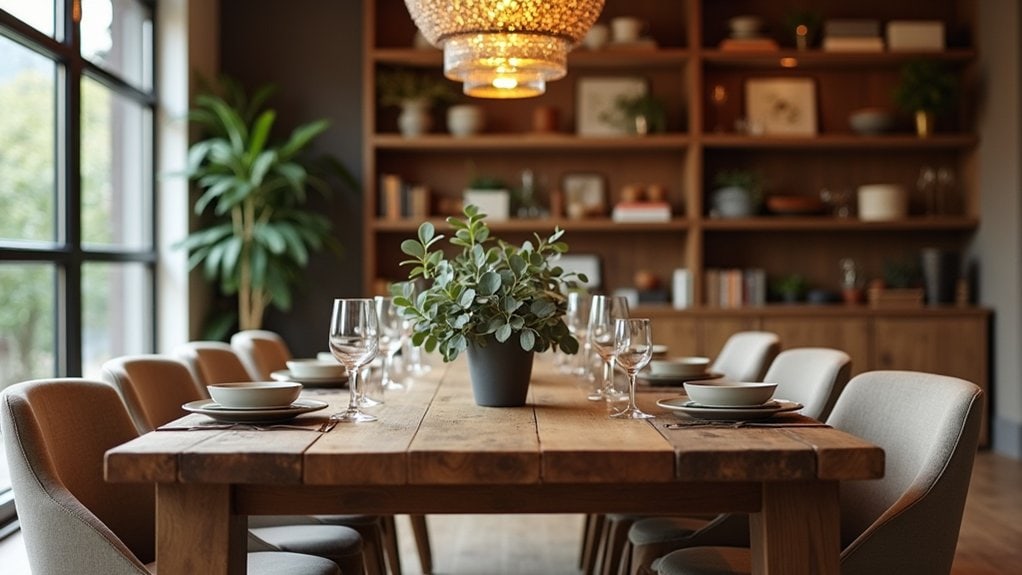
The dining table is probably the single most important piece in the room, so it’s worth thinking carefully before you buy one.
First, think about size considerations. How many people do you actually seat on a regular Tuesday night versus a holiday dinner? Those two numbers are probably very different.
A table that extends gives you flexibility without eating up space daily. It’s a practical choice.
Then there’s the question of versatile materials. Solid wood handles scratches and years of use better than you’d expect. Marble looks beautiful but demands more care. What fits your actual lifestyle, not your ideal one?
You don’t need a perfect table. You need one that works for messy breakfasts and sit-down dinners without feeling wrong for either.
Choose Dining Chairs That Are Comfortable Enough for Tuesday and Polished Enough for Company
Once you’ve sorted out the table, chairs are where things get a little more complicated. You’re balancing comfort, style, and practicality all at once—and honestly, that’s a lot to ask of one piece of furniture.
Think about how long people actually sit there. Ergonomic designs matter more than most people admit.
Look for versatile materials like boucle, leather, or solid wood—things that clean easily but still look intentional.
Some options worth considering:
- Upholstered seats for everyday comfort without sacrificing polish
- Mixed chair styles that still share a common finish or tone
- Armless chairs that tuck under the table when you need more space
- Slipcover-friendly options if you have kids or just messy dinners
Do your chairs actually invite people to linger?
How Does Lighting Transform a Dining Room From Casual to Elegant?
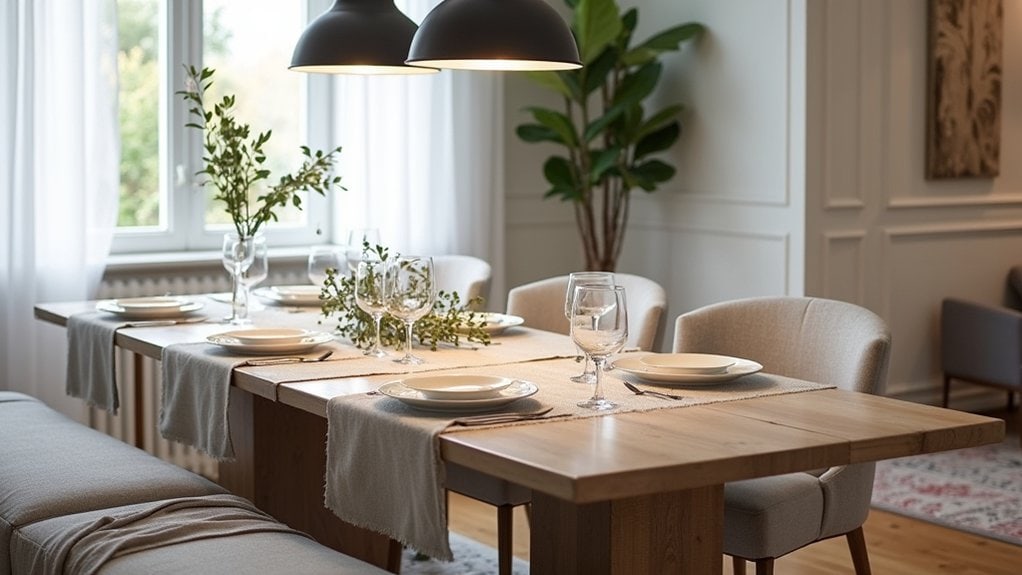
Lighting does more for a dining room than most people realize—it sets the whole mood before anyone even sits down. You want to layer your light sources, which might mean pairing an overhead fixture with a couple of wall sconces or even a lamp nearby, because one source alone tends to feel flat or a little harsh. And honestly, a dimmer switch might be the single most practical upgrade you can make, since it lets you go from bright and casual on a Tuesday night to something that feels a little more pulled together when you’ve got people over.
Layering Light Sources
Dimming your overhead light and adding a candle or two can completely change how a dining room feels — and honestly, that’s kind of the whole point.
Layered brightness isn’t complicated. You’re basically combining ambient lighting, task lighting, and decorative fixtures to create something that actually responds to how you’re using the room.
Think about light placement carefully. Where you put light matters almost as much as what kind you choose.
A few things worth building into your setup:
- Warm tones from a dimmable overhead fixture
- Mood lighting through candles or a sideboard lamp
- Decorative fixtures that add visual interest, not just brightness
- Functional design elements like under-shelf lighting for serving areas
Does your current setup let you shift between casual and intentional? It probably should.
Dimmer Switches Matter
All of that layering only works if you can actually control the intensity — and that’s where a dimmer switch earns its place.
Think about it. You want bright, clear light during a Tuesday dinner with the kids. Then Saturday rolls around, guests arrive, and suddenly you need something warmer, quieter, lower.
That’s ambiance control in its most practical form — not decorative, just functional.
The dimmer benefits aren’t dramatic. They’re subtle. You’re not transforming the room, you’re adjusting the mood by maybe 40 percent. That’s enough.
One switch, one slider, completely different feeling in the room.
If you haven’t installed dimmers yet, it’s worth asking — what’s actually stopping you? The cost is low. The difference isn’t.
Color Palettes That Make a Dining Room Feel Relaxed and Refined
Color does a lot of heavy lifting in a dining room, and the palette you choose really sets the whole tone before anyone even sits down. Neutral schemes—think warm whites, soft taupes, or muted greiges—tend to create that calm, unhurried feeling that makes meals feel less rushed. But if neutrals feel too safe for you, a bold accent wall or richly colored chairs can actually add a surprising sense of refinement without tipping into chaos.
Calming Neutral Color Schemes
Neutral tones can do a lot of heavy lifting in a dining room, maybe more than you’d expect. Think warm whites, soft taupes, and muted greiges. They don’t compete with your furniture or lighting—they just let everything breathe.
What makes neutrals work isn’t just the color. It’s how you layer in calming textures and serene patterns through fabrics, rugs, and wall finishes.
Some combinations worth exploring:
- Warm white walls with linen curtains and a jute rug
- Greige paint paired with wood tones and matte black hardware
- Soft taupe with textured wallpaper and woven placemats
- Cream walls with stone or concrete accents
Do you want the room to feel cozy or airy? That question actually shapes which neutral direction makes the most sense.
Bold Accents With Elegance
Once you’ve got a neutral base down, it gets a lot more interesting—because that’s when bold color actually has room to work.
Think about adding one or two pieces that bring energy without overwhelming the space. A deep burgundy chair, a forest green sideboard, or even elegant patterns on your curtains or table runner can shift the whole feel of the room.
You don’t need much. Honestly, less tends to work better here.
The trick is picking something you actually love, not just what looks good in photos. Does the color feel right when you’re sitting in the room at night?
Start small. One bold piece. See how it lives in the space before you commit to anything else.
Keep Your Dining Room Clutter-Free With the Right Storage
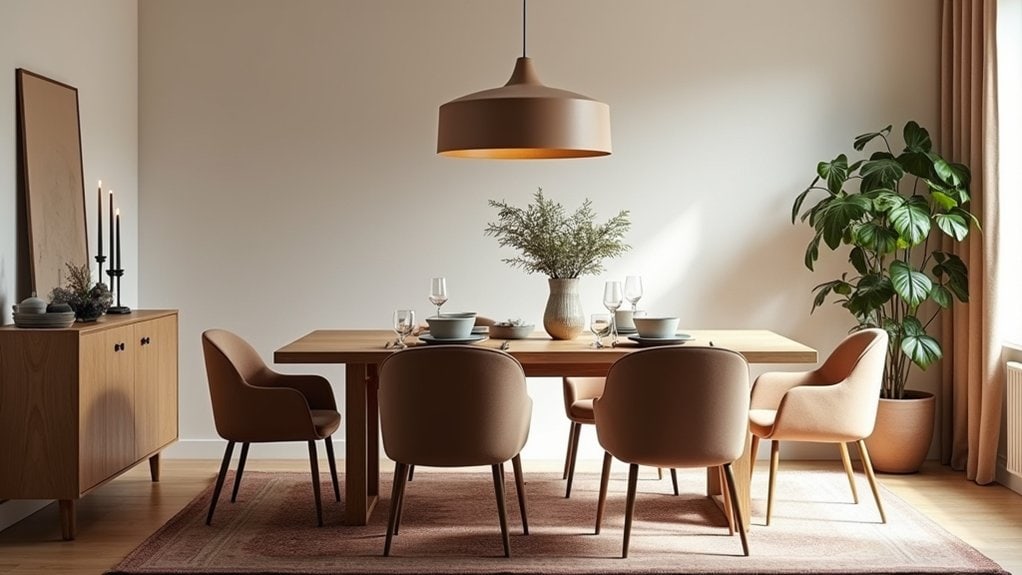
A cluttered dining room can make even the nicest setup feel chaotic, so storage is something you really can’t overlook. Think about what you actually need nearby during meals—extra linens, candles, serving pieces—and find a home for all of it.
Multifunctional furniture does a lot of the work here. A buffet or sideboard gives you hidden storage without eating up extra floor space. A bench with a lift-top seat works too.
Some practical options worth considering:
- A sideboard for storing table linens and serving dishes
- Baskets tucked under benches or consoles
- A bar cart that doubles as display and storage
- Built-in shelving for cookbooks or decorative items
What’s cluttering your dining room right now? That’s probably where you start.
Dress Your Dining Table Up or Down With Layered Textiles
Textiles are one of the easiest ways to shift the mood of your dining room without buying anything new—just layering what you already have differently.
Start with placemat patterns as your base, then add table runners on top. That alone changes everything. Experiment with fabric choices—linen feels casual, velvet reads more formal. Textile textures matter too. Mixing a rough woven runner with smooth napkins creates visual contrast without much effort.
Think about seasonal layers. Lighter color combinations work for summer. Richer tones suit fall and winter.
Napkin styles are easy to overlook, but they contribute a lot. Folded simply versus rolled into rings—same napkin, different energy.
What layering techniques you choose really depends on how you want the table to feel that day.
Which Centerpieces Work for Both Everyday Dining and Entertaining?
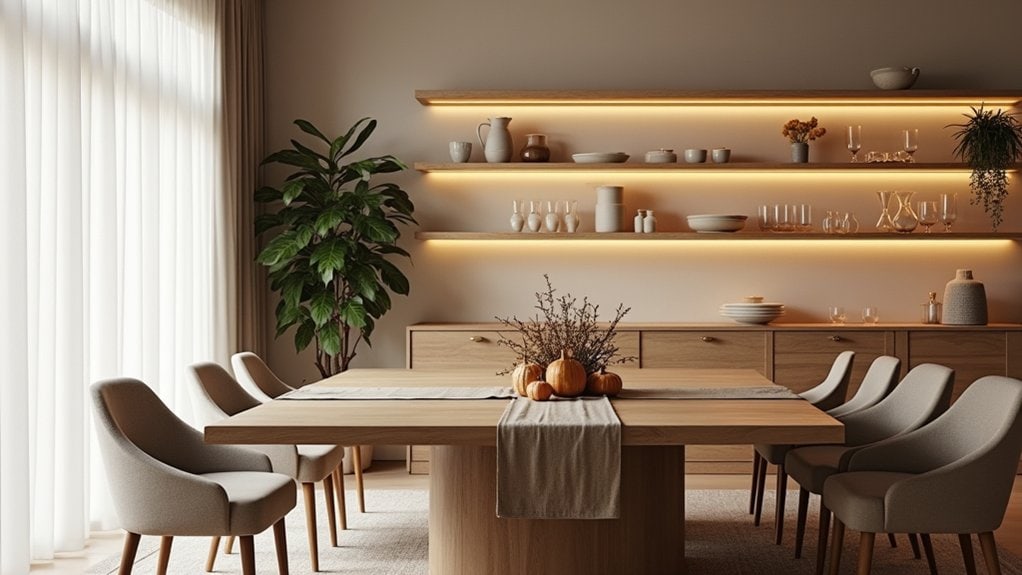
Centerpieces are one of those things that can quietly pull a whole table together—or make it feel overdone if you’re not careful.
The trick is choosing something that doesn’t demand too much attention on a Tuesday but still holds up when guests arrive. Think about options that adapt easily:
- Fruit bowls and rustic centerpieces keep things casual and approachable daily
- Floral arrangements and elegant vases elevate the space without much effort
- Candle clusters and minimalistic designs shift the mood depending on lighting
- Seasonal displays and themed decorations let you swap things out naturally
You don’t need two separate setups. Something like a low vase with simple stems works most days, then candles get added around it for dinner parties. That’s really it.
Style Your Dining Room Around the Dual-Purpose Challenge
Styling a dining room that works for both Tuesday night dinners and Saturday entertaining is honestly trickier than it sounds. You’ll want furniture that can shift easily—think chairs that tuck away, or a table with leaves you can actually add without a whole production. The real question is how much you’re willing to rearrange on a regular basis, because the right setup balances looking good with being genuinely usable.
Balancing Function and Aesthetics
When your dining room has to do double duty—meals on weeknights, homework in the afternoon, maybe the occasional bill-sorting session—it gets tricky to make it feel intentional and put-together. Aesthetic balance doesn’t mean sacrificing practicality. It means choosing functional decor that actually works for both.
Ask yourself: does every piece earn its place?
Some ideas worth considering:
- Choose a table with easy-clean surfaces
- Use storage that doubles as decor, like a sideboard
- Pick lighting you can dim for dinner or brighten for tasks
- Keep a neutral base so the room adapts easily
You don’t need everything to match perfectly. You just need it to feel cohesive enough that guests don’t notice the homework pile from Tuesday.
Flexible Furniture Arrangement Tips
Furniture arrangement matters more than most people think, especially in a room that’s pulling double duty.
Start by asking yourself: does your current layout actually support both daily meals and larger gatherings?
Multi use furniture, like extendable tables or benches that tuck away, gives you real flexibility without sacrificing everyday comfort. You’re not just decorating — you’re solving a problem.
Adaptable layouts work best when you leave yourself room to move things around without completely starting over. Maybe that means keeping one wall clear, or choosing a table that doesn’t demand a specific chair count.
Think about traffic flow too. Can guests move naturally through the space?
Small shifts — even just rotating your table — can dramatically change how the room feels and functions.
Make Open Shelving Work as Both Storage and Display
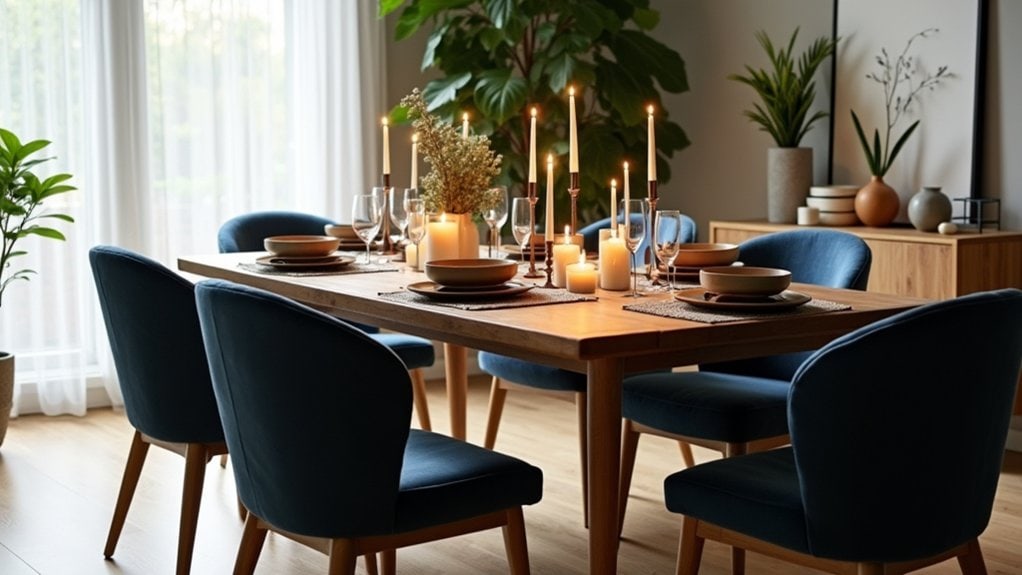
Open shelving can do a lot of heavy lifting in a dining room—but only if you’re intentional about what goes on it.
Think about shelf styling as a balance between practical organization and decorative accents. You don’t want it looking like a storage closet, but you also don’t want it feeling too precious to actually use.
A few ways to make functional displays work for you:
- Group items by color coordination to create visual interest without overthinking it
- Add personal touches like a small plant or something you actually love
- Swap in seasonal themes occasionally to keep it feeling fresh
- Mix everyday dishes with decorative accents so it stays useful
What would you actually reach for daily? Start there.
Seasonal Dining Room Updates That Refresh Without Redecorating
Changing up your dining room for each season doesn’t have to mean buying new furniture or committing to a full refresh. Small, intentional shifts do a lot.
Swap your table runner, change out a candle color, or pull in some nature inspired decor like dried branches or fresh greenery. These minimal updates quietly signal a season change without overwhelming the space.
For fall or winter, lean into festive touches — think warm textures, deeper tones, maybe a bowl of pinecones. Spring and summer invite lighter seasonal accents, like linen napkins or a simple vase of stems.
What would actually feel different to you walking into the room?
You don’t need much. Just enough to make the space feel current and lived-in.
Quick Tablescape Swaps That Shift Your Dining Room’s Whole Mood
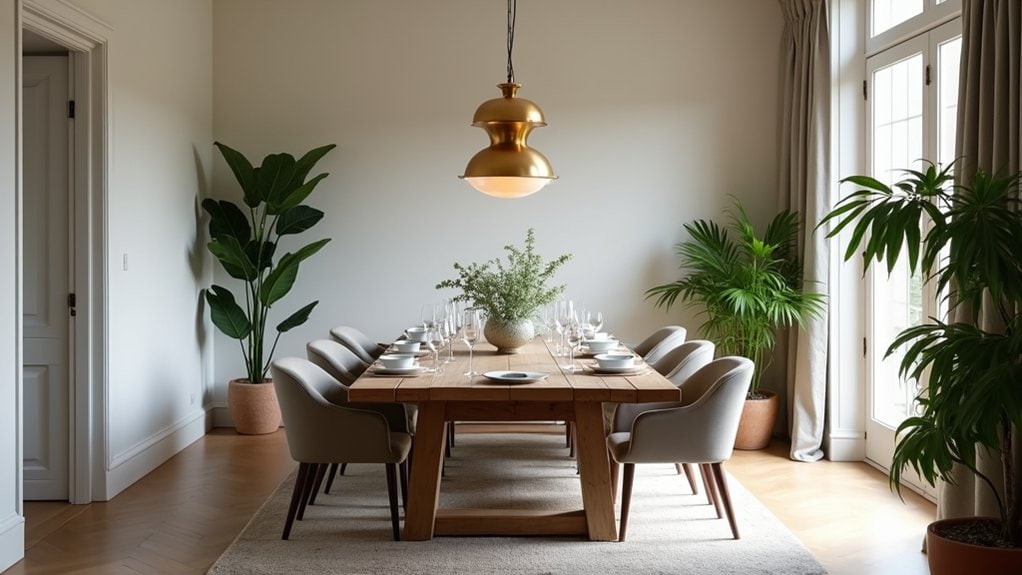
Even small shifts to your tablescape — swapping out a centerpiece, layering in a new texture, or just pulling the table away from the wall a little — can make the room feel noticeably different without touching anything else.
Think about what mood you’re actually going for. Casual elegance doesn’t require much — sometimes it’s just a linen runner and mismatched candles. Seasonal accents help too, even something as simple as a small bowl of fruit or a few dried branches.
Some quick swaps worth trying:
- Replace a vase with a low wooden tray and candles
- Layer two tablecloths in different textures
- Add placemats in an unexpected color
- Swap overhead lighting for a few table candles
What would your table look like if you just tried one thing differently?
Frequently Asked Questions
How Do I Choose a Dining Room Rug That Handles Daily Wear?
Choose durable rug materials like wool or polypropylene—they’ll withstand heavy foot traffic and spills. Opt for color patterns with medium tones or subtle designs; they’ll cleverly disguise everyday dirt while keeping your dining space stylish.
What Dining Room Flooring Options Work Best for Families With Young Children?
You’ll love hardwood durability for its timeless look, though it needs sealing to resist spills. Tile versatility makes cleanup effortless, handling heavy traffic beautifully. Both options keep your family’s dining space practical, stylish, and stress-free daily.
How Do I Soundproof a Dining Room for Better Conversation During Dinner Parties?
You’ll reduce echo and noise by adding soundproofing materials like thick rugs, heavy curtains, and upholstered furniture. Install acoustic panels on walls to absorb sound, making conversations clearer and more enjoyable for your dinner party guests.
What Wall Art Styles Complement a Dining Room Used for Entertaining?
You’ll love how abstract scenery create an elegant, conversation-starting backdrop for entertaining. Hang vibrant portraits to add personality and warmth, drawing guests’ eyes while complementing your dining room’s ambiance and making every dinner feel special and memorable.
How Do I Childproof a Dining Room Without Sacrificing Style or Elegance?
You can childproof your dining room by choosing child friendly decor like rounded-edge furniture and stain-resistant fabrics. Use elegant storage solutions, such as stylish cabinets with safety locks, to keep fragile items out of reach without compromising sophistication.
Final Thoughts
Your dining room doesn’t have to choose between practical and pretty. Small shifts — the right lighting, a flexible table, a few swappable pieces — can genuinely change how the space feels day to day.
You don’t need to overhaul everything at once. Start with what bothers you most right now. What’s making your dining room feel like it’s stuck in one mode? Fix that first, then build from there.