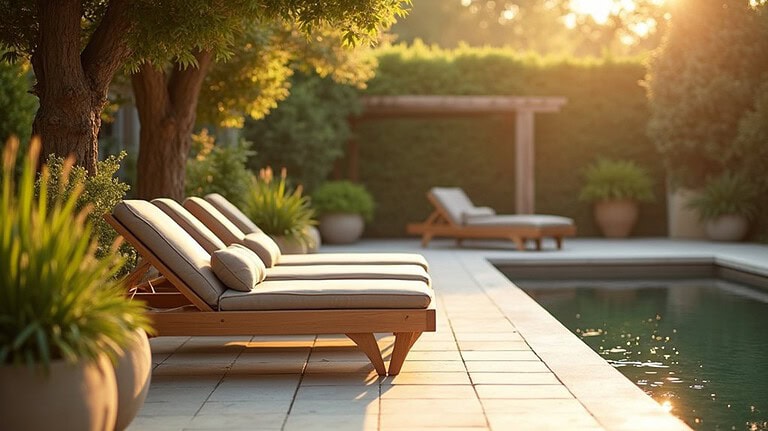
You probably spend real time and money making your interior look good, so why does your patio feel like an afterthought? Outdoor furniture has changed a lot. You’re not stuck choosing between flimsy plastic chairs or boring beige sets anymore. There are actually options now that hold up outside and still look like something you’d want inside. The question is knowing what to look for, and that part gets a little complicated.
The Essentials
- Mirror your indoor color palette outdoors to create a seamless visual connection, especially when spaces are visible from inside.
- Choose quality materials like teak, powder-coated metal, or HDPE wicker for furniture that looks polished and lasts longer.
- Anchor your outdoor space with a cohesive furniture set, then layer lighting and landscaping for a refined finish.
- Coordinate cushions, rugs, and throws using one anchor pattern to avoid a random, unintentional aesthetic.
- Invest in reputable brands like Restoration Hardware or Fermob to achieve interior-quality style with outdoor durability.
Match Your Outdoor Furniture Style to Your Interior Aesthetic
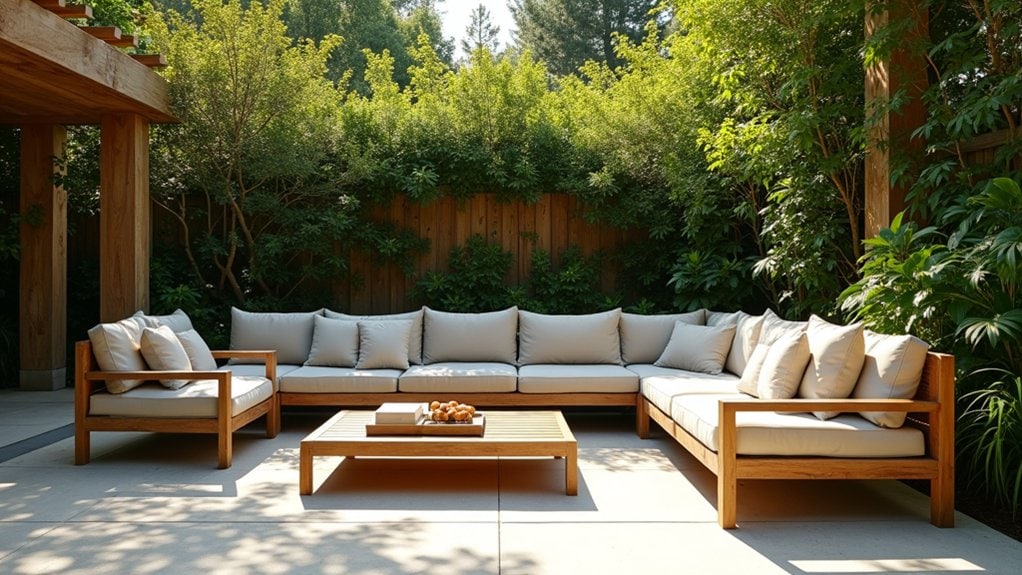
Your outdoor space doesn’t have to feel like a completely separate world from the rest of your home. Think about what’s already working inside — your color palette, your furniture lines, your general vibe. Then carry some of that outward.
Furniture style blending doesn’t mean copying your living room exactly. It means pulling threads. If your interior leans modern and minimal, maybe your patio chairs reflect that too. Clean lines, neutral tones, nothing too busy.
Outdoor color coordination helps tie everything together visually, especially if your backyard is visible from inside. What do you see when you look through your patio door?
Even small choices — a cushion color, a table finish — can make your outdoor setup feel intentional rather than just whatever was on sale.
The Materials That Make Outdoor Furniture Look Expensive
If you want your outdoor space to look like you spent more than you actually did, the materials you choose matter more than almost anything else. Teak wood, powder-coated metal, and high-density polyethylene wicker are the three materials that tend to do the heavy lifting here—they’re durable, sure, but they also just *look* like quality in a way that cheaper alternatives don’t quite pull off. Have you ever touched a teak chair versus a basic pine one and immediately felt the difference?
Teak Wood’s Timeless Appeal
When it comes to outdoor furniture materials, teak wood has a reputation that’s hard to ignore. It’s dense, naturally oily, and it holds up outdoors without much fuss. But here’s the thing—you still want to think about teak maintenance tips before you buy. Occasional cleaning and oiling keeps it looking intentional rather than neglected.
Now, teak sourcing options matter more than people admit. Some teak comes from certified sustainable plantations, which is worth asking about before you commit to a piece. Not all teak is equal quality-wise.
Does teak fit your space, though? It’s heavier than most outdoor materials, so moving it around isn’t always easy. Still, if you want something that actually ages well, teak’s genuinely worth considering.
Powder-Coated Metal Durability
Teak’s great, but it’s not the only material worth your attention.
Powder-coated metal deserves a serious look. The finish durability on these pieces is genuinely impressive—manufacturers bake the coating directly onto the metal, and it holds up well against rust and scratches.
Weather resistance is where powder-coated metal really earns its place. Rain, humidity, sun exposure—it handles all of it without peeling or fading quickly.
Your color options are surprisingly broad, too. Matte black, warm white, earthy tones. You can actually match outdoor pieces to your interior palette.
For maintenance tips, keep it simple. Wipe it down occasionally with mild soapy water. That’s mostly it.
Does it last forever? Not quite. But with basic care, you’re looking at years of reliable use.
High-Density Polyethylene Wicker
High-density polyethylene wicker—HDPE if you want to sound like you know what you’re talking about—is basically plastic engineered to look like natural wicker, and it does a surprisingly convincing job.
The weather resistance alone makes it worth considering. Rain, UV rays, humidity—it handles all of it without warping or fading badly.
Maintenance tips are simple: soap, water, done. No sealing, no staining.
Color options and texture variety are genuinely solid now. You’re not just picking brown or beige anymore. Style trends have pushed manufacturers toward richer tones and tighter weaves that actually look considered.
Eco friendly choices exist too—some brands use recycled materials.
Comfort features depend more on your cushions than the frame itself, so don’t overthink that part.
What design inspirations are you actually working with?
Best Outdoor Furniture Sets for a Polished Patio
Pulling together a patio that actually looks good takes more than just picking a few chairs and calling it done. You need pieces that work together — same finish, similar scale, a consistent vibe.
Start with a dining or lounge set as your anchor. Something with clean lines tends to photograph well and hold up visually over time. From there, layer in outdoor lighting — even a simple string of lights shifts the whole mood after dark.
Don’t overlook patio landscaping either. A few planters or a low hedge can frame your furniture and make the whole setup feel intentional rather than random.
What’s your space actually for? Eating outside, relaxing, entertaining? That answer should drive every purchase you make.
Statement Pieces That Anchor Your Outdoor Space : Fire Pits, Daybeds, and More
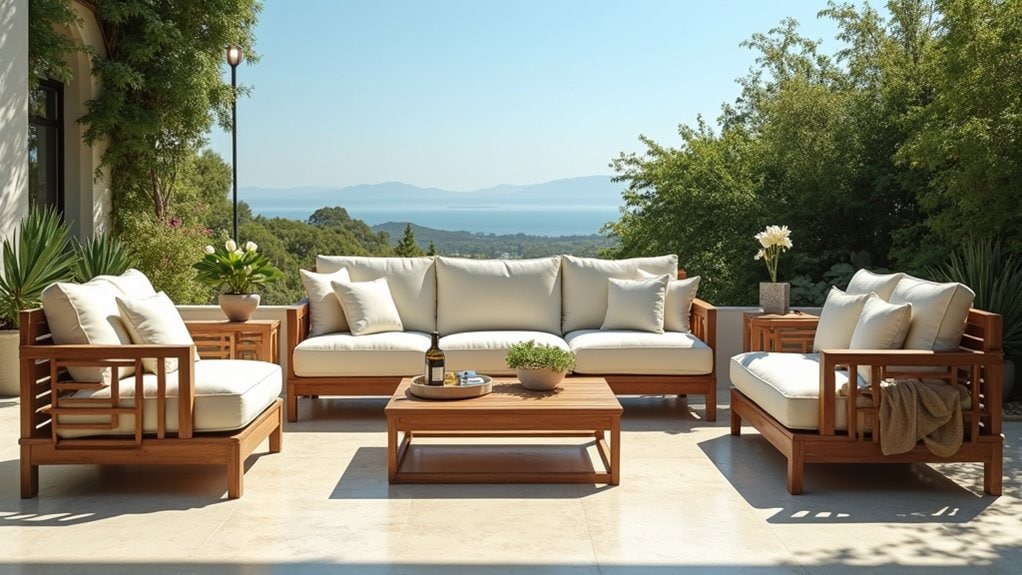
Some outdoor spaces stay forgettable no matter how much furniture you add — and usually it’s because nothing in the setup commands attention.
You need one piece that makes someone stop walking and actually look.
A fire pit does that. There are fire pit styles built for modern minimalism — clean bowls, concrete bases — and others that lean more rustic or traditional. Pick what matches your existing setup, not just what looks good in a photo.
Daybed designs work similarly. A good one almost forces people to sit down and stay longer.
These aren’t decorative extras. They’re anchors. Without something like this, your patio just feels like a collection of things rather than an actual space you’ve thought through.
What would you put at the center?
How to Choose Outdoor Seating That’s Actually Comfortable
When you’re shopping for outdoor seating, comfort isn’t something you can really judge from a photo—you need to actually sit in it. Look for chairs and sofas that support your lower back naturally, without forcing you to perch awkwardly or slouch forward. And if you can test it in person before buying, do that, because what feels fine for thirty seconds might start to ache after an hour outside.
Prioritizing Ergonomic Support
Ergonomic support probably isn’t the first thing on your mind when you’re shopping for outdoor furniture — you’re more likely thinking about color, style, or price.
But it matters more than you’d expect.
Outdoor ergonomics covers things like posture alignment, how your back sits against a chair, and whether adjustable features let you shift between upright and lounge positions comfortably. Good supportive seating doesn’t have to look clinical. A lot of ergonomic designs actually blend stylish functionality with comfort materials like high-density foam or contoured backs.
Ask yourself — can you sit in this chair for two hours without shifting constantly?
That’s a fair test. You want something that works with your body, not against it.
Testing Before Buying
Knowing what to look for ergonomically is useful — but it only gets you so far if you haven’t actually sat in the chair.
If you can, visit a store and spend real time in the pieces you’re considering. Not just a quick sit — actually settle in. Does your back feel supported after a few minutes? Do the armrests land naturally?
Durability testing matters too. Press on the frame. Check the joints. Wobble it a little. You want to know it holds before it’s on your patio.
And think about style compatibility with what you already own. Does it feel like a natural extension of your space, or does it clash?
Don’t rush this. You’ll probably live with this furniture longer than you think.
What Colors Work Best for Outdoor Furniture?
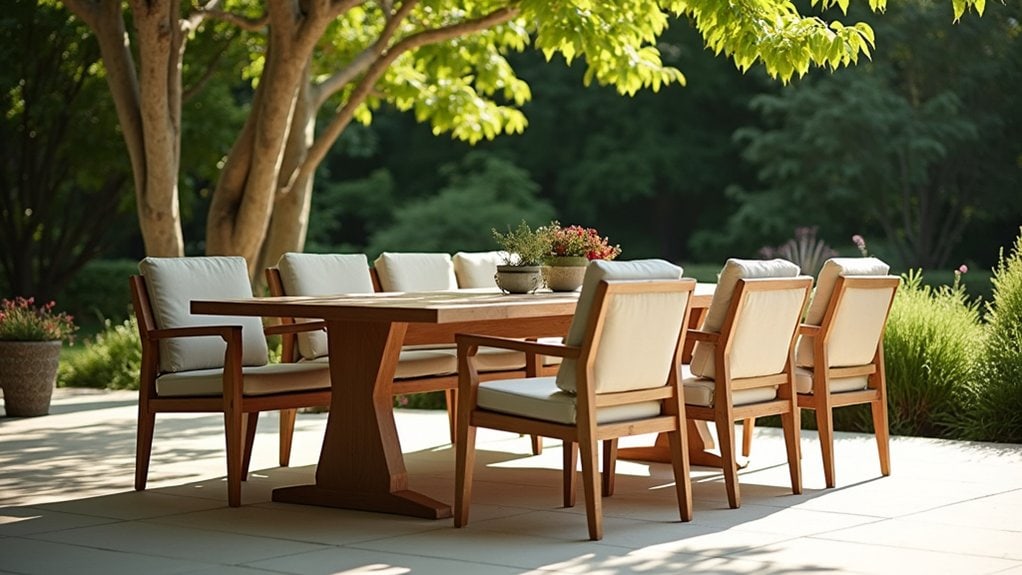
Choosing a color for your outdoor furniture might seem simple, but there’s actually a lot to think about. Color psychology plays a real role here—cool blues and greens tend to feel calming, while warmer tones like terracotta or mustard can feel energizing. Think about how you actually use your outdoor space.
Seasonal trends shift too. Earthy neutrals are popular right now, but you don’t want to redecorate every couple of years just to keep up.
Practical stuff matters more than people admit. Light colors show dirt faster. Dark colors absorb heat—uncomfortable on a hot day.
What’s your house’s exterior color? Your furniture shouldn’t clash with it. You don’t need everything to match perfectly, but some visual connection helps.
How to Accessorize With Cushions, Rugs, and Outdoor Throws
Once you’ve nailed down your furniture colors, the next step is pulling your outdoor space together with textiles like cushions, rugs, and throws that actually coordinate—not just ones that kind of sort of match. You don’t need everything to be perfectly matchy-matchy, but you do want the patterns, tones, and materials to feel like they belong together. Layering a chunky woven throw over a smooth cushion, for example, adds visual interest in a way that feels intentional without looking overdone.
Choosing Coordinated Outdoor Textiles
Textiles can completely change the feel of an outdoor space, sometimes more than the furniture itself. Coordinating your cushions, rugs, and throws doesn’t mean everything has to match perfectly. It just means things should feel intentional.
Start with fabric patterns you actually like indoors. Chances are, they’ll translate well outside too. Stripes, botanicals, geometric prints — pick one anchor pattern and build around it.
Seasonal palettes help here. Warm rust and terracotta tones work beautifully in fall. Cooler blues and greens feel fresh in summer. You don’t have to swap everything, maybe just the throw or a couple of cushion covers.
Does your outdoor setup feel a little random right now? That’s usually a textile problem, not a furniture one.
Layering Textures For Impact
Getting your colors and patterns sorted is a good starting point, but coordinating textiles is really just half the job.
Texture is where things get interesting. Think about what happens when you layer a chunky knit throw over a smooth cushion on a woven rattan chair. That combination creates textural harmony without you having to overthink it too hard.
But don’t ignore visual contrast either. A rough jute rug under a sleek metal table actually makes both pieces feel more intentional.
Ask yourself—does everything feel a little too same? That’s usually the problem.
Mix matte with something slightly shiny. Pair tight weaves with something looser. You don’t need a lot. Sometimes just one unexpected texture pulls the whole setup together.
The Best Outdoor Furniture Brands Worth the Investment
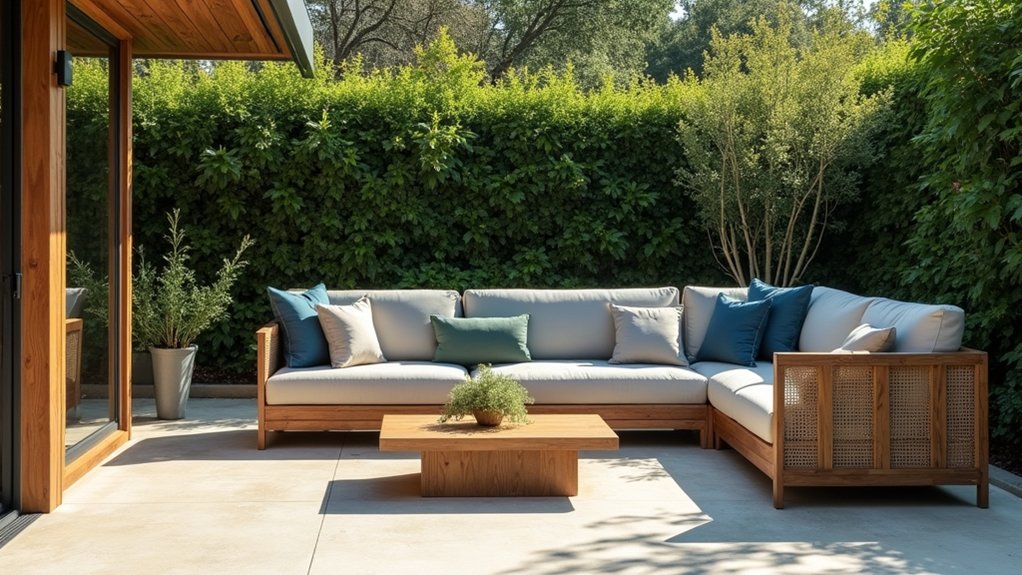
When it comes to outdoor furniture, the brand you choose can make a real difference in how long your pieces last and how much you actually enjoy them. Some brands genuinely invest in sustainable materials, weather resistance, and functional aesthetics that hold up season after season.
Here are a few worth considering:
- Restoration Hardware – luxury brands with modern designs that blur indoor and outdoor lines
- Kettler – strong on weather resistance and multi purpose furniture options
- Fermob – known for space saving solutions and outdoor trends-forward styling
- Loll Designs – eco-conscious, built on sustainable materials with clean functional aesthetics
Do you actually need luxury here? Not always. But buying once from a reliable brand usually beats replacing cheaper pieces every couple of years.
How to Protect Outdoor Furniture From Sun, Rain, and Rust
Even the sturdiest outdoor furniture takes a beating over time if you’re not doing a little upkeep.
Sun protection strategies matter more than people realize. UV resistant coatings can slow fading on wood and metal, but you’ll need to reapply them seasonally. Rainproof materials help, though no material is fully immune. Rust prevention tips like applying a clear sealant on metal frames actually work—don’t skip that step.
Furniture covers are worth buying, especially if your climate shifts dramatically between seasons. A solid seasonal maintenance guide keeps you from forgetting small things, like checking for chipped paint or loose joints.
Storage solutions during winter months extend your furniture’s life considerably. What’s your climate like? That honestly shapes everything about how aggressive your maintenance routine needs to be.
Why Today’s Outdoor Furniture Finally Rivals Indoor Design
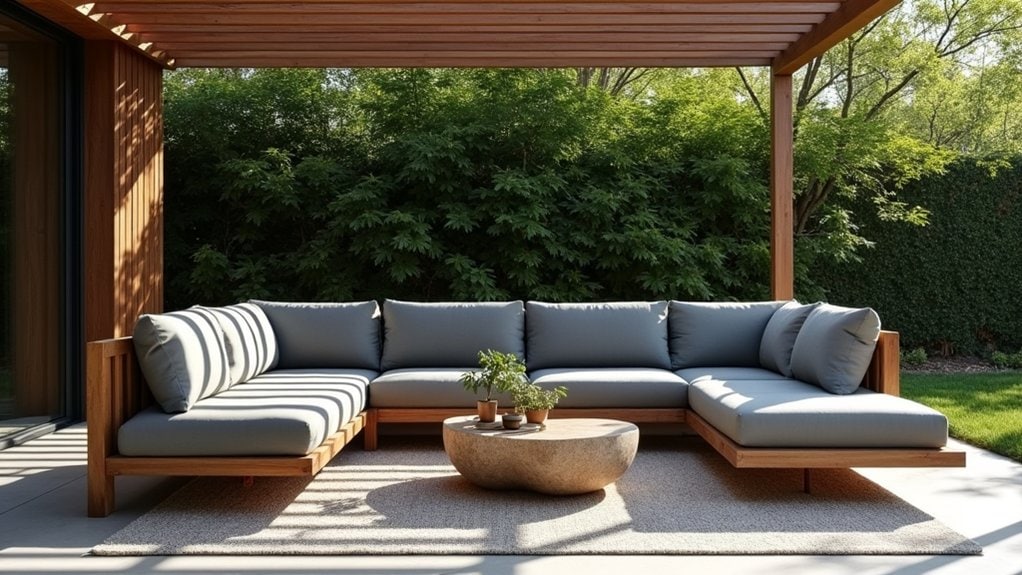
All that upkeep effort starts making a lot more sense when you actually love what you’re maintaining—and that’s where outdoor furniture has gotten genuinely interesting.
Outdoor trends have shifted. Designers are pulling serious design inspirations from living rooms, dining spaces, even bedrooms. The result? Pieces that honestly look like they belong inside.
Here’s what’s changed:
- Textured fabrics that mimic indoor upholstery without falling apart in rain
- Clean-lined frames in powder-coated steel or teak that match modern interior aesthetics
- Modular sectionals you’d actually rearrange, not just tolerate
- Cushion colors and patterns that feel intentional, not default
You might find yourself asking whether a piece is outdoor furniture or something you’d put in your living room. That confusion? It’s kind of the point.
How to Furnish a Small Balcony or Compact Patio
Small spaces have a way of making furniture choices feel really high-stakes—one wrong piece and suddenly your balcony feels like a storage unit.
So what actually works?
Start with scale. A bistro table and two slim chairs can do a lot without crowding you out. Think about compact storage options too—a small bench with a hidden compartment keeps cushions dry and clears floor space.
Go vertical when you run out of floor. Wall-mounted planters let you add balcony plants without sacrificing surface area.
Ask yourself how you actually use the space. Morning coffee? Evening drinks? That shapes everything.
You don’t need much. Sometimes two chairs, a narrow side table, and a few balcony plants honestly feel like enough. Maybe more than enough.
Frequently Asked Questions
Can Outdoor Furniture Be Used Indoors Without Damaging Floors?
Yes, you can use outdoor furniture indoors! To protect your floors, you’ll want to add felt pads or rubber feet. It’ll enhance your indoor aesthetics while preventing scratches and damage to your beautiful flooring surfaces.
Is It Safe to Leave Outdoor Furniture Out During Winter Months?
You can leave outdoor furniture out during winter months, but you’ll want to take into account material durability and winter protection. Cover pieces or store them properly to prevent moisture, freezing temperatures, and harsh elements from causing long-term damage.
How Do I Remove Mold or Mildew Stains From Outdoor Cushions?
Mix one cup of bleach with a gallon of water for effective mold removal. Scrub your cushions using this solution, then rinse thoroughly. Let them air dry completely to finish your cushion cleaning and prevent mildew from returning.
Can I Mix Furniture From Different Outdoor Furniture Brands Together?
Yes, you can mix furniture from different outdoor brands! Focus on style compatibility by choosing pieces that share similar colors, materials, or design elements. Blending brand aesthetics thoughtfully creates a cohesive, curated outdoor space that’s uniquely yours.
What Is the Average Lifespan of Quality Outdoor Patio Furniture?
You can expect quality outdoor patio furniture to last 5–15 years. Durability factors like weather resistance and material benefits of teak, aluminum, or resin markedly extend its lifespan when you’re maintaining it properly.
Final Thoughts
Your outdoor space doesn’t have to feel like an afterthought. With the right materials, a few thoughtful pieces, and some attention to comfort, it can actually feel like a real extension of your home. It won’t happen all at once, and that’s fine. Start with what matters most to you. Maybe that’s seating, maybe it’s shade. Just start somewhere and build from there.