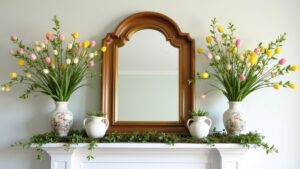
Your entryway is the first thing people see when they walk in, and honestly, it’s easy to overlook. Most people focus on living rooms or kitchens, but the entryway sets the tone before anyone gets that far. A few smart choices — lighting, furniture, storage — can make a real difference without a huge budget or overhaul. So where do you actually start?
The Essentials
- Use warm-toned bulbs and layered lighting with table lamps to create an inviting, comfortable mood upon entry.
- Incorporate multifunctional furniture like storage benches and console tables to maximize limited entryway space efficiently.
- Apply warm colors like terracotta or creamy beige, and layer rugs to add coziness and visual depth.
- Add mirrors opposite windows to reflect natural light, making small entryways feel significantly larger and brighter.
- Include low-maintenance plants like pothos or snake plants to enhance aesthetics and improve entryway air quality.
Start With the Right Entryway Lighting

Lighting can completely change how your entryway feels, and it’s honestly one of the first things worth thinking about. A lot of people overlook it, but ambient lighting sets the overall mood the moment someone steps inside.
You don’t need anything complicated. A simple overhead fixture in a warm bulb tone can do a lot. Think about fixture styles that actually match your home’s personality—something too modern in a traditional space just feels off.
Layering helps too. A small table lamp near a console adds warmth that a single ceiling light can’t really create on its own.
What does your current entryway lighting actually feel like at night? That’s probably the most honest starting point before you change anything.
Pick Entryway Furniture That Works Hard
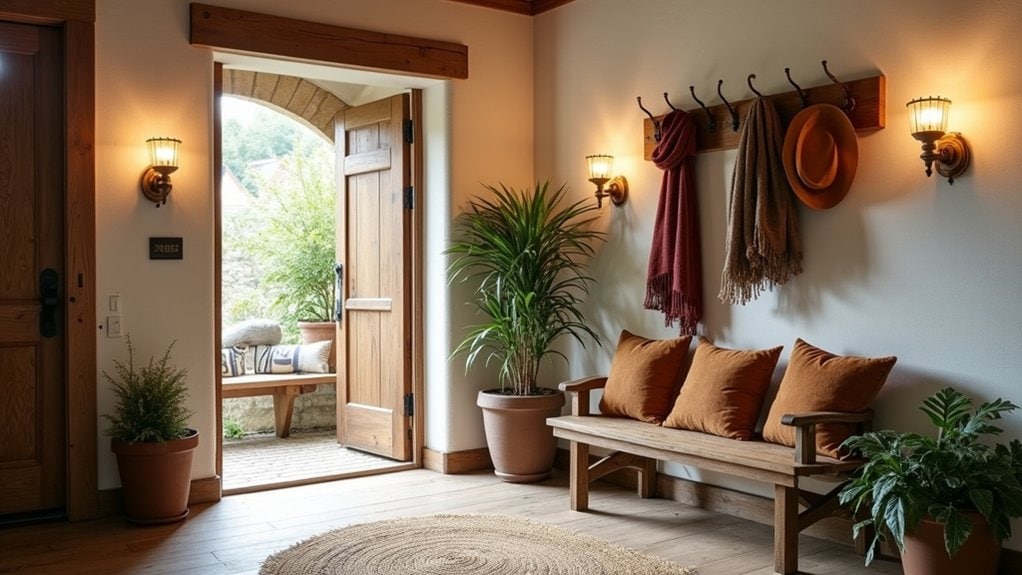
Furniture in an entryway really needs to pull its weight. You don’t have a ton of space, so every piece should serve more than one purpose.
Think about furniture functionality before you buy anything. A bench that opens up for storage beats a plain bench every time. Same with a narrow console table that has drawers or a shelf underneath.
Multi purpose designs aren’t just practical—they keep the space from feeling cluttered. A wall-mounted coat rack with hooks and a small shelf does a lot without taking up floor space.
Ask yourself what you actually need when you walk through the door. Somewhere to sit? A place to drop your keys? Your furniture should answer those questions directly.
Add Entryway Storage Without Sacrificing Style
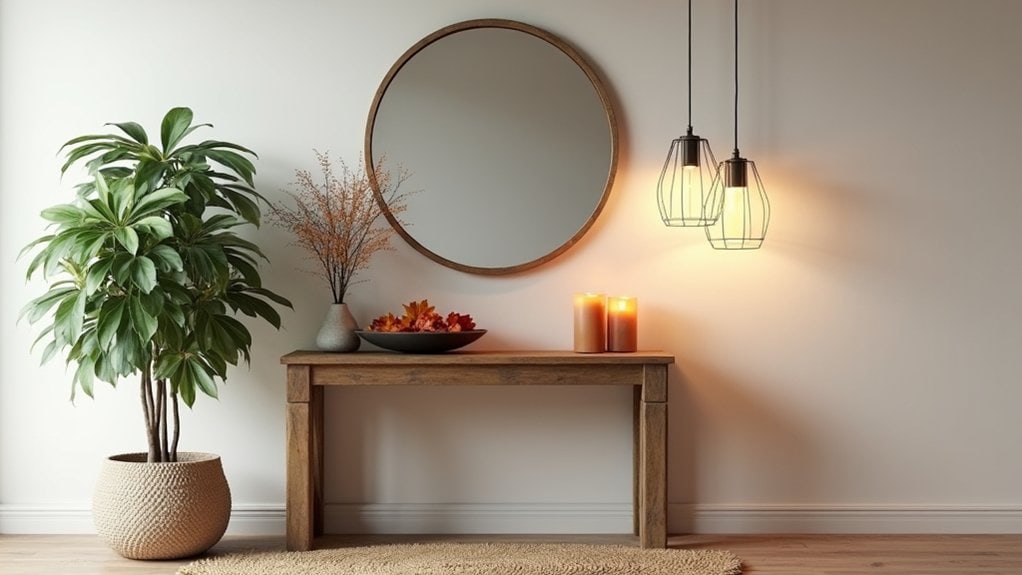
Storage doesn’t have to look like storage. You can keep your entryway tidy without making it feel like a utility closet.
Think about what you actually need to grab daily, then build around that.
- Decorative hooks handle coats and bags while looking intentional
- Entryway baskets corral shoes, scarves, or mail without screaming “mess”
- Modern shelving gives you display space and functional decor in one spot
Stylish organizers and compact furniture with hidden compartments do the heavy lifting quietly. A bench with storage underneath? That’s smart. You’re solving two problems at once.
Don’t overthink the aesthetic. Sometimes the most practical storage solutions end up looking the best because they fit how you actually live. That’s worth more than anything purely decorative.
Use Color to Make Your Entryway Feel Inviting

Color’s one of the easiest ways to shift how your entryway feels the moment someone walks in—warm tones like terracotta, soft gold, or creamy beige tend to feel immediately comfortable, not stark. You don’t have to paint every wall; even a single warm-hued accent wall or a painted door can do a lot. Then think about layering in a deeper accent color, maybe a muted navy or forest green in a small piece of furniture or a rug, because that contrast actually adds some visual interest without making the space feel heavy.
Choosing Warm, Welcoming Hues
When it comes to your entryway, the colors you pick do a lot of heavy lifting. Color psychology tells us that certain hues actually shift how a space feels the moment you walk in. Warm undertones — think terracotta, soft ochre, creamy white — tend to feel grounding rather than cold.
So what actually works?
- Dusty rose or warm beige on the walls reads as welcoming without feeling overdone
- Deep caramel or burnt sienna on an accent wall adds depth without closing the space in
- Even warm-toned neutrals like greige can shift the whole mood
What’s your entryway doing right now? Sometimes one color change is honestly enough. You don’t need to overhaul everything to feel the difference.
Accent Colors for Depth
Once you’ve landed on a base color, accent colors are where things actually get interesting.
Accent color psychology tells us that small doses of color carry serious visual weight. A warm terracotta base with deep navy or forest green accents creates contrasting color combinations that feel intentional without overwhelming a small space.
But here’s something worth thinking about — do you want your entryway to feel energizing or calm?
That question actually changes everything.
A mustard yellow throw or a rust-toned vase can add just enough tension to keep the eye moving. You don’t need much.
Try one accent color first. Live with it for a few days. Sometimes what looks sharp in a photo feels off in your actual lighting.
Your gut usually catches that faster than any color chart will.
Make a Statement With One Standout Piece

Your entryway doesn’t need a lot going on to feel intentional—sometimes one well-chosen piece does more than a dozen smaller ones ever could.
Think about what actually stops you when you walk into a space. Usually it’s one thing with a unique design that pulls your attention before anything else does.
That’s your focal point. Pick something worth looking at:
- A large mirror with an unusual frame
- A vintage bench that has some history to it
- A bold piece of art hung at eye level
You don’t need everything to match or make sense together. Just give people something to notice first. What would you want them to see? Start there, and honestly, the rest tends to fill itself in naturally.
Layer Rugs, Throws, and Textiles for Warmth
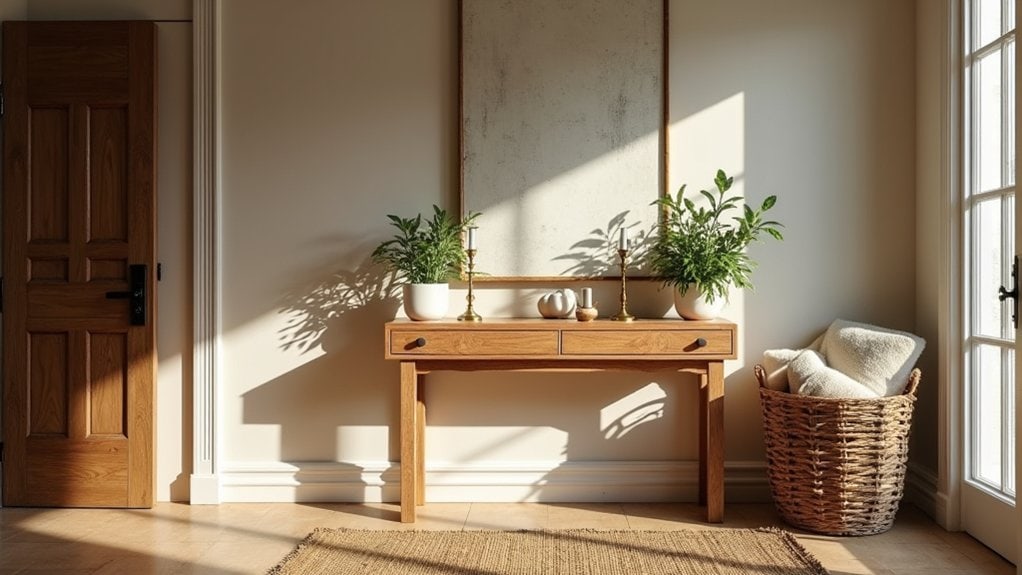
Layering rugs, throws, and textiles in your entryway is one of those things that sounds simple but actually takes a little thought to get right—you don’t want patterns competing so loudly that the space feels chaotic. Try pairing a solid or subtly textured base rug with something that has a bolder print on top, keeping the colors loosely connected. A folded throw draped over a bench or hook nearby adds that last bit of coziness, and honestly, it doesn’t have to match perfectly.
Choosing Complementary Textile Patterns
Three rugs, a chunky throw, and a patterned runner can either pull your entryway together or make it look like a yard sale—it really depends on how you mix them.
Pattern balance matters more than matching. You don’t need everything to coordinate perfectly, but you do need some logic to your textile combinations.
A few things that actually help:
- Pair one bold pattern with two quieter, solid or subtle textures
- Repeat at least one color across your different textiles
- Keep scale in mind—mix large patterns with smaller ones, not two competing large prints
What’s the dominant pattern you’re working with? Start there. Let that piece lead, and build around it. Sometimes one strong choice makes everything else easier to figure out.
Layering Rugs Effectively
Once you’ve got your patterns sorted, the actual layering part is where things get interesting—and honestly, a little tricky.
Rug placement matters more than most people expect. Start with a larger, flat-weave base rug—something neutral that anchors the space. Then layer a smaller rug on top, slightly off-center. Not perfectly centered. That slight asymmetry actually feels more natural.
Rug materials play a big role here too. Pairing a jute base with a softer wool layer creates contrast in texture, which adds warmth without looking overdone.
But here’s something worth thinking about—does your entryway get heavy foot traffic? Because some material combinations shift constantly and become more frustrating than functional.
There’s no perfect formula. You’ll probably adjust it a few times before it feels right.
Adding Cozy Throw Accents
Throws are one of those things that seem simple until you’re actually standing in your entryway holding one, wondering where it even goes.
The good news is there’s no single right answer. You’re really just working with throw placements that feel intentional without looking staged.
A few spots worth trying:
- Drape one loosely over a bench arm — slightly uneven looks more natural
- Fold and stack it on a shelf if you’ve got built-ins or a console
- Hang it over a ladder-style rack near the door
Cozy textures like chunky knits or woven cotton tend to read warmer than smooth fleece. Does the material match your overall vibe? That’s probably the more important question. Don’t overthink it.
Use Plants to Add Life and Color to Your Entryway
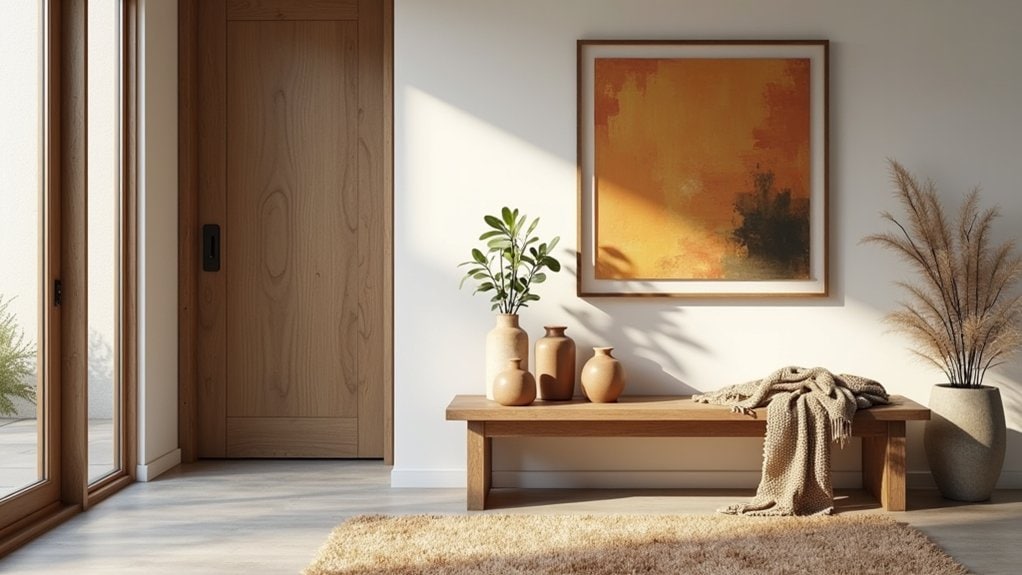
Plants can do a lot for an entryway—more than most people expect. A few well-placed options can shift the whole feel of the space.
Start simple. Low light options like pothos or snake plants handle dim entryways well. You don’t need a bright window. Decorative pots and plant stands let you control height and visual balance in your entryway arrangement.
Air purifying plants pull double duty—they look good and actually clean the air a little. Hanging plants work if floor space is tight.
Think about plant combinations carefully. Mixing textures usually beats matching everything. Seasonal plants can refresh the look without much effort.
Maintenance tips matter more than people admit. What’s your actual plant care routine? Be honest before you buy anything.
Hang Entryway Art and Mirrors to Open Up the Space

Art and mirrors can change how an entryway feels pretty quickly—sometimes more than furniture or paint. Think about art placement before you just grab a hammer. Height matters. Eye level works, but sometimes lower feels more intentional.
Mirrors especially help because reflective surfaces bounce light around and make tight spaces feel less tight. What mirror styles work best? That really depends on your wall shape and how much natural light you’re already getting.
A gallery wall is another option if you’ve got blank space and a few pieces you actually like:
- Mix frame sizes but keep a loose color theme
- Leave breathing room between pieces
- Anchor the arrangement with one larger piece first
Don’t overthink it. Start somewhere.
Make a Small Entryway Feel Bigger With These Tricks
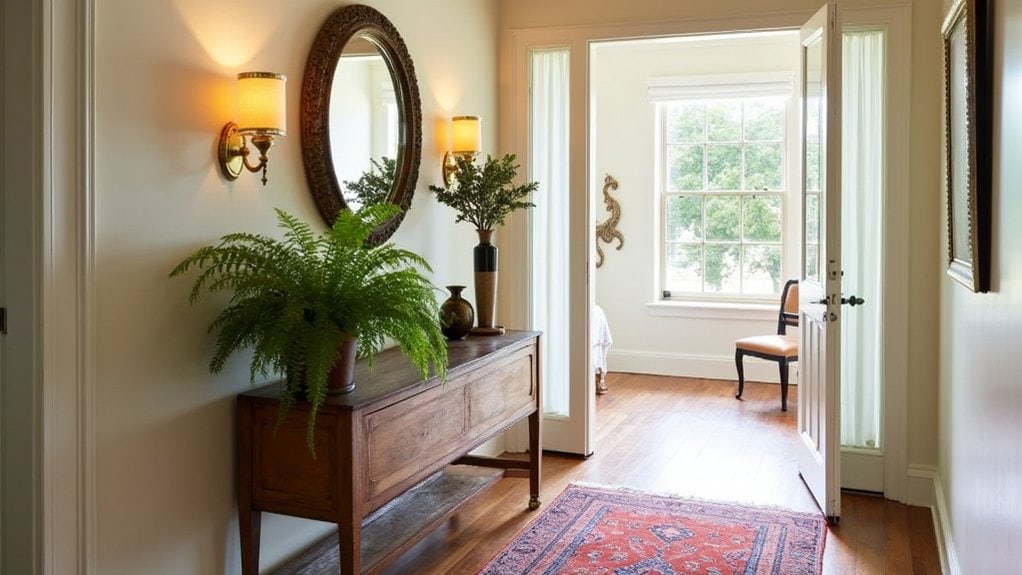
Mirrors already do a lot of heavy lifting in a small entryway, but there’s more you can work with.
Think about mirror placement carefully — positioning one across from a window pulls in natural light and makes the space read larger.
Go vertical. Wall mounted shelves and vertical storage keep the floor clear, which matters more than people realize. Decorative hooks pull double duty too.
Light colors on walls and open designs in furniture — like a slim console or multifunctional benches with built-in shoe storage — help the eye move through the space instead of stopping short.
Entryway organization is really about editing. What do you actually need at the door? Space saving solutions work best when you’re not trying to fit everything in.
Frequently Asked Questions
What Is the Average Cost to Renovate a Home Entryway?
You’ll typically spend $1,500–$5,000 renovating your entryway. Costs vary based on your flooring options and entryway lighting choices. Simple updates run cheaper, while high-end materials and fixtures can push your budget toward the higher end.
How Do I Childproof My Entryway Without Compromising Its Design?
You can childproof your entryway by using stylish storage like decorative baskets to hide hazards. Install safety solutions such as outlet covers and door handle guards that blend effortlessly with your decor, keeping it both safe and beautiful.
What Entryway Features Increase a Home’s Resale Value Most?
You’ll boost resale value most by adding modern upgrades like stylish lighting, quality flooring, and a fresh coat of paint. Don’t overlook functional storage solutions—built-in benches and organized closets impress buyers and make your entryway irresistibly appealing.
How Do I Maintain and Clean Entryway Materials and Surfaces?
You’ll keep your entryway pristine with these cleaning tips: wipe hardwood floors weekly, seal natural stone seasonally, and dust light fixtures monthly. Tailor your material care routine to each surface’s specific needs for lasting beauty.
Can I Create a Welcoming Entryway in a Rental Apartment?
Yes, you can absolutely transform your space with rental solutions that don’t damage walls! Use freestanding furniture, removable hooks, and peel-and-stick accents for entryway inspiration that’s both stylish and landlord-friendly without sacrificing warmth or personality.
Final Thoughts
Your entryway doesn’t need a complete overhaul to feel more welcoming. Small changes, like swapping a bulb or adding a small bench, can shift the whole feel of the space. Think about what actually bothers you when you walk in. Is it the clutter? The lighting? Start there. You don’t have to do everything at once. Just pick one thing and see how it changes how the space feels to you.