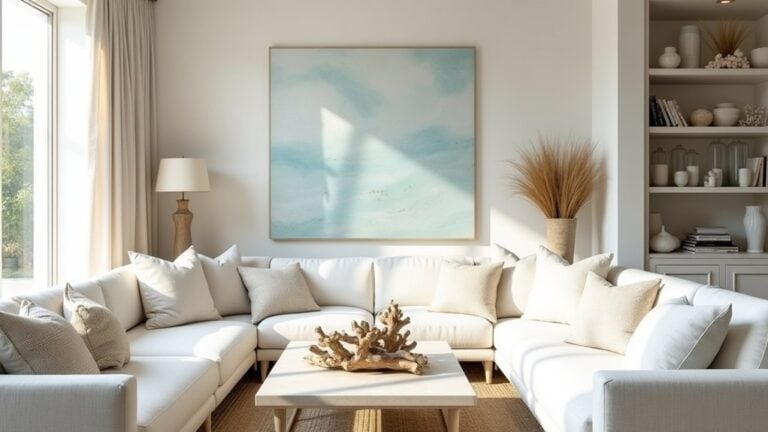
Modern coastal decor doesn’t need anchors and seashells everywhere. You’ll create a sophisticated beach vibe by starting with a neutral foundation—think sandy beiges and soft whites—then layering in natural textures like jute, linen, and rattan. Keep your color palette limited, maybe adding just one oceanic accent. Instead of themed items, opt for abstract ocean photography or subtle textural elements. Quality over quantity makes all the difference. Your space can feel beachy without looking like a souvenir shop.
The Essentials
- Establish a neutral foundation with soft whites and sandy beiges, focusing on how the space feels rather than perfect coordination.
- Prioritize natural textures like jute, linen, and rattan over literal beach-themed decorations for subtle sophistication.
- Select strategic coastal accents through abstract artwork or aerial photography instead of obvious seashell collections.
- Create ambiance with layered lighting that mimics golden hour, using fixtures made from natural materials as focal points.
- Limit your palette to three main colors and edit accessories to display only meaningful items that reflect personal style.
The Neutral Foundation: Building Your Coastal Canvas
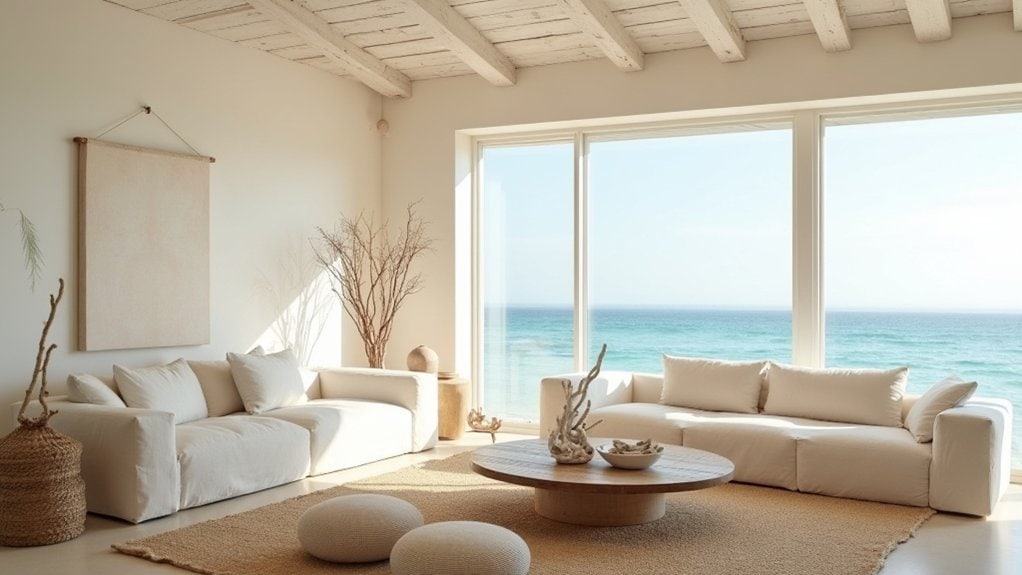
When beginning your beach-inspired makeover, a neutral foundation acts as your blank canvas for coastal serenity. Think soft whites, sandy beiges, and pale grays that mimic shoreline tones. These neutral tones aren’t boring—they’re essential for creating that airy beach feel without going overboard.
Layer in coastal textures to bring dimension to your space. Maybe add a jute rug or linen curtains that catch the breeze when windows are open. I’ve found that mixing different natural materials—like unfinished wood surfaces with woven baskets—adds depth while keeping things relaxed.
Don’t worry about perfect coordination. Sometimes the most authentic coastal spaces have slightly mismatched elements. What matters is how the room feels when you walk in. Does it make you breathe a little deeper? That’s the coastal vibe you’re after.
Texture Over Theme: Bringing Beach Elements Indoors
Instead of beach-themed knickknacks that scream “vacation home,” you’ll create more sophistication by focusing on textures that subtly evoke coastal elements. Try incorporating natural jute rugs, linen curtains, and rattan furniture that bring sand-inspired neutrals into your space without saying a word about the beach. Layering these tactile elements—maybe a chunky knit throw over a smooth cotton sofa or rough-hewn wooden accents against polished surfaces—creates depth that feels both elegant and comfortably lived-in.
Natural Fibers, Refined Edges
While traditional beach décor often relies on literal elements—seashells scattered across coffee tables or anchors mounted on walls—the most sophisticated coastal interiors embrace a subtler approach focused on texture rather than theme.
Natural fibers are your best friends here. Try incorporating jute rugs, linen curtains, or a woven rattan chair that nods to seaside living without screaming “beach house!” The key is balance—maybe pair those textural elements with clean lines and minimalist decor for a modern feel.
I’ve found that a chunky knit throw on a sleek sofa creates that perfect tension between cozy and refined. You don’t need much, honestly. Sometimes a single statement piece, like a handwoven pendant light, brings enough coastal texture without overwhelming your space. What natural materials are you drawn to?
Sand-Inspired Neutral Palette
The beauty of natural textures really shines when paired with the right color palette. When designing your beach-inspired space, sand-inspired neutrals create a sophisticated foundation that never feels dated or kitschy. You’ll want to layer these coastal hues thoughtfully—maybe starting with a warm taupe wall color that reminds you of wet sand after the tide recedes.
For the most authentic sand-inspired palette:
- Mix warm and cool neutrals (ivory, greige, and soft taupe) to mimic the varied tones found in actual beach sand
- Add subtle pops of coastal hues like muted sage, weathered blue, or soft coral
- Incorporate sand textures through natural materials—think grasscloth wallpaper, nubby linen, or speckled terrazzo
This approach feels fresh yet timeless, giving you room to evolve your space without starting over.
Layered Tactile Elements
Next, focus on layered textiles with varying weights. You might pair a chunky knit throw with a lightweight cotton cushion, creating tactile contrasts that echo the diverse textures found at the shore.
Finally, add unexpected rough elements—maybe a driftwood lamp base or a concrete side table with smooth edges. I’ve found these imperfect elements ground a space better than any seashell collection.
When you’re arranging these pieces, trust your hands, not just your eyes. How does each surface feel? Does your space invite touch?
The New Maritime Color Palette
How dramatically the coastal color palette has shifted from predictable nautical blues and whites! Today’s beach-inspired spaces embrace more complex oceanic hues that feel sophisticated rather than themed. You’ll notice designers blending muted sage greens with terracotta and sand tones to create coastal contrasts that feel organic and lived-in.
When selecting your maritime palette, consider these guiding principles:
- Start with a base of warm neutrals (bone, sand, driftwood) rather than stark white
- Introduce depth with at least one unexpected accent color—maybe rust, ochre, or charcoal
- Include varying shades of the same color to mirror nature’s imperfect gradients
I’ve found that limiting yourself to 3-4 key colors keeps the space feeling cohesive while still allowing those subtle oceanic variations to shine through naturally.
Natural Materials: Beyond Driftwood and Rope
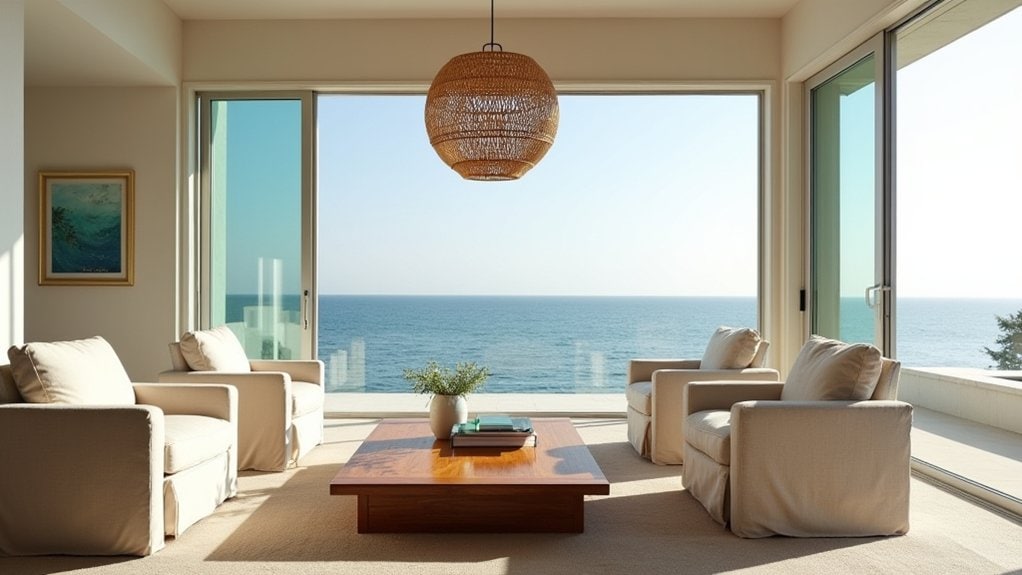
While you’re likely familiar with classic beach decor staples, today’s coastal-inspired homes embrace a wider range of natural textures. You’ll find seagrass and rattan bringing a sophisticated elegance to spaces through lampshades, chair backs, and even wall coverings that feel both earthy and refined. Consider pairing smooth stones with delicate shells for tabletop arrangements that capture the beach’s natural harmony without feeling like obvious vacation souvenirs.
Seagrass and Rattan Elegance
When incorporating these materials, consider:
- Start small with accent pieces like seagrass baskets or a rattan side table
- Layer textures by pairing smooth surfaces with the natural weave patterns
- Think beyond furniture—lighting fixtures in these materials create stunning focal points
Rattan sustainability makes it an eco-conscious choice too. You’ll feel good knowing your stylish headboard or pendant light comes from renewable resources. I’ve found these materials bring warmth without the typical coastal clichés—maybe that’s why they never really go out of style.
Stone and Shell Pairings
You’ll want to look for shell sculptures that don’t feel kitschy—think abstract arrangements in monochromatic colors rather than those tacky souvenir-shop pieces. I recently saw the most amazing spiral shell sculpture mounted on a black stand that looked like it belonged in a gallery.
Stone accents work beautifully as counterpoints. Maybe try river stones as trivets, or slate coasters that remind you of tidal pools. What I love about this approach is how these materials bring texture without looking themed.
The weight of stone balances the delicacy of shells—creating spaces that feel grounded yet light.
Strategic Coastal Accents That Avoid Clichés
Transforming your home into a coastal haven doesn’t require filling every shelf with seashells and anchors. Instead, thoughtfully select a few strategic elements that whisper “beach” rather than shouting it. I’ve found coastal artwork featuring abstract waves or aerial beach photography can set the tone without feeling touristy.
Beach-inspired textiles work wonderfully too—think subtle blue ombré throws or linen curtains in sandy neutrals. Maybe add just one statement piece that feels special to you.
For a modern coastal vibe that avoids clichés:
- Choose natural materials with texture (jute, weathered wood, frosted sea glass)
- Embrace a restrained color palette of whites, blues, and warm neutrals
- Select quality over quantity—one perfect driftwood lamp means more than twenty beach trinkets
Lighting That Captures Oceanside Luminosity
Light plays perhaps the most revolutionary role in coastal-inspired interiors, yet it’s often overlooked in favor of more obvious beach elements. To truly capture that oceanside glow, you’ll want to layer your lighting thoughtfully.
Try installing oceanic chandeliers with cascading glass elements that catch and scatter light like water. Maybe place one over your dining table, where it’ll create dancing reflections during dinner parties.
Don’t forget ambient lighting – it’s what gives that warm sunset feeling to your space. Recessed lights with dimmers let you adjust the mood from bright midday to golden hour.
I’ve found that translucent lamp shades in sandy neutrals work amazingly well. They filter light in a way that reminds me of sunshine through beach grasses. What kind of atmosphere are you trying to create in your space?
Blending Modern and Coastal: The Perfect Balance
While coastal style often conjures images of seashells and nautical stripes, achieving a truly sophisticated beach-inspired space means finding that sweet spot between modern minimalism and relaxed seaside charm. It’s about bringing in that airy, laid-back coastal feel without turning your home into a souvenir shop.
Coastal minimalism pairs wonderfully with modern simplicity when you:
- Limit your palette to three main colors – think whites, sandy neutrals, and maybe just one oceanic accent
- Choose furniture with clean lines but relaxed materials – a sleek sofa in natural linen works perfectly
- Edit your accessories ruthlessly – display just one or two meaningful items rather than collections
You’ll know you’ve hit the balance when your space feels both curated and comfortable. The beach vibe should whisper, not shout.
Frequently Asked Questions
How Much Should I Budget for a Coastal Decor Makeover?
For your makeover, you’ll need $1,000-5,000 depending on room size. Your budget breakdown should include furniture, accessories, and paint. Try cost saving tips like DIY projects and thrift shopping for unique pieces.
Can Coastal Decor Work in Small Apartments or Urban Settings?
You’ll find coastal color palettes work wonderfully in small apartments. Incorporate urban beach accessories like driftwood accents or sea glass vases to create that seaside feeling without overwhelming your compact space.
How Do I Maintain Beach-Inspired Decor in Humid Environments?
You’ll need proper humidity control to protect your beach-inspired elements. Choose decor materials like sealed wood, metal, or treated fabrics that resist moisture damage. Dehumidifiers and good ventilation are essential in humid environments.
Are There Eco-Friendly Options for Authentic Coastal Design Elements?
You’ll find plenty of eco-friendly coastal options. Use sustainable materials like reclaimed wood for furniture, bamboo accessories, recycled glass vases, and natural textiles. Look for locally sourced driftwood and seagrass to enhance authenticity.
How Often Should I Update My Coastal Decor Seasonally?
You’ll want to refresh your coastal decor 2-3 times yearly. Switch seasonal themes in summer and winter, updating color palettes with brighter blues in warmer months and deeper tones when it’s cooler.
Final Thoughts
Trust your instincts. Sometimes a single driftwood lamp or the perfect shade of seafoam is enough. What matters is how your space makes you feel. Relaxed, refreshed, connected to something larger than yourself.