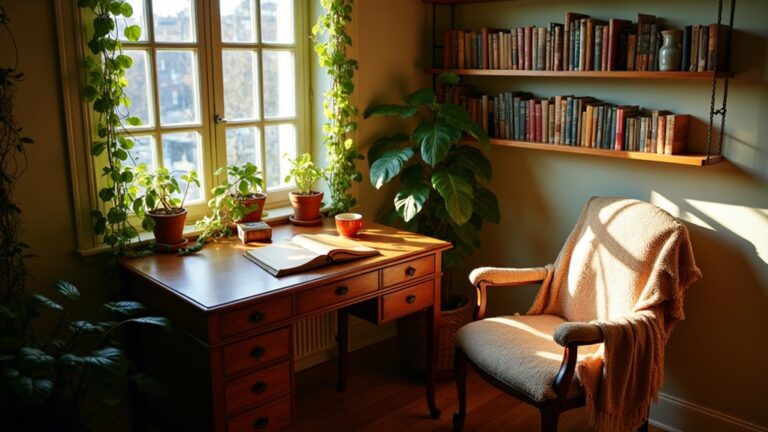
Did you know that 68% of creative breakthroughs happen in spaces under 100 square feet? You’ve probably never thought about how that overlooked corner of your home could become your creativity catalyst. It’s not about having more space—it’s about transforming what you already have. That dusty nook by the window? It might just hold the key to your next big idea. The way you arrange these tiny sanctuaries matters more than you think, and there’s a fascinating reason why our brains respond so powerfully to these intimate environments.
The Essentials
- Corners provide natural boundaries that create psychological safety, triggering deeper breathing patterns and shifting the mind into creative mode.
- Strategic lighting, comfortable seating, and vertical storage solutions maximize functionality in small corner spaces.
- Biophilic elements like plants connect indoor spaces with nature, reducing stress and enhancing focus and creativity.
- Sound design with soft surfaces reduces distractions, while personalized soundscapes support individual creative working styles.
- Even minimal transformations of small corners can yield significant creative benefits, as demonstrated by successful creators who thrived in humble spaces.
The Psychology Behind Corner Retreats
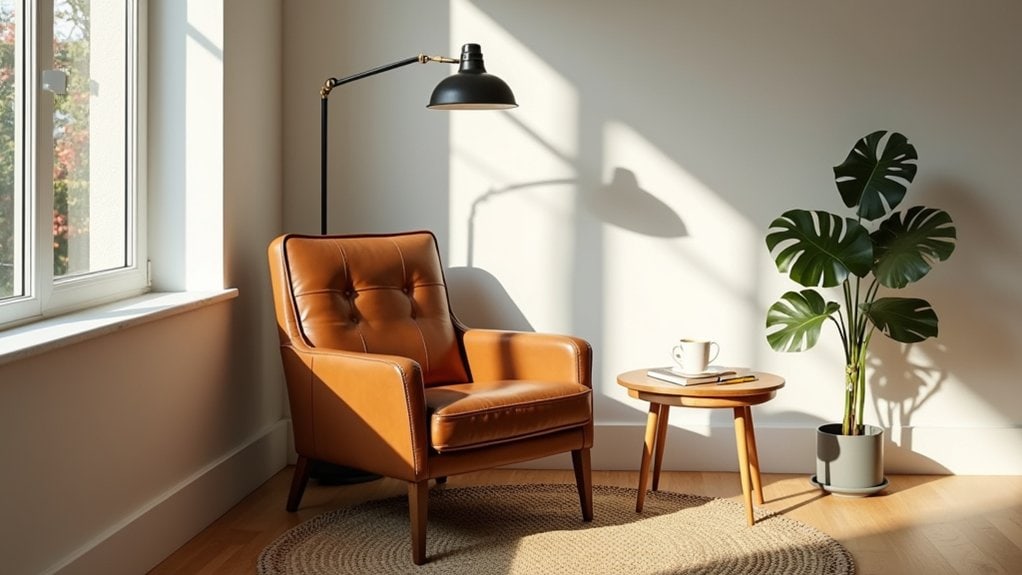
While we often overlook the corners of our homes, these neglected spaces hold surprising psychological power. You’re naturally drawn to corners because they offer something essential: boundaries. This defined area creates a sense of calm that’s hard to find in open spaces.
Think about how you feel when you tuck into a corner with a good book. There’s safety there, right? Your brain relaxes when it doesn’t need to scan for potential interruptions from all sides.
This mental ease actually fuels creative inspiration. When you designate a corner as your creative space, you’re telling your brain “this is where ideas happen.” Over time, just settling into that spot triggers your mind to shift into creative mode.
Want proof? Notice how you breathe differently in corner spaces—deeper, slower.
Designing Your Perfect Nook: Elements That Matter
Since you’ve decided to transform that neglected corner into something special, let’s focus on the elements that truly make a nook work. First, consider light—natural is best, but a warm lamp works too when you’re dealing with limited space. The right chair matters more than you might think; it should support you but also invite creativity.
Think about surfaces. Do you need a small desk for writing, or just a shelf for your coffee? Creative nook ideas for the home often incorporate vertical storage—wall-mounted shelves or pegboards can expand your options without eating floor space.
What inspires your best design for creativity? Maybe it’s plants, art, or just a clean, uncluttered view. Sometimes the simplest corners spark the biggest ideas. What would make you want to sit there?
Window Corners: Harnessing Natural Light for Creativity
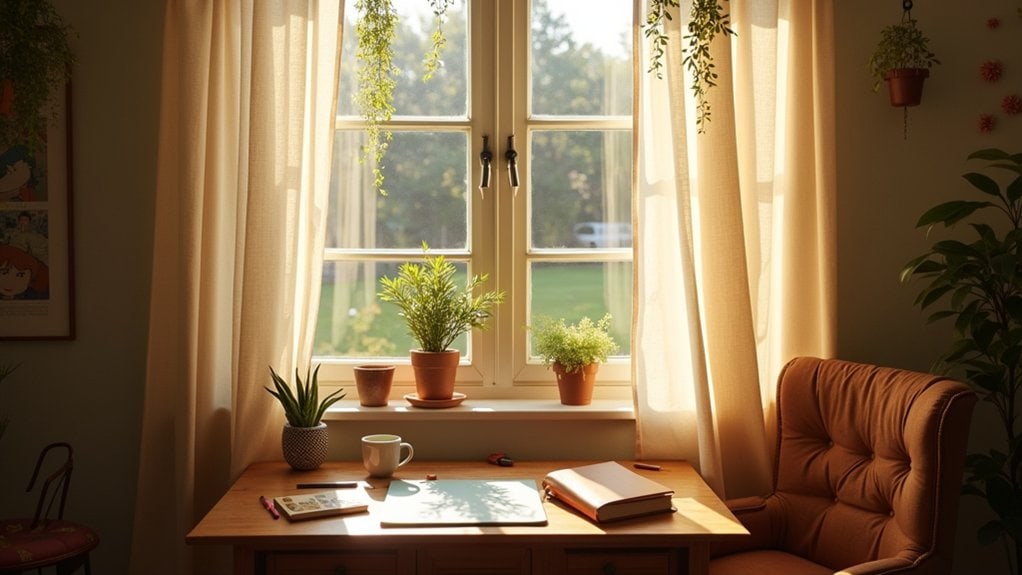
Windows offer the perfect foundation for a creative nook, giving you that precious natural light we all crave. When you position your desk or reading chair near floor to ceiling windows, you’re not just choosing a spot with a view—you’re setting up your brain for success. Natural light stimulates your creative juices in ways artificial lighting simply can’t match.
Try these simple window corner enhancements:
- Add a small, adjustable side table that can move with the sun’s position
- Place a potted plant nearby to create a connection between your indoor sanctuary and the outside world
- Install sheer curtains that diffuse harsh direct sunlight while maintaining the glow
Don’t underestimate how your productivity shifts throughout the day as the light changes. Where’s your window facing? That matters too.
The Reading Alcove: Literary Escapes in Minimal Space
Three key elements transform any small corner into a reading alcove that feels like it belongs in a grand library. First, comfortable seating makes all the difference—think cushioned bench, oversized chair, or even floor pillows stacked just right. You’ll spend hours there, so don’t skimp on comfort.
Next, consider how lighting alters your perception of space. A small lamp creates intimacy while a strategically placed mirror expands the area visually. Maybe try both?
Finally, add that personal touch. Display favorite books within reach, hang art that inspires you, or include a small side table for your tea. What makes you feel at home matters most.
Wonder what corner of your home might work? Look around—that neglected nook could become your new favorite retreat.
Workspace Corners: Productivity in Compact Arrangements

While your reading nook offers escape into literary worlds, your workspace corner serves a different purpose—focused productivity in the smallest of spaces. You don’t need a dedicated room to create an efficient work environment. A compact desk tucked against a wall or nestled in an unused corner can become your creative home office with just a few thoughtful additions.
Try these corner workspace essentials:
- A wall-mounted desk or floating shelf that folds down when needed
- Vertical storage solutions like pegboards or stacked shelves to maximize your limited square footage
- Adjustable lighting that directs focus to your work surface without overwhelming the space
Wonder how your productivity might improve with a dedicated workspace? Even the simplest setup can transform your mindset when you sit down to work. The key is defining boundaries, however small.
Meditation and Mindfulness Pockets for Mental Clarity
In today’s non-stop world, where can you find a moment of calm within your own home? The answer might be closer than you think—in those overlooked corners that can transform into mindful corners at home.
You don’t need much space. A cushion, a small shelf for a candle, maybe some plants. That’s it. The key is designating this spot exclusively for your mental reset. Many artistic nooks design principles suggest facing a wall or window rather than high-traffic areas.
Try setting a timer for just five minutes at first. Sit. Breathe. Let your mind wander, then gently bring it back. These brief pauses can actually fuel your creative endeavors more effectively than pushing through mental fog. What forgotten corner could become your sanctuary?
Biophilic Corner Design: Bringing Nature to Tight Spaces
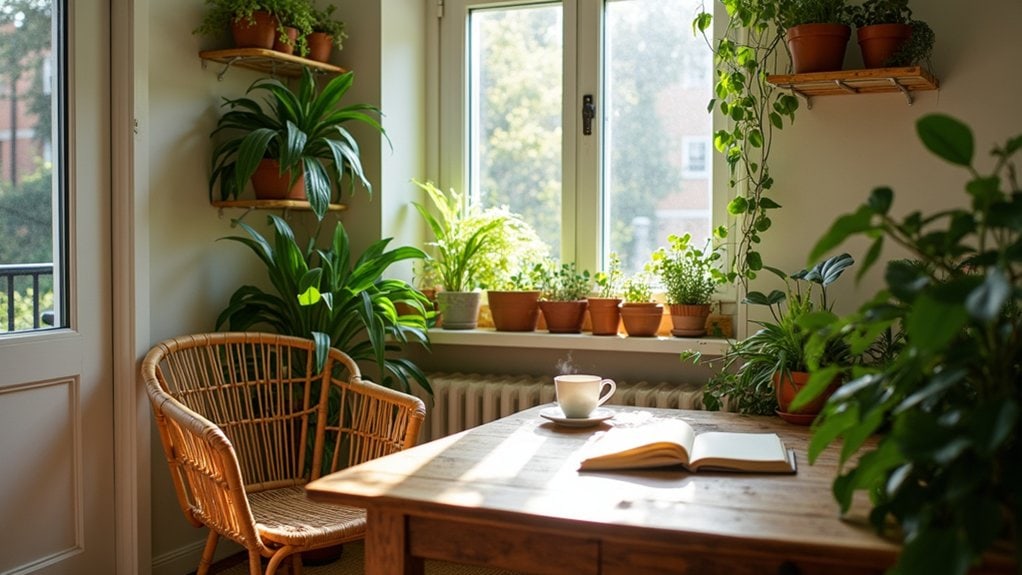
When your living space feels cramped and confining, biophilic design can transform it into something extraordinary. Even the smallest corner can become a living, breathing ecosystem that connects you to nature. You don’t need sprawling square footage to create a green sanctuary – just thoughtful placement and the right plant selections.
Try these corner-friendly approaches to bring nature indoors:
- Vertical green walls using pocket planters that maximize wall space while minimizing floor footprint
- Tall, slender snake plants that purify air and require minimal maintenance in tight spaces
- Hanging planters at different heights to create visual interest without consuming valuable surface area
Indoor plants don’t just beautify your space – they improve air quality, reduce stress, and enhance focus. What forgotten corner in your home might become your next biophilic retreat?
The Technology-Free Zone: Unplugging in Your Corner
Nature brings life to our corners, but technology often steals our attention from it. Creating a mindful corner at home means deliberately leaving your devices behind. You’ll need a comfortable seat, a small table for a book or journal, and maybe a cup of tea—but no charging stations.
Your personal style should guide this space. Do you prefer minimalism with clean lines and neutral colors? Or are you drawn to cozy textures and warm tones? Either way, choose one focal decor piece that grounds you—perhaps a handmade ceramic, a small sculpture, or a framed quote that reminds you why unplugging matters.
Think about it: when was the last time you sat quietly without reaching for your phone? This corner isn’t just furniture arrangement. It’s an invitation to reconnect with yourself.
Multi-Functional Corner Solutions for Changing Needs
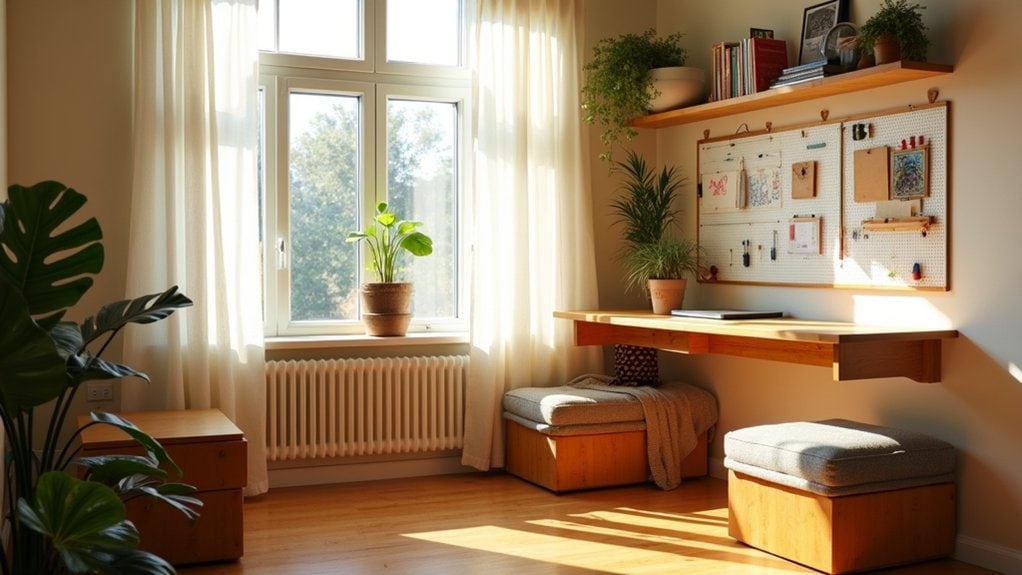
Life changes quickly, yet our homes often don’t adapt at the same pace. Your cozy corner needs to evolve with you—whether you’re suddenly working from home, pursuing a new hobby, or just need more space. Multi-functional furniture transforms how you use that overlooked nook, letting you switch between activities without rearranging your entire home.
Consider these versatile approaches:
- A fold-down desk that becomes a dining table or crafting station when you need it, then disappears when you don’t
- Wall-mounted shelving that maximizes vertical space while keeping your essentials within reach but not in the way
- Seating with hidden storage space underneath to tuck away seasonal items or project materials
What matters most isn’t how much space you have, but how thoughtfully you’ve designed it to serve your changing needs.
Sound Design: Creating Acoustic Comfort in Your Sanctuary
Beyond thoughtful furniture choices, your corner sanctuary needs attention to another dimension of comfort—sound.
The acoustic quality of your space directly impacts how well you can think and create. Sound design isn’t just for recording studios; it’s essential for inspiration spaces at home too. Consider adding soft surfaces—a small rug, a fabric wall hanging, or even a bookshelf—to absorb echoes and create a buffer against distracting noises.
Maybe you’ll want a small bluetooth speaker for background music, or perhaps you prefer complete quiet? Your needs might change depending on your task or mood—that’s what makes a truly dynamic environment.
Think about when you’re most productive. Is it with gentle background noise or in total silence? Design your corner’s soundscape to match how your mind works best.
Corner Sanctuaries for Children: Nurturing Young Imaginations
Why should adults be the only ones with dedicated thinking spaces? Children need design inspiration too—perhaps even more than we do. Creating fun space corners in your home gives kids room to explore their boundless imagination while learning to appreciate their own company.
When designing creative home corners for your little ones, consider:
- A low tent or canopy that creates an instant “secret” feeling without permanent installation
- Cushions and soft textures that make the space inviting and comfortable for longer creative sessions
- Rotating supplies based on interests—art materials one week, building blocks another
You’ll notice your child retreating to their corner sanctuary during quiet moments, developing independence while still being safely within your reach. It’s amazing what kids can create when given just a bit of space to call their own.
The Minimalist Approach: Less Space, More Impact
While children thrive in their dedicated corners, adults can benefit from the opposite approach. You might find that compact spaces with intentional design actually spark more creativity than sprawling rooms filled with distractions.
Try creating a minimalist nook with clean white walls and just the essentials—a comfortable chair, good lighting, and perhaps one inspiring object. When you eliminate the excess, your mind has room to expand.
Have you noticed how a clutter-free home changes your thinking? Many creative professionals deliberately work in sparse environments. Your brain doesn’t need to process background noise or visual chaos.
Start small—transform an unused alcove or window seat into your thinking space. You don’t need much room to generate big ideas, just enough to sit comfortably and let your thoughts wander freely.
Transformative Stories: How Corner Spaces Changed Creative Lives
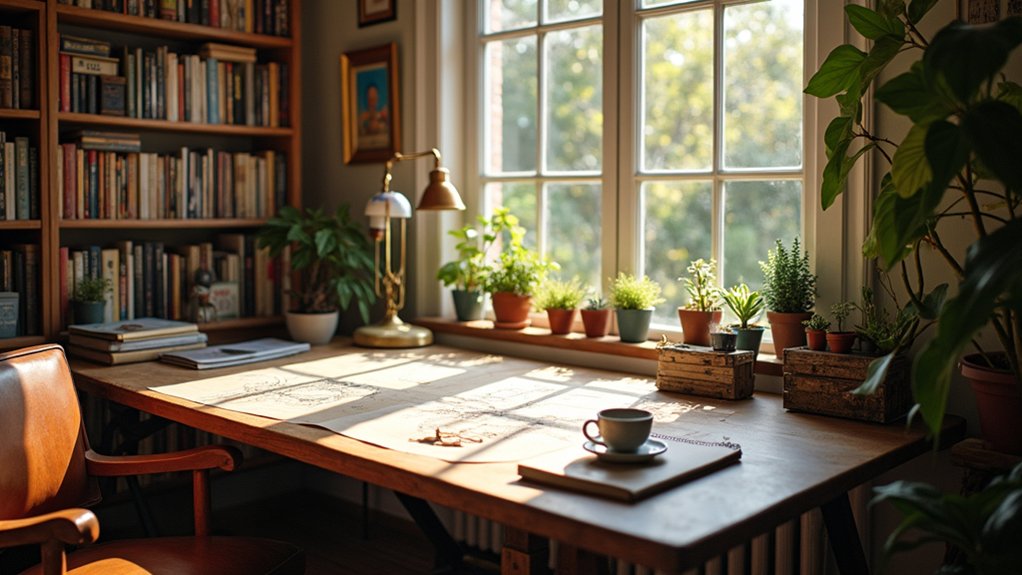
Many of history’s most celebrated creators found their spark in the humblest of spaces. When you design a mindful corner at home, you’re following in the footsteps of remarkable minds who transformed unused space into wellsprings of innovation. Creative spaces don’t need to be grand—they just need to speak to you.
Consider these transformative examples:
- A novelist who wrote her bestselling trilogy at a tiny desk wedged between her refrigerator and window
- A software developer who coded his revolutionary app from a repurposed closet with just enough room for a chair
- A painter who turned her apartment’s awkward corner into a studio that launched her career
You might be surprised how quickly a forgotten nook can become your most valued thinking spot.
Frequently Asked Questions
How Much Does Creating a Quality Corner Sanctuary Typically Cost?
Creating a quality corner sanctuary typically costs between $200-$1,000. You’ll spend less if you’re repurposing furniture and décor you already own, while custom shelving and premium seating will increase your investment.
Can Corner Sanctuaries Work in Shared Living Arrangements?
You might wonder if it’s possible… Yes! Corner sanctuaries work wonderfully in shared spaces. You’ll just need to establish boundaries, communicate with roommates, and perhaps use screens or curtains for added privacy when needed.
What Solutions Exist for Corners With Structural Challenges?
For corners with structural challenges, you’ll find success using floating shelves, tension rods, portable screens, or hanging elements. Don’t overlook foldable furniture, wall-mounted lighting, and corner-specific organizers that work around obstacles.
How Do Seasonal Changes Affect Different Types of Corner Spaces?
Did you know 73% of natural light changes seasonally in corner spaces? You’ll notice north-facing corners get colder in winter, while south-facing ones heat up in summer, affecting your plants, comfort, and energy usage.
Are Portable or Temporary Corner Sanctuary Options Available for Renters?
Yes, you’ll find many renter-friendly options for temporary corner sanctuaries. Try tension rods with curtains, freestanding screens, modular furniture, or plant arrangements. These create defined spaces without damaging walls or losing your deposit.
Final Thoughts
You’ll find it almost magical how even the tiniest corner can unlock your greatest ideas. When you create your sanctuary—no matter how small—you’re practically building a creative powerhouse. It might seem exaggerated, but these little nooks can literally transform your thinking. So grab a cushion, add a plant, and claim that forgotten corner.
What’s stopping you from turning that empty space into your next big breakthrough?