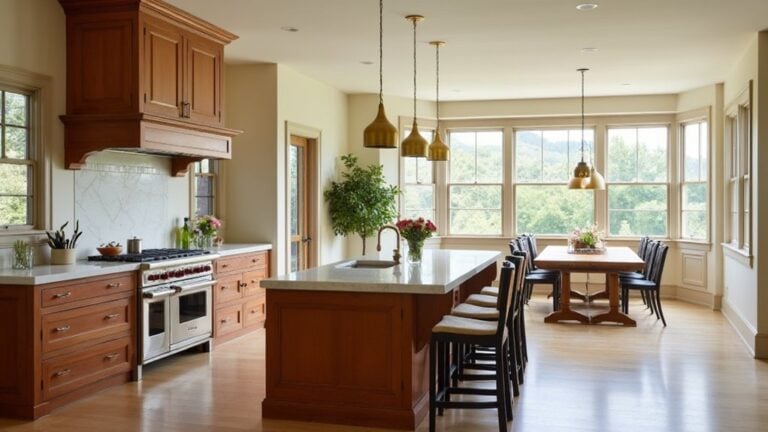
Your kitchen probably handles meal prep just fine, but does it actually bring people together? Most kitchens feel more like workstations than gathering spots. You know the feeling when everyone clusters around the island during parties, even though there’s a whole living room nearby? That’s because something about your kitchen design either draws people in or keeps them out. The difference lies in how you think about the space itself.
The Essentials
- Create open floor plans by removing walls to enhance sight lines and facilitate natural conversation flow between cooking and gathering areas.
- Install flexible seating options like island bar stools and moveable furniture to accommodate various group sizes and activities.
- Layer three types of lighting—task, ambient, and accent—with dimmers to create warm, inviting atmospheres for different occasions.
- Design interactive storage zones and open shelving that showcase personal items and encourage guest participation in kitchen activities.
- Position multi-functional islands as central hubs that support both cooking tasks and social interaction through strategic placement and accessibility.
Open Floor Plans That Connect Spaces and People
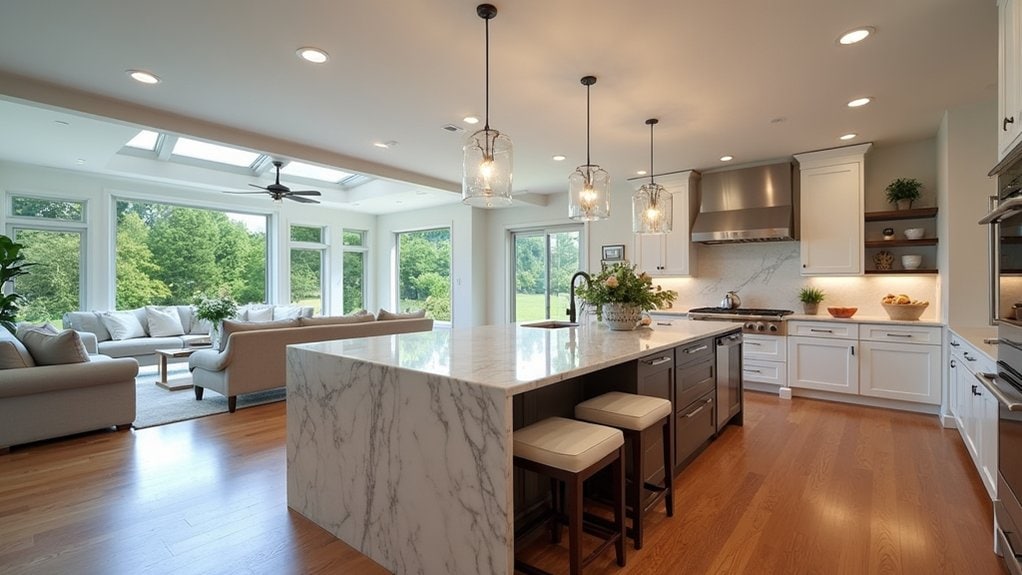
When you tear down the wall between your kitchen and living room, something interesting happens beyond just creating more space. You’ll notice conversations flow differently. Your guests naturally migrate toward the kitchen island while you’re prepping dinner, and suddenly cooking becomes less isolating.
These flexible layouts let you adapt spaces based on what’s happening. Maybe you need extra room for holiday entertaining, or perhaps you want the kids doing homework nearby while you cook. The beauty lies in having options.
Social flow becomes almost effortless when sight lines connect rooms. You can chat with someone watching TV while stirring pasta, or keep an eye on toddlers playing while chopping vegetables.
Sure, open concepts aren’t perfect—cooking smells travel everywhere, and kitchen messes stay visible. But for gathering? They’re pretty hard to beat.
Strategic Seating Solutions for Every Kitchen Layout
Creating space for people to gather means nothing if they don’t have comfortable places to sit. You’ll want to think beyond just cramming chairs around your existing table.
Consider these seating approaches that actually work:
- Island collaboration – Built-in benches or well-chosen bar stool options create natural conversation spots
- Flexible arrangements – Rolling carts and moveable seating let you adapt when more people show up
- Multi-level options – Combine counter-height and standard dining table arrangements for different activities
The key is matching your seating to how you actually use the space. Do kids do homework while you cook? You might need lower seating with back support. Host wine tastings? Bar-height spots work better for mingling.
Don’t forget about sight lines either. People want to see what’s happening.
Creating Natural Conversation Zones Within Your Kitchen
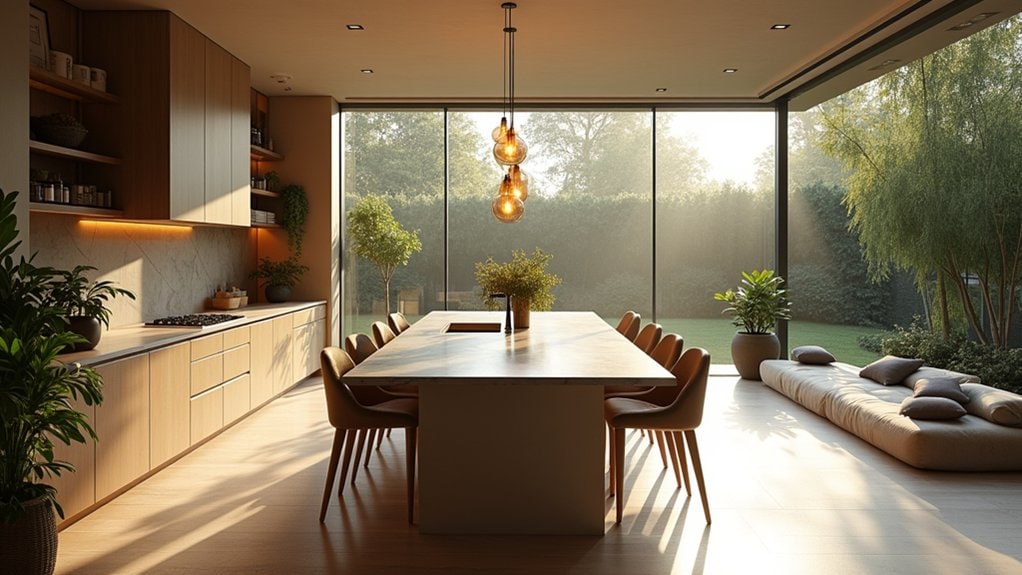
Once you’ve got the seating sorted out, you’ll notice something interesting happens—people naturally start clustering in certain spots.
These zones form around your layout flow, not against it. The corner where your island meets the main counter? That’s prime real estate for conversation starters. People lean there while you cook, sharing stories about their day.
Your prep area becomes another hub. Someone always wants to help chop vegetables or just watch you work. It’s oddly intimate, these shoulder-to-shoulder moments.
Don’t fight these natural gathering points. Enhance them instead. Keep a small bowl of nuts nearby, or position a wine opener within reach. Maybe add a small cutting board for impromptu cheese plates.
The goal isn’t forcing conversation—it’s removing barriers to it.
Lighting Design That Sets the Mood for Gathering
Good lighting can make or break the gathering vibe in your kitchen, and most people get this completely wrong.
You need layers, not just that harsh overhead fixture. Think about it—would you want to hang out under fluorescent office lighting?
Your kitchen needs three distinct lighting types:
- Task lighting for prep work (under-cabinet strips work great)
- Ambient lighting for overall warmth (recessed lights with dimmers)
- Accent lighting for mood enhancement (pendant lights over islands)
The secret is controlling intensity. Bright lighting screams “work mode” while softer ambient lighting whispers “stay awhile.” Install dimmers everywhere you can.
Consider how your family actually uses the space. Do kids do homework at the island? You’ll need adjustable task lighting there too.
Kitchen Islands as Multi-Functional Social Hubs
While most people think of kitchen islands as extra counter space, they’re actually the beating heart of modern home life—if you design them right.
Your island needs to work harder than just looking good. Sure, functional aesthetics matter—you want something beautiful. But social functionality? That’s where the magic happens.
Think about height first. Standard counter height works for prep, but adding bar-height seating creates natural conversation spots. You’ll find people gravitate toward these elevated perches.
Storage underneath keeps clutter away while you’re entertaining. Nothing kills the vibe like a messy workspace.
Consider power outlets too. People charge phones, plug in laptops, maybe blend smoothies. These small details make your island genuinely useful.
What activities happen in your kitchen beyond cooking? Design for those moments.
Storage and Display Ideas That Encourage Interaction
Your storage choices can actually draw people into conversations rather than hiding everything away behind closed doors. When you create open shelving displays with your favorite dishes or cookbooks, guests naturally gravitate toward these visual touchpoints and start asking about that vintage mixing bowl or where you found those beautiful glasses. You’ll want to think about setting up interactive storage zones too—maybe a coffee station where people can help themselves, or a baking area where ingredients stay visible and accessible for those spontaneous cooking moments together.
Open Shelving Display Solutions
Open shelving transforms storage from a purely functional necessity into an invitation for conversation and connection.
When you choose shelving styles, think beyond basic brackets. Floating shelves create clean lines, while industrial pipe shelving adds character. Wood shelves bring warmth that draws people closer.
Your decorative accents become conversation starters when displayed thoughtfully:
- Mix everyday dishes with special pieces that tell stories
- Display cookbooks you actually use alongside beautiful serving bowls
- Layer in plants or small art pieces between functional items
You’ll notice guests naturally gravitate toward open shelves. They ask about that vintage mixing bowl or comment on your cookbook collection. The key is curating items that reflect your personality while remaining accessible.
Don’t overthink it though. Sometimes the most engaging displays happen when you simply use what you love daily.
Interactive Storage Zones
Taking open shelving one step further means creating zones where storage actively invites people to participate in your kitchen life.
Consider a pull out pantry that doubles as a snack station. When friends visit, they can browse through organized treats without you having to play host constantly. It’s honestly liberating.
Hidden compartments work well for coffee supplies or tea collections. You might install a sliding panel that reveals mugs, sugar, and stirrers. Guests discover these spots naturally, which creates those spontaneous moments of connection.
Think about eye-level storage that showcases beautiful serving pieces. When everything’s visible and accessible, people feel comfortable helping themselves. They’ll grab plates for appetizers or find the right bowl for mixing.
These interactive zones reduce your workload while making others feel genuinely welcome in your space.
Choosing Materials and Finishes That Feel Warm and Welcoming
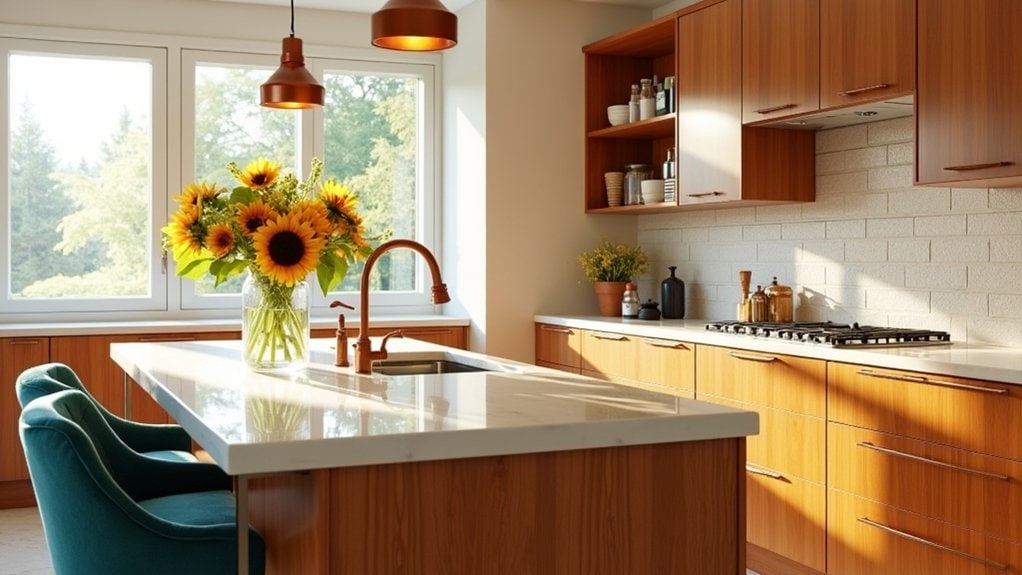
How do you make a space feel like it’s hugging you back? The answer lies in your material choices. Cold, sterile surfaces push people away, while textured materials and warm finishes draw them closer.
Think beyond the obvious. Your countertops don’t have to be stark white quartz. Consider these welcoming alternatives:
- Rich walnut butcher block that invites touch
- Honed marble with subtle veining and softer edges
- Concrete with aggregate that adds visual interest
Warm finishes work harder than you might expect. Brass cabinet pulls develop a beautiful patina over time. Matte black fixtures feel less intimidating than high-gloss chrome. Even your backsplash can contribute—handmade subway tiles have slight imperfections that catch light differently than machine-made versions.
These choices aren’t just aesthetic. They’re invitations.
Frequently Asked Questions
What’s the Ideal Budget Range for Creating a Gathering-Focused Kitchen Renovation?
You’ll need $15,000-50,000 for a quality renovation. Budget breakdown should allocate 30% for appliances, 25% for cabinets, 20% for labor. Here’s renovation tips: prioritize island seating, open layouts, and comfortable lighting to enhance your investment’s gathering potential.
How Do You Maintain Cleanliness When Encouraging More People in the Kitchen?
You’ll need smart cleaning strategies like designated prep zones and immediate cleanup habits. Organization tips include installing extra trash bins, keeping cleaning supplies accessible, and assigning simple tasks to guests who’re helping with meal preparation.
What Kitchen Layouts Work Best for Entertaining Large Groups of Guests?
You’ll want open floorplans that eliminate barriers between kitchen and living spaces. Multi functional islands serve as prep areas, serving stations, and casual seating spots, letting you cook while guests naturally gather around you.
How Can Small Kitchens Accommodate Gatherings Without Feeling Overcrowded?
You’ll optimize space by choosing multi functional furniture like bar stools with storage and kitchen islands on wheels. Install open shelving instead of bulky cabinets to create visual flow and prevent cramped feelings during gatherings.
What Safety Considerations Should Be Addressed When Designing Social Kitchen Spaces?
You’ll need proper ventilation and fire safety equipment like extinguishers nearby. Make certain adequate lighting prevents accidents, maintain clear walkways between gathering areas, and establish separate zones for food handling to avoid cross-contamination during social events.
Final Thoughts
Your kitchen doesn’t need to be massive to become a gathering spot.
Small changes make the biggest difference—maybe it’s just adding two bar stools or swapping harsh overhead lights for warmer pendants. You’re really creating moments, not just meals.
Think about how you actually live and move through the space. What feels natural? Start with one area and see how it changes the way people interact in your home.