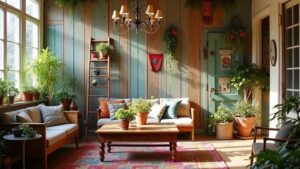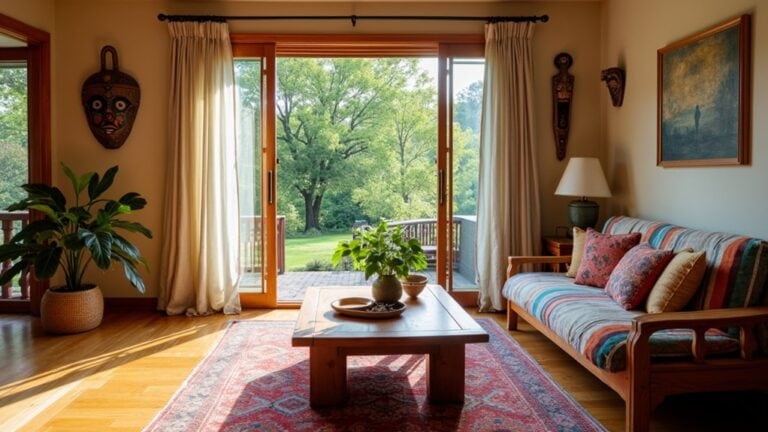
You can create travel-inspired spaces without making your home feel like a souvenir shop. Focus on meaningful pieces that tell your story – maybe a Turkish kilim as a throw, or ceramics from a memorable trip arranged as a small collection. Mix global textiles for layers of interest, and try hanging vintage maps or local artwork as conversation starters. Group similar items together rather than scattering them throughout your home. The best global decor connects you to places while still feeling right at home.
The Essentials
- Curate meaningful mementos in cohesive groups to tell personal travel stories rather than displaying scattered souvenirs.
- Layer diverse textiles like Turkish kilims, batik pillows, and vintage saris to add warmth, texture, and cultural depth.
- Create wall displays with framed maps, local artwork, and travel photography for impactful visual storytelling.
- Balance statement furniture pieces against neutral backgrounds, limiting to one or two cultural focal points per room.
- Incorporate handcrafted ceramics, wooden carvings, and color accents that evoke specific destinations and cultural traditions.
Meaningful Mementos: Curating Collections With Purpose
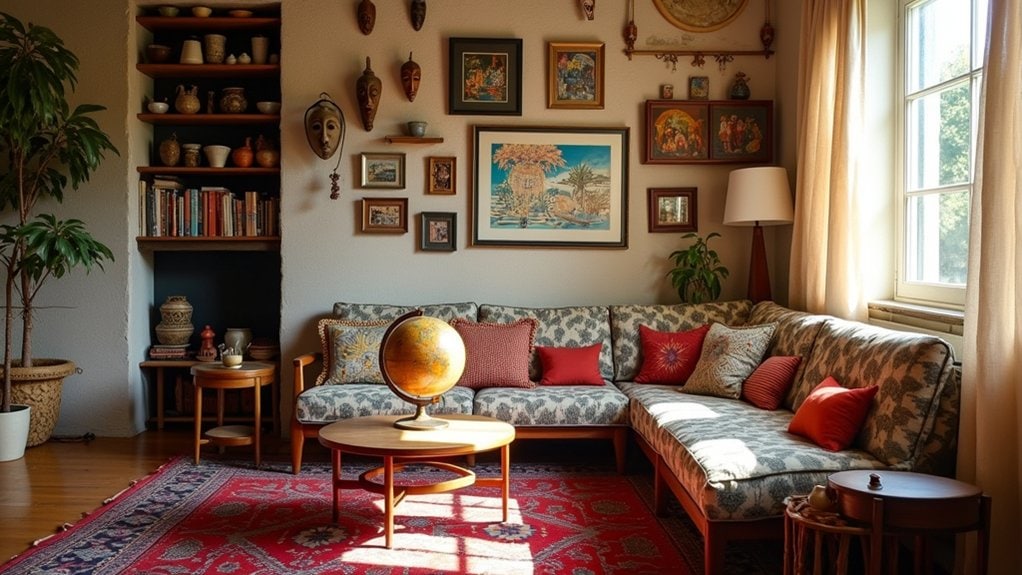
When you return from your travels, it’s tempting to display every souvenir you’ve collected, from ticket stubs to restaurant receipts. But thoughtful curation creates more meaningful spaces than scattered trinkets ever could.
Try grouping similar items together—maybe those handcrafted pottery pieces from different countries on one shelf. Memory maps work wonderfully as focal points, especially when you’ve marked places that changed you somehow.
Travel tokens don’t need to scream “souvenir.” That ordinary coffee cup from that tiny café in Barcelona? It’ll spark conversations and memories every morning.
Ask yourself what actually matters. That shell from your beach walk might mean more than the expensive tourist shop purchase. Display fewer items with more intention—your home should tell your story, not just document where you’ve been.
Textile Tales: Incorporating Global Fabrics and Patterns
Beyond mementos and keepsakes, textiles offer a rich, tactile way to bring your travels into everyday living spaces. You’ll find that global textiles transform rooms with their unique patterns and textures that just can’t be replicated by mass-produced items.
Try layering Moroccan throw pillows on your couch, or maybe drape that handwoven blanket you found in Peru across your bed. I’ve noticed that mixing cultural influences creates the most interesting spaces—like pairing Indian block print curtains with Scandinavian furniture.
Don’t worry about perfect matching. Sometimes the vibrancy of a Turkish kilim rug works surprisingly well against more neutral walls. What matters is that these fabrics connect you to places you’ve been. How might you incorporate that special textile you picked up on your last adventure?
Wall-Worthy Wonders: Maps, Art, and Photography
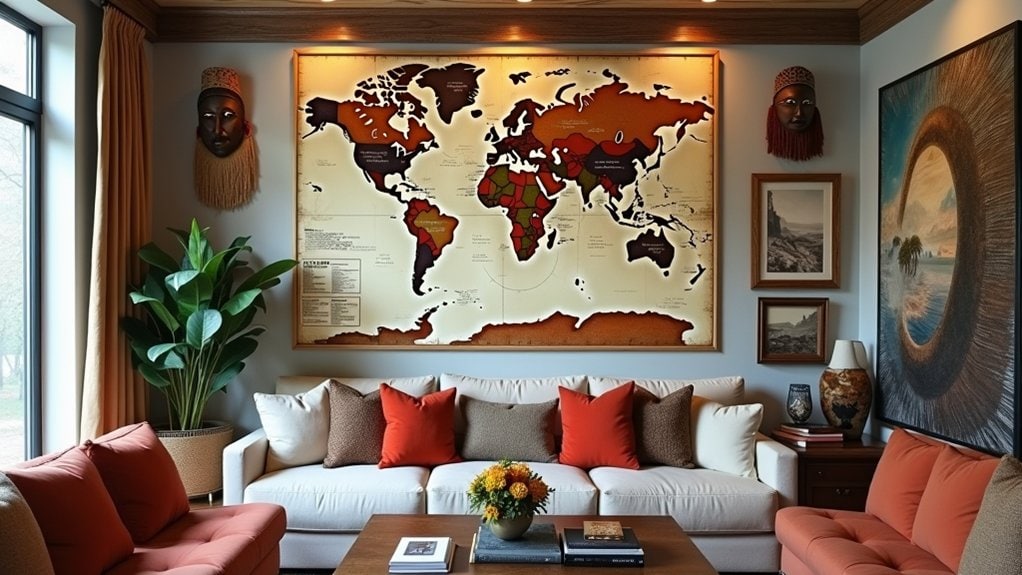
Three key elements transform bare walls into storytelling surfaces: maps, art, and photography from your travels. When you’re missing the excitement of distant places, these visual reminders bring back those feelings instantly. You’ll find yourself glancing at them during morning coffee, remembering the sounds and scents of faraway streets.
- Vintage maps make striking focal points—try framing sections of places you’ve visited or dream of exploring
- Overlay photos on simplified city skylines for a personalized mixed-media piece
- Group black-and-white travel photos in mismatched frames for an eclectic gallery wall
- Display local artwork you’ve collected, even small pieces like postcards or prints
Furniture Fusion: Blending International Styles Seamlessly
You’ll find magic happens when you mix cultural patterns like a bold ikat pillow against a minimalist Scandinavian sofa, or maybe combine woods from different continents using simple techniques like staining or distressing. Your home’s personality really comes through in those statement pieces—perhaps that carved Indonesian coffee table or Moroccan pouffe—that tell your travel story without saying a word.
Cultural Pattern Combinations
When exploring travel-inspired decor, mixing cultural patterns from different parts of the world creates spaces that tell your unique story. The key is finding pattern harmony while embracing cultural contrasts. You don’t need perfect matching—just thoughtful combinations that feel right to you.
Try these approaches to mix patterns effectively:
- Layer textiles with varying scales—pair bold Moroccan prints with subtle Japanese-inspired patterns
- Use a consistent color palette to unite diverse patterns from different regions
- Incorporate neutral spaces between patterned elements to give the eye a rest
- Balance geometric and organic patterns—maybe a structured Indian block print with flowing batik designs
You’ll know when it works because the room will feel collected rather than chaotic. Trust your instincts—if a combination feels meaningful to you, it probably works.
Mixed Wood Techniques
Despite what many design magazines suggest, mixing wood tones and furniture styles from different cultures doesn’t require an interior design degree. You can absolutely blend that teak coffee table from Thailand with your grandmother’s oak sideboard.
The key is creating intentional design contrasts. Try pairing light maple with darker walnut pieces, or match wood finishes by their undertones (warm or cool) rather than exact colors. This gives your space that collected-over-time look that feels authentic.
I’ve found that incorporating a unifying element helps too—maybe similar hardware across pieces or a neutral rug that pulls everything together. When I added my carved Indonesian bench to my dining room with Danish chairs, I worried it wouldn’t work. But honestly? The variation made the space feel more interesting and personal.
Statement Pieces Matter
Statement pieces serve as the anchors of travel-inspired decor, telling stories no souvenir magnet ever could. You’ll want to invest in one or two bold sculptures or eye-catching murals that instantly transport you back to that special destination. Maybe it’s that hand-carved wooden bench from Bali or the ceramic vase you carefully brought back from Portugal.
When selecting statement pieces, consider:
- Scale – larger items create immediate visual impact
- Placement – position where guests naturally pause
- Personal connection – choose items that spark real memories
- Conversation potential – the best pieces invite questions
Don’t worry about perfectly matching everything. That Moroccan side table might clash with your existing decor at first glance, but that tension actually creates interest. Trust your gut – if it moved you enough to bring it home, it belongs in your space.
Color Theory Across Continents: Palettes That Transport
The colors you choose for your home can instantly transport you to places you’ve visited or dream of experiencing. Maybe it’s the deep blues and whites of Santorini or the earthy terracottas of Morocco that call to you.
Color emotions shift dramatically across cultures. What feels calming in one region might energize in another. Have you noticed how Mediterranean homes embrace sea tones while Scandinavian spaces prefer muted neutrals? These regional influences aren’t random—they’re deeply tied to scenery, climate, and cultural history.
You don’t need to repaint everything. Start small with pillows or art in colors that remind you of your favorite destination. I once added burnt orange throws to my living room after a trip to New Mexico, and honestly, they still make me happy years later.
Artisanal Accents: Handcrafted Treasures as Focal Points
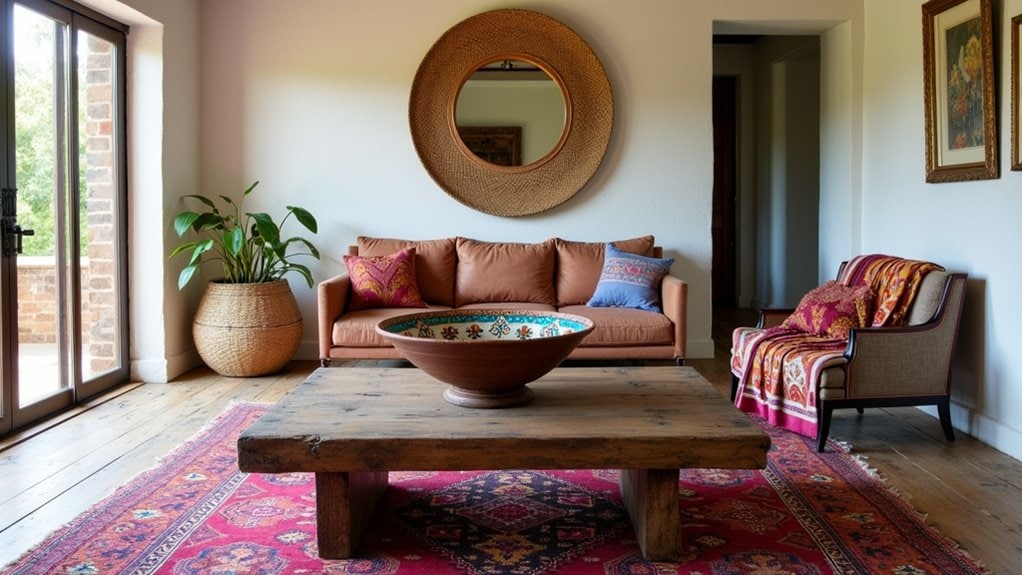
You’ll find that artisanal treasures from your travels can transform an ordinary room into something truly personal—maybe it’s a hand-loomed textile draped over a chair, a ceramic bowl that caught your eye in a marketplace, or a wooden carving you couldn’t leave behind. These handcrafted pieces don’t just add visual interest; they’re conversation starters that connect your daily life to meaningful moments and places you’ve experienced. When you strategically position these unique finds as focal points, you’re not just decorating but telling your story through objects that carry the energy and skill of their makers.
Statement Textiles Shine
From distant marketplaces to hidden village workshops, handwoven textiles often become the soul of travel-inspired interiors. You’ll find these pieces transform ordinary rooms with their bold patterns and lively hues that tell stories of faraway places. I’ve noticed how a simple Moroccan throw can completely change the feel of my living room.
Try incorporating textiles in these ways:
- Drape a handwoven Turkish kilim over your sofa for instant warmth
- Layer different patterns—maybe a batik pillow with an ikat throw
- Hang a framed textile fragment as unexpected wall art
- Use vintage saris repurposed as curtains for a splash of color
The beauty of textile accents? They’re packable souvenirs that actually work in your everyday space, unlike that giant ceramic mask I bought in Venice.
Ceramics Tell Stories
Handcrafted ceramics possess a storytelling power that mass-produced items simply can’t match. When you place that hand-painted bowl from Morocco or that asymmetrical vase from a Japanese village artisan on your shelf, you’re displaying more than decor—you’re sharing cultural symbolism made tangible.
Look for pieces with distinct ceramic narratives: the blue pottery of Jaipur with its floral motifs, Greek ceramics with their ancient mythology references, or Mexican Talavera with its lively history. These aren’t just pretty objects—they’re conversation starters.
I’ve found that mixing just two or three statement ceramic pieces into your existing decor works best. Maybe place that hand-thrown mug you bought from that tiny studio in Portugal where the potter explained her family’s seven-generation tradition? What stories do your ceramics tell?
Wooden Carvings Speak
While ceramics carry cultural heritage through color and form, wooden carvings bring an organic warmth that transforms spaces with their tactile presence. You’ll find that each piece tells a story of cultural significance through its craftsmanship details—the careful gouge marks from hand tools or the polished finish that comes from hours of sanding.
When selecting wooden carvings for your home, look for:
- Pieces with visible tool marks that reveal the artist’s technique
- Carvings made from local, indigenous woods that connect to their origin
- Items with religious or ceremonial significance (displayed respectfully)
- Functional art like bowls or masks that you’ll actually use or interact with
I’ve found that placing these wooden treasures at eye level helps guests notice the intricate details that might otherwise go unappreciated.
Creating Balance: Mixing Cultural Elements Without Overwhelming
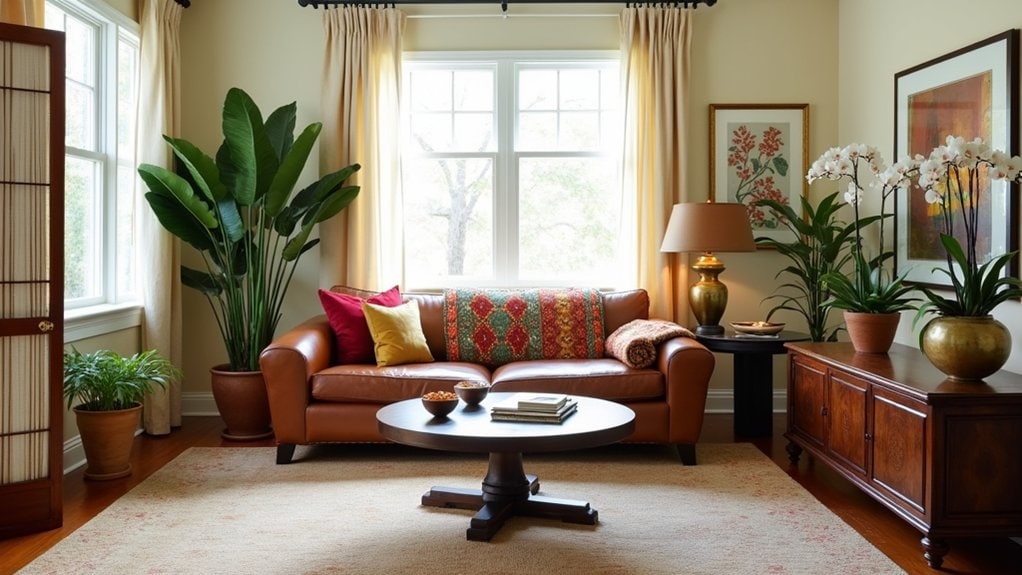
When integrating souvenirs and cultural items from your travels, striking the right balance becomes essential to avoid creating a space that feels like a chaotic museum display. I think the secret lies in cultural harmony – choosing pieces that complement rather than compete with each other.
You might try grouping similar items together rather than scattering them throughout your home. Maybe limit yourself to one or two statement pieces per room. I’ve found that maintaining a neutral backdrop helps foreign treasures shine without overwhelming.
Design cohesion doesn’t mean everything must match perfectly. It’s more about finding common elements – similar colors, materials, or shapes that tie diverse objects together. What about displaying items from different cultures that share a similar purpose? This creates a thoughtful conversation between pieces rather than a random collection.
Frequently Asked Questions
How Do I Authenticate International Decor Pieces Before Purchasing?
To guarantee decor authenticity before buying, you’ll want to research sellers, request provenance documentation, check craftsmanship details, ask for authenticity certificates, and consult experts. These purchasing tips will protect your investment and appreciation.
Can Travel-Inspired Decor Work in Small Apartments or Limited Spaces?
You’ll find small space solutions work perfectly with travel-inspired decor. Choose minimalist travel decor pieces like framed photos or small artifacts that add character without cluttering your apartment. Wall displays optimize limited space beautifully.
What’s the Best Way to Clean Delicate Global Textiles?
For delicate global textiles, you’ll need gentle textile care. Hand wash in cool water with mild soap, avoid wringing, and air dry flat. For antique pieces, consider professional cleaning methods instead of DIY approaches.
How Do I Avoid Cultural Appropriation in My Decor Choices?
You’ll avoid cultural appropriation by practicing cultural sensitivity and researching items’ origins. Purchase from authentic sources, understand their significance, and aim for respectful representation rather than using sacred objects as mere decorative pieces.
Where Can I Find Ethically Sourced Global Decor Items Online?
You’ll find ethically sourced global items on Ten Thousand Villages, Novica, and The Little Market. These ethical marketplaces prioritize sustainable sourcing, fair wages, and direct relationships with artisans from around the world.
Final Thoughts
You’ve got this—bringing the world into your home doesn’t require a design degree or endless travel. Start small with something that genuinely speaks to you, maybe that textile from your Thailand trip or a print of a place you dream of visiting. Mix it in. Live with it. Add pieces gradually as you discover them. Your space should feel collected, not decorated. And isn’t that the point? A home that tells your story.