
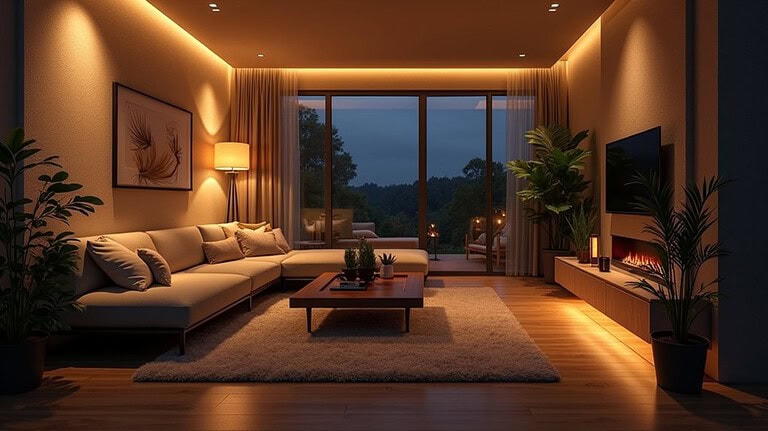
Have you ever walked into a room at night and immediately felt something was off, but couldn’t quite pinpoint why? Lighting does more to a space than most people realize. It’s not just about visibility. It shapes how a room feels, how colors read, even how relaxed you actually get. The fixtures you choose and where you place them matter more than you’d think, and there’s a lot worth reconsidering here.
The Essentials
- Ambient lighting creates depth and visual interest through shadows, enhancing a room’s atmosphere in ways that become noticeable only when absent.
- Warm light colors (2700K–3000K) establish a relaxed, settled evening atmosphere, while cooler tones suit functional spaces like kitchens.
- Layering multiple light sources, such as floor and table lamps, prevents a flat appearance and adds dynamic visual interest.
- Dimming options significantly alter nighttime ambiance, allowing one lighting layer to shift a room’s entire mood and perception.
- Matching fixtures to decor style—like Edison bulbs for rustic spaces or geometric pendants for modern rooms—ensures cohesion and enhances overall design.
What Ambient Lighting Actually Does to a Room After Dark
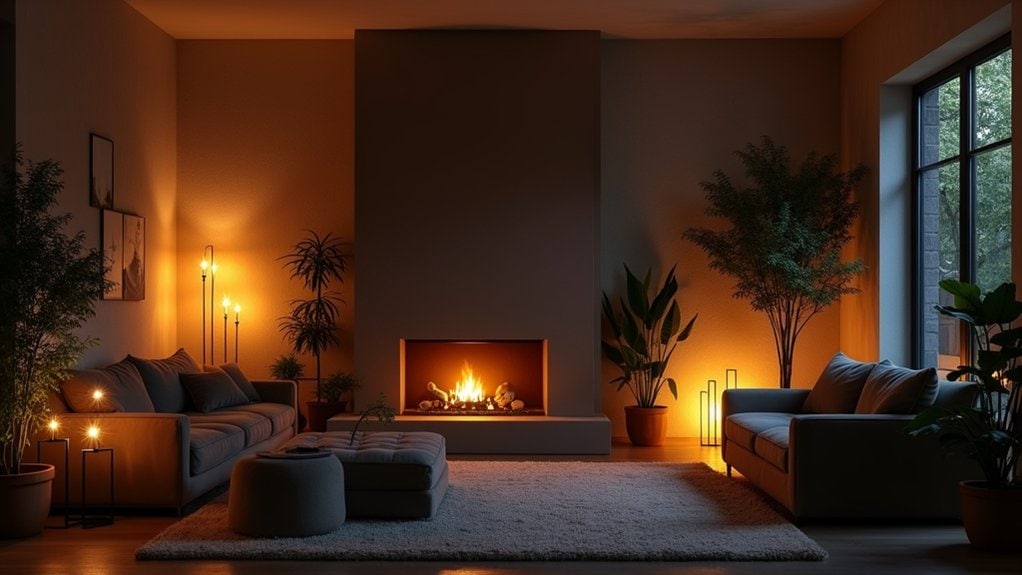
When the sun goes down, the lighting you’ve chosen for a room stops being background noise and starts doing real work.
Soft shadows start forming in corners, along walls, across furniture edges. That actually matters more than people realize. Those shadows give a room depth—without them, everything looks flat and kind of harsh.
Mood enhancement isn’t just a design buzzword. It’s something you feel before you consciously notice it. Think about how differently you feel sitting in a dimly lit room versus one with overhead fluorescents blasting at full strength.
Your lighting choices are quietly shaping how relaxed or alert you feel in that space. Does your current setup reflect how you actually want to feel at night?
The Best Types of Ambient Lighting for Indoor Spaces

There are a few different types of ambient lighting worth knowing about, and honestly, some will suit your space better than others depending on what you’re working with.
Recessed lights are probably the most common ambient light fixtures you’ll see in homes. They spread light pretty evenly across a room, which helps if you’ve got low ceilings.
Flush mounts work similarly. Wall sconces add something a little different—they push light outward and upward, which feels softer.
Warm light colors tend to make a room feel more settled at night, less harsh. Think 2700K to 3000K range if you’re shopping for bulbs.
What kind of ceiling situation are you dealing with? That actually matters more than people realize when you’re choosing between fixture types.
How to Layer Ambient Lighting for Depth and Warmth

Once you’ve figured out which fixture types work for your ceiling and room shape, the next thing worth thinking about is how those fixtures work together—not just individually.
Layering means you’re combining overhead light with lower sources—floor lamps, wall sconces, maybe something tucked on a shelf. Each layer adds different lighting textures to the room, and that contrast is what actually creates mood enhancement rather than just brightness.
Think about what you want the room to feel like at 9pm versus 6pm. Are you running everything at full power the whole time?
Dimming one layer while keeping another on low does something interesting to a space. It’s not always obvious which combination works until you try a few.
Common Ambient Lighting Mistakes That Flatten a Room

One of the most common mistakes you’re probably making is relying on a single overhead light to do all the work—and it’s quietly flattening every room in your home. When there’s only one light source, you lose all the variation in shadow and brightness that makes a space feel layered and lived-in. Think about it: are you actually using floor lamps, table lamps, or wall sconces alongside that ceiling fixture, or is everything depending on just that one light?
Relying On One Source
If your room has just one overhead light doing all the work, that’s probably why it feels a little flat or off—even if you can’t quite put your finger on it.
Single fixture reliance is honestly one of the most common issues people overlook. One light creates one mood, one angle, one shadow pattern. That’s it.
You need multiple ambient light sources working together—a floor lamp here, some wall sconces there, maybe a table lamp in the corner you never really think about.
Ask yourself: where does your eye actually travel when you walk in at night?
Probably straight to the one harsh overhead light. That’s the problem. Spreading light across different heights and zones makes the whole room feel more alive, more considered.
Ignoring Light Layer Depth
Even if you’ve got multiple light sources going, that doesn’t automatically mean the room works.
Light layering is about placement and height, not just quantity. Are your lights all sitting at the same level? That’s a problem. When everything hits the room from the same angle, you lose visual interest fast. The space starts feeling flat, almost staged in a bad way.
Try mixing floor lamps with overhead fixtures and something lower, like a table lamp near a corner. That variation in height creates dimension.
Think about where shadows naturally fall at night. You’re not trying to eliminate them entirely. Some shadow adds depth.
If your room still feels one-dimensional after adding lights, the layering probably isn’t working yet.
How to Choose the Right Color Temperature for Each Room

Color temperature can make or break how a room actually feels to live in, and it’s one of those things most people don’t think about until something feels off.
Warm light, around 2700K, works well in bedrooms and living rooms where you want to relax. Color psychology actually backs this up — warmer tones lower mental alertness over time.
Cool light, closer to 4000K, suits kitchens and home offices better because room functionality matters there. You’re cooking, reading, working. You need clarity.
Think about what you actually do in each room before buying bulbs. Bathrooms are tricky — you need accuracy for grooming but don’t want harsh light first thing in the morning.
What does your current lighting make you feel when you walk in?
How Dimmer Switches Give You Complete Ambient Lighting Control

Once you’ve dialed in the right color temperature for a room, dimmer switches are probably the next thing worth thinking about. They’re one of those lighting control options that quietly change how a space feels without you even realizing it.
Dimmer switch benefits go beyond just saving energy — they let you actually match the light to the moment.
- Adjust brightness during a movie without fumbling for lamps
- Create a softer mood for dinner without buying new fixtures
- Reduce eye strain during late-night reading sessions
- Layer your lighting levels throughout the evening
- Avoid that harsh, fully-lit feeling when you just want to wind down
Not every switch works with every bulb, so check compatibility first. LED dimmers especially — they’re not all the same.
The Fixtures That Create the Most Dramatic Ambient Lighting Effects

When it comes to fixtures that really shape a room’s mood, your choices matter more than you might think. A statement chandelier doesn’t just light a space—it draws the eye up and anchors the whole room around it, creating that dramatic effect you’re probably after. Wall sconces work differently, adding layers of light at eye level that give a room depth and warmth in a way that overhead lighting alone just can’t replicate.
Statement Chandeliers Create Drama
Few fixtures command attention quite like a statement chandelier. When you hang the right one, it shifts the entire mood of a room at night. Different chandelier styles — clustered bulbs, tiered crystals, geometric frames — each produce pretty different dramatic effects on your walls and ceiling.
Think about what you actually want the light to *do* in your space.
- Tiered crystal chandeliers scatter light across walls in shifting patterns
- Clustered Edison bulbs create warm, uneven pools of glow
- Geometric metal frames cast sharp, angular shadows
- Oversized designs draw the eye upward, making ceilings feel taller
- Dimmable chandeliers let you control how intense the drama gets
Wall Sconces Add Depth
Wall sconces don’t get enough credit, honestly. They’re not the flashiest fixture, but wall placement actually matters more than people think. Put them too high, and they wash the ceiling. Too low, and they feel awkward. Eye level is usually the sweet spot—around 60 to 65 inches from the floor.
Different sconce styles do different things for a room. A swing-arm sconce near a reading chair is practical. A pair flanking a console table feels intentional without being overdone.
What’s interesting is how sconces layer light in a way overhead fixtures can’t. They pull your eye sideways across the room, which creates this sense of depth. It’s subtle, but you’d notice if they weren’t there.
Have you tried dimming them? That changes everything.
How to Choose Ambient Lighting That Fits Your Decor Style

Choosing ambient lighting that actually works with your decor style isn’t always as straightforward as it sounds. Different decor styles call for very different lighting trends, and what looks great in a minimalist space can feel completely off in a more traditional room. So where do you even start?
Think about the mood you’re already building, then match your fixtures to that feeling.
- Modern decor styles work well with sleek, geometric pendant lights
- Rustic spaces benefit from warm Edison bulbs or lantern-style fixtures
- Bohemian rooms can handle layered, eclectic light sources at different heights
- Traditional decor pairs naturally with soft, warm chandeliers or table lamps
- Scandinavian styles lean toward simple, functional lighting with clean lines
Your existing furniture and color palette should honestly guide most of your decisions here.
Frequently Asked Questions
Can Ambient Lighting Improve Sleep Quality When Used Correctly at Night?
Yes, ambient lighting can improve your sleep quality! When you choose warm light colors in your sleep environment, you’ll signal your brain to relax, making it easier to drift into a restful, restorative night’s sleep.
How Much Does a Professional Ambient Lighting Installation Typically Cost?
You’ll typically spend $200–$2,000 on professional ambient lighting installation. Installation factors like room size, fixture type, and complexity affect your cost comparison, so getting multiple quotes helps you find the best deal.
Is Ambient Lighting Energy-Efficient Compared to Other Home Lighting Options?
Yes, ambient lighting’s energy savings are impressive! When you compare lighting types, LED-based ambient setups use considerably less power than traditional options. You’ll reduce electricity costs while still creating that perfect, inviting atmosphere in your home.
Can Renters Install Ambient Lighting Without Damaging Walls or Ceilings?
Yes, you can absolutely install ambient lighting as a renter! Use temporary fixtures like plug-in sconces or floor lamps, and rely on adhesive solutions such as LED strip lights to avoid damaging your walls or ceilings.
How Do Smart Home Systems Integrate With Existing Ambient Lighting Setups?
You can integrate smart home systems by swapping in smart bulbs, then connecting lighting controls through apps. You’ll customize color temperature, create mood settings, explore automation options, and issue voice commands for effortless nighttime ambiance.
Final Thoughts
Ambient lighting’s really about small choices that add up. A dimmer here, a warmer bulb there — it changes how a room actually feels after dark. You don’t need to overhaul everything at once. Start with one space, maybe the room you use most at night. Notice what’s working, what feels off. Then adjust. It’s less about getting it perfect and more about getting it right for you.


