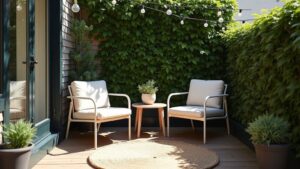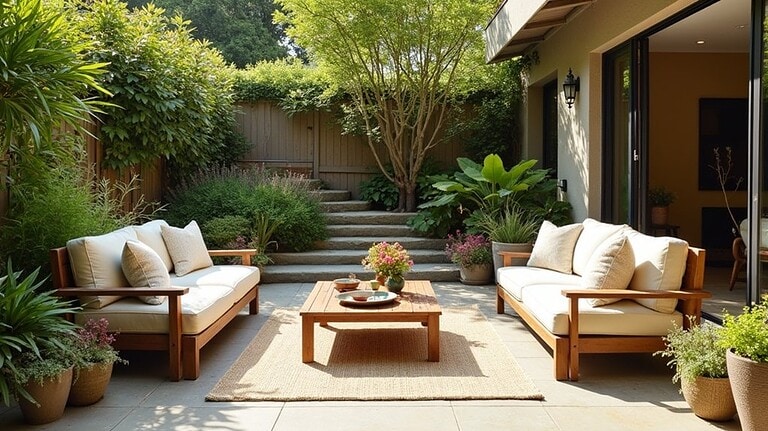
Before you buy anything, think about how you’ll actually use the space. Do you want a spot for quick weeknight dinners, slow coffee, or kids running in and out? That answer changes everything, from flooring to lighting to the kind of chairs you pick. If you carry drinks outside a lot, make the path easy and the surfaces durable. And if the space still feels split, the fix usually isn’t bigger furniture. It’s something simpler.
The Essentials
- Prioritize how you use the space daily, then choose flexible, weather-resistant furniture that supports dining, lounging, storage, and easy rearranging.
- Create a seamless transition with matching flooring tones, coordinated trim and hardware, low thresholds, and wide, unobstructed doorways.
- Define dining and lounging zones with rugs, lighting, and mixed seating while keeping circulation paths open and comfortable.
- Repeat colors, materials, and durable fabrics across both areas to create visual continuity and a cohesive indoor-outdoor palette.
- Layer ambient, task, and accent lighting, and add weather-ready textiles, storage, and seasonal comfort features for year-round use.
Start With How You’ll Use the Space
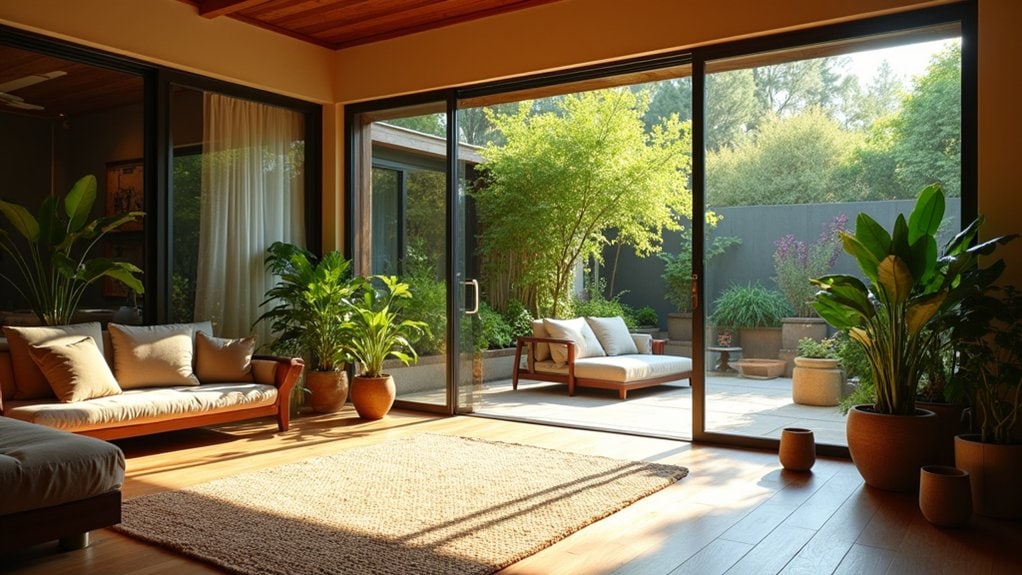
How do you actually want to live in this space day to day?
Start there, not with furniture. Think about what you’ll do most often. Will you eat here, read, work, let kids spread out, or host a few friends? Your answers shape better space utilization than any mood board can.
Make a short list of priorities, then rank them. If morning coffee matters more than entertaining, give that routine the best spot. If you need storage, plan it early. If you hate clutter, be honest about that too.
This is where functional aesthetics really help. Choose pieces that look good but earn their keep. A bench with hidden storage, a table that expands, lighting aimed where you actually need it. You’re building habits, not just decorating a scene for real life.
Improve the Transition Between Indoors and Out
You can make the shift from inside to outside feel easier by repeating flooring tones or even using a similar material near the threshold.
Your doorway matters too, and a wider opening or trim that matches both spaces can sort of pull everything together.
What would your patio feel like if the floor and door design didn’t break the flow the second you stepped out?
Unified Flooring Choices
When the same flooring, or at least a close match, runs from your living area toward the patio, the whole space feels easier to move through. You notice it right away. Your eye keeps going, and your body relaxes a little. Choose durable tile, sealed concrete, or composite planks that handle weather but still feel right indoors. If you want sustainable materials, look at porcelain with recycled content or responsibly sourced stone. Texture variety matters too, just enough grip outside, enough comfort inside.
- You feel calmer when rooms connect.
- You trust the layout more.
- You spend time outside without thinking.
- You enjoy hosting because it all feels simpler.
Try samples in daylight and at night. Do the tones still work? If not, adjust before you commit.
Coordinated Doorway Design
Even a beautiful patio can feel cut off if the doorway between inside and outside looks like an afterthought. You want that opening to feel intentional, not like two separate zones pushed together. Match trim color, hardware finish, and sightlines so your doorway aesthetics support the whole room. If your indoor space feels modern, carry that look outside, or at least get close.
Pay attention to threshold materials, too. A bulky metal strip or awkward height change can interrupt the flow fast. Try a low-profile threshold, stone that echoes your patio, or wood tones that connect both sides. Glass doors help, sure, but so does scale. Is your doorway wide enough for traffic, furniture, and daily use? If not, maybe that’s the real problem. Small changes here can shift everything, honestly.
Match Colors and Materials Across Spaces
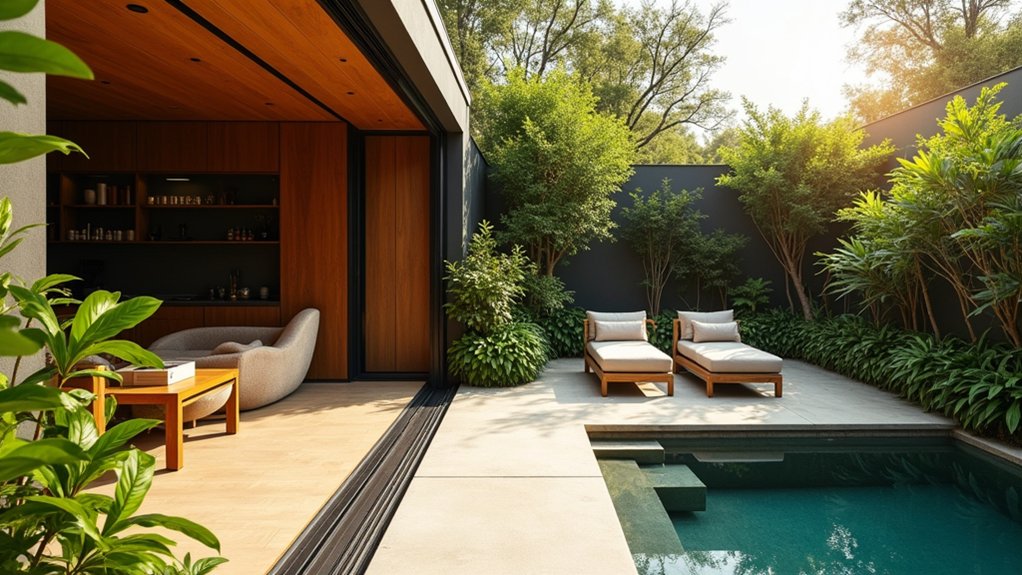
Although the furniture may change from patio to living room, the easiest way to make both areas feel connected is to repeat a few key colors and materials on purpose. You don’t need exact matches. You just need color palettes and material textures that echo each other, a little.
- Pull one accent color from outdoors inside, so the view feels calmer.
- Repeat wood, metal, or woven finishes to create comfort and familiarity.
- Keep cushion, planter, and throw tones related, not identical, for a relaxed mood.
- Ask yourself what feels off, then swap one small piece and notice the shift.
Maybe your patio has black planters and sandy cushions. Bring that black into lamp bases, and that sand into pillows. If your outdoor chairs use teak, try a teak tray or side table indoors too.
Use Flooring to Create Indoor-Outdoor Flow
Because your floor takes up so much visual space, it can quietly decide whether your indoor and outdoor areas feel connected or kind of chopped up. If you want better flow, start by comparing flooring materials on both sides of the door. You don’t need exact matches, but they should relate.
Try repeating one tone, shape, or finish so the shift feels intentional. Large-format tile inside and stone pavers outside can work if the colors echo each other. Keep level changes minimal when you can. That alone helps.
Pay attention to texture contrasts, too. A slight change adds interest, but too much can feel abrupt underfoot and to the eye. Ask yourself what you notice first when the door opens. The break line? Or the whole space? That’s usually your answer there.
Choose Flexible Indoor-Outdoor Furniture
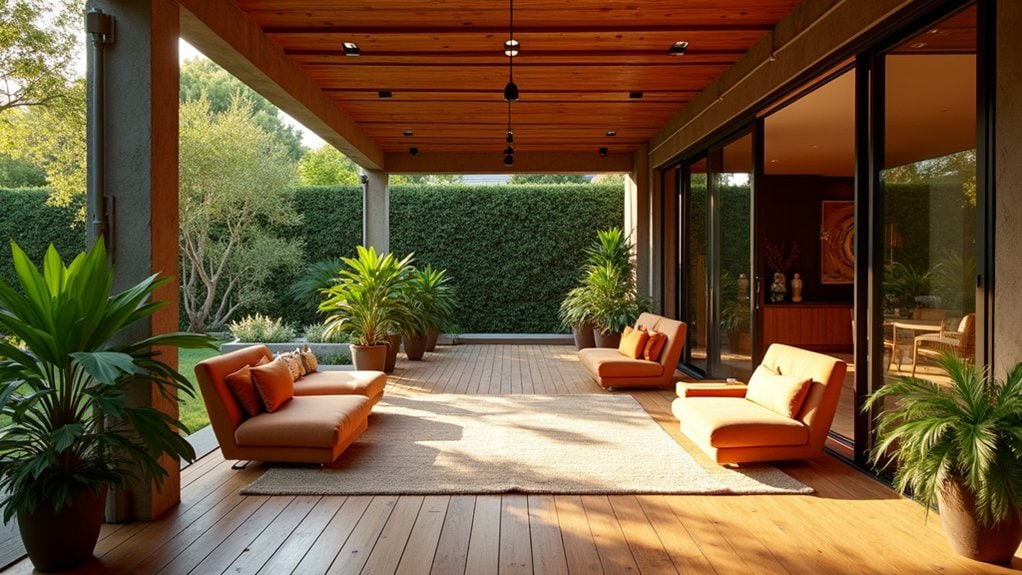
When you want your space to work harder, flexible furniture does a lot of the heavy lifting. You should look for modular designs that shift easily, tuck away fast, and still feel intentional. Pieces with weather resistance and functional durability let you relax instead of worrying every time the forecast changes.
- You feel calmer when maintenance ease means less scrubbing, less stress.
- You gain breathing room with space saving solutions in tighter spots.
- You keep style cohesion through color adaptability and aesthetic versatility.
- You feel confident buying less when one piece handles more.
Try a bench with hidden storage, stackable stools, or a slim console that moves where you need it. What actually fits your habits? If you use it often, and it still looks right, that’s probably the piece to keep.
Create Zones for Dining and Lounging
Start by defining your dining area with a table, an outdoor rug, or even just the way you place chairs so it feels separate from where you relax.
Then layer in comfortable seating for lounging like a sofa, a couple of chairs, and a side table or two because, honestly, you want people to settle in.
As you set it up, make sure the layout still flows and works for real life—can you move easily between zones, and does each spot actually do what you need?
Define Dining Areas
If you want your indoor-outdoor space to feel usable, not just nice to look at, you need to give dining its own clear spot. Start with smart space planning, then match the area to your dining styles, whether that’s quick breakfasts, family dinners, or weekend gatherings. Use a rug, overhead light, or flooring change to mark the zone without boxing it in.
- You feel calmer when the table has a purpose.
- You invite people to linger when paths stay open.
- You make meals easier when serving surfaces sit nearby.
- You create connection when everyone knows where to gather.
Ask yourself: can you carry plates easily, pull out chairs, and move around without awkward sidesteps? If not, shift things. A defined dining area doesn’t need much, just enough intention to feel natural every day.
Layer Comfortable Seating
Two kinds of seating usually make an indoor-outdoor space feel more usable right away: a dining setup for meals and a softer spot for lounging after.
You can make each zone feel inviting by mixing seating styles instead of matching everything too closely. Try a sturdy table with chairs that encourage long dinners, then add a loveseat, two lounge chairs, or even a bench nearby. That slight contrast helps each area feel intentional.
Comfort matters more than you think, especially outside. Use comfort materials that handle weather but still feel good against bare skin, like performance cushions, washable slipcovers, and textured throws. Add a small side table where you actually need it. Think about how you sit when you’re relaxed. Do you lean back, curl up, stretch out a little? Let that answer guide your choices.
Balance Flow And Function
Once you’ve got comfortable seating in place, the next thing to figure out is how people will move through the space and what each area is actually for.
You want clear zones, not one blurry setup. Keep dining close enough to the kitchen or grill that serving feels easy. Let lounging sit a little apart, where conversation can breathe. That’s smart space utilization, but it also protects aesthetic harmony.
- Set a table where meals feel relaxed, not cramped.
- Leave walking paths open so nobody awkwardly squeezes by.
- Use an outdoor rug to signal, quietly, this is the hangout spot.
- Add lighting that shifts the mood after sunset.
Ask yourself: where do guests pause, gather, linger? If a chair blocks traffic, move it. If a corner feels ignored, give it a purpose.
Layer Lighting for Indoor-Outdoor Living
Because indoor-outdoor spaces do more than one job, your lighting should do more than just brighten everything at once.
Start with ambient lighting so the whole area feels usable after sunset. Then add task lighting where you actually need it, like near a grill, dining table, or reading chair. Decorative fixtures help tie both zones together without feeling too matched.
Try outdoor sconces by doors or along a wall, and use accent lighting to highlight plants, steps, or architectural details. For better mood setting, choose dimmable options so you can shift from dinner to quiet lounging without changing everything. Keep energy effectiveness in mind too, especially if lights stay on for hours.
And yes, make seasonal adjustments. Longer nights, different routines, changing layered textures around the space, they all affect how light feels.
Add Textiles for Indoor-Outdoor Comfort
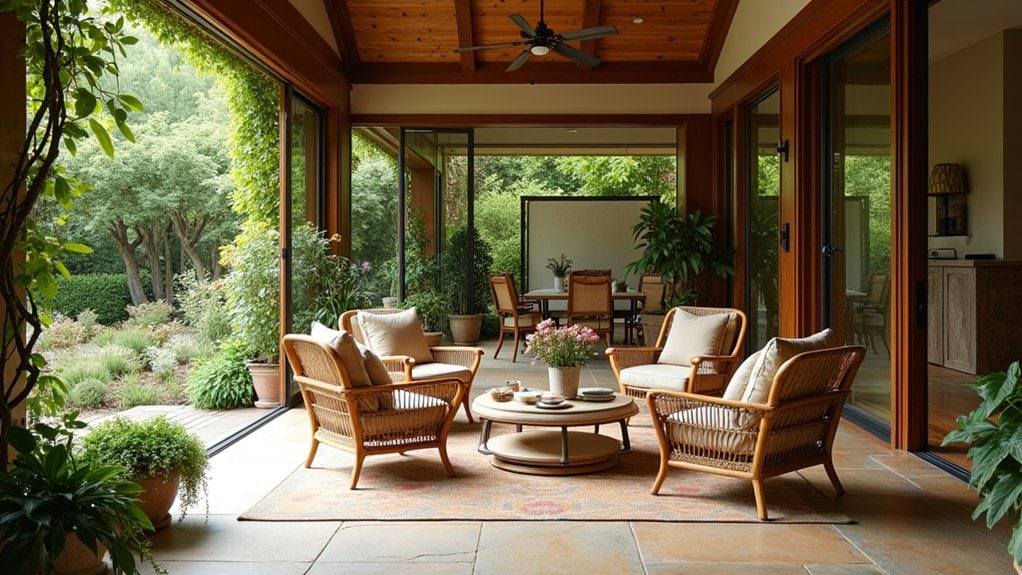
You can make the space feel easier to use, honestly, by adding weather-ready soft layers like outdoor throws, floor cushions, and rugs that won’t mind a little sun or damp air.
Keep your outdoor fabrics coordinated with the colors and textures you already use inside, so the whole setup feels connected instead of patched together.
What would make you stay out there longer—a washable pillow, a softer seat, maybe just one more layer?
Weather-Ready Soft Layers
Even if your patio feels open and airy, it won’t stay comfortable for long without a few soft layers that can handle shifting weather.
You want cushions, throws, and floor poufs made from weather resistant textiles, because damp evenings and sudden sun can ruin comfort fast. Think about seasonal adaptations too. What feels right in July may feel thin in October.
- Add a lightweight throw so you can linger outside when the air cools.
- Keep a storage bench nearby so pillows stay dry and ready.
- Choose quick-drying covers for seats you actually use every day.
- Layer an outdoor rug underfoot because cold decking feels stark, honestly.
You’re not trying to overdecorate. You’re making the space easier to enjoy, even when the forecast shifts a little, or a lot. Comfort matters more.
Coordinated Outdoor Fabrics
Soft layers help with comfort, but the fabrics themselves set the mood and make the whole space feel connected.
When you choose coordinated outdoor textiles, you make the shift from living room to patio feel easier, almost automatic. Try repeating one or two colors across cushions, dining chairs, and even a simple bench pad. You don’t need a perfect match. Actually, it’s better if you don’t. Mix stripes with solids, or a small print with a textured weave, so your setup feels relaxed.
Pay attention to fabric durability, too. Sun, spills, and damp air show up fast outside. If you’re shopping, check for fade resistance and quick-dry materials. Could that indoor-style throw pillow work better in performance fabric instead? Little swaps like that keep your space comfortable, practical, and still very much yours every day.
Use Plants to Soften the Transition
When the line between inside and outside feels too sharp, plants can ease it in a way furniture usually can’t. You create a calmer shift by repeating plant varieties near doors, windows, and patios. Try an indoor arrangement with leafy heights that echo your outdoor placement, so your eye keeps moving naturally. It’s simple, but it works.
- Place one welcoming pot by the entry
- Repeat natural textures in baskets or clay
- Choose easy greens that help air quality
- Adjust for seasonal changes without overthinking it
You don’t need a jungle. A few grouped pots can change the mood, soften edges, and add aesthetic appeal. Think, too, about maintenance tips before you buy. Will you actually water that fern? If not, pick something tougher. Your space should feel connected, not demanding or stressful.
Plan for Year-Round Indoor-Outdoor Living
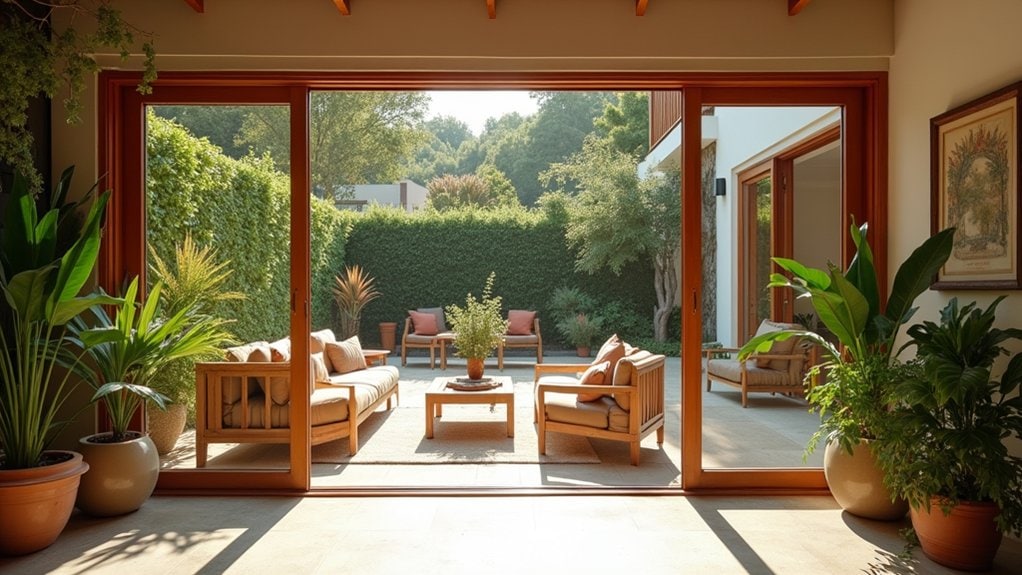
If you want the space to work all year, you have to plan for the annoying parts too, not just the pretty ones.
Think about heat, bugs, wind, and where rainwater goes before you buy one more chair. Add a ceiling fan, outdoor curtains, or a small heater so you can make seasonal adjustments without redoing everything. Choose fabrics that dry fast and store cushions where you can actually reach them.
You should also build simple maintenance tips into your routine. Sweep leaves before they pile up. Wipe tracks on sliding doors. Check seals, covers, and drainage after storms. It’s not glamorous, obviously, but it keeps the space usable.
And ask yourself: when the weather turns, will you still want to sit there, or just look at it through the glass?
Frequently Asked Questions
How Do I Keep Outdoor Bugs Away From Living Areas?
Keep outdoor bugs away from living areas by using bug repellents, planting natural deterrents, installing outdoor barriers like screens and door sweeps, and doing seasonal maintenance so you remove standing water, seal cracks, and trim plants.
What Permits Are Needed for an Indoor-Outdoor Renovation?
You’ll typically need building, electrical, plumbing, and possibly zoning permits, depending on scope. Check local building codes early, since design considerations like doors, decks, structural changes, drainage, and HVAC updates can trigger additional approvals.
How Can I Improve Privacy in an Exposed Backyard?
You can improve backyard privacy with privacy screens, decorative fencing, outdoor curtains, and plant barriers. Use strategic planting and layered landscaping solutions to block sightlines, soften exposure, and create a secluded, stylish space you’ll enjoy daily.
What’s the Best Way to Secure Outdoor Furniture From Theft?
Secure outdoor furniture by anchoring it with locking cables or ground mounts; you’ll boost theft prevention immediately. Choose durable furniture materials like metal or teak, add motion lights, engrave identifiers, and store smaller pieces when you’re away.
How Do I Childproof an Indoor-Outdoor Living Space?
Childproof your indoor-outdoor living space by installing gates, locking doors, covering outlets, anchoring furniture, and choosing soft surfaces. You’ll boost child safety with smart design solutions, clear sightlines, shaded zones, and secure storage for tools.
Final Thoughts
If you want the space to feel connected, make a few choices carry through. Repeat a color from your living room on outdoor cushions. Use a similar rug pattern near the door. Add a lamp, a planter, maybe a small side table you can move around.
Then step back and ask yourself: would you actually sit here at night, or in early spring?
That answer usually tells you what’s missing. And, honestly, what you can skip.