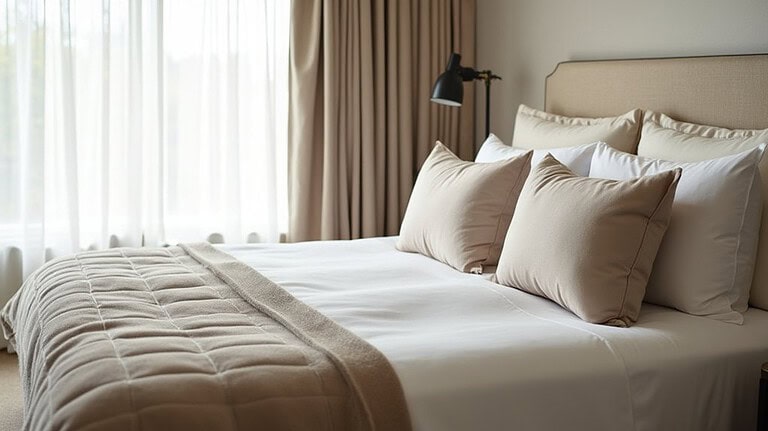
You’ve probably crashed into a hotel bed and thought, “why doesn’t mine feel like this?” It’s not magic, and it’s probably not the mattress either. Hotels follow a specific layering system that most people just don’t know about. The difference comes down to what goes on the bed and how it’s arranged. Stick around, because once you see the breakdown, you’ll want to pull your whole bed apart and start over.
The Essentials
- Start with a mattress pad as the foundation, followed by a fitted sheet and two flat sheets for a comfortable buffer.
- Use a thick, white duvet for warmth and style, folding the top flat sheet back for a crisp, inviting look.
- Invest in long-staple cotton sheets with a thread count between 300 and 500 for optimal comfort and durability.
- Arrange at least six pillows on a queen bed, stacking euro shams, sleeping pillows, and accent pillows for a polished finish.
- Create crisp bed corners by pulling sheets tight, tucking firmly, and folding lifted panels down for a neat appearance.
Why Hotel Beds Feel So Different From Yours
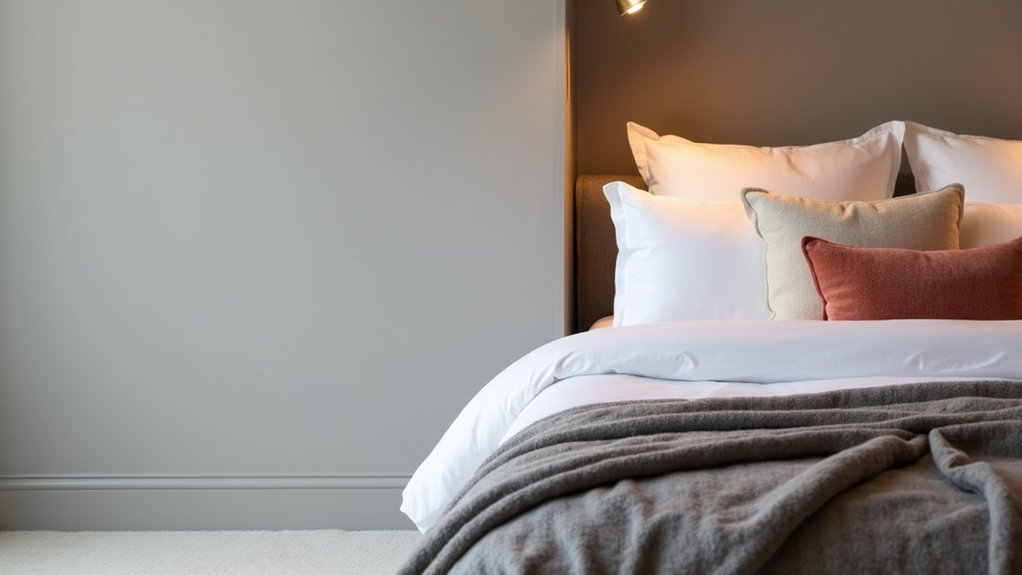
There’s a good chance you’ve stayed in a hotel, collapsed onto the bed, and thought “why doesn’t my bed feel like this?” It’s a fair question.
Hotels invest heavily in luxury linens — thread counts, fabric quality, and layering techniques that most people don’t think about at home. That hotel ambiance you feel isn’t accidental. It’s deliberate.
A lot of it comes down to bedding essentials you might be skipping. A mattress topper. Crisp, well-fitted sheets. Proper pillow arrangement. These small details actually affect your sleep quality more than you’d expect.
And honestly? Hotels wash their linens constantly, keeping everything fresh and firm. Your bedding at home probably doesn’t get that same attention.
The Essential Layers Every Hotel Bed Uses
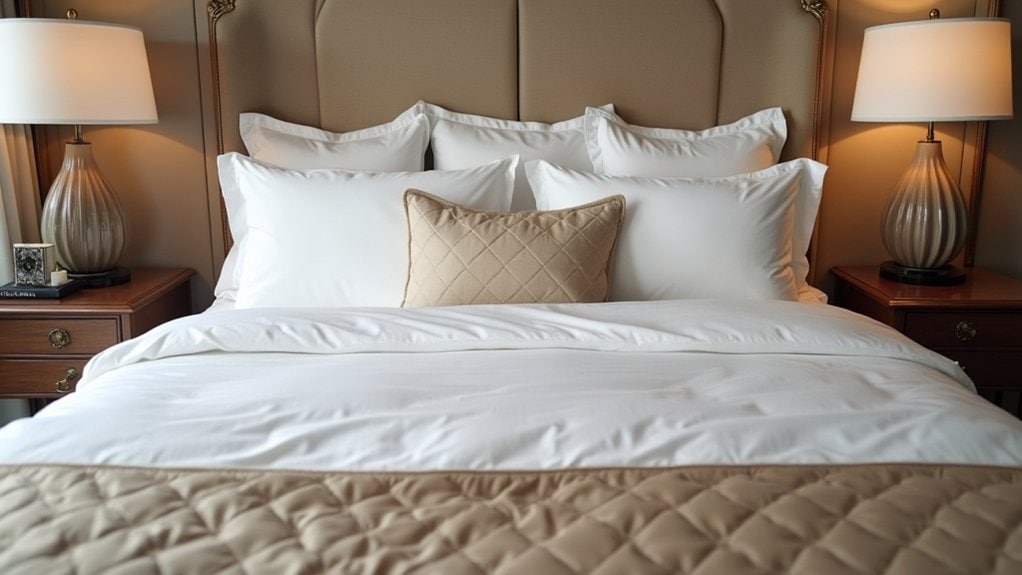
When you strip a hotel bed down to its basics, you’ll find it’s actually built in specific, deliberate layers — and each one does something.
It starts with a mattress pad. Then a fitted sheet, a flat sheet, and another flat sheet on top of that. That second flat sheet acts as a buffer between you and the duvet.
These aren’t just bedding essentials thrown together randomly. Hotels are intentional about this.
The duvet goes on next, usually white, usually thick. Then a top flat sheet gets folded back over it — that crisp fold you always notice.
Luxury linens matter here, but honestly, the layering system matters more.
What Thread Count and Fabric Type Actually Matter?
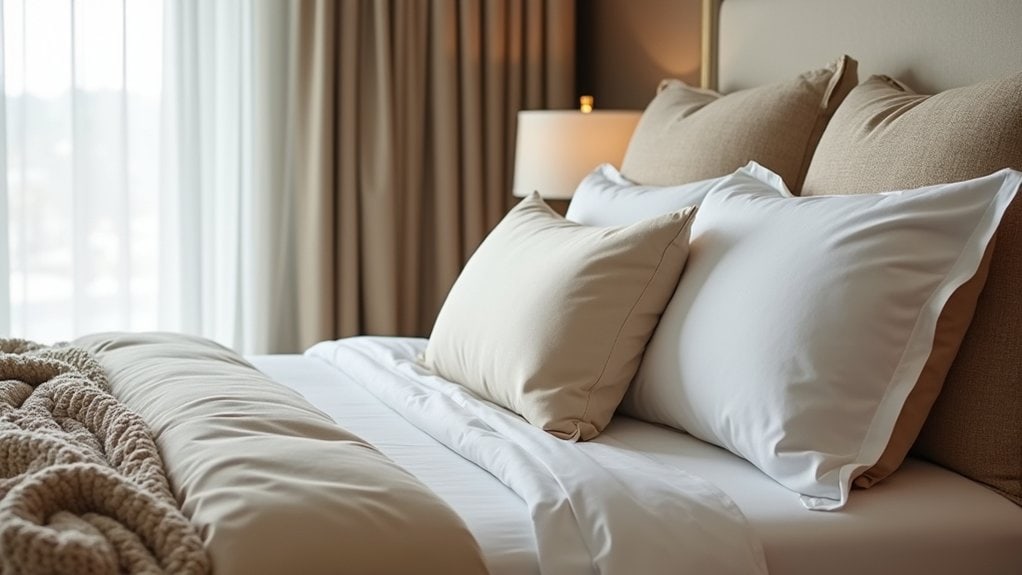
You’ve probably seen “800 thread count” splashed across a label and assumed higher means better—but honestly, anything above 400 or so starts to matter a lot less than the actual fabric. Cotton, especially long-staple varieties like Egyptian or Pima, tends to feel softer and hold up longer than blended fabrics, though blends are usually easier to care for. It’s kind of a tradeoff you’ll need to think about depending on whether you want sheets that feel amazing right away or ones that just survive years of washing without much fuss.
Thread Count Explained Simply
Thread count gets thrown around a lot when people shop for sheets, and honestly, it’s a little misleading. A higher number doesn’t automatically mean better sleep or longer-lasting luxury linens.
Here’s what actually matters more: thread quality.
Sheets made from long-staple cotton — like Egyptian or Pima — tend to feel softer and hold up better over time, even at a lower thread count. A 300-count sheet using quality fibers will usually outperform a 600-count sheet made from cheaper, shorter fibers.
So what thread count should you actually look for? Somewhere between 300 and 500 is a reasonable range for most people.
Anything above that? Manufacturers sometimes artificially inflate numbers by counting individual fiber strands. It’s worth knowing that before you spend more than you need to.
Best Fabrics For Softness
Beyond thread count, the fabric itself is probably the bigger factor in how your sheets actually feel — and this part trips a lot of people up.
Here’s what’s actually worth knowing:
- Cotton blends and breathable textiles — Long-staple Egyptian or Pima cotton stays soft wash after wash. Cotton blends sometimes add durability, but pure cotton usually wins for feel.
- Microfiber options and performance fabrics — Budget-friendly and wrinkle-resistant, though they trap heat. Not ideal if you run warm.
- Eco friendly fabrics and hypoallergenic materials — Bamboo-derived fabrics are genuinely soft and work well for sensitive skin. Luxury linens made from linen fiber feel better over time, not immediately.
Silk sheets exist, sure — but are they practical for everyday use? Probably not for most people.
Durability Versus Comfort Tradeoffs
Most people assume higher thread count automatically means better sheets — and that’s just not quite right.
Thread counts between 300 and 500 actually hit the softness balance most sleepers prefer. Go higher, and you’re often paying for marketing.
Your comfort materials matter more than numbers. Long-staple cotton like Egyptian or Pima offers real fabric longevity without sacrificing feel. Percale weaves handle durability options better for hot sleepers, while sateen leans toward aesthetic appeal but shows wear faster.
Here’s something worth thinking about — does better sleep quality justify higher cost considerations? Sometimes, honestly, no.
Linen is rougher upfront but outlasts almost everything. Microfiber feels soft immediately but pills over time.
Follow basic maintenance tips — cold wash, low heat dry. That alone extends any fabric’s life considerably.
Start With the Right Mattress Foundation for a Hotel Feel
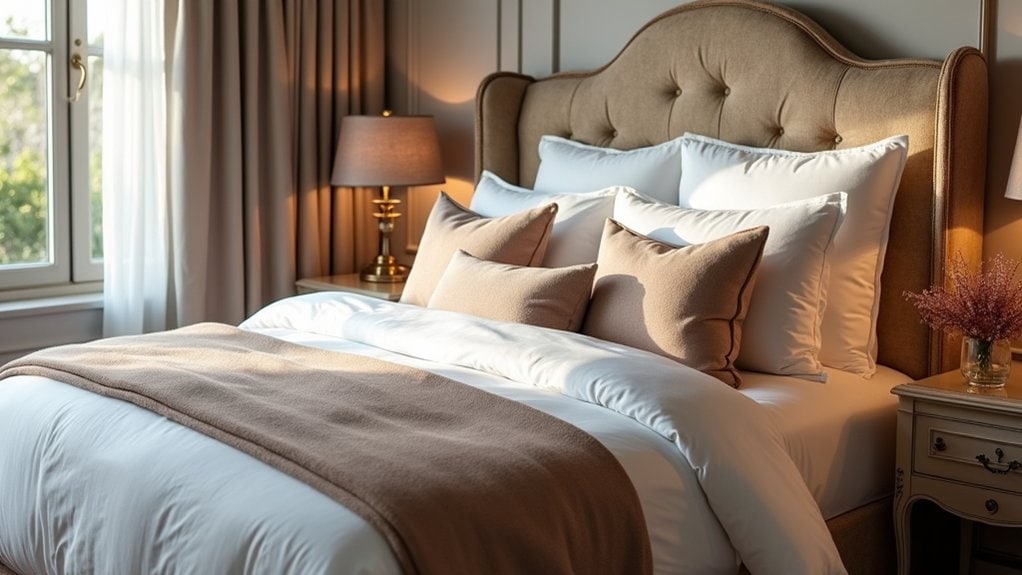
Before you even think about sheets or pillows, your mattress and what’s supporting it will make or break that hotel-bed feeling. Most hotels use medium-firm mattresses, sometimes with a topper added to soften things up just enough—so if your mattress feels too stiff or too saggy, a quality foam or featherbed topper might be the easier fix before replacing the whole thing. Whether you’re working with a box spring or a platform base also matters more than people realize, since the wrong foundation can actually change how your mattress feels over time.
Choosing the Right Mattress
Getting that hotel-bed feeling really does start with the mattress itself—everything you layer on top won’t matter much if what’s underneath isn’t right.
Most hotels actually lean toward medium-firm options. Not too soft, not too stiff. Mattress firmness directly affects your sleep quality, and that balance matters more than people realize.
Ask yourself: when you wake up in a hotel, do you feel rested? That’s the mattress doing its job.
Here are three things worth considering when choosing yours:
- Support level – medium-firm works for most sleepers
- Material – memory foam, innerspring, or hybrid all feel different
- Age of your current mattress – older than 8 years probably isn’t helping you
Start there before anything else.
Mattress Toppers Add Comfort
Once you’ve got a solid mattress underneath you, a topper can genuinely change how the whole bed feels.
Hotels often use them to fine-tune mattress comfort without replacing the whole mattress. That’s actually smart thinking you can borrow at home.
Memory foam toppers add pressure relief. Featherbed toppers give you that softer, sink-in feel. Neither is wrong—it really depends on how you sleep and what you’re missing from your current setup.
The topper benefits really show up in the details. A slightly firmer mattress suddenly feels more forgiving. A bed that felt just okay starts feeling intentional.
Worth asking yourself—what’s actually bothering you about how your bed feels right now? A topper probably won’t fix everything, but it might fix the right thing.
Box Springs vs. Platforms
What’s actually holding your mattress up matters more than most people think. Your foundation affects how your mattress feels, lasts, and honestly, how put-together your bed looks.
Here’s a quick breakdown:
- Box springs benefits include better bounce, added height, and improved airflow under your mattress — great if you’ve got an older innerspring setup.
- Platform pros include a firmer, lower-profile feel that works well with memory foam or latex mattresses.
- Platform beds also tend to look sleeker, which is probably closer to that hotel aesthetic you’re going for.
Neither option is wrong. It really depends on your mattress type. Check your mattress manufacturer’s recommendation before you decide — it’s worth the two minutes.
Choose Sheets That Feel Like a Five-Star Hotel Stay
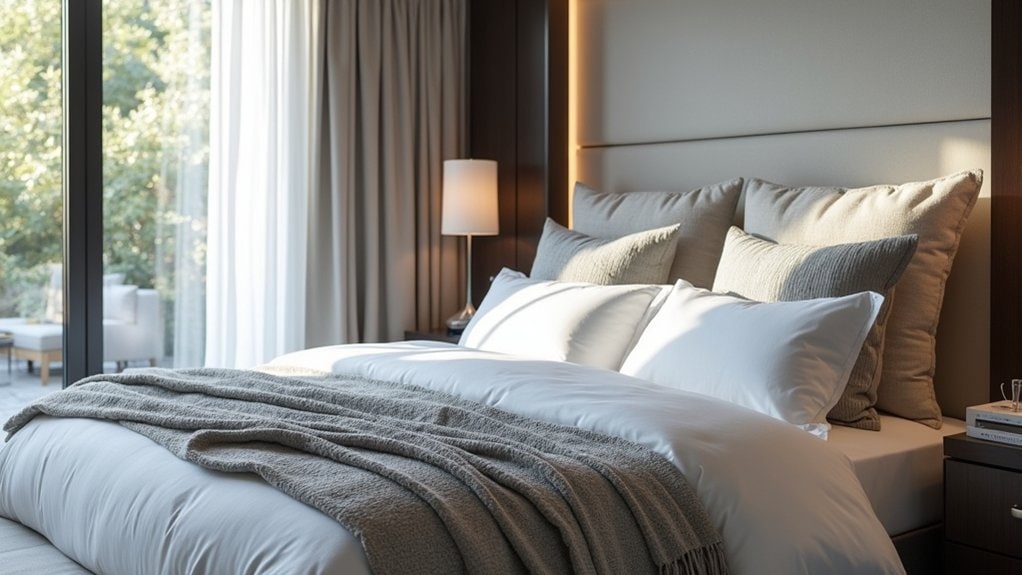
The sheets you pick matter more than most people think, and honestly, it’s one of the easiest places to make a real difference.
Hotels don’t just grab whatever’s cheap. They invest in luxury linens that feel smooth against your skin and hold up after dozens of washes. You don’t need to spend a fortune, but you do need to pay attention.
Thread count isn’t everything, but high thread sheets—somewhere between 300 and 600—tend to feel noticeably better. Anything beyond that is often just marketing.
Cotton matters too. Egyptian or long-staple cotton stays softer longer.
Have you ever noticed how hotel sheets feel cool when you first get in? That’s the weave, not just the material. Percale weave does that well.
How to Layer a Hotel Bed Duvet Correctly
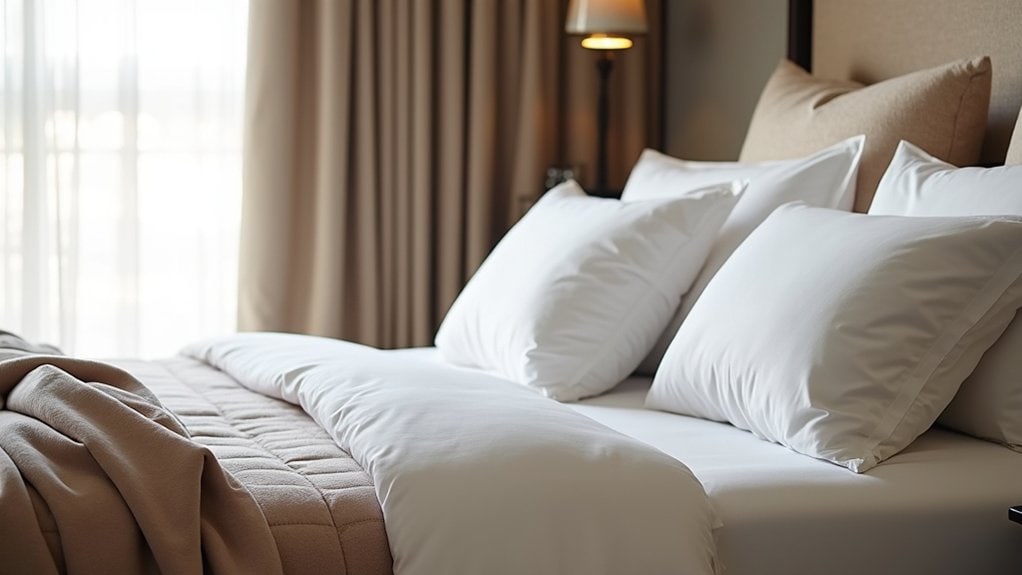
Getting the sheets right is only part of it. The duvet is where hotel bed aesthetics really come together—or fall apart. Most hotels use specific duvet layering techniques that you can honestly replicate at home without much effort.
- Start flat – Lay your duvet evenly across the bed, hanging equal on both sides.
- Fold it down – Pull the top third down toward the foot of the bed, exposing your sheets underneath.
- Smooth it out – Run your hands across the surface to remove any lumps or uneven spots.
Does your duvet look intentional or just thrown on? That difference matters more than you’d think. Small adjustments in placement change everything about how the bed reads visually.
How Many Pillows a Hotel Bed Actually Needs?
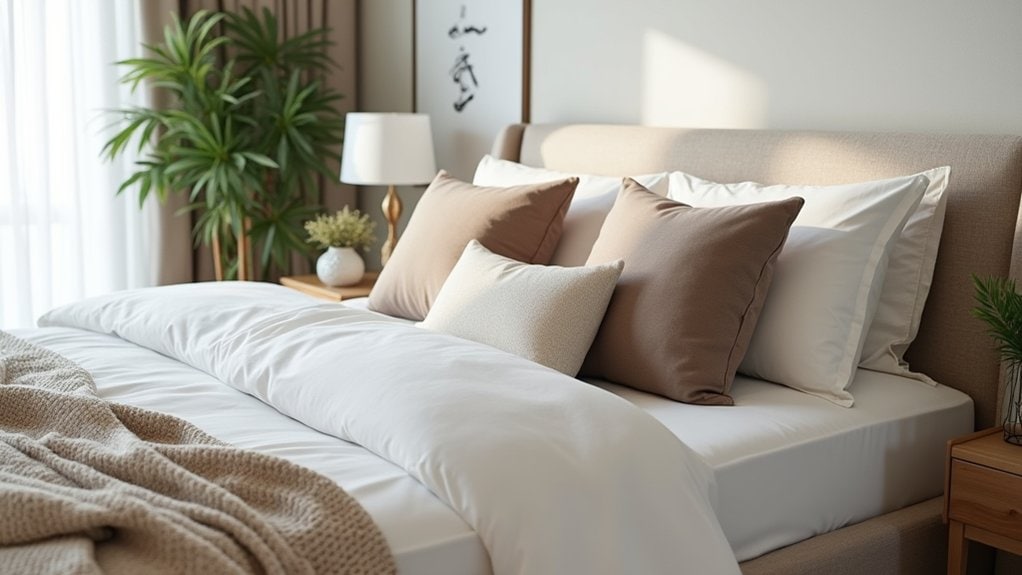
Most hotels use at least six pillows on a queen bed—two sleeping pillows per person, plus a couple of decorative ones up front.
But here’s the thing: pillow types actually matter more than the count.
You’ve got your sleeping pillows, your euro shams, and your smaller accent pillows. Each one plays a different role in the overall pillow arrangement.
Stack your euro shams flat against the headboard first. Then layer your sleeping pillows in front. Add one or two smaller pillows at the very front if you want that finished, layered look.
Do you actually need six pillows? Probably not every night. But visually, it makes a real difference.
Start with four if six feels like too much. Adjust from there.
How to Fold and Place a Throw the Hotel Way
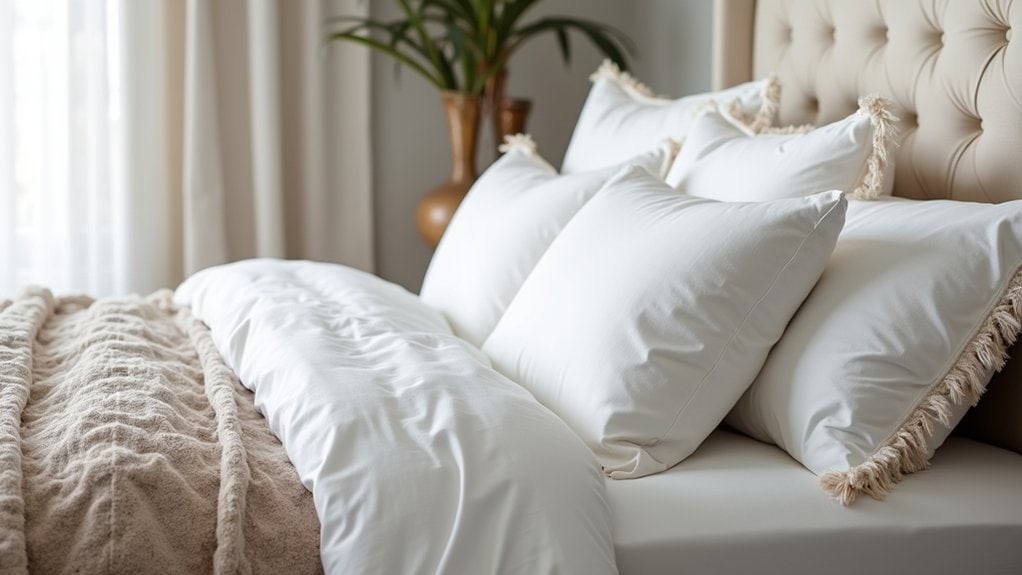
When it comes to throws, hotels typically fold them into a neat rectangle or long strip and lay them across the foot of the bed—not tossed, not draped, just clean and intentional. You can do this by folding the throw in thirds lengthwise, then folding it once more so it sits in a tidy, flat band. It’s a small detail, but honestly, the placement matters more than people think—centered, aligned with the mattress edge, not crooked or hanging off one side.
Folding Techniques for Throws
Throws can make or break the whole layered look, and how you fold one actually matters more than you’d think. Different throw styles call for different folding techniques, so there’s no single right answer here.
A few approaches worth trying:
- Tri-fold lengthwise – Fold the throw into thirds vertically, then drape it across the foot of the bed horizontally. Clean, structured, intentional.
- Casual fold – Fold loosely in half, then half again. Let it sit slightly off-center. Less rigid, still put-together.
- Diagonal drape – Fold into a long rectangle and angle it across one corner. Adds a little visual interest without overthinking it.
Which one works depends on your throw’s weight and texture. Heavier knits hold structure. Lighter fabrics drape better.
Placement for a Polished Look
Once you’ve got your fold sorted, placement is where things either come together or fall apart.
Bed positioning matters more than you’d think. Hotels usually drape the throw across the lower third of the bed — not centered, not shoved to one side. That specific spot creates visual weight without overwhelming the pillows.
Are you working with a bold throw? Think about color coordination with your existing bedding. A throw that clashes just looks like an afterthought.
Keep it slightly asymmetrical if full symmetry feels stiff. Let one corner hang a little lower. That tiny detail actually reads as intentional.
Don’t tuck it under the mattress. Just let it rest there, relaxed but deliberate. Hotels make it look effortless because the placement is actually pretty calculated.
How to Make Crisp, Wrinkle-Free Hotel Bed Corners
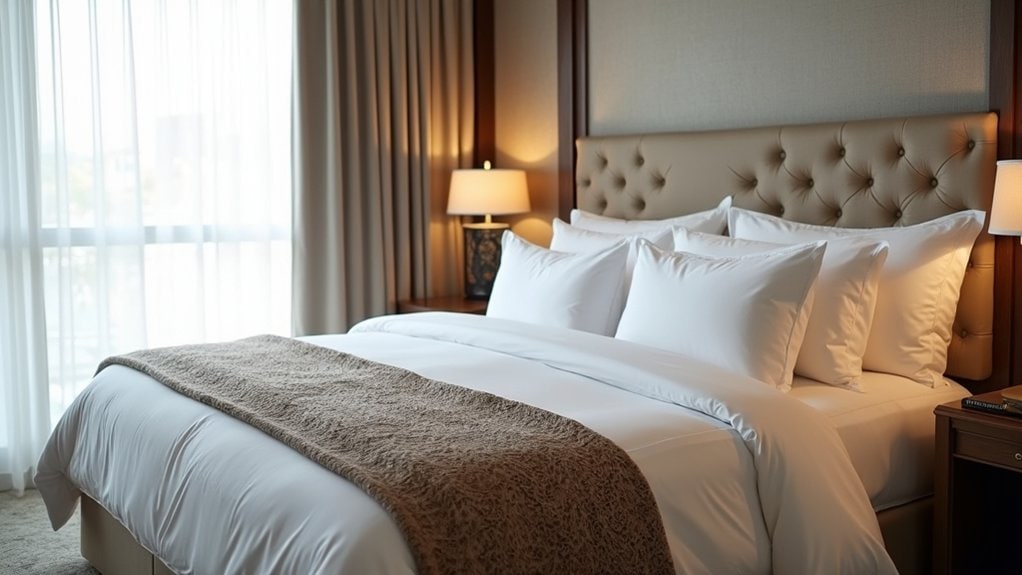
Getting those hotel-style corners right is probably the one thing most people skip, and honestly, it makes a bigger difference than you’d think. Bed corner techniques aren’t complicated, but they do require a little patience. Crisp edges don’t just happen.
Here’s what actually works:
- Pull the sheet tight at the foot of the bed, then lift the side panel about 16 inches up onto the mattress.
- Tuck the hanging fabric underneath firmly, then fold the lifted panel back down.
- Press along the edge with your hand to flatten any bunching.
Does it feel fussy? Maybe a little. But once you see how clean it looks, you’ll probably stop skipping it.
Budget Buys That Nail the Hotel Bed Look
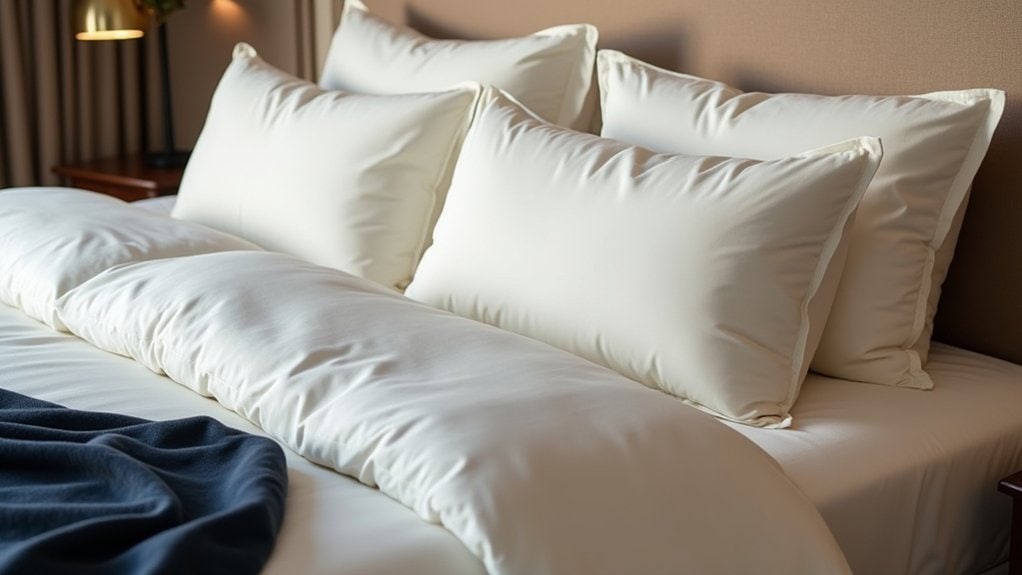
The hotel look doesn’t have to cost a fortune, and that’s probably the most underrated part of this whole thing.
Budget linens from stores like IKEA or Target can look surprisingly sharp. You don’t need to spend hundreds. A chic bedspread layered over affordable duvets already shifts the whole feel of your bed. Add a stylish throw at the foot, and suddenly it reads intentional.
Decorative pillows help, but you don’t need ten of them. Two or three work fine.
Plush blankets and cozy comforters create layered textures without requiring a big investment. A soft mattress topper also helps—more than people realize.
Frequently Asked Questions
How Often Do Hotels Actually Replace Their Mattresses and Bedding?
Hotels typically replace mattresses every 3–5 years to guarantee mattress longevity. You’ll find they follow strict bedding maintenance schedules, washing sheets daily and replacing pillows annually so you’re always sleeping on fresh, comfortable materials.
Can Scent or Fragrance Play a Role in the Hotel Bed Experience?
Yes, scent absolutely shapes your sleep experience! Hotels use subtle, clean fragrances on linens to create calm and luxury. You’ll notice fragrance impact immediately upon lying down, and matching those scent preferences at home transforms your bed’s entire ambiance.
Do Hotels Use Different Bedding Styles for Different Seasons?
Yes, many hotels do switch up their seasonal bedding to keep you comfortable year-round. They’ll use lighter luxury materials like linen in summer and swap to heavier, cozier layers when winter arrives.
Are There Specific Bed Frame Styles That Enhance the Hotel Aesthetic?
Yes, you’ll want modern bed frames with clean lines and luxurious finishes like upholstered headboards or sleek metal designs. They instantly elevate your bedroom’s look, creating that polished, sophisticated hotel aesthetic you’re aiming for.
How Do Hotels Keep White Bedding so Bright and Stain-Free?
Hotels use commercial-grade detergents and hot water washes to maintain bright whites. You can replicate their bedding maintenance tips by pre-treating spills immediately with stain removal techniques like oxygen bleach, ensuring your linens stay crisp and spotless.
Final Thoughts
You don’t need to redo your entire bedroom to get that hotel feel. Start small — maybe just better sheets or an extra pillow layer. See what actually makes a difference for you.
It’s really about building the habit of making your bed intentionally. Some steps will feel worth it. Others won’t fit your lifestyle, and that’s fine.
Just pick what works and adjust from there.