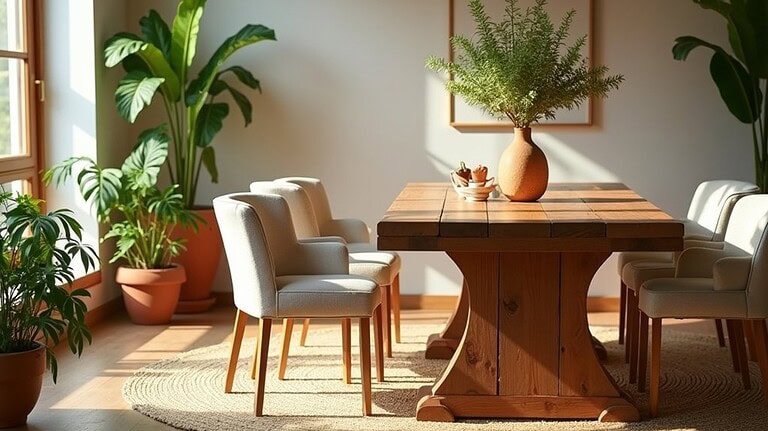
There’s something about a wooden bowl or a linen throw that just works, even when nothing else in the room matches.
You’ve probably noticed it without really thinking about it.
Natural materials seem to belong wherever you put them.
But why is that?
And more importantly, how do you use them intentionally without guessing?
The answers are more practical than you’d expect.
The Essentials
- Natural materials carry inherent color harmony, with warm taupes and muted greens that effortlessly complement each other in any space.
- Texture contrast, like smooth linen paired with rough jute, creates visual interest without requiring deliberate or forced design decisions.
- Wood, stone, and textiles are versatile enough to suit modern, rustic, and eclectic styles equally well.
- Layering three or four natural materials adds depth and dimension while maintaining a clean, uncluttered aesthetic.
- Natural materials evoke a calming, grounding atmosphere that feels instinctively balanced and harmonious in any room.
Why Natural Materials Make a Room Feel Different
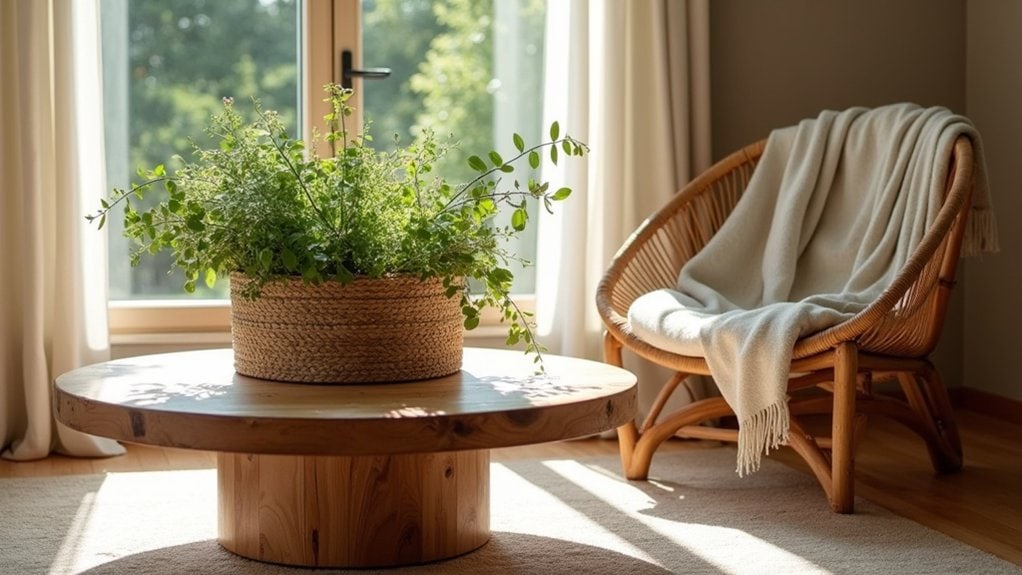
There’s something about walking into a room filled with natural materials that just feels different — and it’s not always easy to explain why. You notice it before you even process it. The wood grain, the woven fibers, the rough stone. Your eyes settle instead of searching.
Part of it comes down to texture contrast. When you mix smooth linen with a rough jute rug, your eye moves naturally between surfaces. It doesn’t feel forced.
Color harmony plays into it too. Natural materials tend to carry tones that already belong together — warm taupes, muted greens, soft browns. You don’t have to work as hard to make things match.
Have you ever noticed how a single wooden bowl can ground an entire shelf? That’s worth paying attention to.
What Each Natural Material Brings to a Room
Once you start paying attention to individual materials, you realize they don’t all do the same thing in a space. Wood characteristics vary wildly—pine feels casual, walnut reads as serious. Stone warmth surprises people. You’d expect it to feel cold, but it actually grounds a room. Textile variety lets you soften or sharpen depending on what you layer in. Texture layering is where things get interesting—rough linen next to smooth ceramic, for example.
Plant incorporation adds something harder to name. Life, maybe? Sustainable sourcing matters too, though it rarely changes how something looks.
Color harmony and design balance come naturally when you stop forcing it. What does each material actually do for your specific room? That’s the question worth sitting with.
How Natural Materials Fit Every Design Style
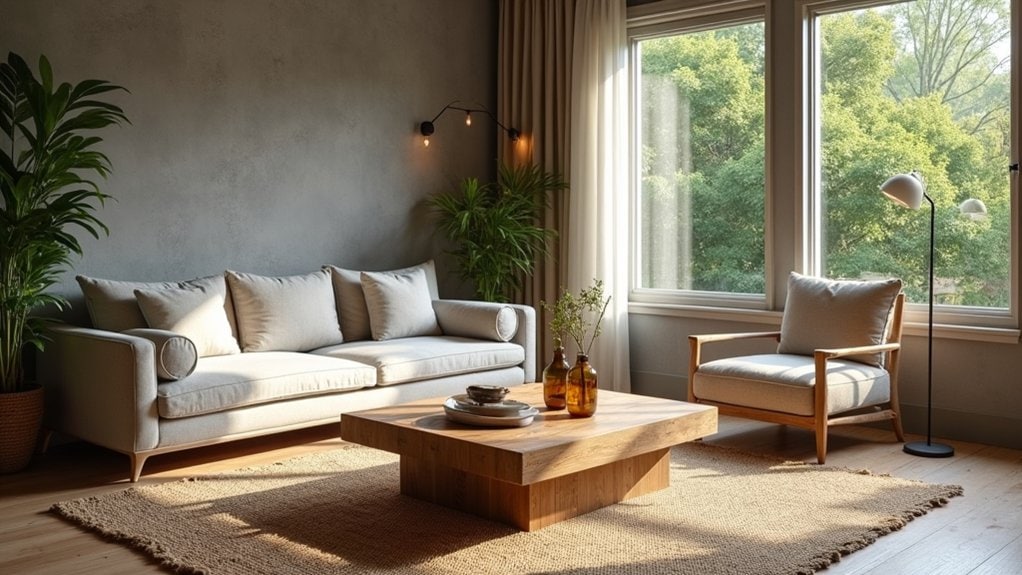
One of the more interesting things about natural materials is that they don’t really belong to just one design style—you can work them into almost anything, whether that’s a clean, modern space or something more rustic and layered. The textures and tones you get from wood, stone, linen, or rattan tend to feel grounded, which makes them easy to build around without overthinking it. Do you actually need a defined style to make natural materials work, or is it more about trusting what feels right in your space?
Natural Materials Across Styles
Whether your home leans toward sleek and modern or warm and rustic, natural materials have a way of fitting in almost anywhere.
Think about it. A linen throw adds cozy simplicity to a bedroom. Raw wood brings farmhouse flair to a kitchen. Rattan works in a bohemian style living room just as easily as it does in a space chasing beachy vibes.
Stone and concrete can sharpen an industrial edge or soften it, depending on how you pair them. Jute rugs add urban warmth to city apartments. Marble leans into modern elegance. An eclectic mix of textures—clay, wood, wool—gives a room dimension without trying too hard.
Even a minimalist approach benefits from one well-placed natural piece. So what style are you actually working with?
Versatile Textures and Tones
Style is really just the starting point—what makes a room actually feel right comes down to texture and tone.
Natural materials give you both, almost automatically. A linen sofa next to a wood coffee table creates textural harmony without you really trying. You’re not forcing a look—you’re just letting the materials do the work.
Tonal balance matters too. Think about how a jute rug pulls warm beiges and browns together across a whole room. It’s subtle, but you notice when it’s missing.
The honest question is: are your materials actually talking to each other?
Stone, wood, cotton, clay—they share an underlying warmth. That’s probably why mixing them rarely feels wrong. You don’t need a strict style to make it work. You just need to pay attention.
Timeless Appeal in Design
What’s interesting about natural materials is that they don’t really belong to any one design style—they just work. A linen throw fits in a minimalist apartment just as easily as it does in a farmhouse living room. That’s kind of remarkable if you think about it.
There’s a timeless elegance to wood, stone, and cotton that doesn’t ask too much from a space. They don’t compete. They settle in.
You can layer a jute rug under a sleek modern sofa and it still looks right. That enduring simplicity is why designers keep returning to these materials, decade after decade.
Small Swaps That Make a Big Natural Impact
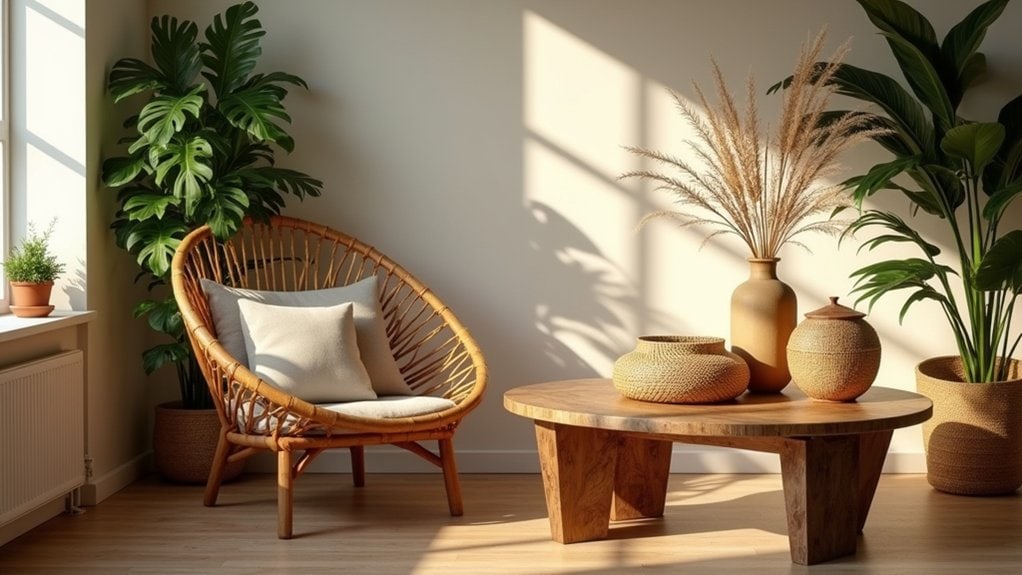
You don’t have to overhaul your entire space to make it feel more grounded—sometimes it’s just about swapping out a synthetic throw blanket for a chunky wool one, or replacing a plastic fruit bowl with a wooden or ceramic option. Layering a few organic textures together, like a jute rug under a linen cushion, tends to create that lived-in, natural feel without a lot of effort or expense. Small accents—a bundle of dried grasses, a rough stone candle holder—can shift the whole mood of a room faster than you’d expect.
Swap Synthetic For Natural
Sometimes the biggest shift in a space doesn’t come from a renovation or a full room overhaul — it comes from swapping out a few small things you probably don’t even think about.
Replace that synthetic throw with a wool or cotton one. Swap plastic storage baskets for woven seagrass. These eco friendly choices quietly support sustainable living without demanding a complete redesign.
Natural materials bring texture variety that synthetic options just can’t replicate. They support organic aesthetics, improve indoor air quality, and even offer health benefits by reducing off-gassing chemicals in your home.
They also offer seasonal adaptability — linen feels right in summer, wool in winter.
Does everything need to change at once? No. Even one or two swaps can create real design harmony. Start small. See what feels right.
Layering Organic Textures Effectively
Once you start swapping synthetics for natural materials, layering becomes the next instinct — and it’s worth getting right.
Good layering techniques aren’t about matching everything perfectly. They’re about tactile contrasts that feel intentional. Think a rough jute rug under a soft linen throw. That kind of texture combinations work because they create depth creation without visual noise.
Organic patterns add something too — a woven basket next to smooth stone, for instance. Material mixing like this builds a sensory experience that’s hard to fake with synthetics.
Ask yourself: does this corner have dimension play, or does it feel flat?
Balanced aesthetics come from layering things with different weights and finishes. Visual harmony follows naturally when you stop overthinking it and just trust what feels grounded.
Natural Accents, Immediate Impact
The smallest swaps often surprise you most.
Swap out a synthetic throw for a chunky wool one. Replace plastic storage bins with woven seagrass baskets. These feel like minor decisions, but they shift the entire room.
Textural contrast matters here. A smooth linen cushion against a rough jute rug creates visual interest without you doing much at all. You’re not redesigning — you’re just noticing what’s already competing for attention.
Color harmony becomes easier with natural materials too. Wood tones, stone, dried grasses — they tend to work together without much effort on your part.
So what’s one thing you’d swap today?
Start small. Maybe it’s a ceramic bowl instead of a plastic one. Sometimes that’s genuinely enough to change how a room feels.
Natural Materials on a Budget: Splurge vs. Save
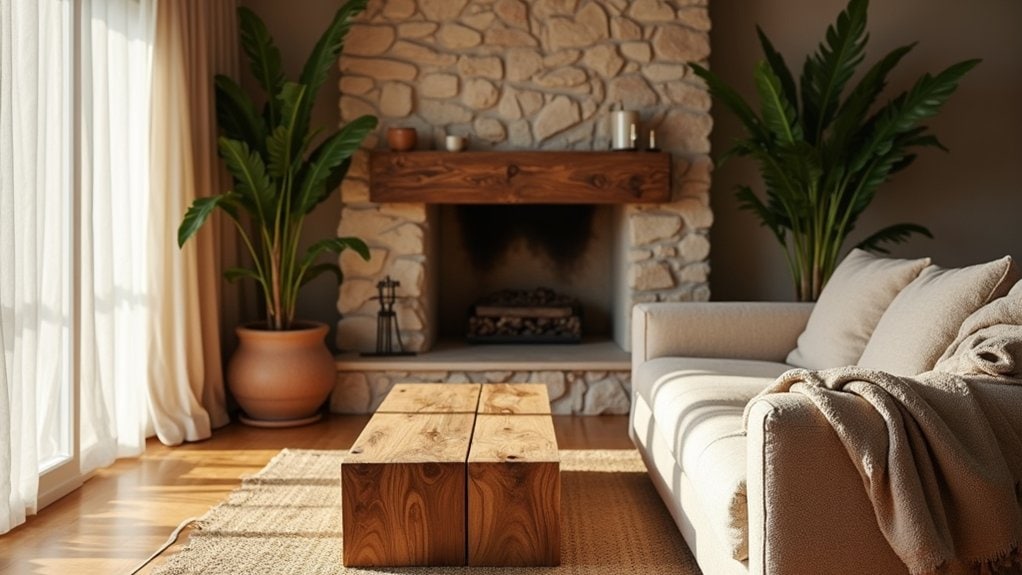
Decorating with natural materials doesn’t have to drain your wallet, but knowing where to spend and where to cut corners makes a real difference.
Splurge on pieces that anchor a room — a solid wood coffee table, a woven jute rug. These hold up. For everything else, lean into budget friendly options like thrift store finds or upcycled materials you refinish yourself.
DIY projects work surprisingly well here. A few branches, some linen scraps, seasonal decor you rotate out. Local artisans sometimes offer better pricing than big retailers, and you’re supporting real craft.
Think about texture combinations and color palettes before buying anything. Minimalist approaches actually stretch your budget further — fewer things, chosen carefully. Eco friendly choices don’t always cost more. Sometimes they cost less.
How to Mix Natural Materials Without Clashing
Mixing natural materials well isn’t complicated, but it does take a little intention. Think about what you’re pairing and why.
A few things worth keeping in mind:
- Prioritize texture balance — if one surface is rough, let another be smooth. Stone next to linen, for example, just works.
- Color harmony matters more than matching — you’re not looking for identical tones, just ones that don’t fight each other. Warm woods and cool concrete can actually complement each other.
- Limit your materials to three or four — more than that and your space starts feeling cluttered, even chaotic.
Ask yourself: does each material have room to breathe? Sometimes you add one thing too many without realizing it. That’s usually where things go sideways.
The Best Rooms in Your Home for Natural Materials
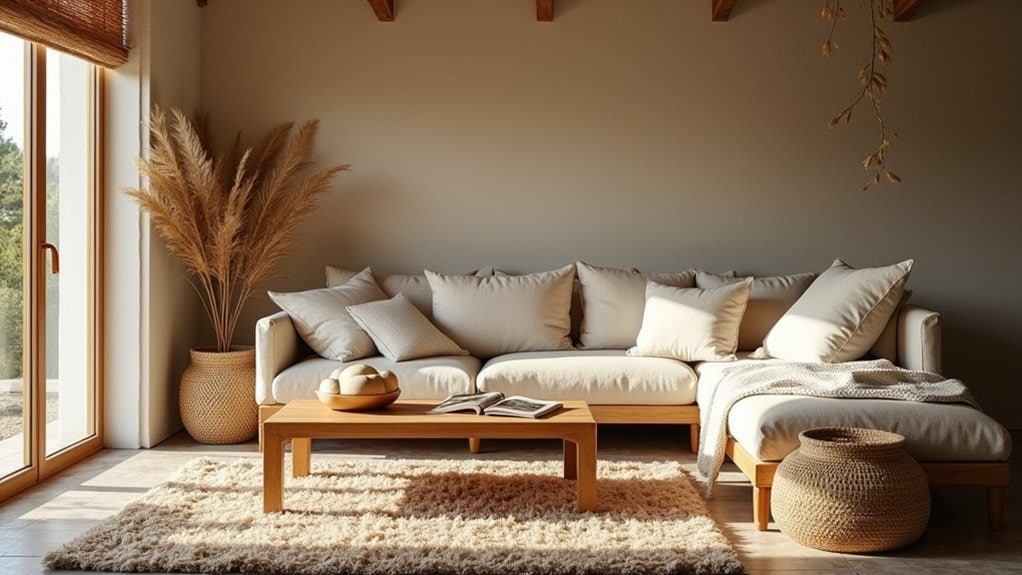
Some rooms just lend themselves to natural materials more than others, and it’s worth thinking about that before you start pulling things together.
Your living room handles wood and linen well. The bedroom sanctuary feels calmer with cotton, jute, and stone accents. Kitchen warmth comes naturally from wooden cutting boards, woven baskets, clay pots. Bathroom tranquility? Think bamboo, river stones, unglazed ceramic. Dining elegance benefits from a solid timber table — nothing complicated there.
Don’t overlook hallway charm with a simple woven runner. Outdoor spaces almost demand natural textures. Your workspace inspiration could come from a cork board or raw wood desk.
Even an entryway welcome or children’s playroom handles natural materials surprisingly well. Where would you actually start, though?
How to Source Natural Materials Responsibly
Once you’ve figured out which rooms you want to work with, sourcing the actual materials responsibly is where things get a little more complicated. Sourcing sustainably means asking harder questions about where things come from.
- Check certifications — Look for FSC-certified wood or OEKO-TEX textiles. Not every seller advertises this, so you might need to ask directly.
- Research ethical harvesting practices — Some bamboo and rattan suppliers cut corners. A quick search on a brand’s sourcing policy tells you a lot.
- Buy local when you can — Locally sourced stone or reclaimed wood cuts down on transportation emissions and sometimes supports smaller craftspeople.
Do you actually know where your materials come from? It’s worth slowing down and finding out.
How to Care for Natural Materials So They Last
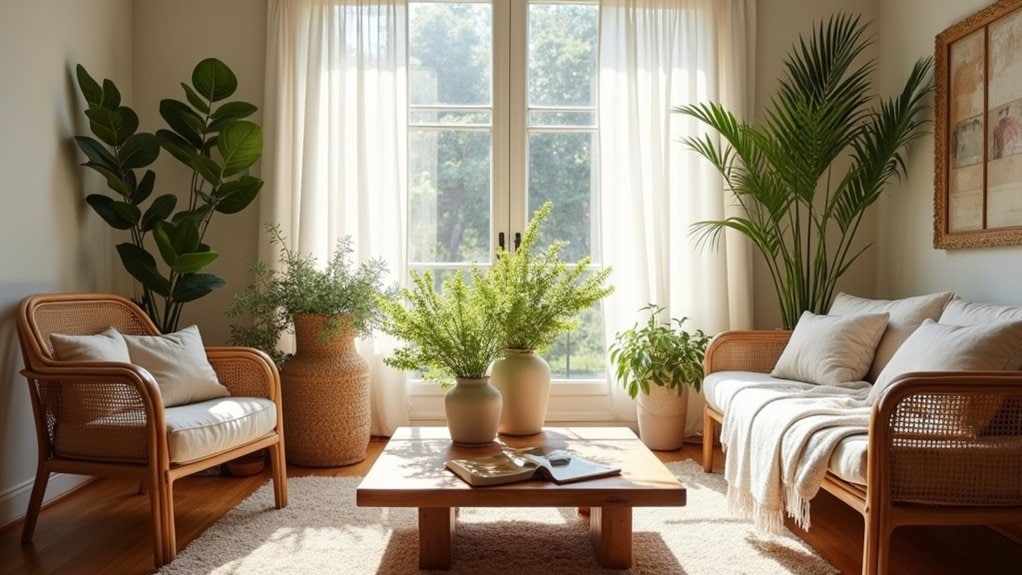
Getting natural materials into your home is one thing — keeping them in good shape is another. Your maintenance tips routine doesn’t need to be complicated. Dust wood regularly. Use mild cleaning techniques — nothing harsh. Longevity strategies often come down to simple habits, like wiping spills fast.
Protective finishes help wood and stone resist moisture. Reapply them seasonally — that’s your seasonal care sorted. Got a crack or scratch? Repair methods vary by material, so look up what actually works for yours.
Think about storage solutions if you’re rotating decor. Wrap delicate pieces properly. Usage guidelines matter too — don’t put heavy things where they’ll cause damage.
And honestly, consider environmental impact. Following sustainability practices means buying less replacement stuff over time. That’s worth something.
Frequently Asked Questions
Can Natural Materials Trigger Allergies or Sensitivities in Some People?
Yes, natural materials can cause allergy triggers and sensitivity reactions for you. If you’re prone to allergies, you’ll want to test materials like wool, latex, or certain woods before incorporating them into your space.
Are Natural Materials Safe to Use in Homes With Young Children?
Yes, natural materials are generally safe for homes with young children. You’ll want to prioritize child safety by choosing options with strong material durability, avoiding splinters, sharp edges, or toxic finishes that could potentially harm curious little ones.
Do Natural Materials Affect Indoor Air Quality or Humidity Levels?
Yes, natural materials like wood and cotton actively improve your indoor air quality while providing humidity regulation. When you choose options with sustainable sourcing, they’ll absorb excess moisture and release fewer toxins than synthetic alternatives, creating healthier living spaces.
Can Natural Materials Be Used in Rental Homes Without Causing Damage?
Yes, you can absolutely use natural materials in rentals! Choose temporary installations like removable solutions — jute rugs, bamboo blinds, and wooden trays — that you’ll simply take with you when your lease ends.
Are Certain Natural Materials Considered Culturally Significant or Sacred?
Yes, many natural materials carry deep cultural meaning. You’ll find that sacred wood like teak holds spiritual importance in Asian cultures, while culturally significant stone such as jade connects you to ancient Chinese traditions and ceremonial practices.
Final Thoughts
You don’t need to overhaul everything at once.
Start with one thing — a wooden bowl, a linen throw, something small that actually appeals to you. See how it feels. Natural materials tend to look right because they’re, well, real. They’ve got imperfections, variation, a kind of quiet presence that manufactured stuff often lacks.
What’s one swap you’ve been putting off? That’s probably your starting point.