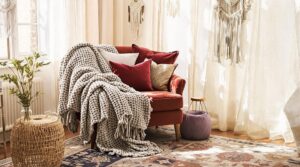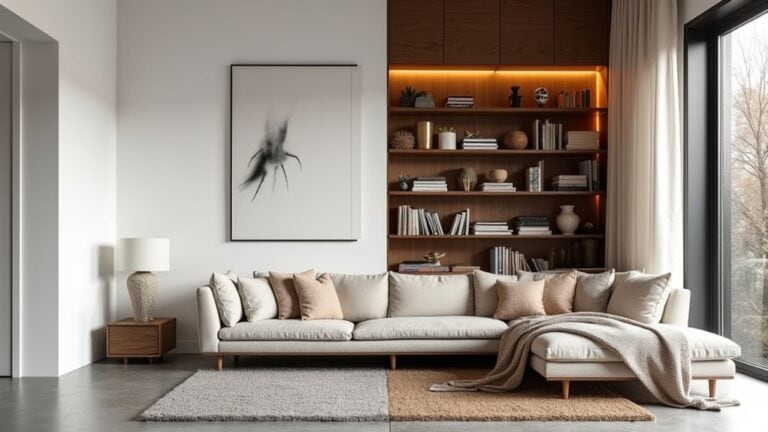
You’ve probably noticed the tension in home design lately—that pull between empty space and filled corners. Do you go for the clean minimalist look with its promise of serenity, or embrace the warmth of displayed collections and personal artifacts? It’s not just about aesthetics. Your choice reflects deeper values about what makes a house feel like home. Some find peace in bare surfaces while others need visible memories and textures to feel grounded. What does your space say about you?
The Essentials
- Minimalist design emphasizes clean lines and white space to create mental clarity, while intentional warmth incorporates personal items and textural elements.
- Psychological research shows organized spaces reduce anxiety, yet overly minimal environments can feel cold and museum-like rather than homey.
- Organized abundance offers a middle ground by displaying curated collections and meaningful objects while maintaining functional order.
- Balance can be achieved by combining minimalist principles with warm materials like wood, textiles, and tactile surfaces that invite touch.
- Design choices should prioritize personal wellbeing and comfort over rigid aesthetic rules or social media trends.
The Philosophical Roots of Modern Minimalism
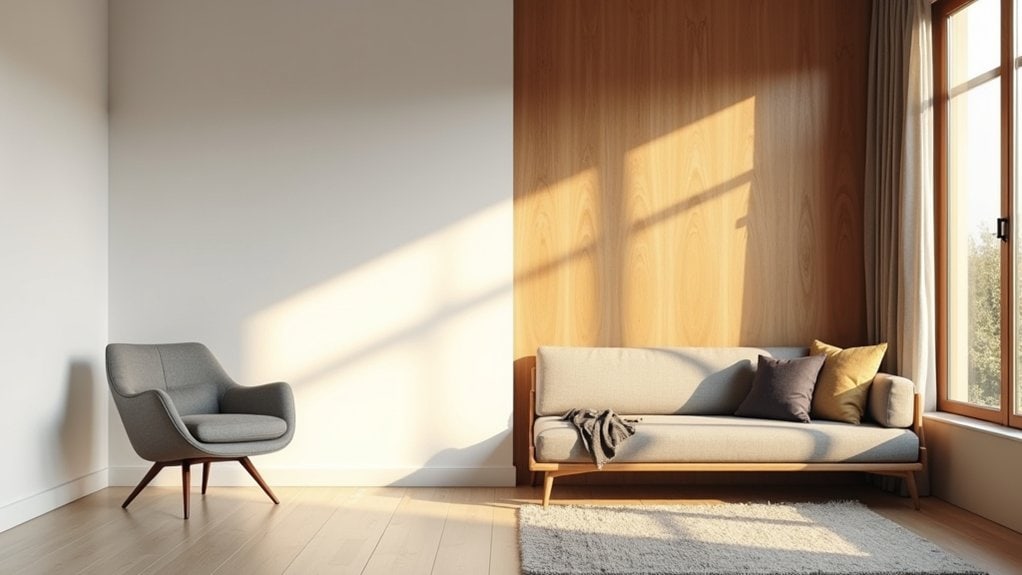
While many assume minimalism emerged purely as a reaction against mid-century consumerism, its philosophical roots actually stretch back centuries to Eastern traditions like Zen Buddhism.
When you strip away decoration in your space, you’re actually participating in a long aesthetic tradition with deep philosophical implications. The Japanese concept of “Ma” – the meaningful space between objects – has influenced Western designers since the early 20th century. You might notice this in your own home when a bare wall somehow feels more intentional than a cluttered one.
These artistic influences weren’t just about looks. They reflected beliefs about clarity of thought and purpose. What if the state of your living room actually affects your mental state? Many early minimalists thought so. The aesthetic origins of today’s clean-lined furniture connect directly to this idea of physical space shaping internal experience.
Why White Space Became the Design Gold Standard
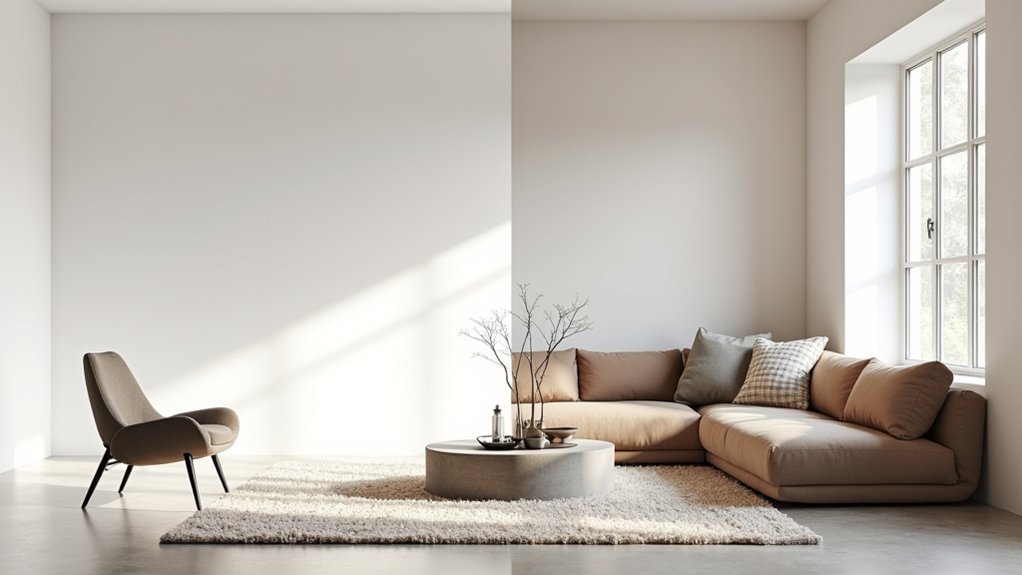
The alteration of white space from absence to presence revolutionized interior design in the late 20th century. You’ve probably noticed how empty areas in rooms aren’t just forgotten gaps anymore—they’re intentional design elements. This shift happened as functional aesthetics gained traction, with designers realizing that breathing room actually served a purpose.
White dominance emerged alongside this design evolution, reflecting cultural values of the time. You might find it interesting that what started as a practical choice (white shows dirt, forcing cleanliness) became a status symbol. Blank spaces began signaling luxury—room to spare in increasingly cramped urban environments.
The appeal makes sense when you think about it. After decades of cluttered Victorian sensibilities, the modern eye craves rest. And white space? It gives your mind somewhere to pause.
The Psychology Behind Decluttered Environments
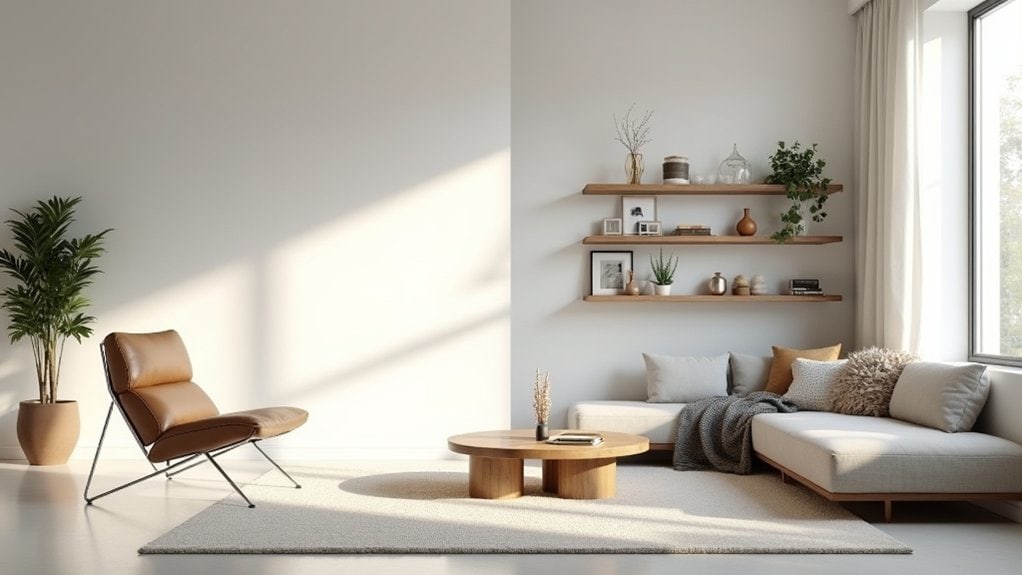
When decluttering became more than just a practical habit, researchers started noticing significant psychological effects. Your brain processes spatial awareness differently in clean environments, allowing you to think more clearly and make decisions faster. The emotional response to a tidy space isn’t just preference—it’s hardwired into how we function.
The clutter impact extends beyond mere aesthetics:
- You’ll experience reduced anxiety when you can see clear surfaces and defined spaces
- Your sleep quality improves when your bedroom isn’t competing for your attention
- Your relationships benefit from shared spaces that don’t trigger frustration or blame
Ever wonder why you feel instantly lighter after cleaning? That’s your mind responding to newfound order. Most people don’t realize how deeply their surroundings affect their mental state until they experience both extremes.
When Minimalism Becomes Cold: The Critique
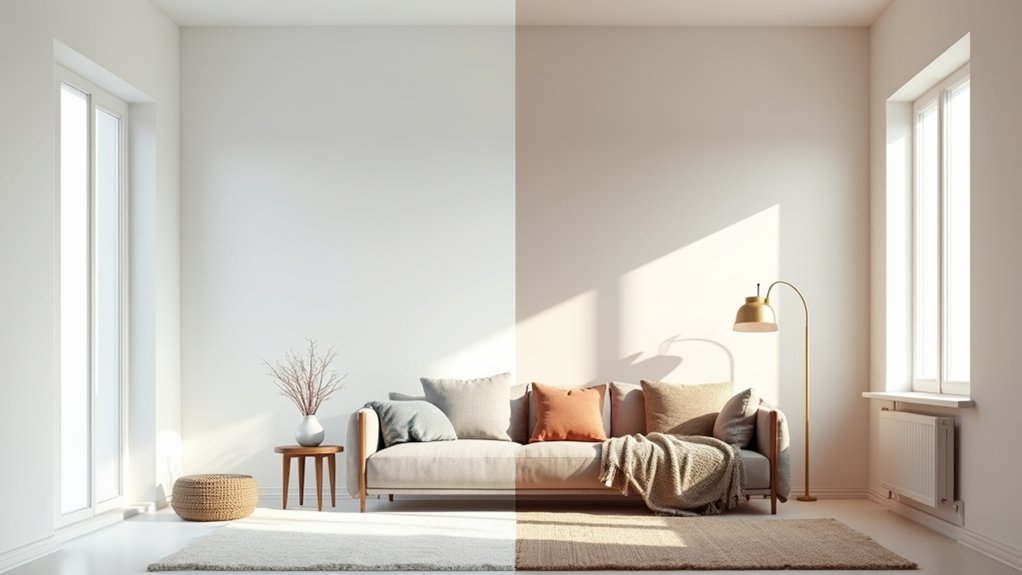
Despite its popularity in design magazines and Instagram feeds, minimalism has faced growing criticism for creating spaces that feel more like museums than homes. You might notice this cold minimalism critique centers on what’s missing: the emotional warmth that makes a space feel lived-in and personal.
When you strip away too much, you’re left with an aesthetic that looks perfect but lacks comfort. Your home should reflect you—not just design principles. Many people find themselves living in these pristine, empty spaces wondering why they don’t feel relaxed.
The challenge is finding balance. Can you maintain clean lines while adding elements that bring emotional connection? Maybe it’s a family photo, a colorful throw, or a shelf of books you actually read. What makes your space feel like more than just a backdrop for photos?
The Rise of “Organized Abundance” as an Alternative
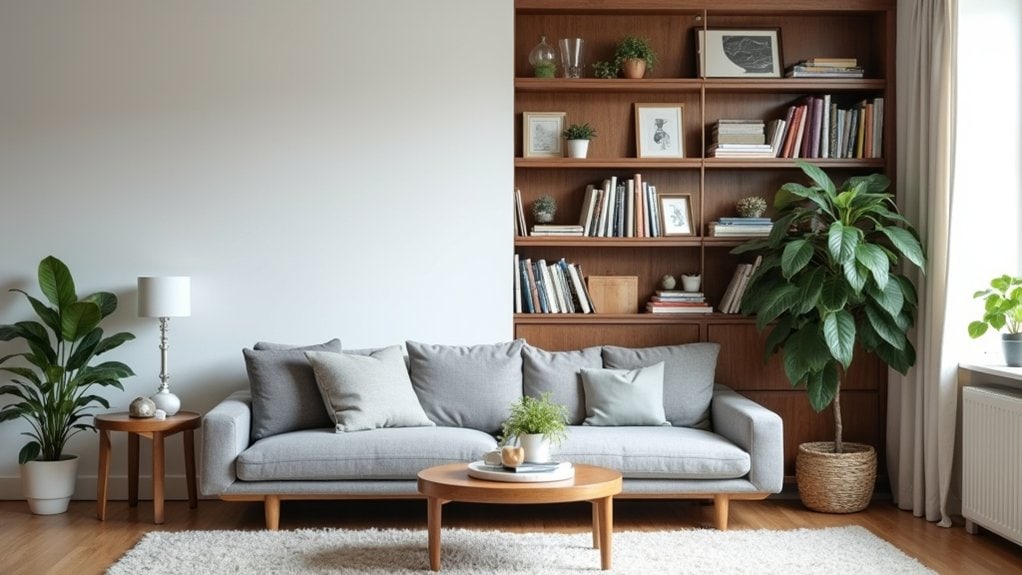
As minimalism faces backlash, “organized abundance” has emerged as an invigorating alternative that’s capturing attention in design circles. This approach allows you to display your personality through thoughtfully arranged possessions rather than hiding everything away.
In organized abundance spaces, you’ll find:
- Curated collections displayed in dedicated areas—think vintage cameras on floating shelves or colorful ceramics in glass cabinets
- Books arranged not just alphabetically but by color, creating visual interest while maintaining function
- Artful layering of textiles, artwork, and meaningful objects that tell your story
The abundance aesthetics movement isn’t about clutter—it’s about intentional display. You’re creating organized spaces that feel lived-in and personal. Want your home to feel like you actually live there? Maybe it’s time to let some of your treasures out of storage.
Personal Objects as Storytellers in Home Design
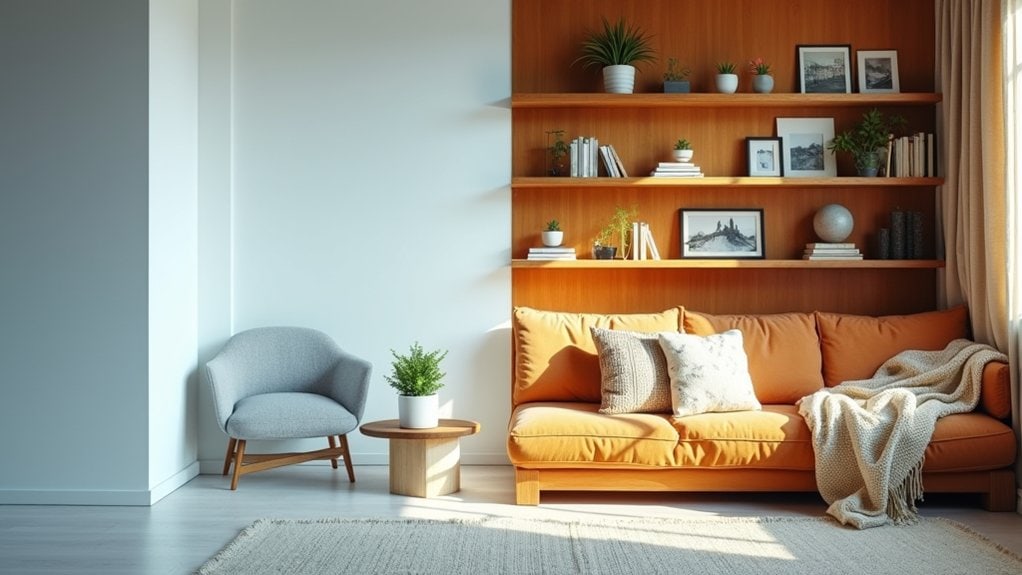
While minimalism strips away personal context, your cherished objects speak volumes about who you are and where you’ve been. That vintage camera from your grandfather doesn’t just occupy shelf space—it preserves personal narratives that make your home uniquely yours.
Think about the items you’ve collected during travels or inherited from family. Each carries cherished memories that transform sterile spaces into emotionally resonant environments. When you display that hand-painted bowl from your trip to Portugal, you’re not just decorating—you’re creating meaningful connections between your past experiences and daily life.
Your home becomes more than an aesthetic achievement; it becomes a autobiography told through objects. What stories are your possessions telling? Sometimes the most visually imperfect items hold the deepest significance, reminding us that homes should reflect real lives, not magazine perfection.
Balancing Visual Rest With Meaningful Collections

The personal objects that tell your story create a unique home, but they can overwhelm your space if not thoughtfully arranged. Finding visual harmony means knowing when to add and when to pause. You’ll want to create pockets of space balance throughout your rooms, giving both your treasures and your eyes some breathing room.
When curating collections, consider:
- Grouping similar items together rather than scattering them across multiple surfaces
- Rotating seasonal or meaningful pieces instead of displaying everything at once
- Using negative space intentionally to highlight your most cherished possessions
The most inviting homes strike that delicate balance—they feel personal yet peaceful. What collections might you edit down? Sometimes the things you choose not to display make as much impact as those you do.
Cultural Influences on Space Utilization

Cultural heritage shapes how we employ space in ways we might not even recognize. You might gravitate toward open layouts if you’re from certain Western backgrounds, while those with East Asian influences often prefer defined functional zones. These aren’t just preferences—they’re spatial narratives passed through generations.
Look at how you arrange your living room. Do you center conversation or entertainment? Your answer likely reflects cultural symbolism embedded in your upbringing.
Design evolution happens when cultures intersect. You might find yourself drawn to Scandinavian minimalism while incorporating textiles from your South American roots. Or maybe you’ve adopted Japanese room divisions while maintaining Italian-inspired entertaining spaces.
Your home tells a story of where you’ve been and who you are. Sometimes the most authentic spaces emerge when you stop fighting these cultural influences.
The Middle Path: Thoughtful Curation Techniques
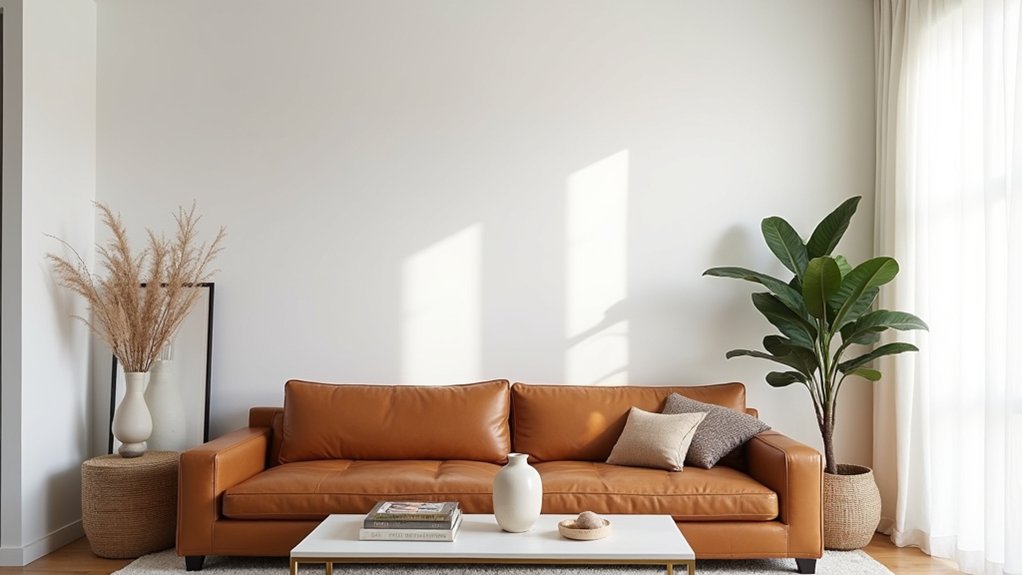
How might we find balance between stark minimalism and overwhelming abundance? The answer lies in thoughtful curation—selecting items that truly matter while creating space for them to breathe. You don’t need to choose between empty rooms or cluttered chaos.
When practicing intentional displays, consider these approaches:
- Group related objects in odd numbers (three ceramic pieces, five books) to create visual interest without symmetrical perfection
- Rotate your curated collections seasonally, keeping spaces fresh without buying new things
- Designate “quiet zones” where eyes can rest between focal points
The middle path means asking yourself why each item deserves space in your home. It’s not about rules or trends, but creating an environment that feels right for you—thoughtfully arranged but never precious.
Material Choices: Textures That Bridge Both Worlds
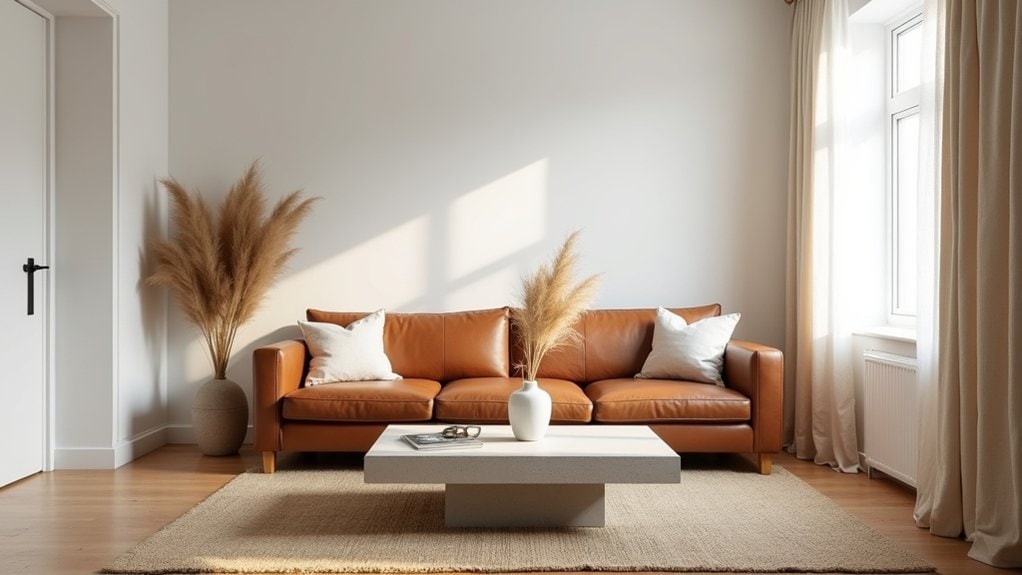
Thoughtful curation sets the stage, but your material choices play the starring role in creating spaces that balance minimalism with warmth. It’s all about textural contrasts—pairing the sleek with the soft, the reflective with the rough.
Try layering materials throughout your room. A polished concrete floor feels less austere when topped with a handwoven jute rug. Cold marble surfaces warm up instantly beside natural wood elements. Even something as simple as a linen throw draped over a clean-lined sofa creates that middle ground you’re after.
What makes a space truly inviting? Tactile experiences. We’re drawn to touch interesting surfaces. Run your fingers across different textures in your own home. Are they all similar? Maybe that’s why the space feels flat or too rigid. Remember—our hands understand things our eyes sometimes miss.
The Social Media Effect on Home Aesthetic Pressure
Scrolling through Pinterest and Instagram has transformed our relationship with our homes in ways we rarely acknowledge. You’re bombarded with perfectly styled spaces that make your lived-in home feel somehow inadequate. The social media effect creates this constant aesthetic pressure to keep up with rapidly shifting design trends.
Think about how often you’ve felt the urge to redecorate after seeing:
- A minimalist Scandinavian living room with pristine white walls and exactly three decorative objects
- Someone’s “casual” breakfast nook that definitely took two hours to style
- A bohemian bedroom that somehow looks both effortless and meticulously curated
You might find yourself questioning your own taste. Is your home warm enough? Too cluttered? Not minimalist enough? Remember that real homes aren’t meant to be permanent museum exhibits. They’re meant to be lived in.
Designing for Wellbeing Rather Than Trends
Wellbeing should ultimately drive our design choices, not the fleeting trends we’re bombarded with daily. When you create mindful design in your home, you’re actually crafting an environment that supports your mental health rather than just impressing visitors.
Think about how you feel in different spaces. Do you need a reading nook with soft textures that helps you decompress after work? Or maybe a clutter-free kitchen that makes cooking less stressful?
Emotional comfort comes from surroundings that reflect your actual needs, not what social media suggests you should want. Consider how your body responds to different elements—natural light, plants, personal mementos that trigger positive memories.
Creating wellbeing spaces means asking yourself, “Will this still make me happy next year?” Sometimes the answer isn’t what’s trending right now.
Sustainable Approaches to Both Design Philosophies
Whether you’re drawn to cool minimalism or cozy maximalism, sustainability can be integrated into both design approaches without compromising your aesthetic vision. You’ll find that eco-friendly materials work surprisingly well in clean-lined minimalist spaces, where bamboo, cork, and recycled glass create visual interest without clutter.
For warmer, more layered interiors, upcycled decor adds character while reducing waste. Have you considered how sustainable sourcing practices impact both styles?
- Minimalists: Invest in fewer, higher-quality pieces made from responsibly harvested woods or recycled metals
- Maximalists: Hunt vintage shops for pre-loved textiles and unique accessories with history
- Both approaches: Choose low-VOC paints and natural fibers that improve indoor air quality
The best part? These sustainable choices often bring more authentic texture and character to your space than mass-produced alternatives.
Frequently Asked Questions
How Much Does Professional Minimalist Home Staging Typically Cost?
Professional minimalist home staging typically costs $1,500-$5,000. You’ll find staging cost breakdown includes professional designer fees ($75-$150/hour) and furniture rental. For budget-friendly options, consider partial staging or DIY with key pieces.
Can Minimalist and Maximalist Styles Work in Different Rooms Together?
Yes, you can blend minimalist and maximalist styles in different rooms. Create room harmony through consistent color palettes, maintain style balance with shifting spaces, and guarantee design cohesion by repeating select elements throughout your home.
What Colors Complement White Space Without Compromising Minimalist Principles?
You’ll maintain minimalist principles by choosing a neutral color palette with soft grays, beiges, or blacks. Add depth through texture layering techniques and select subtle accent color choices like pale blues or muted greens.
How Do Children and Pets Fit Into Minimalist Home Design?
You’ll need child-friendly design with organized play areas using hidden storage. Choose pet-friendly furniture with durable, washable fabrics. Embrace functional minimalism that accommodates their needs while maintaining clean aesthetics you love.
Do Minimalist Homes Actually Sell Faster Than Warmly Decorated Spaces?
Market trends suggest you’ll find mixed results. Staging effectiveness varies by location—minimalist homes can appeal to certain buyer preferences, but warmly decorated spaces often create emotional connections that drive purchases just as effectively.
Final Thoughts
You’ll find your own balance between minimalism and warmth—it’s not really a war after all. Maybe keep the clean lines you love while adding a few meaningful objects that make you smile. Trust your instincts about what feels right in your space. Sometimes a perfectly styled room isn’t as comfortable as one with a bit of yourself in it. What matters most? Creating a home that feels good to live in.