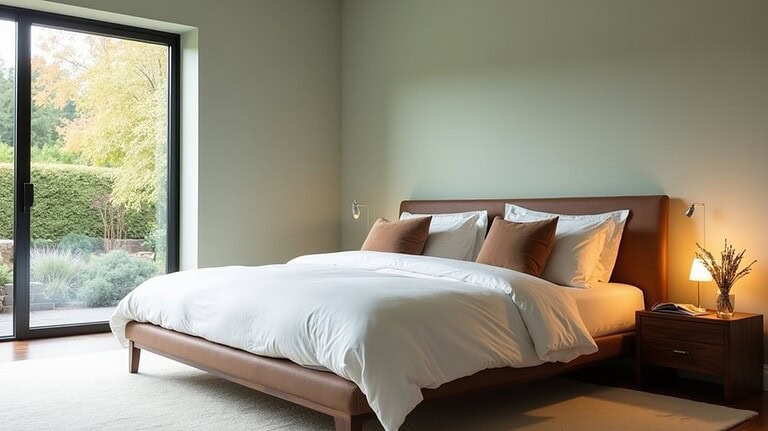
Your bedroom should feel like somewhere you actually want to be—not just a place you collapse into at the end of the day. But most bedrooms don’t feel that way, and honestly, it’s rarely about budget. It’s usually about the small decisions people overlook. The color on the walls, how the light hits at night, what’s sitting on the nightstand. Each choice matters more than you’d think, and we’re going to work through all of it.
The Essentials
- Declutter your bedroom first, removing anything unused or unnecessary, to create a calm and intentional foundation for your retreat.
- Choose a soothing color palette, such as soft blues, warm taupes, or muted pinks, to promote relaxation and comfort.
- Layer natural textures like linen, rattan, and wood accents to create warmth and a grounding, nature-inspired atmosphere.
- Use scent strategically with lavender, cedarwood, or sandalwood to consistently signal rest and relaxation to your brain.
- Install layered lighting with dimmers to control brightness and mood, supporting both functionality and a calm ambiance.
Declutter Your Bedroom Before You Add Anything New
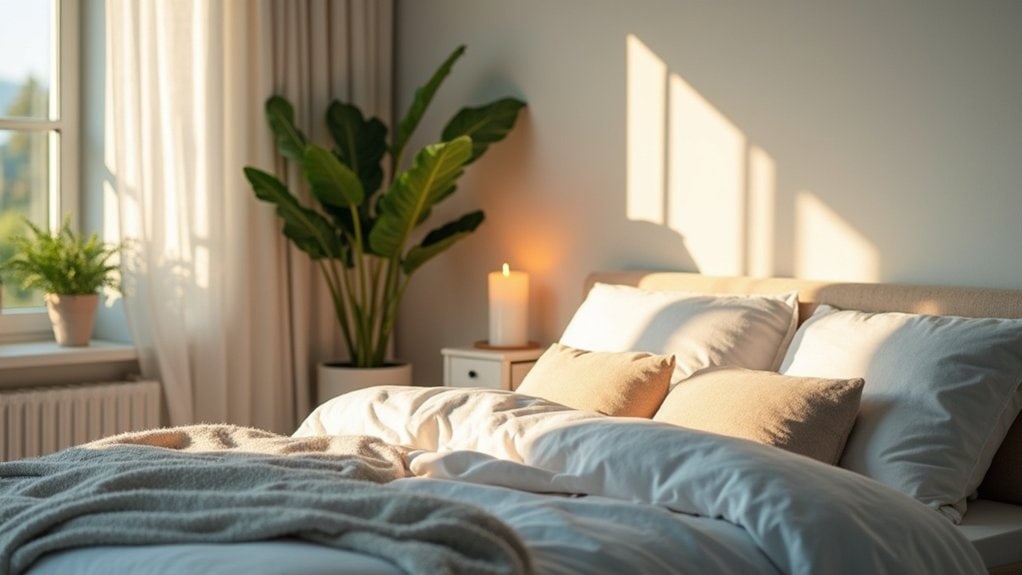
Before you even think about adding new décor, furniture, or anything else to your bedroom, you need to clear out what’s already there.
Start simple. Pull everything out, look at what you actually use, and get rid of what you don’t. It sounds obvious, but most people skip this step.
A minimalist approach doesn’t mean your room has to feel cold or empty. It just means you’re making intentional choices about what stays.
Ask yourself: does this item belong in a bedroom, or did it just end up here?
Mindful organization comes after the purge, not before. You can’t organize clutter — you can only move it around.
Donate, toss, or relocate anything that doesn’t genuinely belong. Then you’ll have a real starting point.
Start With a Bedroom Color Palette That Calms You
Once you’ve cleared the clutter, color is probably the next biggest decision you’ll make for your bedroom. And honestly, it’s worth thinking about more carefully than most people do.
Color psychology tells us that certain tones actually shift how your nervous system responds. Soothing hues tend to do the heavy lifting here.
A few directions worth considering:
- Soft blues and greens — these read as naturally calming to most people
- Warm taupes and creamy whites — cozy without feeling cold
- Muted dusty pinks — warmer than you’d expect, surprisingly grounding
- Deep charcoals or navy — works if you want something more enveloping
What actually relaxes *you* though? That’s the real question. Don’t just copy what looks good in someone else’s room.
Create a Bedroom Layout That Flows Naturally
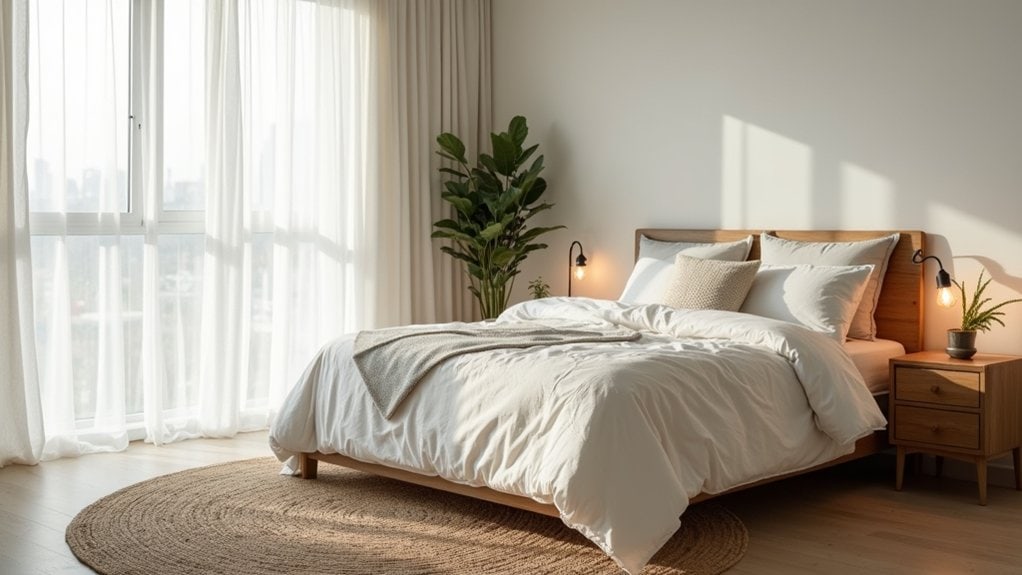
After you’ve settled on a color direction, the layout is where things get either really comfortable or quietly frustrating—and most people don’t realize which one they have until they’ve lived in the room a while.
Start with furniture placement around how you actually move. Where do you walk first thing in the morning? That path should feel open, not blocked.
Pull your bed away from the window if natural light hits your face before you’re ready for it. Or lean into it—some people love that. It depends on you.
Don’t push every piece against a wall. Floating furniture a little creates breathing room.
Ask yourself: does this layout serve sleep, or does it just look balanced in a photo?
Choose the Right Lighting for Your Bedroom
Lighting can really make or break the mood of your bedroom, so it’s worth pondering carefully about how you layer your light sources—overhead lights, bedside lamps, and maybe even some soft accent lighting work together in ways that a single ceiling fixture just can’t pull off on its own. You’ll also want to contemplate installing dimmer switches, because being able to dial down the brightness at night versus in the morning is honestly one of those small changes that feels surprisingly significant. And don’t overlook the difference between warm and cool light tones—warmer bulbs tend to feel cozier and more restful, though the right choice really depends on how you personally use your bedroom space.
Layering Light Sources
Bedroom lighting is something a lot of people get wrong, and honestly, it’s usually because they rely on one overhead light to do everything. That one fixture can’t really handle the whole room. Light layering techniques fix that.
Try building your lighting in levels:
- Ambient lighting options like a ceiling fixture or recessed lights for general visibility
- Task lighting — a reading lamp or bedside sconce for focused light
- Accent lighting to highlight a wall or shelf
- Dimmers so you can actually control the mood
What does your room feel like at 9pm with just the overhead on? Probably not great. Adding even one extra light source changes everything. Start small, then adjust.
Dimmer Switches Matter
If you’ve ever tried to wind down at night with a harsh overhead light blasting at full brightness, you already know why dimmers matter.
A simple dimmer switch transforms your bedroom’s ambient lighting almost instantly. You’re not replacing fixtures or rewiring anything complicated. You’re just giving yourself control over intensity.
And that control does a lot for mood enhancement. Bright light signals your brain to stay alert. Lower light tells it to relax. That’s not a small thing when you’re trying to actually rest.
Think about what you do in your bedroom at night. Reading? Getting ready? Just decompressing? Each activity probably needs a different light level.
Dimmers let you adjust without compromise. It’s an easy upgrade that honestly doesn’t get enough credit.
Warm Versus Cool Tones
Once you’ve got a dimmer installed, the next thing worth thinking about is the actual color of your light.
Bulbs come in different temperatures, measured in Kelvins. That number matters more than most people realize.
Here’s a simple breakdown:
- 2700K–3000K — warm, amber-ish light that supports warm color psychology and signals your brain to wind down
- 3500K–4000K — neutral, closer to office lighting
- 4000K–5000K — cool tone benefits show up here, great for tasks but harsh before bed
- 5000K+ — basically daylight, probably not what you want in a bedroom
Build a Bed Setup You Actually Want to Sleep In
The bed is honestly the most important piece of furniture in your bedroom, so it makes sense to spend real time getting it right.
Start with bed frame styles. Do you want something low and minimal, or do you prefer a tall upholstered headboard that actually supports you while you read? Both work, depending on the room.
Then think about mattress materials. Memory foam, latex, hybrid—each one feels completely different, and what works for someone else might not work for you.
Layering matters too. A fitted sheet, a breathable duvet, maybe one or two pillows you actually use. Not a decorative pile nobody touches.
What do you actually need to feel comfortable at night? Start there, and build outward from that answer.
Layer Your Bedroom Bedding for Comfort and Warmth
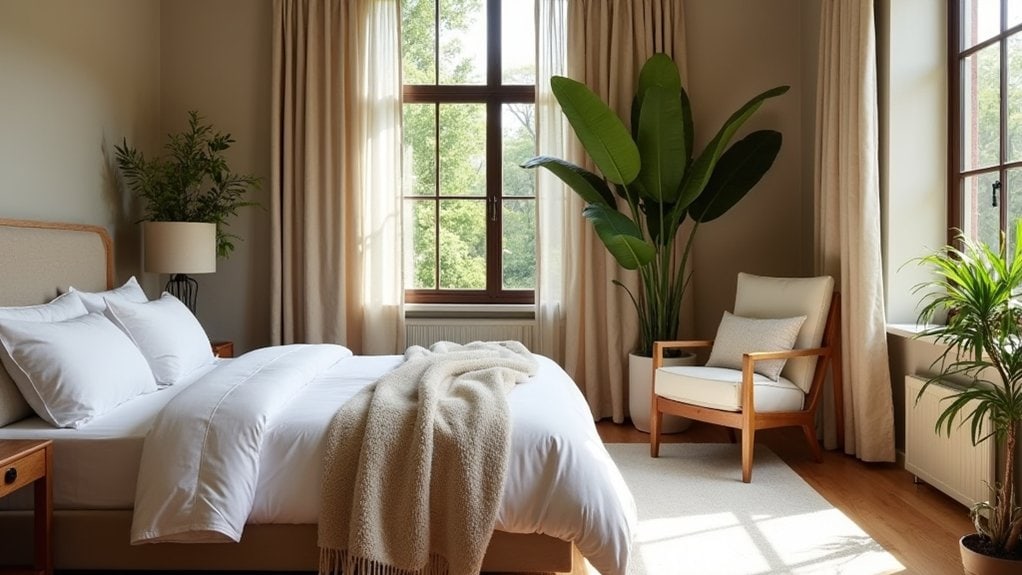
Layering your bedding isn’t complicated, but it does take a little thought. Start with what feels good against your skin, then build from there. Bedding textures matter more than most people realize — rough linen, soft cotton, chunky knit. They all feel different. Here’s a simple layering technique that actually works:
- Start with a fitted sheet in breathable cotton
- Add a flat sheet if you like that option
- Layer a duvet or comforter on top
- Finish with a throw blanket folded at the foot
Does your bed feel warm but not suffocating? That’s the goal. Don’t overthink the color coordination either. Sometimes mismatched textures look more intentional than a perfectly matched set ever could.
Smart Bedroom Storage That Keeps Clutter Out of Sight
A few smart storage choices can completely change how your bedroom feels — and honestly, it’s less about buying more stuff and more about using what you already have better.
Start with under bed solutions — flat bins or rolling drawers work really well for seasonal items. Multifunctional furniture, like a storage ottoman or bed frame with built-in drawers, quietly handles hidden storage without cluttering your visual space.
Decorative baskets on shelves look intentional and actually hold things. Closet systems with adjustable shelving help you stop piling stuff on the floor.
Does your room feel chaotic? Sometimes stylish organizers and a more minimalist design approach make a bigger difference than you’d expect.
Room dividers can also carve out a dedicated space, keeping certain areas visually separate and calmer.
Bring Plants, Wood, and Stone Into Your Bedroom
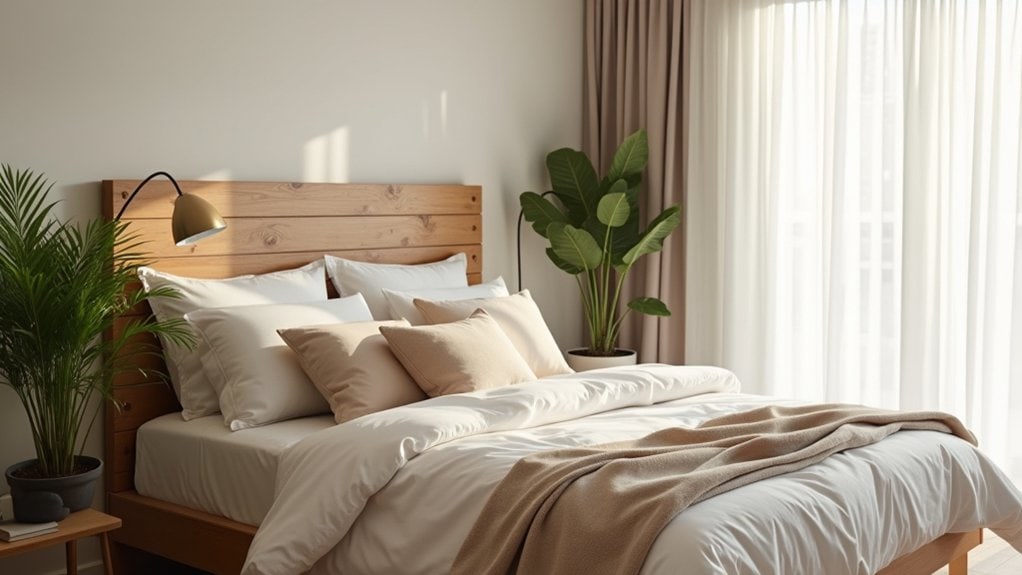
Once your storage situation feels more under control, you’ll probably notice something else — the room might still feel a little cold or flat. That’s where natural textures come in.
Try adding:
- Air purifying plants like pothos or snake plants — indoor gardening doesn’t have to be complicated
- Wood accents on shelves, frames, or furniture legs to warm things up
- Stone decor like a small tray or bookend to add some weight and grounding
- Nature inspired elements through linen, rattan, or woven baskets
These aren’t dramatic changes. But layering a few of them together shifts how the room actually feels. Do you want it quieter? More grounded? Start there, then choose accordingly.
Set the Right Scent and Sound for Your Bedroom
Scent and sound are two things people often overlook when they’re putting together a bedroom, but they can shift the whole feeling of a space pretty quickly. A lavender diffuser or even just a candle with a soft, clean scent can help your brain start to wind down—honestly, it doesn’t need to be complicated. If you’re not sure where to start with sound, try a white noise machine or a low-volume playlist of ambient tracks and see what actually helps you relax.
Choosing Calming Bedroom Scents
There’s something worth paying attention to when it comes to how your bedroom smells—most people don’t think about it much, but scent can actually affect how quickly you wind down at night.
The aromatherapy benefits are real, and scent selection doesn’t have to be complicated. A few options worth trying:
- Lavender – probably the most researched for sleep
- Cedarwood – grounding, subtle, not overpowering
- Chamomile – softer than you’d expect
- Sandalwood – works well if lavender feels too floral
You can use a diffuser, linen spray, or even a candle you blow out before sleep. What matters is consistency—your brain starts associating that scent with rest. Does your bedroom currently smell like anything intentional? Probably worth asking.
Soothing Sounds for Sleep
Sound works a lot like scent—your brain picks up on it, even when you’re not paying much attention.
Some people swear by white noise or nature sounds like rain or ocean waves. Others do better with calming music, sleep podcasts, or even binaural beats, which some research suggests may help ease you into deeper rest.
If your mind tends to race at night, guided meditations or sleep affirmations might give it something gentle to latch onto instead.
Ambient noises—fans, soft static, distant traffic—can also work surprisingly well. It’s not always about what sounds “right.” It’s about what actually quiets your particular brain.
What do you usually hear when you’re trying to fall asleep? That’s probably a good place to start.
Small Bedroom Sanctuary Ideas That Punch Above Their Weight
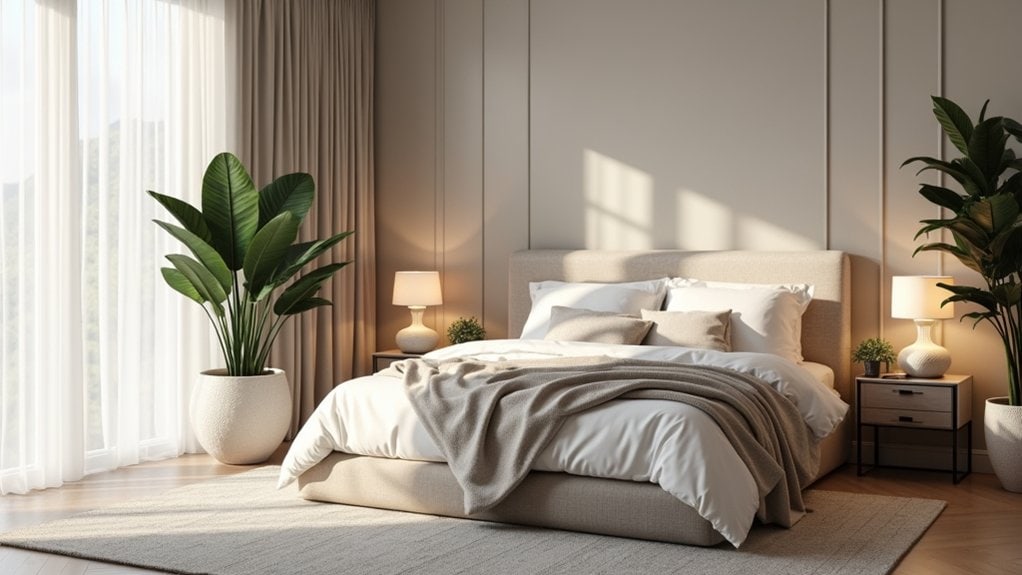
A small bedroom doesn’t have to feel like a compromise. With the right choices, even a tight space can feel intentional and genuinely restful.
Start with these four moves:
- Pull in nature elements—a small plant or two shifts the whole energy
- Choose multifunctional furniture that earns its floor space
- Use soft textures on your bed and your one cozy corner to add warmth without clutter
- Hang calming artwork that gives your eye somewhere to land
Minimalist decor actually works harder in small rooms. You don’t need more—you need better. A few personal touches matter more than filling every shelf. Maybe one statement piece. Nature elements, soft lighting. That’s honestly enough to make a small room feel chosen, not just settled for.
Art, Textiles, and Décor That Complete Your Bedroom
The details are what most people underestimate—and honestly, they’re also where bedrooms either come together or fall slightly flat.
Think about your wall art first. One piece with real presence beats five forgettable ones. Layered patterns in your bedding—maybe a textured throw over printed cozy cushions—add textile textures without overthinking it.
Your decorative details should feel chosen, not collected. A ceramic dish. A worn book. Personal touches like these do more than statement pieces sometimes.
Don’t stress about artful accents matching perfectly. They don’t need to.
Ask yourself: does this room actually feel like yours? If not, something’s missing—probably something small.
Layered patterns, textile textures, the right wall art placement. It’s not complicated. You just have to slow down enough to actually notice what’s working.
Frequently Asked Questions
What Bedroom Temperature Is Ideal for the Best Quality Sleep?
You’ll sleep best when your bedroom sits between 60–67°F. Maintain your sleep environment at this range and keep bedroom humidity around 30–50% to promote deeper, more restorative rest every night.
Should You Keep a TV in Your Bedroom Retreat?
Avoid keeping a TV in your bedroom retreat. It disrupts your bedroom ambiance and reduces sleep quality. While TV benefits entertainment, it’ll stimulate your mind, making it harder for you to unwind and truly relax.
How Often Should You Replace Your Bedroom Mattress?
You should replace your mattress every 7–10 years to maintain ideal mattress lifespan. Don’t wait too long, as an aging mattress directly impacts your sleep quality, leaving you restless and preventing your bedroom from feeling like a true retreat.
Can Sharing a Bedroom With a Partner Affect Its Retreat Feel?
Yes, sharing a bedroom with a partner can affect its retreat feel through shared space interactions. You’ll need to balance personal preferences, so compromise on décor, lighting, and organization to guarantee both of you feel relaxed and comfortable.
Is It Worth Hiring an Interior Designer for Your Bedroom?
It depends on your design budget and personal style. If you’re unsure where to start, a designer can save you time and money. But if you’ve got clear vision, you can confidently do it yourself.
Final Thoughts
Your bedroom doesn’t have to be perfect to feel like a retreat. Start with one thing — clear the clutter, swap the lighting, add a plant. See how it feels. Small changes actually matter more than you’d think. You don’t need a full renovation or a bigger space. You just need a room that works for you, not against you. That’s really the whole point.