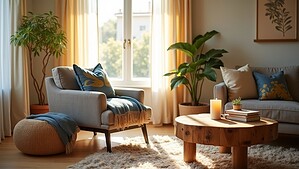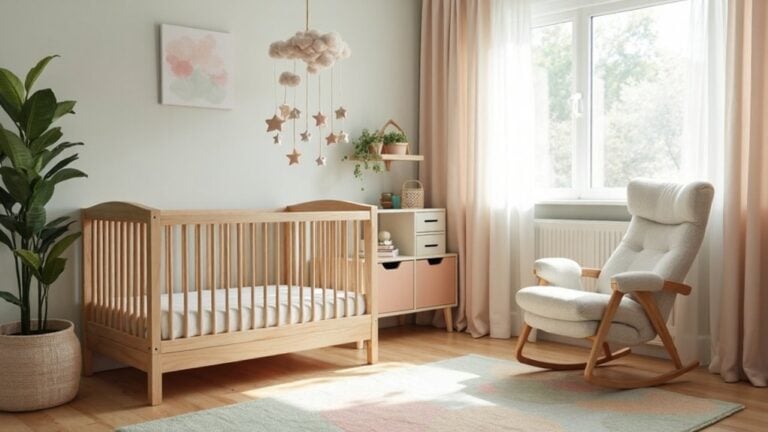
You can create kid-friendly spaces without sacrificing your style by focusing on dual-purpose solutions. Look for washable performance fabrics on furniture, rounded coffee tables that double as play surfaces, and clever storage ottomans that hide toys while complementing your decor. Wall-mounted lighting keeps curious hands safe, while modular furniture adapts as your family grows. The trick is finding pieces that work for everyone—functional for kids but still something you’ll actually want in your home.
The Essentials
- Multi-functional furniture like convertible cribs and storage ottomans balances practicality with adult aesthetics.
- Performance fabrics including microfiber, Crypton-treated materials, and washable slipcovers resist stains while maintaining style.
- Designated play zones with stylish rugs and decorative storage bins create organized spaces that blend with home decor.
- Rounded furniture edges, wall-mounted shelving, and padded surfaces create safe environments without sacrificing sophistication.
- Sustainable materials like non-toxic paints and reclaimed wood offer durability while LED lighting provides safety and ambiance.
Multi-Functional Furniture That Grows With Your Family
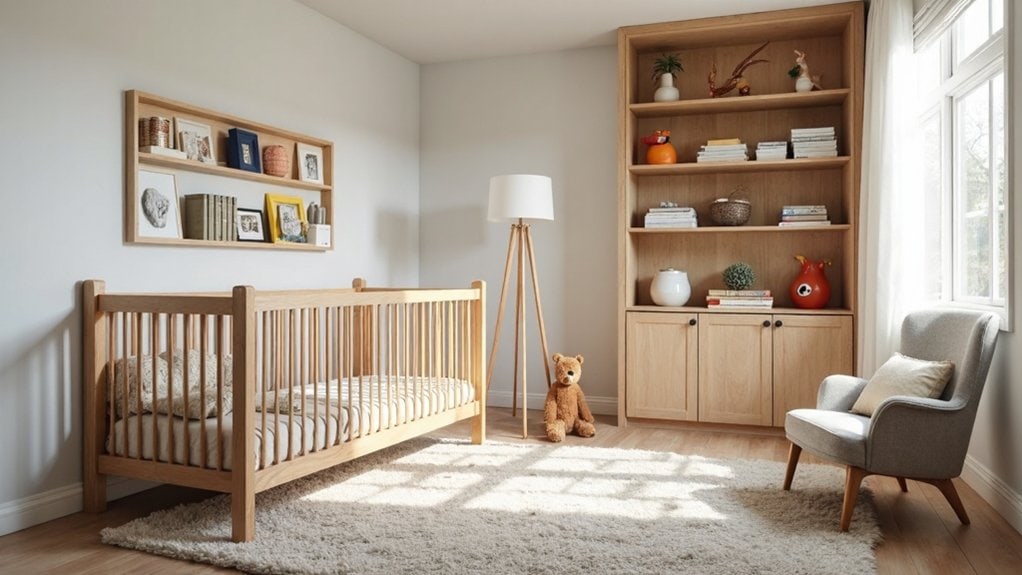
When designing a child’s room, why settle for furniture they’ll outgrow in a year? Smart parents are turning to multi-functional furniture that adapts as kids grow from toddlers to teens.
Consider modular furniture like convertible cribs that transform into toddler beds, then daybeds for elementary years. You’ll save money and reduce waste. I’ve seen families absolutely love those storage solutions with cubbies that work for both toys and later, school supplies.
Look for pieces with built-in versatility—maybe a desk with adjustable heights or bookshelves that can be reconfigured. My neighbor just got this amazing loft bed with a study area underneath that her daughter will use well into high school.
The best part? These practical investments don’t have to look childish. You can find options that blend with your home’s aesthetic.
Washable Fabrics That Stand Up To Sticky Fingers
Functional furniture provides a great foundation for a kid’s space, but let’s face it—children aren’t exactly known for their cleanliness. Those sticky fingers and muddy footprints have a way of finding every surface in your home.
When selecting fabrics for high-traffic areas, washable fabrics are absolutely non-negotiable. Look for microfiber sofas that you can wipe down or, even better, slipcovers you can toss in the washing machine after juice box disasters. Some companies now make sofas with completely removable, washable covers—worth every penny if you ask me.
I’ve learned this the hard way. Remember those cream-colored throw pillows I bought before kids? Yeah, they didn’t stand a chance. Now I stick with dark patterns or performance fabrics that repel stains before they set in.
Clever Storage Solutions For Toy Clutter
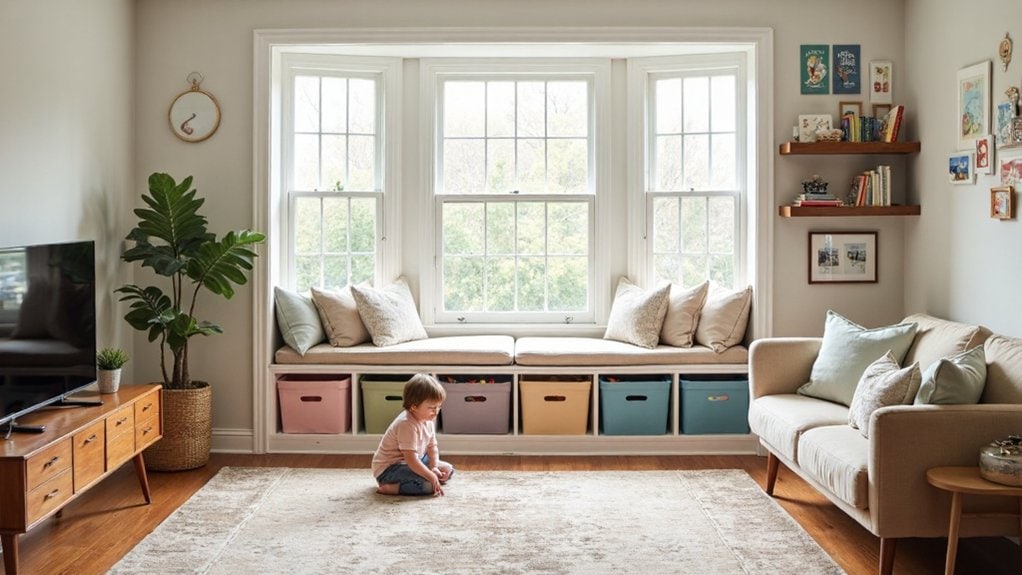
No matter how beautiful your kid-friendly decor might be, toys scattered across every surface can quickly turn your stylish space into what looks like the aftermath of a toy store explosion. The solution? Strategic storage that hides the chaos.
Invest in closed storage pieces that double as furniture—ottomans that open up to swallow Lego collections or coffee tables with hidden compartments. I’ve found that decorative storage bins work wonders when labeled clearly (maybe even with pictures for little ones).
Create “toy zones” with dedicated hidden storage in each area of your home where kids play. This approach has saved my sanity countless times. You can actually maintain some grown-up style while containing the kiddie clutter.
Child-Safe Coffee Tables Without The Eyesore Factor
Three annoying problems plague most coffee tables in homes with little ones: sharp corners that seem magnetically attracted to toddler foreheads, hard surfaces perfect for painful falls, and grown-up styling that clashes with child-friendly needs.
You don’t have to sacrifice style for safety, though. Round ottoman coffee tables with padded tops solve the corner issue while offering secret storage. I’ve seen leather poufs clustered together that look surprisingly sophisticated. Some companies now make furniture pieces with silicone edge guards that actually look intentional—not like aftermarket add-ons.
For a truly kid-friendly space, consider a table with rounded wood edges and a felt-covered surface. These absorb impact and prevent toys from making that horrible crashing sound when dropped. Trust me, your nerves will thank you.
Rounded Corners And Soft Edges For Peace Of Mind
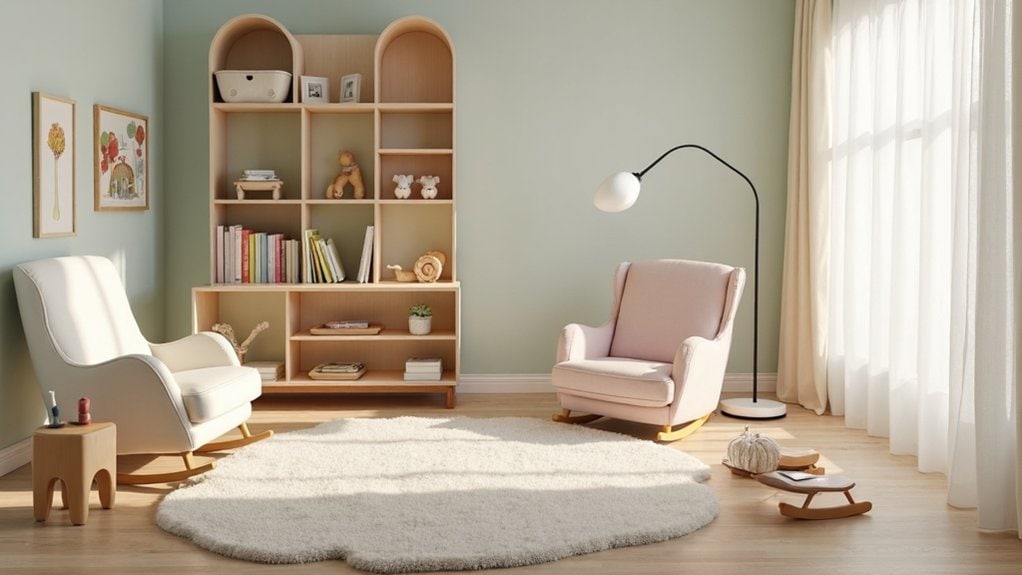
Safety becomes second nature when you embrace rounded corners and soft edges throughout your home. You’ll breathe easier watching your little one explore without that constant fear of sharp corners and hard edges.
Consider replacing rectangular coffee tables with oval shape alternatives that naturally eliminate dangerous points. The organic shape not only protects tiny foreheads but often adds a modern touch that works surprisingly well with most décor styles.
Look beyond just tables though. Many pieces of furniture now come with kid-friendly considerations built right in. That plush ottoman with rounded edges might actually look better than the sharp-cornered version you originally wanted.
I’ve found that softening these elements throughout your living space creates a more relaxed vibe for everyone. Maybe it’s because you’re not constantly yelling “be careful!” every five minutes.
Stylish Play Areas That Blend Into Living Spaces
With safety challenges addressed, let’s explore how to create those magical kid zones without turning your living room into a primary-colored plastic jungle.
You don’t need to surrender your home’s style to accommodate play areas. Try incorporating storage ottomans in neutral colors that hide toys while doubling as seating. Or maybe designate a corner with a stylish rug that defines personal space for your little one while complementing your decor.
I’ve found that wall-mounted shelving works wonders too. It displays your kid’s favorite things at their height but can showcase decorative items up top – best of both worlds!
Creating a family-friendly home isn’t about separate adult and kid spaces. It’s about thoughtful combination. What if that coffee table had rounded corners AND a drawer for crayons? Your living room can work for everyone without looking like a daycare.
Durable Flooring Options That Welcome Play
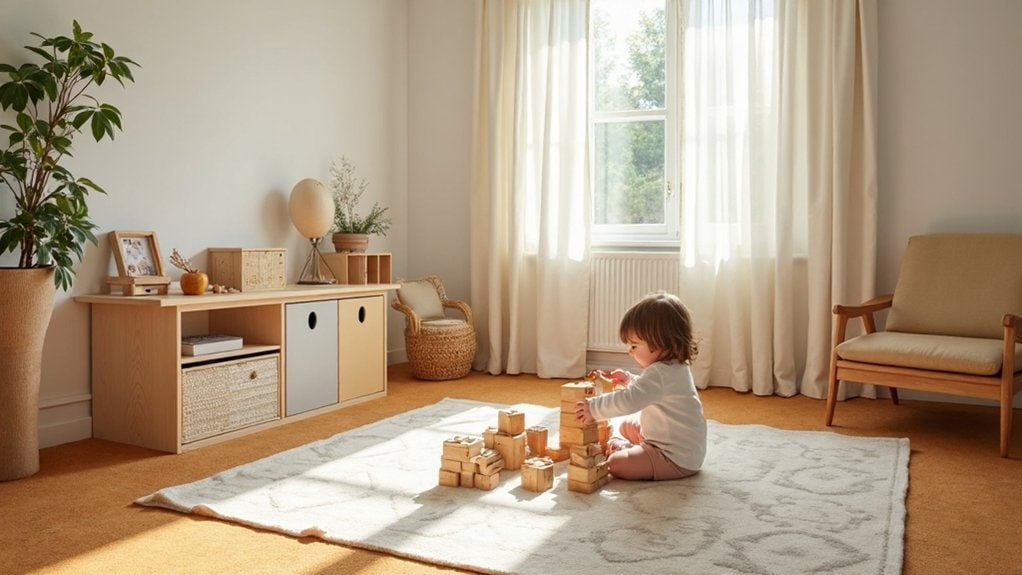
When tiny feet spend hours racing toy cars or practicing dance moves, your flooring needs to withstand the challenge. Luxury vinyl plank has become my go-to recommendation for families—it’s waterproof, scratch-resistant, and comes in styles that honestly look like real wood.
Cork is another option worth considering. It’s naturally springy, which means fewer tears when little ones tumble during playtime. Plus, it creates a warmer floor space for setting up bean bag chairs or building blanket forts.
If you’ve got your heart set on carpet, look for solution-dyed options with stain protection. They’ll handle spilled juice boxes way better than traditional types.
Whatever you choose, think about your family friendly lifestyle first. Maybe add area rugs that can be easily cleaned or, honestly, replaced when art projects go terribly wrong.
Wall Décor That Inspires Young Minds
The walls of your child’s space offer endless possibilities beyond just keeping the roof up! They’re blank canvases waiting for creativity that can actually grow with your kid.
Wall decals are my go-to for quick changes—they’re removable and won’t drive you crazy when your child’s dinosaur phase suddenly shifts to outer space. I recently helped my sister put up some alphabet decals that her toddler absolutely loves pointing at.
Consider a wall mural for more impact. Maybe something educational but still visually appealing? You’d be surprised how a well-designed solar system or world map can spark conversations at bedtime.
Quality wall art doesn’t have to be childish, either. Think framed nature prints or abstract pieces with colors that complement their room. What stories might these images inspire in your child’s imagination?
Sophisticated Color Palettes Beyond Primary Hues
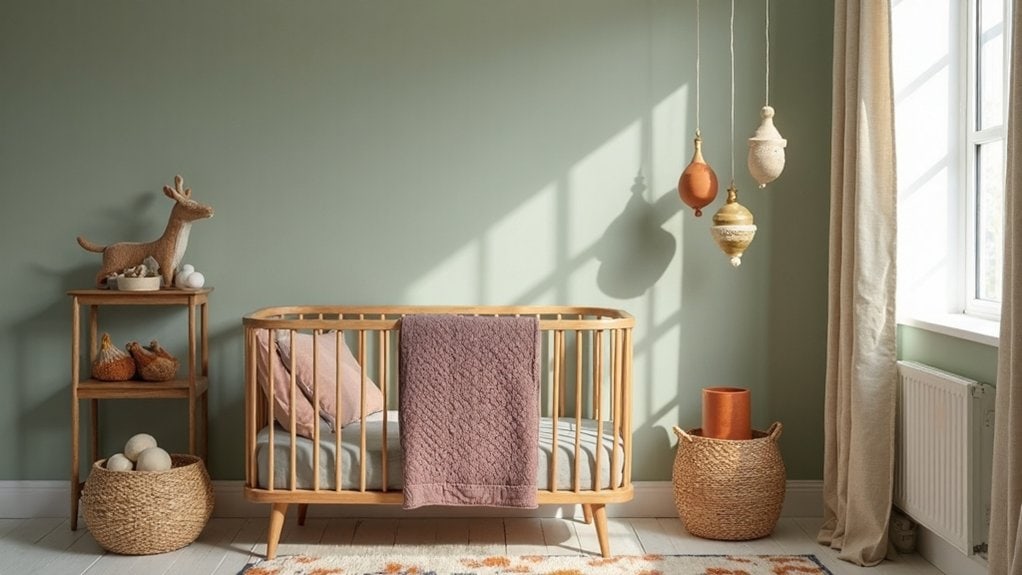
Try a sophisticated blue color scheme with varying shades from navy to misty gray-blue. I remember painting my daughter’s room in a dusty teal that grew with her from toddler to teen.
Neutral backgrounds actually make pops of color more impactful. Consider warm beiges or soft grays with strategic color moments—maybe mustard yellow pillows or a coral bookshelf?
Your color palette can be both kid-appropriate and aesthetically pleasing to adult eyes. Think about colors that soothe at bedtime but energize during play. What emotions do you want the space to evoke?
Kid-Friendly Art Displays That Rotate Easily
Creating a flexible gallery for your child’s artwork transforms both their creativity and your home’s look. You’ll want something that changes easily as their artistic style evolves—maybe a simple wire system with clips or magnetic wall strips that don’t damage walls.
Try designating a specific gallery wall near their storage for toys. This keeps their creative zone together and makes art rotation part of playtime. I’ve found that framing just a few special pieces while keeping a rotating display for newer creations prevents overwhelming clutter.
Don’t forget to incorporate sensory elements nearby—textured frames or soft seating can make the art area more inviting. What about a small shelf with art supplies underneath their display? This encourages them to create when inspiration strikes, and you won’t have to search for markers across the house!
Performance Textiles That Hide Evidence Of Spills
Three essential performance textiles have revolutionized kid-friendly homes in recent years, making spills and stains much less stressful for parents. You’ll find these fabrics offer a perfect neutral base for any room while hiding the inevitable juice disasters around your dining table.
Look for these kid-proof options:
- Solution-dyed acrylics that repel liquid instead of absorbing it
- Crypton-treated fabrics that create an almost invisible barrier against stains
- Performance velvets with tight weaves that prevent spills from setting
- Outdoor fabrics brought indoors—they’re surprisingly soft now!
- Microfiber blends that can be wiped clean with just water
I’ve found these materials work especially well in outer space-themed rooms where dark blues and purples naturally camouflage small marks. Maybe you’ve noticed how much easier cleanup becomes when you choose the right textiles?
Lighting Options Safe For Curious Hands
While children explore their environment with curious hands, lighting fixtures often become tempting objects to investigate. You’ll want to choose lighting that won’t cause injuries if touched or accidentally knocked over. Wall sconces installed above reaching height provide good ambient light without the tipping hazard of table lamps.
For your kid-friendly home, consider LED strip lights along baseboards or under furniture—they’re cool to touch and create a fun glow that most kids love. In playroom ideas, think about pendant lights with fabric or plastic shades rather than glass ones.
I’ve found that clip-on book lights are really versatile too. You can attach them to shelves or headboards for reading, and they’re pretty sturdy against curious little fingers. Maybe look for fixtures with rounded edges and no exposed bulbs?
Dual-Purpose Rooms That Serve The Whole Family
When space is limited in your home, dual-purpose rooms become essential for family harmony. Creating a living space that works for everyone means finding that perfect blend of functionality and style. You’ll want areas where kids can be kids, but that don’t scream “children live here!” when your adult friends visit.
Try these playful elements that serve double duty:
- Ottoman storage that hides toys but offers extra seating when guests arrive
- A dining table that converts to an art station with supplies tucked in nearby drawers
- Modular furniture that rearranges for movie night or playtime
- Wall-mounted desks that fold away when not needed
- Bookcases with lower shelves for kids’ items and higher ones for your treasures
Maybe the key is thinking beyond single-use spaces. Rooms can evolve throughout the day as your family’s needs change.
Sustainable Materials For Health-Conscious Homes
As parents become increasingly aware of indoor air quality and environmental impacts, sustainable materials have moved from trendy option to family necessity. You’ll find that incorporating non-toxic paints, organic fabrics, and reclaimed wood isn’t just good for the planet—it’s essential for your little ones who are more sensitive to chemicals.
During your design process, prioritize materials with clean lines and minimal processing. Cork flooring, for example, offers a forgiving surface for tumbling toddlers while being naturally antimicrobial. Maybe try bamboo furniture? It grows quickly without pesticides and can take a beating from energetic kids.
I’ve noticed that wool rugs, though pricier upfront, actually save money long-term because they’re incredibly durable and naturally stain-resistant. What sustainable switches could you make this year?
Technology Integration That Parents Can Control
Since the digital revolution has transformed our homes, smart technology incorporation has become both an opportunity and a challenge for parents. You want devices that enhance your family’s life without dominating the aesthetic of your adult space. Designer Emily Henderson suggests creating tech zones that blend harmoniously with your decor while maintaining parental oversight.
Consider these parent-approved tech solutions:
- Voice-controlled lighting systems with child locks for bedtime routines
- Hidden charging stations behind furniture or in decorative boxes
- Wall-mounted tablets in semigloss paint-matched frames that disappear when not in use
- Kid-friendly smart speakers with parental controls for appropriate content
- Under-cabinet or recessed screens for kitchens that don’t clutter countertops
Maybe the best approach is balance—tech that’s there when you need it, invisible when you don’t.
Frequently Asked Questions
How Do I Prevent Kids From Drawing on Walls?
You can prevent kids from drawing on walls by providing designated art spaces, using washable materials, supervising creative time, teaching boundaries early, and installing washable paint or removable wallpaper that’s easier to clean if accidents happen.
What’s the Best Way to Handle Window Treatments for Child Safety?
You’ll want cordless blinds or shades to prevent strangulation hazards. Secure any existing cords with cord cleats, positioned high up. Don’t place cribs near windows, and install window guards to prevent falls.
How Can I Create Kid-Friendly Spaces in Small Apartments?
In small apartments, you’ll enhance kid spaces by using multi-functional furniture, vertical storage, designated play zones with rolling bins, and foldable items. Don’t forget wall-mounted options that save precious floor space.
Which Plants Are Safe for Homes With Curious Toddlers?
You’ll want non-toxic options like spider plants, Boston ferns, and Calathea. Keep plants like peace lilies and pothos out of reach. Consider hanging planters or high shelves for additional safety with curious toddlers.
When Should I Transition From Nursery to “Big Kid” Room?
You should shift to a “big kid” room between ages 2-4, when your child outgrows the crib or shows interest in more independence. Follow their cues and make it a gradual, thrilling change together.
Final Thoughts
You don’t need to choose between kid-friendly and stylish anymore. With these options, your home can work for everyone who lives there. Remember that little adjustments—swapping out a sharp-edged table or adding washable slipcovers—make a huge difference in daily life.
The best part? As your kids grow, these thoughtful choices adapt with them. What small change might make your space more functional tomorrow?