If you’ve ever sat in a room that felt off — too harsh, too dim, somehow both — lighting is probably why. Most people set up overhead lights and call it done. But that one-source approach tends to flatten a space and make it feel more functional than livable. Lamps change that. The real question is how to use both together without the room looking like it can’t make up its mind — and that’s exactly where this gets interesting.
The Essentials
- Overhead lighting provides general brightness and coverage, while lamps add warmth and mood, making both essential for a well-balanced space.
- Layering ambient, task, and accent lighting creates depth and enhances the overall atmosphere of any room.
- Dimming overhead lights while using lamps simultaneously achieves a cozy, lived-in feel with minimal effort.
- Loosely matching fixture styles between lamps and overhead lights maintains visual cohesion without requiring an exact design match.
- Adding dimmer switches to overhead fixtures increases versatility, allowing lighting levels to adapt to different activities and occasions.
Why Every Room Needs More Than One Light Source
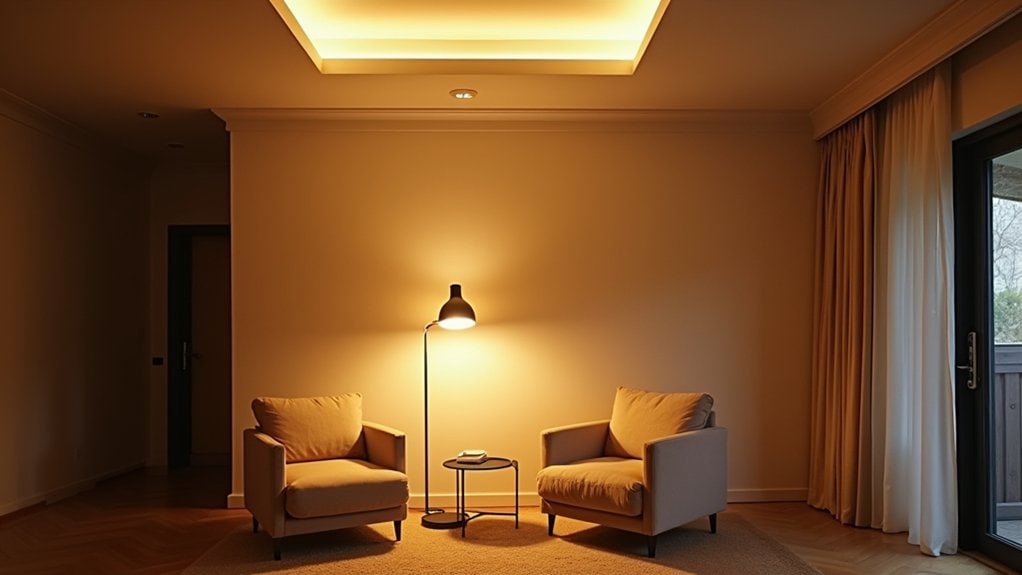
Most rooms feel a little off when they’re lit by just one source, even if you can’t immediately pinpoint why.
Your brain processes lighting styles in ways that affect mood enhancement and spatial perception more than you’d expect. One fixture just doesn’t cut it.
Think about what you actually do in a room. Task functionality near your desk needs something different than ambient options near your couch. Those are two separate needs.
Layering fixture variety also gives you control over color temperature throughout the day. That matters.
And honestly, mixing decorative elements with practical lighting builds design cohesion without much effort. You’re also improving energy effectiveness by only running what you need.
Does your current setup support everything you actually do in that space?
Lamps vs Overhead Lighting: What Each One Actually Does
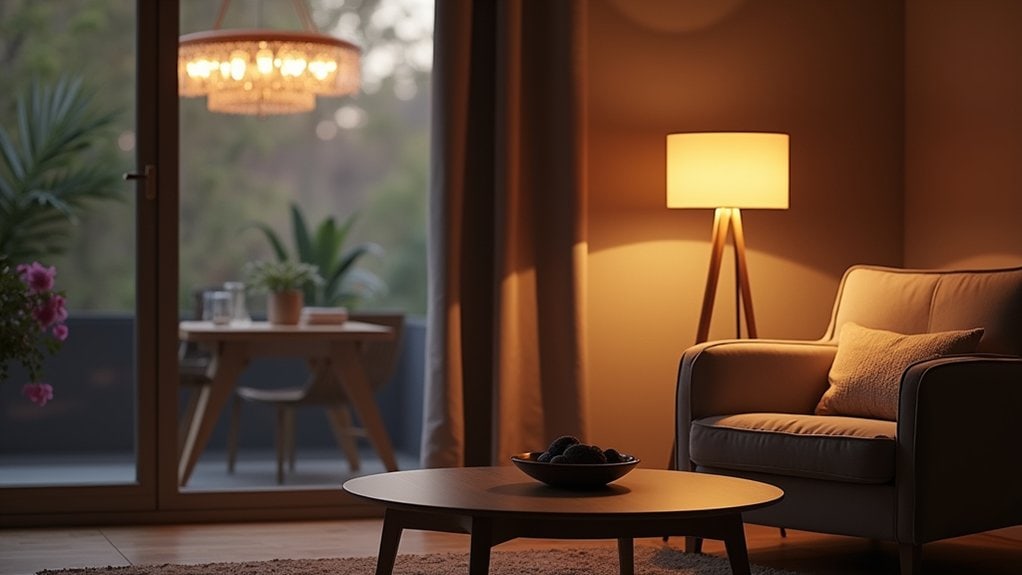
Both serve a purpose, but they don’t do the same thing.
Overhead types — recessed lights, flush mounts, pendants — handle general brightness levels and overall coverage. They’re doing the heavy lifting for your lighting purpose. But they’re not great at mood setting or adding warmth.
That’s where lamp styles come in. A floor lamp in the corner, a table lamp near your reading chair — these change the color temperature of a space, soften it, make it feel less clinical.
Design impact matters too. Fixture materials like brass, linen, or matte black affect how a room feels, not just how it looks.
Placement tips? Don’t stack everything in one zone. Spread your sources out. And honestly — energy effectiveness should factor into which fixtures you’re actually running all day.
How to Layer Lamps and Overhead Lighting Together
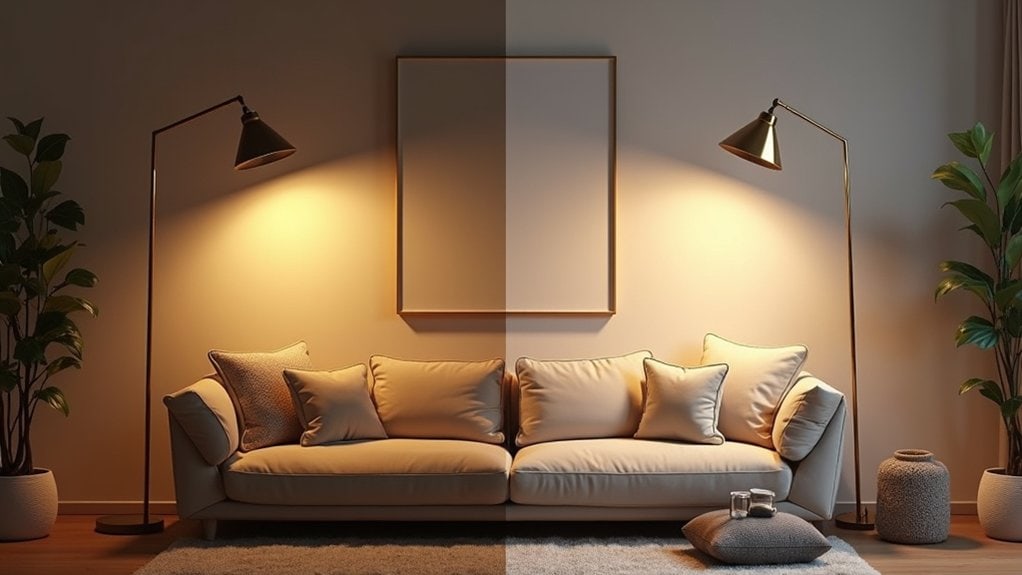
Once you’ve got a handle on what each light source does, the real trick is figuring out how to use them together without it feeling chaotic or flat. Try keeping your overhead light dimmed and letting a table lamp or floor lamp fill in the closer, warmer zones—that alone can make a room feel more lived-in. Layering isn’t really about having more lights, it’s about deciding which areas actually need light and why.
Mixing Light Sources Effectively
When you’re working with both lamps and overhead lighting, the goal isn’t really to pick one over the other — it’s figuring out how they can work together in the same space.
Start by thinking about color temperature. Warm bulbs in your lamps can soften harsh ambient lighting from above. That contrast actually helps with mood setting without you doing much else.
Place lamps where task lighting matters — a reading corner, your desk, beside the bed. Overhead fixtures handle the broader coverage.
Design cohesion comes from matching fixture styles loosely, not perfectly. And energy productivity improves when you’re not running every light at once.
Light placement is honestly something you’ll adjust over time. Does the room feel balanced when you dim the overhead and let the lamps do more work?
Creating Depth With Layers
Layering light is less about decoration and more about function — though it ends up doing both.
Start with ambient lighting as your base. That’s your overhead fixture handling the room’s general brightness. Then add lamps where you actually need them — next to the couch, on a desk, beside the bed.
Here’s where it gets interesting. Mixing color temperature between sources creates texture contrast that adds visual interest without you doing much else. A warmer lamp against cooler overhead light shifts your space perception in subtle ways.
It also helps with mood enhancement — you’re not locked into one harsh setting.
And honestly? Running a lamp instead of every overhead light improves energy effectiveness too.
Functional aesthetics come from layering thoughtfully, not perfectly. Does your room let you do that yet?
The Room-by-Room Home Lighting Combination Guide
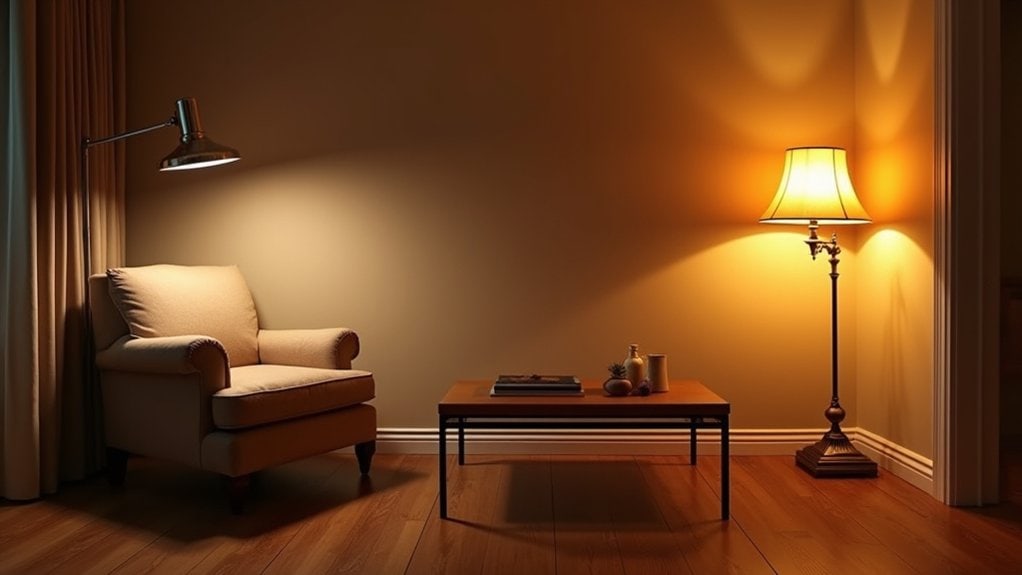
Every room in your home has different lighting needs, and honestly, there’s no one-size-fits-all answer.
Your kitchen needs strong task lighting over counters, but you’ll also want ambient lighting that doesn’t make the space feel clinical. Think about bulb types and color temperature here — warmer tones feel less harsh.
Your bedroom? Mood setting matters more than function. Dimmer switches genuinely change everything.
Living rooms benefit from layering ambient lighting, accent lighting, and natural light together. Don’t force fixture styles that clash with how you actually use the room.
Consider room function first, then work backward. A home office needs focused task lighting. A dining room rewards softer, adjustable setups.
What does each room ask of you daily? Start there.
Lighting Ratios That Most Rooms Get Wrong
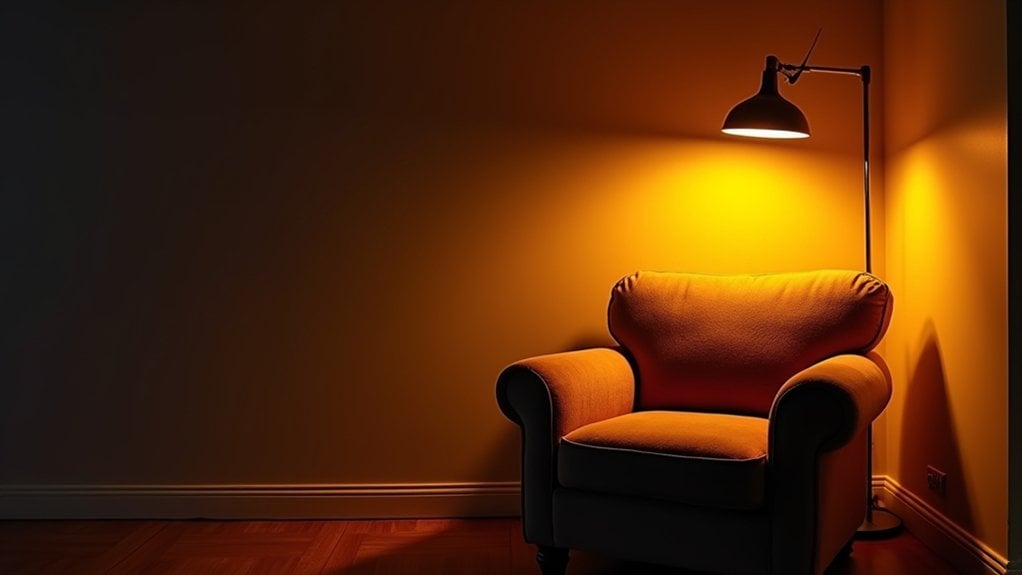
Most rooms you walk into are either way too bright everywhere or too dim to actually do anything useful—and that imbalance usually comes down to ignoring the ratio between ambient and task lighting. You’ll want your ambient light lower and softer, letting task lamps carry the brighter, focused work where you actually need it. Getting that layering right isn’t complicated, but a lot of people accidentally skip it, defaulting to one overhead fixture and calling it done.
Ambient Versus Task Balance
Three distinct lighting layers sound great in theory, but most people end up with rooms that are either too dim for focused work or so bright they feel clinical.
The fix isn’t complicated, but it does require you to think about what you actually do in each space.
Ambient warmth sets the overall mood—it’s the base layer, the light that makes a room feel livable. But if you rely on it alone, your eyes end up straining when you’re trying to read or cook.
That’s where task focus comes in. A dedicated lamp over your desk or countertop changes everything.
Ask yourself: does your lighting actually match how you use the room? Most of the time, it doesn’t. And that mismatch is worth fixing.
Layering Light Levels Effectively
Once you start thinking about lighting ratios, you realize most rooms are just guessing. Brightness balance isn’t accidental — it takes actual intention.
Here’s a simple layering approach:
- Set your ambient ambiance first — this is your base, not your only light
- Add functional focus where you actually work, read, or cook
- Use shadow play deliberately to create depth and mood setting
- Adjust color temperature based on time of day or activity
Most people skip steps two and three entirely. That’s why rooms feel flat or weirdly bright.
Energy performance matters here too — dimmer switches and lamps together let you control exactly how much light you’re actually using. That’s also a style statement, honestly. Your room should feel thought through, not just lit.
Common Ratio Mistakes Made
There are a few lighting ratio mistakes that show up in almost every room, and honestly, they’re pretty easy to make.
One of the biggest is blowing your lighting budget on one statement fixture and ignoring everything else. Fixture placement matters just as much as the fixture itself. You also can’t mix bulb types with wildly different color temperatures and expect design cohesion — your room will just feel… off.
Fixture height affects light intensity more than most people realize. Too high, and the light scatters. Too low, and it’s blinding.
And dimmer switches — are you actually using them? Because if you’re not, you’re missing an easy way to control how layered your lighting actually feels throughout the day.
Common Home Lighting Mistakes and How to Fix Them
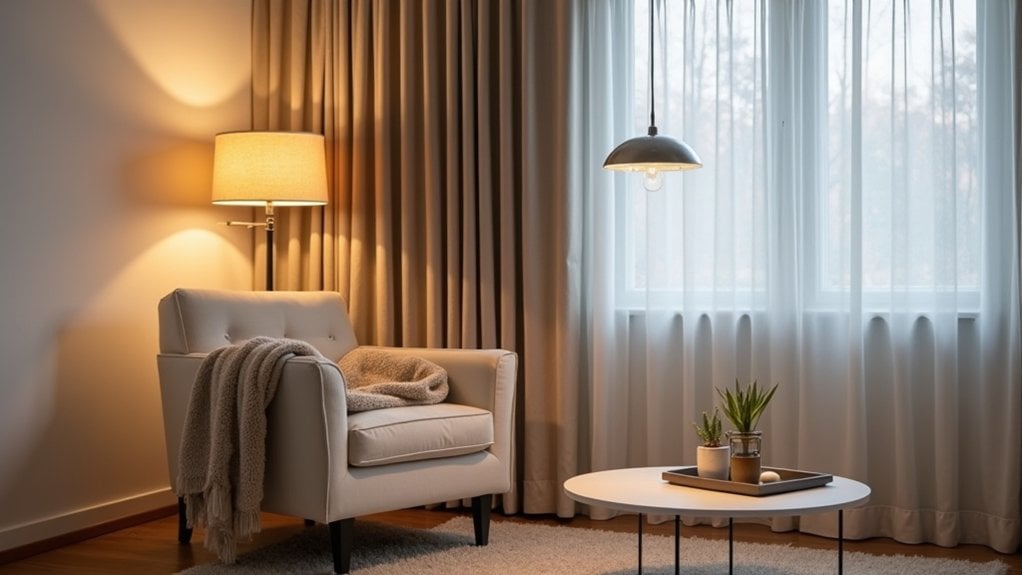
Most people make at least a few lighting mistakes in their homes, and honestly, some of them are so common you might not even realize you’re doing it.
Here are four worth fixing:
- Relying on one light source — single overhead fixtures flatten a room fast.
- Ignoring bulb choices — warm versus cool tones genuinely change how a space feels.
- Mismatching lighting styles — mixing too many conflicting fixture designs creates visual noise.
- Skipping dimmers — fixed brightness doesn’t work for every moment or mood.
You don’t need to overhaul everything. Start with your bulb choices, then layer in a lamp or two. Think about what you actually do in each room. That alone shifts things more than you’d expect.
Quick Swaps That Make an Immediate Difference
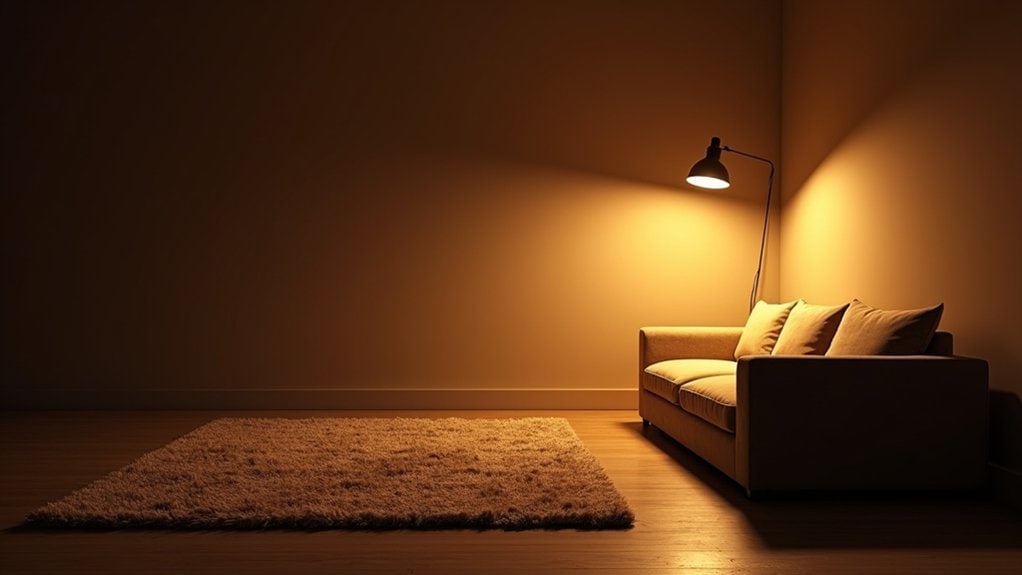
Fixing those bigger mistakes is worth it, but sometimes you just want something that works *right now*.
Start with bulb temperature. Swapping a harsh cool-white bulb for a warm 2700K option costs almost nothing — that’s one of the most budget-friendly solutions you’ll find. Instant upgrade, real design impact.
Add a lamp you already own to a dim corner. Seriously, just move it. Placement matters more than you think.
A simple dimmer switch creates mood enhancement without touching your actual fixtures. Versatile options like clip-on lamps or plug-in sconces give you functional aesthetics without commitment.
Quick fixes don’t have to feel temporary, either. Some stylish changes — a new shade, a repositioned floor lamp — end up staying permanently.
What one swap could you make today?
Frequently Asked Questions
What Is the Average Lifespan of an LED Lamp Bulb?
You can expect an LED technology bulb to last around 15,000 to 50,000 hours. That’s impressive bulb longevity! With proper use, you’ll enjoy years of reliable, energy-efficient lighting before you’d ever need a replacement.
Can Smart Bulbs Work With Both Lamps and Overhead Lighting Fixtures?
Yes, smart bulbs offer broad smart bulb compatibility, working smoothly in both lamps and overhead fixtures. You’ll just need to match them to your lamp types and guarantee your fixture uses a standard compatible socket.
How Much Does Professional Lighting Installation Typically Cost Homeowners?
You’ll typically spend $150–$500 per fixture for professional lighting installation. Cost variations depend on installation factors like electrical complexity, fixture type, and labor rates in your area, so always get multiple quotes.
Are There Lighting Options Specifically Designed for People With Visual Impairments?
Yes, you’ll find several lighting options built around visual accessibility. You can explore adaptive technologies like high-contrast lighting, glare-reducing fixtures, and adjustable color temperature bulbs that help you enhance visibility and comfort in your living spaces.
What Lighting Choices Are Most Energy-Efficient for Reducing Monthly Electricity Bills?
You’ll save the most with LED bulbs and smart lighting technologies—they’re top energy saving tips for cutting bills. Use dimmers, timers, and motion sensors to guarantee you’re only powering lights when you actually need them.
Final Thoughts
You don’t need to overhaul your whole space to get the lighting right. Start with one room. Notice what’s missing — maybe it’s warmth, maybe it’s just enough light to actually see. Add a lamp, adjust your overhead, and see how it feels. It’s kind of trial and error, honestly. But once you get it, you’ll wonder why you waited so long to pay attention to something you live with every day.