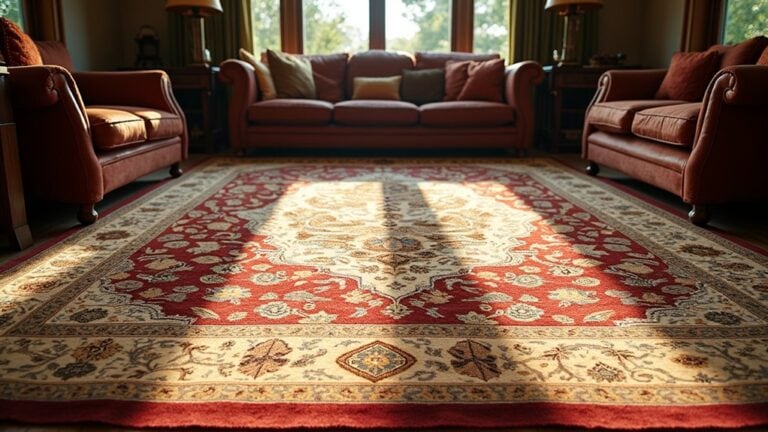
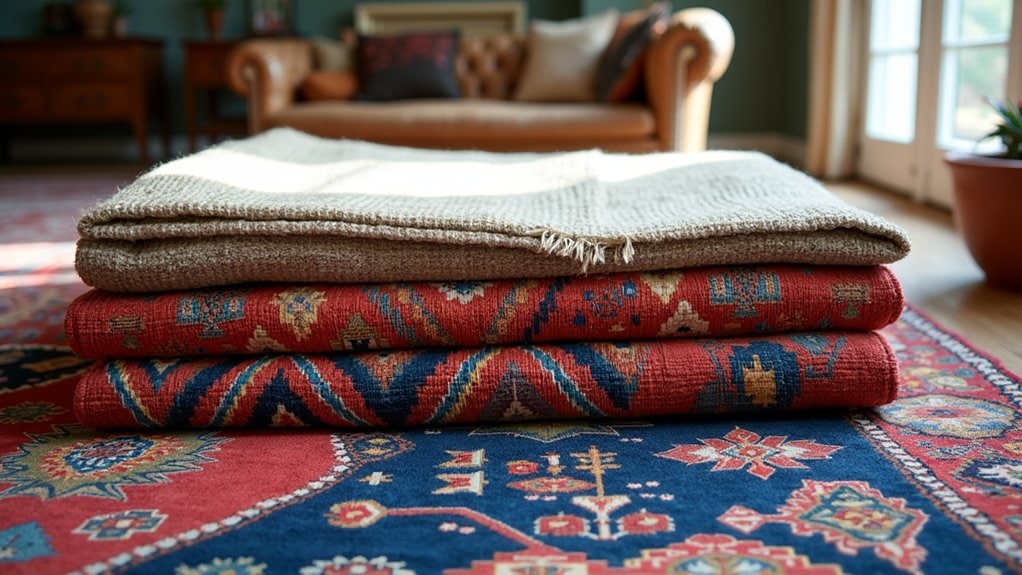
You’ll create depth and drama by layering rugs with contrasting textures and complementary colors. Try anchoring a room with a large neutral jute rug, then add a smaller vintage piece on top. Make sure your bottom rug extends at least 18 inches beyond the top one for balance. Position furniture with front legs on the top layer to unify the space. Different textures define zones while adding visual interest. Switch your top layer seasonally for an instant room refresh without major changes.
The Essentials
- Layer contrasting textures like plush over flat-woven rugs to create visual interest and evoke different emotional responses.
- Ensure proper sizing with the bottom rug extending at least 18 inches beyond the top rug’s edges for balanced proportions.
- Mix patterns of different scales, pairing large designs with smaller intricate ones while maintaining a common element.
- Use complementary or contrasting colors to create energetic vigor or dramatic impact in your layered rug arrangement.
- Define distinct zones in open spaces by using different rug styles while anchoring furniture with front legs on the top layer.
The Psychology Behind Layered Textures
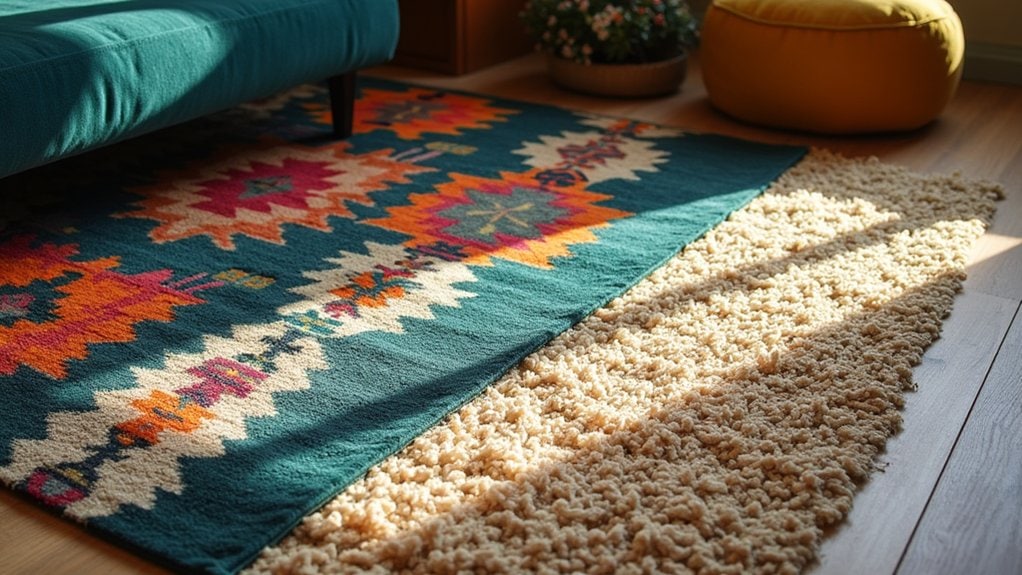
Although we don’t often think about it, the surfaces we surround ourselves with affect our psychological well-being in profound ways. When you layer rugs, you’re actually engaging with texture perception at a deep level, creating spaces that feel more vibrant and lived-in.
You might notice how different textures trigger varied responses – maybe a plush shag rug makes you feel comforted while a flat-woven piece feels more structured and orderly. This emotional resonance happens unconsciously, but it’s powerful stuff.
I’ve found that homes with thoughtfully layered textures often feel more complete. You know that feeling when a room seems almost right but something’s missing? Try adding a smaller rug with contrasting texture over a larger one. What sensations does it evoke? Warmth? Sophistication? Interest?
Mastering Scale: Size Relationships in Rug Pairings
When you’re layering rugs, size matters – probably more than any other factor. Thoughtful rug dimensions create visual balance that just feels right in your space. I’ve found that most pairing strategies work best when the bottom rug extends at least 18 inches beyond each edge of the top rug.
- Try a large neutral jute (8×10) underneath a lively Persian (5×7) to create a framed art effect on your floor
- Layer a tiny sheepskin (3×5) off-center on a medium-sized geometric rug (6×8) for an asymmetrical look that’s not trying too hard
- Place a runner (2.5×8) diagonally across a round rug (6′ diameter) to guide the eye through a challenging space
Remember that mismatched proportions can make even beautiful rugs look awkward together. Maybe experiment with paper templates before committing?
Pattern Play: Mixing Motifs Without Visual Chaos

When you’re mixing patterns in layered rugs, you’ll actually find that contrast creates harmony—those bold geometric patterns can surprisingly complement your vintage florals if you vary their scale. The scale of your patterns matters most; try pairing a large-scale design on your bottom rug with smaller, more intricate patterns on top, or vice versa. You can always anchor your boldest pattern choices with neutral rugs underneath or on top, which gives your eye a place to rest while still enjoying all that wonderful texture and visual interest.
Contrast Creates Harmony
Despite what many believe, layering patterns in your rug combinations doesn’t have to result in visual chaos. Actually, thoughtful contrast often creates the most harmonious spaces. When you’re selecting rugs to layer, look for pieces that differ in meaningful ways while sharing a common element—maybe a color tone or design motif.
Contrast techniques that create stunning harmony:
- Pair a bold geometric pattern with a subtle, textural solid rug
- Layer a lively, colorful design over a neutral base that has minimal pattern
- Combine different scales—a large-motif rug underneath a smaller, more intricate design
You’ll find that harmony principles work best when you’re not trying too hard to match everything perfectly. The uneven edges and slightly misaligned patterns? That’s where the real character emerges in your space.
Scale Matters Most
While contrast creates the foundation for successful rug layering, the scale of your patterns truly determines whether your combination sings or screams.
When playing with scale considerations, remember that dramatic differences work surprisingly well together. Try pairing a bold, large-motif bottom rug with a smaller, more intricate design on top. Or maybe reverse it? I’ve found that keeping the base rug simpler often gives the eye a place to rest.
Rug proportions matter too. You’ll want your top rug to be roughly 2/3 the size of your base layer – this creates that perfect framing effect without looking like you accidentally placed one rug on top of another.
Don’t be afraid to experiment a bit. What works in theory doesn’t always translate to your actual space, so try different combinations until something feels right.
Anchor With Neutrals
Three essential truths govern successful pattern mixing in layered rugs: start with a neutral base, introduce pattern gradually, and maintain visual breathing room. When you’re layering rugs, that bottom layer establishes the tone for everything above it. A neutral palette creates the perfect foundation, letting your statement pieces shine without fighting for attention.
Texture contrast matters just as much as color here. You might love that bold kilim, but without a neutral sisal beneath it, you’ll miss the magic of the layering effect.
Try these foolproof neutral base options:
- Natural jute with visible weave texture for a warm, organic foundation
- Low-pile wool in oatmeal or greige that feels soft underfoot
- Flatweave cotton in off-white that won’t compete with detailed patterns above
Seasonal Transformations Through Strategic Layering
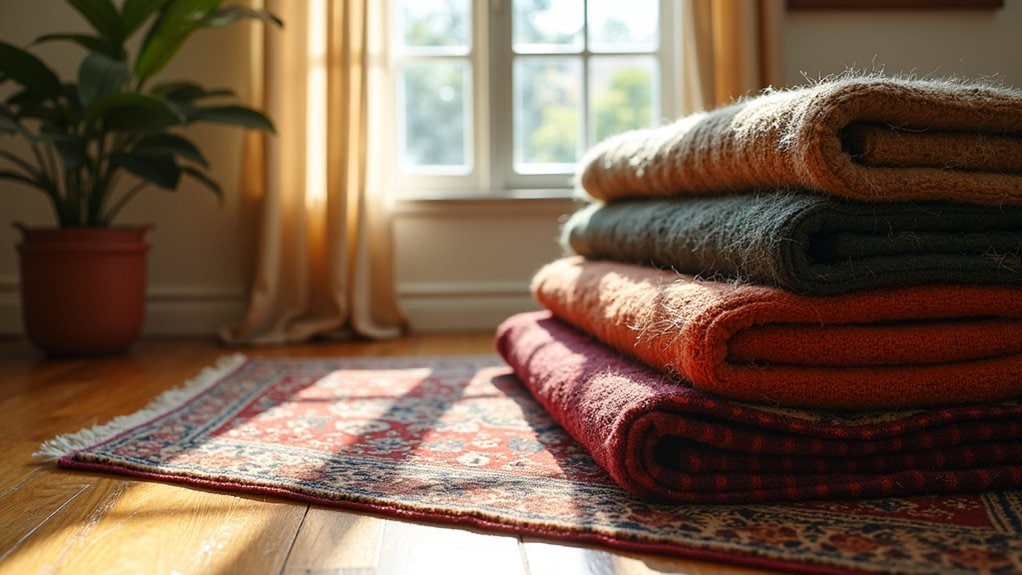
You can completely transform your space’s vibe by swapping out top layers as seasons change—think lightweight cotton dhurries over jute in summer that you’ll replace with plush wool layers when temperatures drop. Changing your rug layers might actually be the easiest way to shift your home’s mood from bright summer energy to cozy winter warmth. The color changes don’t need to be dramatic; even subtle shifts like adding a cream top layer over your existing blue base rug can make your living room feel lighter and more suited to warmer months.
Winter-to-Summer Transitions
As seasons shift from the frigid chill of winter to the warm embrace of summer, your living spaces naturally crave a change that mirrors the world outside your windows. Altering your layered rugs offers an easy refresh without a complete design overhaul. You’ll want to contemplate both transitional textures and seasonal colors that reflect warmer days ahead.
Try these simple rug-layering adjustments:
- Replace dense wool base layers with lighter sisal or jute foundations that breathe better in humidity
- Swap dark, heavy winter accent rugs for cream, pale blue, or soft green toppers that evoke summer skies and fresh growth
- Think about rotating thicker pile rugs to less-trafficked areas, bringing washable cotton dhurries into spaces where bare feet will roam
Maybe you’ll even store some winter pieces completely. Your summer space should feel airy and relaxed.
Colorful Mood Shifts
While seasons shift naturally outside your window, your home’s interior palette can transform just as dramatically through the strategic layering of rugs in different color combinations. It’s amazing how a bold orange runner over a neutral base rug can instantly warm a space during fall months.
Color psychology plays a significant role here—cool blues and greens might help you feel more relaxed after hectic days, while reds and yellows can energize spaces where you need a productivity boost. I’ve found that swapping just the top layer can completely change how a room feels.
For mood enhancement, try unexpected combinations. Maybe layer a small geometric pattern over a larger organic one? This creates visual interest without overwhelming the space. And hey, don’t overthink it—sometimes the most invigorating combinations come from experimenting with colors you wouldn’t normally pair together.
Defining Zones in Open Floor Plans
Open floor plans create gorgeous, flowing spaces but often leave homeowners wondering where one “room” ends and another begins. Layered rugs offer a perfect solution for zone differentiation in open concept homes. You can visually separate your living room from your dining area without building walls or adding bulky furniture.
I’ve tried this in my own home and it really works! The texture contrast between areas helps your brain register different functional spaces.
- Layer a chunky jute rug under a smaller vintage rug to anchor your living room seating area
- Use a round rug under your dining table, with a rectangular runner leading to it
- Define a reading nook with a small, plush accent rug that feels different underfoot
What spaces in your home need better definition? Maybe try combining different shapes for unexpected impact.
Color Theory for Rug Combinations
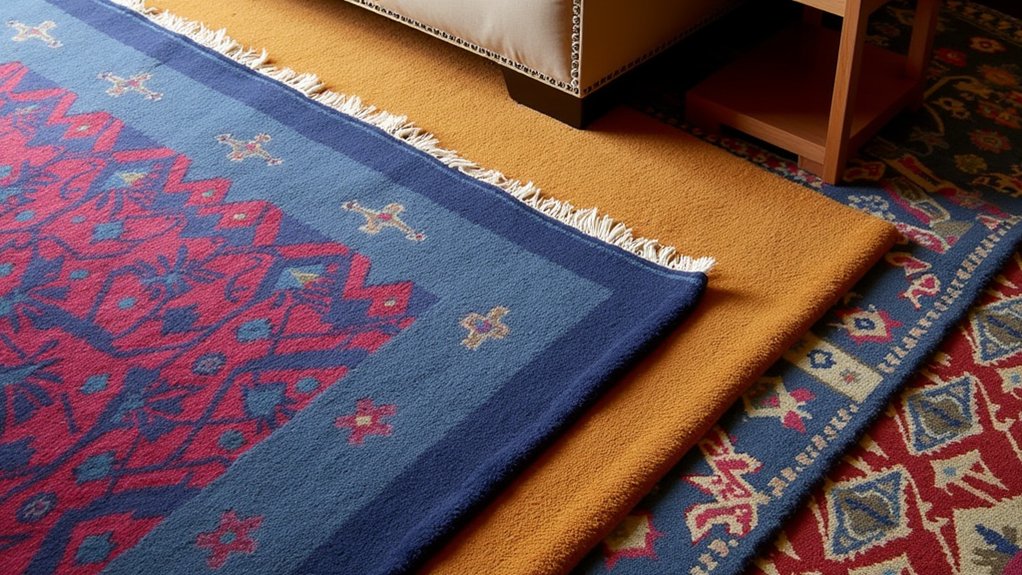
Why do some rug combinations instantly click while others seem off? It’s all about color theory—understanding which shades work together naturally.
You’ll want to contemplate complementary color combinations (opposite on the color wheel) for energetic vigor. Maybe pair a blue rug with an orange-toned one underneath. Or try analogous colors that sit next to each other for a more subtle, harmonious feel.
Contrasting hues create drama—think a bold geometric pattern over a neutral base. I’ve found that layering a vivid red over a cream jute rug really transforms a room.
Remember contrast isn’t just about colors but texture too. What about trying a plush solid-colored rug over a flat-weave pattern? The combination creates visual interest without feeling chaotic or, you know, too matched.
Anchoring Furniture With Multi-Dimensional Floor Coverings
When your furniture seems to float disconnectedly in a room, layered rugs can create the visual foundation everything needs. Think about how your furniture placement works in relation to your rugs – maybe you’ve tried centering your sofa on a rug that’s too small and felt something was off. By layering rugs of different textures and sizes, you’ll naturally define conversation areas while adding visual weight to ground the space.
Try these approaches to anchor your furniture effectively:
- Place a large, neutral sisal or jute rug as your base layer, then add a smaller high-texture rug centered under your coffee table
- Position all front legs of seating on the top rug layer to create cohesion
- Use rug textures that contrast – like a flat-weave under a plush shag – for dimension that draws the eye downward
Care & Maintenance for Stacked Rug Arrangements
How do you keep those beautiful layered rugs looking their best when they’re constantly shifting under foot traffic? It’s actually not that complicated. Use rug-on-rug gripper pads and regular vacuum techniques—maybe try low suction settings to prevent edge fraying on your top layers.
Stain prevention is essential with multiple rugs. Treat spills immediately and consider applying fabric protection spray on your uppermost rugs. For deeper rug cleaning, rotate which ones get professional treatment each year.
Watch out for moisture control issues—layered rugs can trap dampness. And don’t forget about pest control! I once found moths had damaged my bottom wool rug while the top one looked fine.
Sun exposure can cause uneven fading, so occasional rug rotation helps. For seasonal changes, proper storage solutions protect your investment when not in use.
Frequently Asked Questions
Can Layered Rugs Work With Radiant Floor Heating Systems?
Yes, you can layer rugs with radiant floor heating, but choose thinner options for better heat transfer. Consider rug compatibility with radiant heat systems by avoiding thick padding that might insulate and reduce effectiveness.
How Do I Prevent Slipping Between Stacked Rugs?
You’ll need to use rug pads between your stacked rugs to prevent slipping. Place non-slip solutions between each layer, ensuring they’re cut slightly smaller than the upper rug for invisible but effective grip.
What’s the Ideal Rug Thickness Combination for Layering?
For ideal layering, you’ll want a thinner flatweave (¼ inch) on top of a thicker base rug (½-¾ inch). Remember rug size selection matters—top rug should be smaller—and color coordination creates visual harmony in your space.
Are Certain Rug Materials Better for Top Versus Bottom Placement?
For layering, you’ll want sturdy flat-weaves like jute or sisal as your base, while softer materials like wool or sheepskin work best on top. Material characteristics and aesthetic considerations should guide your placement decisions.
How Do I Address Uneven Wear in High-Traffic Layered Areas?
You’ll minimize uneven wear patterns by rotating your layered rugs every few months. For high-traffic areas, consider rug maintenance tips like adding rug pads and periodically rearranging furniture to distribute foot traffic more evenly.
Final Thoughts
You’ve got all the tools to transform your space with layered rugs now. Remember, there’s no perfect formula—sometimes the oddest combinations create the most interesting rooms. Start small if you’re nervous, maybe with an inexpensive jute under something you already love. Play around with it, move things, try different angles. Trust your eye. When something feels right in your space, that’s all that matters.