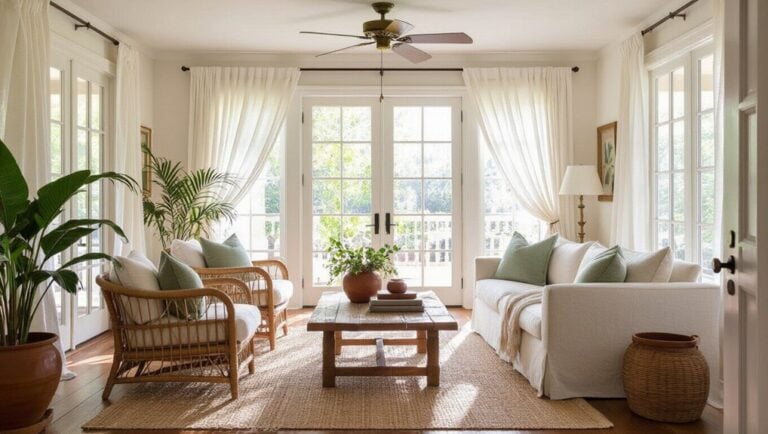
You don’t need to crank up the AC to stay comfortable at home. Your decor choices can actually work harder than you think to keep things cool. Light paint colors bounce heat away while certain plants pull moisture into the air through their leaves. Even how you arrange your furniture affects airflow. Some of these tweaks cost almost nothing, but the impact on your comfort level might surprise you. What if your biggest cooling solution was hiding in plain sight?
The Essentials
- Install external window shutters or light-colored treatments to block solar heat before it enters your home.
- Choose light-colored paint like soft whites, pale blues, or gentle greens to reflect heat and create psychological cooling.
- Place heat-absorbing plants like snake plants and peace lilies in warm areas to cool air through transpiration.
- Use breathable natural fabrics like cotton and linen for furniture while positioning pieces away from exterior walls.
- Create outdoor shade structures like pergolas or awnings to prevent heat buildup before it reaches indoor spaces.
Strategic Window Treatments for Maximum Heat Blocking
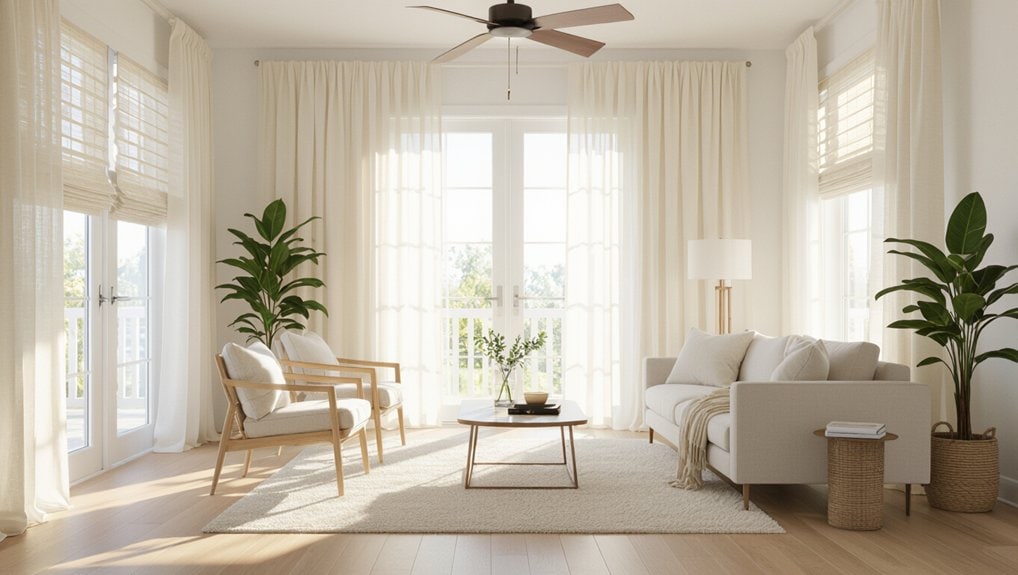
When the sun’s beating down on your windows all day, you’re basically turning your home into a greenhouse. That’s where adequate shading becomes your best friend.
External window shutters work wonders here. They block heat before it even touches your glass, which is way more effective than curtains alone. You’ll want to look for options with a low solar heat gain coefficient – basically, materials that don’t absorb and transfer heat inside.
Think about layering your approach too. Maybe exterior shutters during peak hours, then lighter curtains for privacy later. White or light-colored treatments reflect more heat than dark ones.
The trick is stopping that solar energy outside your home rather than trying to manage it once it’s already warming up your living space.
Color Psychology and Paint Choices for Cooler Interiors
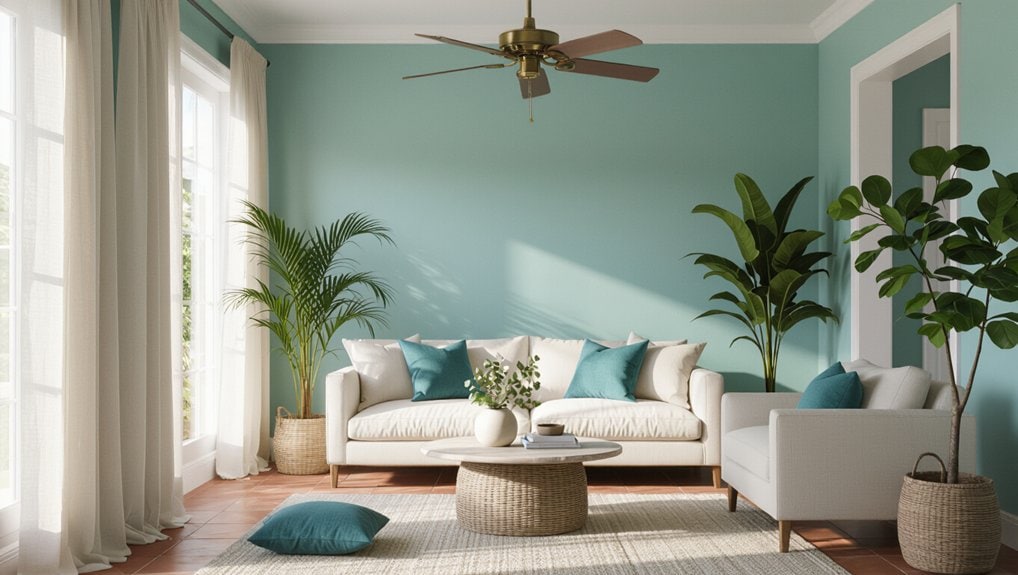
Since your walls take up most of your visual space, they’re probably doing more to influence how hot or cool your rooms feel than you realize. Light colours actually reflect heat instead of absorbing it, which can make a noticeable difference in your indoor temperatures.
Think about these cooling color options:
- Soft whites and off-whites that bounce light around
- Pale blues that psychologically feel invigorating
- Light grays that stay neutral but feel crisp
- Gentle greens that connect you to cooler outdoor spaces
Your brain associates certain colors with thermal comfort, so even if the actual temperature doesn’t change much, you’ll feel cooler. Dark colors do the opposite—they absorb heat and make spaces feel warmer. Have you noticed how different rooms in your house feel based on their paint colors?
Heat-Absorbing Plants That Act as Natural Air Conditioners
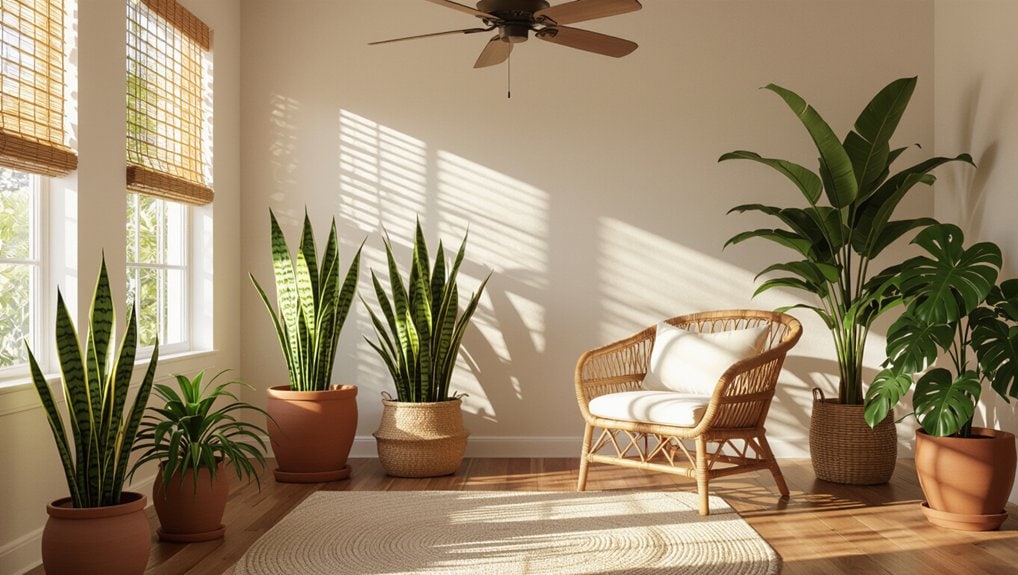
Plants don’t just look good—they’re actually working behind the scenes to cool down your space through a process called transpiration.
Think of it as evaporative cooling that happens naturally. When plants release moisture through their leaves, they’re literally cooling the air around them. It’s one of those natural processes that feels almost too simple to be true.
Snake plants and peace lilies are particularly good at this. Aloe vera works well too, though it’s… well, it’s not quite as dramatic as the others. You’ll want to place these in your warmest indoor spaces where they can do the most work.
The cooling effect isn’t huge, but it’s noticeable when you have several plants working together. Plus they’re cleaning your air while they’re at it.
Furniture Placement to Optimize Cross-Ventilation
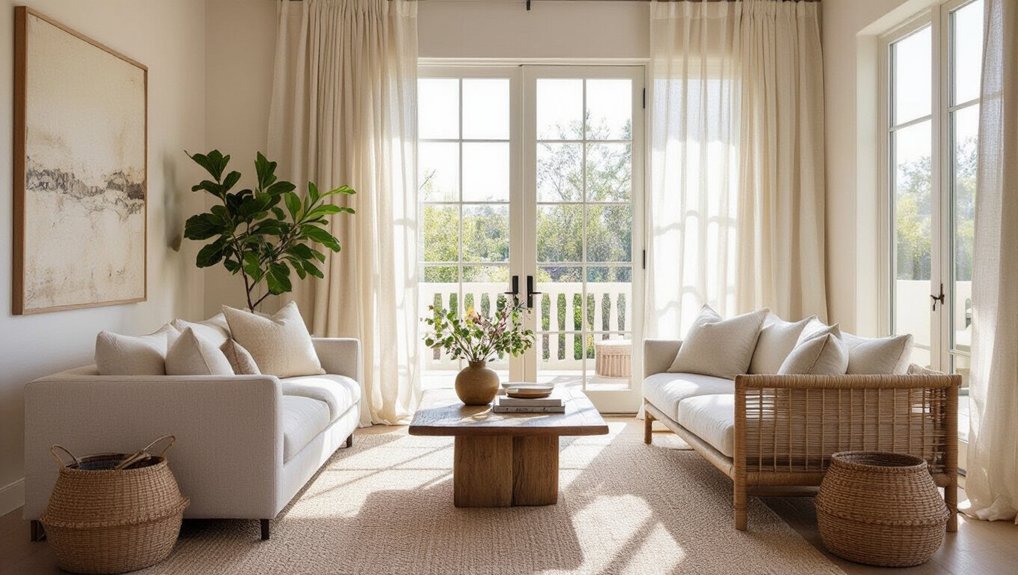
One simple shift can turn your living room from stuffy to breezy—just move your couch away from that window.
Strategic furniture placement creates natural ventilation pathways that actually work. You’re fundamentally designing invisible highways for air to flow through your space.
Position pieces to encourage cross ventilation:
- Place tall bookcases perpendicular to walls, not blocking window-to-window airflow
- Keep sofas and chairs at least two feet from exterior walls
- Use low-profile furniture near windows to avoid creating air dams
- Angle ottomans and side tables to guide air movement around seating areas
Think about it—when furniture blocks your windows or crowds doorways, you’re fundamentally putting up roadblocks for cooling breezes. Even small adjustments make a difference. That heavy armchair might look perfect under the window, but it’s probably sabotaging your natural cooling efforts.
Breathable Fabric Selections for Upholstery and Curtains
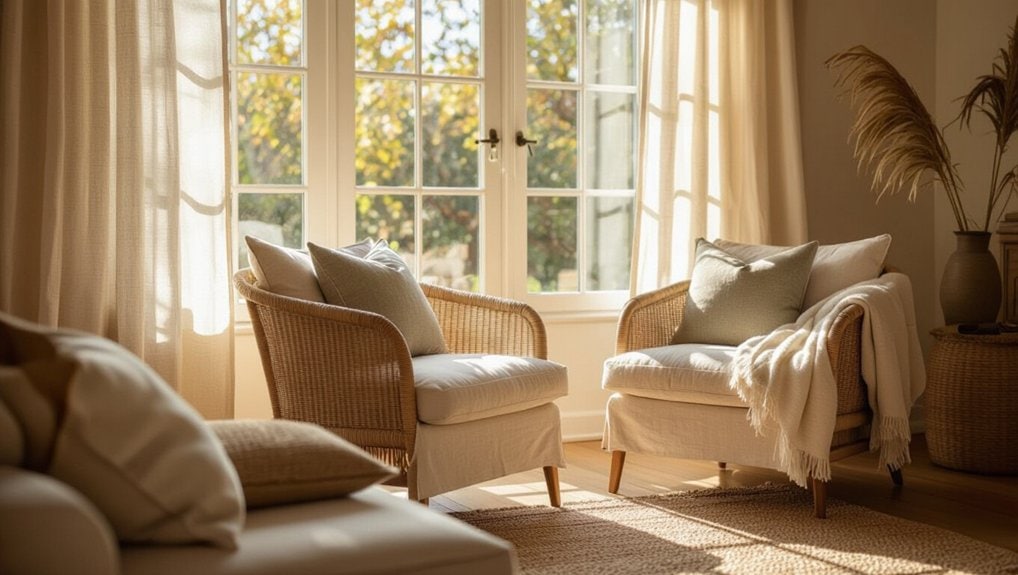
Moving furniture around your room won’t matter much if your couch is wrapped in vinyl or your windows are draped with heavy velvet.
You’ll want to swap out synthetic upholstery for natural fibers like cotton, linen, or hemp. These materials breathe, which means they don’t trap heat against your skin the way polyester does.
For curtains, choose lightweight cotton or bamboo over thick fabrics. Dark colors absorb heat, so lighter shades work better for occupant comfort in living spaces.
Consider this: that leather sectional might look great, but it’ll stick to your legs on hot days. Canvas or loose-weave fabrics let air circulate instead of creating internal heat gains.
Your throw pillows matter too. Swap synthetic covers for breathable ones during warmer months.
Floor Covering Options That Stay Cool Underfoot
Your feet are temperature sensors that can make or break your comfort level, especially when you’re walking around barefoot on scorching summer days. The right flooring choices help keep thermal energy from building up underfoot, making your house comfortable even without AC.
Natural materials work best for staying cool:
- Stone or ceramic tiles that feel delightfully cold against bare skin
- Bamboo flooring with its naturally breathable surface texture
- Cork floors that insulate while staying comfortable to walk on
- Polished concrete that acts like a thermal mass, absorbing heat
Even in a well-insulated home, your floors can become heat traps. Thick carpets and rugs hold warmth, while smooth surfaces let air circulate better. You might consider switching out heavy winter rugs for lighter options during summer months. Sometimes the smallest changes make the biggest difference.
Ceiling Fan Placement and Blade Direction for Optimal Airflow
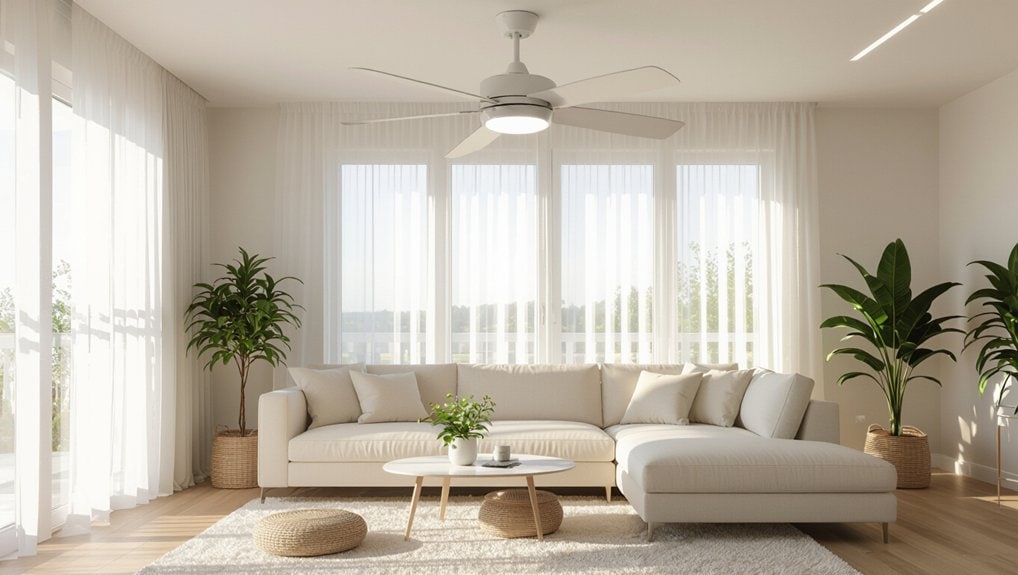
While most people think ceiling fans just need to spin to create a breeze, the reality is that strategic placement and blade direction can dramatically change how effective they are at cooling your space.
Position your fans where you spend the most time, not just in the center of rooms. You want the airflow hitting you directly. In summer, blades should rotate counterclockwise to push air down and create that cooling wind-chill effect.
Adjust fan speed based on the room’s size and your comfort level. Higher speeds work better in larger spaces or when you really need relief.
For upper levels of your home, consider cross-ventilation patterns. Place fans to pull hot air toward windows or push cooler air from shaded areas. The goal is moving air, not just circulating it.
Mirror Positioning to Redirect Heat and Light
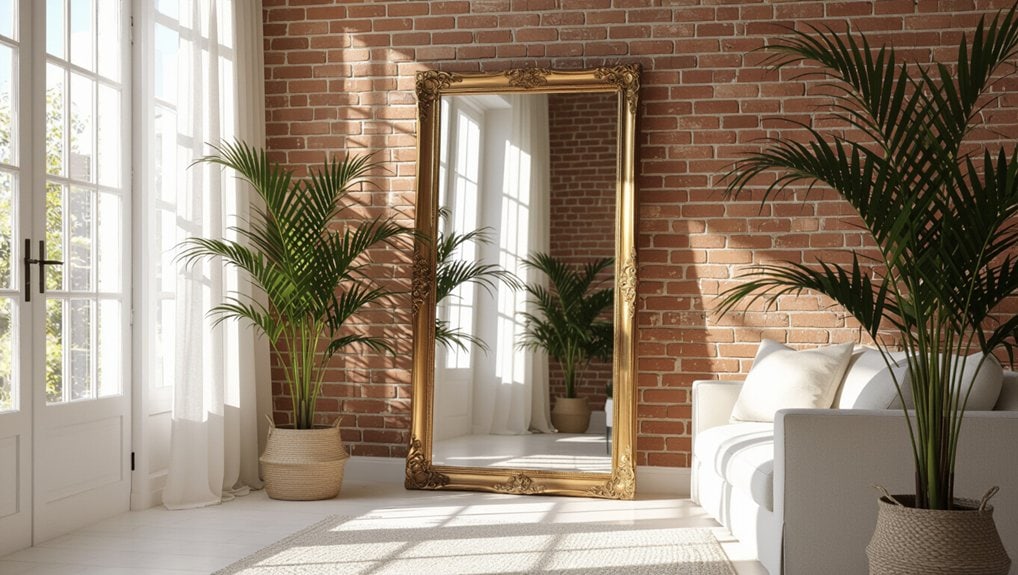
Beyond airflow management, mirrors can become powerful tools for controlling heat and light in ways most homeowners never consider.
Strategic mirror placement redirects unwanted solar gain away from living spaces while bouncing cooler light into darker areas. You’ll want to position mirrors to reflect morning sunlight toward north-facing rooms rather than letting it heat south-facing spaces.
Consider these thoughtful design approaches:
- Angle mirrors to deflect afternoon sun streaming through west windows
- Place large mirrors opposite north windows to amplify gentle, cool light
- Use mirrors in hallways to redirect heat gain from sunny rooms
- Position reflective surfaces to bounce light upward toward white ceilings
The key is understanding your home’s light patterns throughout the day. Which rooms get brutally hot? Where does morning light hit hardest? Sometimes moving one mirror makes a surprising difference.
DIY Evaporative Cooling Solutions Using Water Features
When heat becomes unbearable, water offers one of nature’s most effective cooling mechanisms through evaporation.
You can create simple water features that function like a basic evaporative cooler. Place shallow bowls of water near fans—the moving air accelerates evaporation and drops surrounding temperatures by several degrees.
A wet towel draped over a chair with a fan blowing through it works surprisingly well. You’ll notice the difference within minutes.
Consider positioning small fountains or water dishes around your living space. These decorative elements add visual appeal while naturally increasing humidity levels in dry environments.
Even a spray bottle can help—mist curtains or fabric surfaces occasionally. The cooling effect isn’t permanent, but it provides relief during peak heat hours.
Just monitor humidity levels though. Too much moisture can make things uncomfortable rather than invigorating.
Thermal Mass Materials for Temperature Regulation
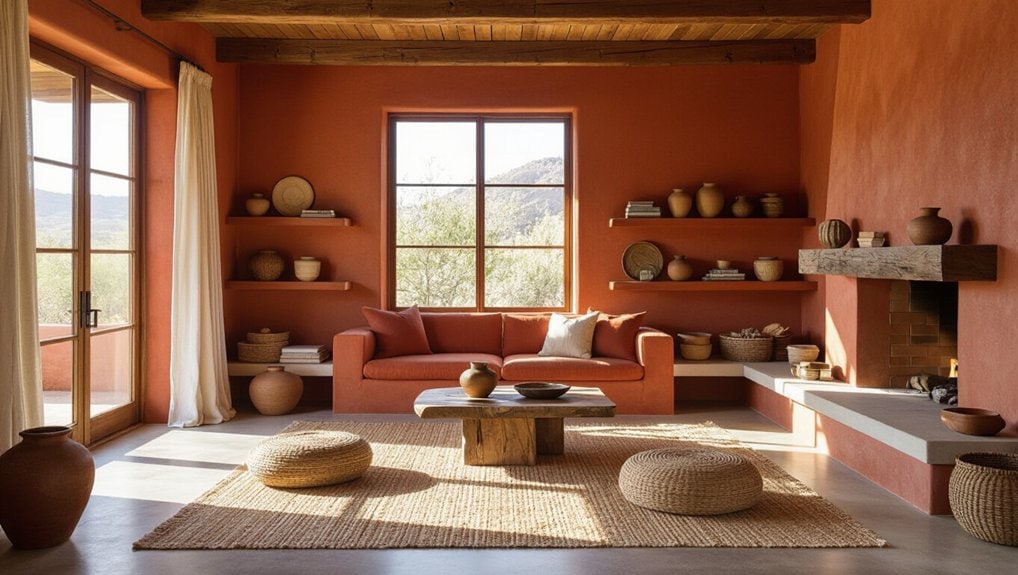
Thermal mass works by absorbing heat during the day and slowly releasing it at night—or vice versa during hot weather. You can use this principle to maintain a stable temperature in your home without relying on mechanical cooling systems.
Think about incorporating these materials into your decor:
- Stone accent walls or exposed brick that absorb excess heat
- Concrete planters filled with succulents near sunny windows
- Clay tile floors that store heat from the building envelope
- Water-filled ceramic vessels strategically placed in living areas
The key is positioning these elements where they’ll interact with your home’s natural temperature fluctuations. A thick stone wall, for instance, will soak up stored heat during the day and gradually release it when temperatures drop. It’s not instant gratification, but it works.
Outdoor Shade Structures to Cool Indoor Spaces
While thermal mass helps regulate temperature from the inside, blocking heat before it reaches your windows and walls makes an even bigger difference.
Outdoor shade structures create the first line of defense against solar heat gains. You’re fundamentally creating a buffer zone that intercepts sunlight before it heats up your home’s exterior.
Pergolas with climbing vines offer natural shade in summer while allowing winter sun through bare branches. Awnings work well too, though they’re more permanent. Even simple shade sails can drop indoor temperatures by several degrees.
The key is positioning these structures on your home’s south and west sides where afternoon sun hits hardest. You might be surprised how much cooler your rooms feel when you prevent that initial heat buildup.
This passive cooling approach costs less than most indoor solutions.
Nighttime Cooling Strategies Through Decor Adjustments
Once the sun goes down, you’ve got a golden opportunity to flush out all that hot air that’s been building up inside your home. Night purging works by creating cross-ventilation that draws cooler outdoor air through your space.
Set up your decor to enhance this natural cooling:
- Position lightweight curtains to channel airflow between open windows
- Move portable furniture away from air pathways temporarily
- Angle floor fans toward windows to pull warm air out
- Place reflective surfaces near windows to bounce cool night sky temperatures inward
Night flushing works best when you strategically open windows on opposite sides of your home. The temperature difference creates a natural draft that… well, it’s surprisingly effective once you get the positioning right. You might need to experiment with which windows work best together.
Budget-Friendly Cooling Accessories and Quick Fixes
Before you spend money on expensive cooling gadgets, there’s probably stuff sitting around your house right now that can make a real difference.
Got old towels? Dampen them and hang them near open windows. The evaporation actually drops the temperature a few degrees. House fans work better when you position them strategically—one pulling hot air out, another pushing cooler air in.
You can make basic swamp coolers using a bowl of ice and a regular fan. Place the ice in front of the fan’s airflow. It’s not fancy, but it works.
For adjustable shading options, try hanging sheets or blankets outside your windows during peak sun hours. Even cardboard covered in aluminum foil helps block heat.
Sometimes the simplest fixes are the most effective ones.
Frequently Asked Questions
How Much Money Can Natural Cooling Methods Save on Electricity Bills?
You’ll save 20-50% on electricity bills using natural cooling methods. By implementing fans, opening windows strategically, using thermal curtains, and creating cross-ventilation, you’re reducing air conditioning dependency and cutting monthly energy costs considerably.
Do Natural Cooling Techniques Work Effectively in Extremely Humid Climates?
You’ll find natural cooling techniques less effective in extremely humid climates since evaporation slows down considerably. Nevertheless, you can still benefit from cross-ventilation, ceiling fans, and shade strategies to reduce temperatures somewhat.
How Long Does It Take to Notice Temperature Differences After Implementation?
You’ll notice immediate changes with fans and shade adjustments within minutes. Cross-ventilation and thermal mass cooling take 30-60 minutes. Extensive natural cooling systems need 2-4 hours to establish noticeable temperature differences throughout your space.
Can Renters Use These Cooling Methods Without Violating Lease Agreements?
You’ll find most cooling methods are renter-friendly since they don’t require permanent modifications. Check your lease for restrictions on window treatments or appliances, but fans, light-colored decor, and removable solutions typically won’t violate agreements.
What Maintenance Is Required to Keep Natural Cooling Systems Working Properly?
You’ll need to clean fans monthly, replace air filters regularly, trim vegetation around windows, and check for air leaks seasonally. Don’t forget to maintain proper ventilation paths and guarantee moving parts stay lubricated for peak performance.
Final Thoughts
You don’t need expensive cooling systems to stay comfortable at home. These natural strategies work together—though some’ll be more effective than others depending on your space.
Start with one or two changes that fit your budget. Maybe it’s repositioning furniture or adding a few plants. You’ll notice the difference pretty quickly.
Your home can work with you to beat the heat, not against it.