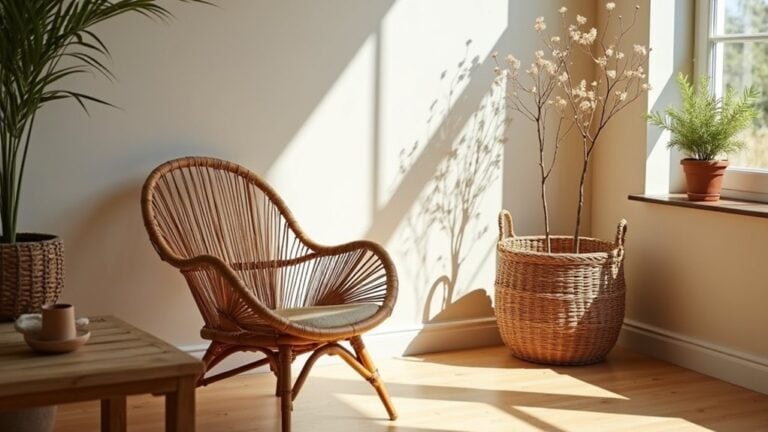
Rattan, wicker, and wood bring both style and sustainability to your home. While rattan is an actual light, flexible vine, wicker is just a weaving technique that can use various materials. These natural elements reduce your carbon footprint compared to synthetic options and add wonderful texture contrasts when mixed together. You’ll want to protect them with regular dusting and keep them out of direct sunlight. The right combination of these materials can completely transform your living space.
The Essentials
- Rattan creates lightweight, flexible furniture while wicker is a weaving technique that can incorporate various natural materials.
- Natural materials like wood and rattan significantly reduce carbon footprint compared to synthetic alternatives.
- Mix different natural textures—such as jute, linen, wood, and rattan—to create visual depth in your space.
- Proper maintenance includes dusting weekly, applying protective finishes annually, and keeping items out of direct sunlight.
- Look for ethical certifications like FSC to ensure sustainable harvesting practices and responsible sourcing.
The Environmental Benefits of Natural Material Choices
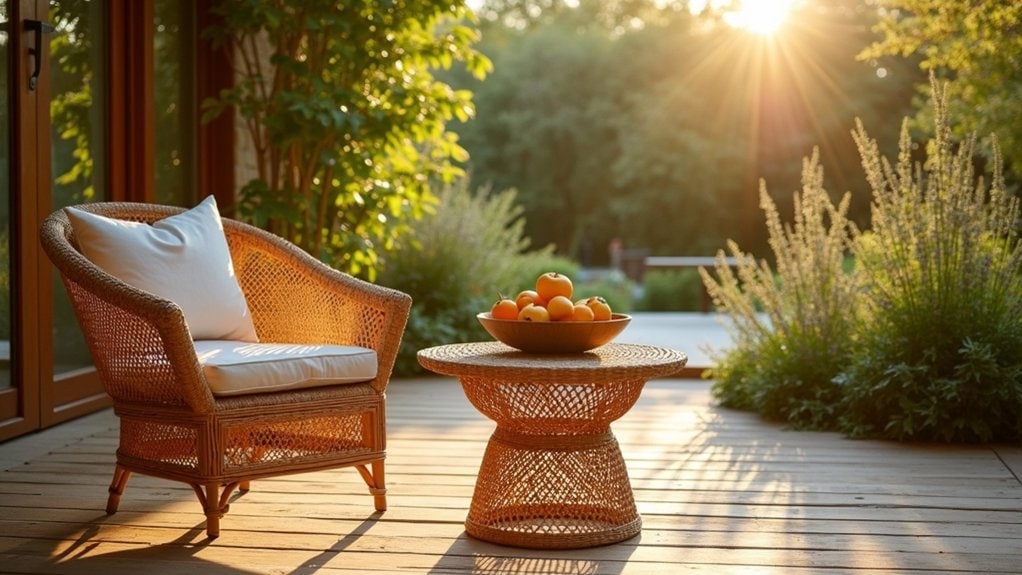
When you choose natural materials for your home, you’re making a decision that extends far beyond aesthetics. You’re actually helping to reduce your carbon footprint in ways you might not realize.
Natural elements like rattan, wicker, and wood don’t require the energy-intensive manufacturing processes that synthetic materials do. Plus, these biodegradable materials won’t sit in landfills for centuries when you’re done with them.
I’ve noticed my own home feels different since switching to more natural pieces. There’s something about knowing a bamboo table will eventually return to the earth that makes me feel better about my purchases.
You might pay a bit more upfront, but think about the long-term environmental impact. Wouldn’t you rather invest in something that works with nature instead of against it?
Distinguishing Between Rattan, Wicker and Wood
Though they’re often used interchangeably in home décor conversations, rattan, wicker, and wood are distinctly different materials with their own unique characteristics.
Rattan characteristics include flexibility and lightness—it’s actually a vine, not a tree. You’ll notice its distinctive natural color and jointlike markings. Wicker weaving isn’t a material at all but rather a technique. Surprise! You can have wicker furniture made from rattan, reed, or even synthetic materials.
Wood types vary enormously in hardness, grain, and color. Maybe you’ve noticed how oak feels different from pine when you run your hand across it? Each has its own material durability profile too. Rattan resists humidity but can crack in dry conditions. Most woods last decades with proper care, though they’re heavier than rattan.
Think about where you’ll place these pieces before deciding which suits your space best.
Styling Tips for Incorporating Natural Elements
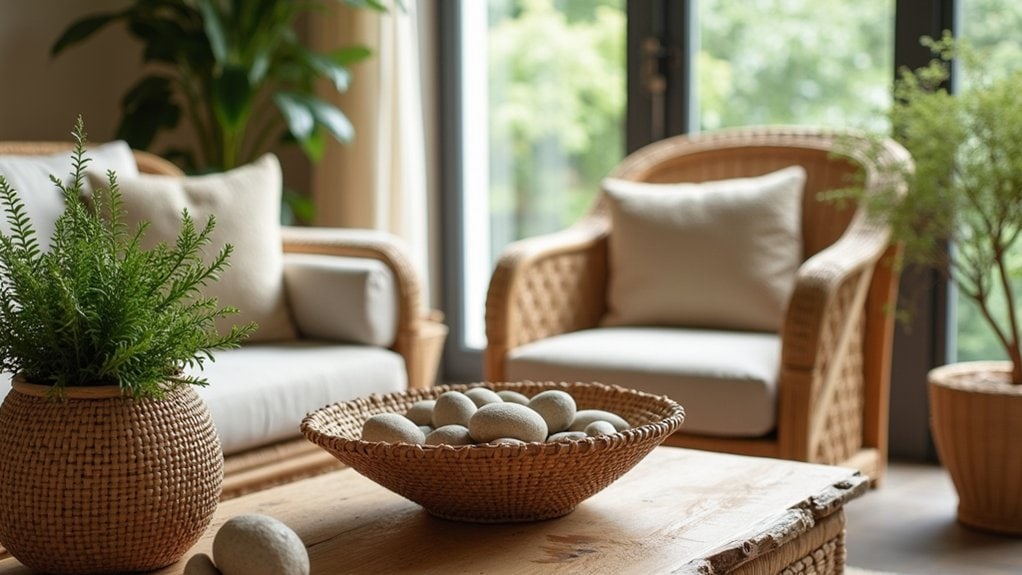
You’ll want to mix textures strategically when adding natural elements to your space – think rough jute rugs against smooth wooden tables or glossy ceramic pots holding textured plants. Layering different natural materials creates depth that catches the eye and makes rooms feel more organic and lived-in. Don’t be afraid to combine rattan chairs with linen curtains and a few well-placed stone accessories – these combinations create that effortless, collected-over-time look that’s both comforting and stylish.
Mix Textures Strategically
The secret to creating depth in a natural interior lies in thoughtful texture combinations. When you pair smooth woods with rough-woven rattan or soft linen with chunky wool, you’re creating texture contrast that brings rooms to life. I’ve found that even the most balanced design needs variety—maybe three or four different textures to feel complete.
- Combine glossy bamboo with matte-finished woods for subtle dimension
- Layer a chunky jute rug under smoother sisal furniture
- Place rough ceramic vessels next to polished wooden objects
- Mix loose linen upholstery with tightly woven wicker frames
- Contrast smooth leather with nubby natural textiles for warmth
Don’t worry about perfect matching. Trust your instincts about what feels right together. What textures do you already have that could work as companions?
Layer Natural Elements
When natural elements work together in a space, they create a sense of harmony that manufactured materials simply can’t replicate. That’s why mastering layering techniques is essential for your home’s natural ambiance.
Try placing a jute rug beneath a wooden coffee table, then add a rattan basket filled with wool throws. I’ve found that groups of three work surprisingly well—maybe a stone vase, wooden candle holder, and clay pot clustered on a shelf.
Don’t worry about perfect coordination. Actually, slight variations in tone create more visual interest. You might combine lighter bamboo with darker walnut, or mix smooth polished stone with rough-textured ceramics.
Remember that nature isn’t uniform. The beauty comes from thoughtful combinations that feel, well, natural. What textures do you already have that could work together?
Maintenance and Care for Longevity
Although natural materials offer exquisite beauty and sustainability, they won’t maintain their charm without proper care. Regular maintenance of your rattan chairs, wooden tables, or wicker baskets will extend their life dramatically. You’ll need to develop specific cleaning techniques tailored to each material—what works for solid oak might damage delicate rattan.
- Dust wooden furniture weekly with a soft cloth (those microfiber ones work great)
- Apply protective finishes annually to prevent drying and cracking
- Keep natural fibers away from direct sunlight when possible
- Clean spills immediately—even water can stain some natural materials
- Use mild, plant-based cleaning solutions instead of harsh chemicals
I’ve found that a quick cleaning routine takes just minutes but saves you from costly replacements later. Maybe establish a seasonal schedule for deeper maintenance?
Ethical Sourcing and Sustainability Practices
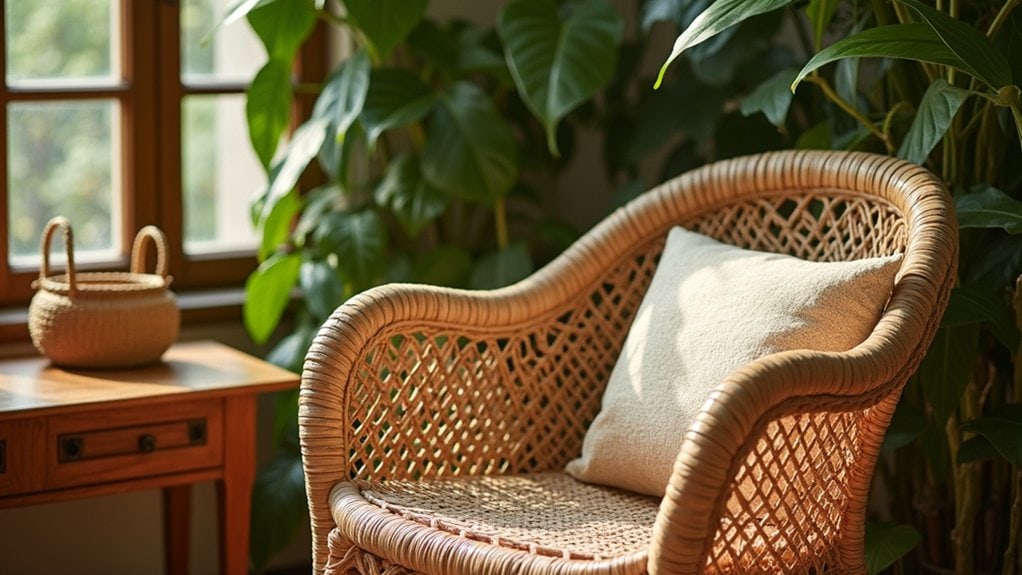
Beyond the beauty natural materials bring to your home, understanding where they come from makes all the difference in creating truly sustainable spaces. When you’re shopping for rattan pieces or wooden furniture, look for items with ethical certifications like FSC (Forest Stewardship Council) that guarantee sustainable harvesting practices.
Many companies now openly share their sourcing stories—I’ve found this transparency invigorating. You’ll feel better knowing your gorgeous new coffee table didn’t contribute to deforestation somewhere.
Ask questions about how materials are harvested. Is the rattan wild-harvested or plantation-grown? Are the workers paid fairly? These details matter.
Mixing Natural Materials With Modern Design Trends
The beauty of today’s interior design environment lies in how natural materials can complement even the most modern aesthetics. You don’t have to choose between sleek minimalism and natural harmony—they actually work remarkably well together. I’ve seen stunning spaces where rattan chairs sit beside glass tables, creating this unexpected balance that just works.
- Pair woven pendants with matte black fixtures for dramatic contrast
- Add a chunky wooden coffee table to a room with clean-lined furniture
- Incorporate rattan storage baskets in monochromatic spaces
- Layer jute or sisal rugs under modern geometric patterns
- Mount wooden shelving against concrete or painted brick walls
Maybe it’s the textural contrast that makes these combinations so appealing, or perhaps it’s just that we crave a bit of nature in our tech-filled environments.
Frequently Asked Questions
Are Natural Materials Suitable for Outdoor and High-Humidity Areas?
Some natural materials suit outdoor and high-humidity spaces if you select ones with good weather resistance. You’ll need regular maintenance tips like sealing, cleaning, and proper storage to extend their lifespan and prevent moisture damage.
How Much Weight Can Rattan Furniture Typically Support?
You’ll find that rattan furniture typically supports between 250-300 pounds per seat. Its impressive weight capacity stems from rattan’s natural durability, though specific limits vary by design and construction quality.
Do Natural Materials Affect Indoor Air Quality?
Yes, natural materials can improve your indoor air quality by releasing fewer indoor pollutants than synthetic ones. They won’t trap dust and allergens as easily, allowing for better air circulation throughout your home.
Can Natural Materials Be Painted or Stained Different Colors?
Yes, you can paint or stain natural materials in various colors. Color application is versatile, allowing you to customize with different finish types like matte, glossy, or weathered effects to match your style preferences.
What’s the Average Lifespan of Rattan Versus Solid Wood Furniture?
When comparing rattan durability with solid wood longevity, you’ll find rattan lasts 5-10 years while solid wood furniture can serve you 10-30 years. With proper care, you’ll extend both materials’ lifespans considerably.
Final Thoughts
Bringing natural materials into your home isn’t just a design choice—it’s a lifestyle shift. You’re making spaces that feel alive, breathable. Sometimes I think we forget how good wood grain or woven rattan can make us feel after a long day.
Try starting small. Maybe a wooden bowl, or that wicker chair you’ve been eyeing. Your space will thank you, and honestly, you might breathe a little easier too.