True organization doesn’t mean sterile perfection. You can maintain order while preserving your space’s soul by displaying items that spark joy, not just what matches your decor. Try creating zones of contained creative chaos where your treasured objects live visibly. Color-code intuitively rather than rigidly, and leave some intentional empty spaces as visual breathers. The best systems flex with your moods and energy levels. Your home should feel like you—a little messy, deeply personal, and completely functional.
The Essentials
- Create intuitive organization systems that match your personal habits rather than rigid, prescriptive methods.
- Embrace strategic areas of creative disorder to maintain authenticity while keeping other spaces tidy.
- Organize by mood, energy level, or intuitive color systems instead of traditional categories.
- Display meaningful personal treasures that evoke happiness rather than purely decorative or trendy items.
- Balance negative space with purposeful displays to avoid both sterile minimalism and overwhelming clutter.
Display What You Love (Not What You Think You Should)

When you walk into your home, you should feel surrounded by things that genuinely make you happy—not items that ended up there because they matched a color scheme or looked good on Pinterest.
Your space deserves your personal treasures—those odd souvenirs from that road trip, or maybe that quirky artwork your friend made. These things have emotional resonance that generic decor simply can’t match.
I’ve seen too many homes where everything looks “correct” but nothing feels lived-in. Like, remember when everyone had those “Live Laugh Love” signs? Yeah, don’t do that unless you really love them.
Ask yourself: “Does this item actually make me smile when I see it?” If not, why give it valuable space in your daily life?
The Art of Contained Chaos: Curated Clutter That Works
Although perfect minimalism works for some people, I’ve found that a bit of strategic messiness can actually make a space feel more authentic and lived-in. This curated chaos isn’t about letting everything pile up—it’s about thoughtfully deciding what deserves to be seen.
Try creating “zones” of creative disorder. Maybe your bookshelf displays not just books but that weird souvenir from Barcelona or those concert tickets you saved. Expressive storage solutions like glass jars, vintage boxes, or wall-mounted collections can transform everyday clutter into personal art installations.
The trick is containment. Give yourself permission for some areas to be perfectly imperfect while keeping others clean. I noticed my workspace feels more inspiring with a few project materials visible rather than hidden away. What areas in your home might benefit from a little beautiful disorder?
Color-Coding for the Creative Soul

Don’t you think rigid color-coding sounds totally anti-creative? You’ll actually find that intuitive rainbow systems—where you group items by color in a way that makes sense to your brain—can reveal organization without sacrificing your natural flow. Maybe start with messy-friendly palette maps in your workspace or digital files, letting your instincts guide which colors represent different projects or priorities rather than forcing yourself into someone else’s organizing logic.
Intuitive Rainbow Systems
Despite our artistic tendencies, many creative souls secretly crave systems that bring order to our chaos—we just need them to feel as lively as our imaginations.
Enter intuitive rainbow organizing: a practical approach that corresponds with how your brain naturally categorizes things. You might try arranging books by color spectrum rather than alphabetically—creating dynamic displays that actually help you remember where things are. “I always know my purple notebook has my poetry,” a friend once told me.
The beauty is in the flexibility. Maybe you’ll color-code project folders by energy level—reds for urgent tasks, blues for calm thinking work.
Your system doesn’t need to make sense to anyone but you. What matters is that when you glance at your colorful, flowing space, you feel both organized and inspired to create.
Messy-Friendly Palette Maps
Intuitive rainbow systems can evolve into something even more personalized when you’re ready to level up your creative organization. Enter palette maps—color schemes that actually work with your messy aesthetics rather than fighting against them.
You know how your brain connects certain colors with specific projects or moods? Use that. Try creating color zones in your workspace that make sense to you, not some organization guru. Maybe your blue corner holds all those half-finished writing projects, while your yellow shelf contains materials for crafts you’re excited about.
This playful organization approach acknowledges that creativity isn’t linear. Your space doesn’t need to look Instagram-perfect to be functional. What matters is that you can find what you need when inspiration strikes. Doesn’t that sound more sustainable than forcing yourself into someone else’s system?
Functional Spaces That Still Feel Magical
When we imagine perfectly organized spaces, we often picture sterile, museum-like rooms where nobody actually lives. But functional spaces can still feel alive, even magical. You don’t need to choose between order and personality.
Try magical minimalism—keeping only items that serve a purpose while arranging them in ways that spark joy. Maybe that’s your collection of crystals organized on a floating shelf, or art supplies stored in vintage glass jars.
Functional aesthetics means thinking about how things work and look. Your bookshelf doesn’t just hold books—it displays objects that tell your story. That writing desk? Position it near a window where light pours in.
The trick is creating systems that work with your habits, not against them. What feels magical to you? A cozy reading nook? A kitchen where everything’s within reach?
Storage Solutions That Tell Your Story

Storage boxes, bins, and containers don’t have to be soulless plastic vessels hidden away in closets—they can be extensions of your personality. Think vintage suitcases stacked as side tables, each filled with personal artifacts from different chapters of your life. Or maybe those wooden crates displaying your vinyl collection, telling the story of your musical journey.
Your grandmother’s cookie tin repurposed for craft supplies? That’s narrative nostalgia at work. You’re not just organizing; you’re curating little time capsules throughout your home.
Try asking yourself what each item means before tucking it away. Some things deserve beautiful display boxes rather than anonymous storage. Remember that time I found my old concert tickets in a shoebox? Instead of hiding them, I framed a few favorites. What forgotten treasures might you rediscover?
Room to Breathe: Creating Mindful Empty Spaces
Many homes today suffer from what I like to call “stuff suffocation”—the overwhelming presence of objects filling every available surface and corner. It’s exhausting, right? Your eyes and mind never get a moment to rest.
Mindful decluttering isn’t about creating sterile, empty rooms. It’s about balance. You need negative space to appreciate what you’ve kept. Try this: clear one surface completely today. Maybe your nightstand or coffee table. Just one.
I’ve found that intentional spaces work like mental palate cleansers. They give your thoughts room to settle when you walk into a room. Your home shouldn’t feel like a to-do list made physical.
What might change if you left that corner empty on purpose? Sometimes the most powerful decorating choice is deciding not to fill a space at all.
Seasonal Rotations: Keeping Your Space Fresh Without Purging
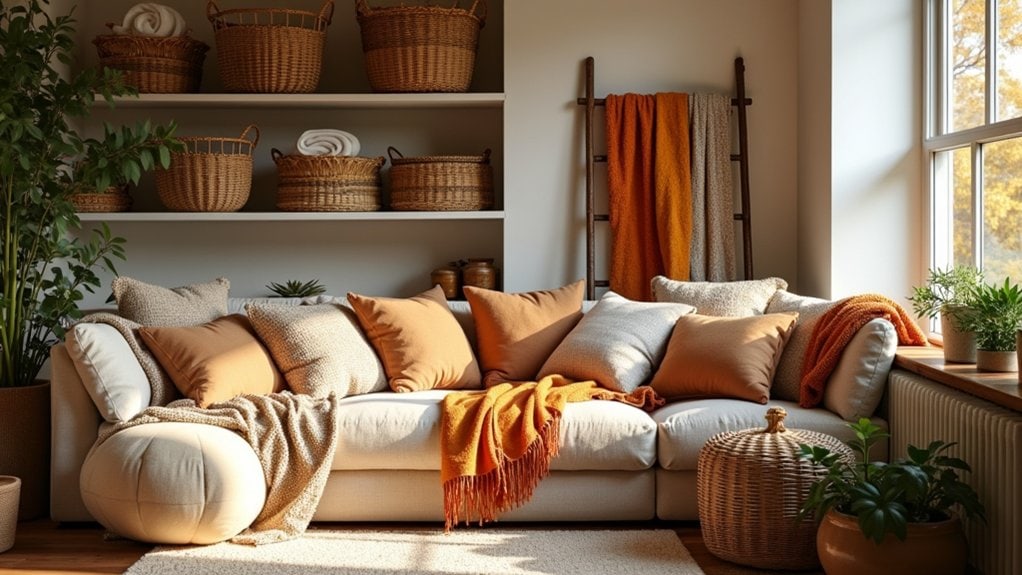
You don’t need to dump all your favorite things just because the seasons change—smart storage solutions let you tuck away winter blankets in summer or rotate holiday decorations without losing them forever. Celebrating these natural shifts can actually make your space feel fresh year-round, whether it’s swapping heavy drapes for light curtains or changing throw pillows to match the weather outside. Try adopting a one-in, one-out method for your seasonal items, where that new fall centerpiece means packing away a summer one, keeping your overall collection manageable while still giving you something to look forward to each season.
Smart Storage Solutions
When the seasons shift, the impulse to completely overhaul your space often follows—but there’s a better way. Smart storage solutions can help you rotate seasonal items without creating chaos or throwing things away that you might need later.
Consider investing in smart shelving that adapts to different needs. I’ve found that pull-out bins or drawers work wonders for tucking away winter sweaters during summer months. Maybe try modular organizers that can be reconfigured as your needs change.
You don’t need fancy systems, though. Even labeled cardboard boxes work well if you’re on a budget. The key is accessibility—you want to easily find what you need when temperatures change.
What’s your biggest storage challenge? Sometimes just rethinking one problem area can make your whole space feel more functional.
Celebrate What Changes
Instead of viewing seasonal changes as a cue to purge your belongings, try embracing the natural rhythm of rotating items throughout your home. This mindful approach to organizing honors the cyclical nature of our lives and spaces.
When you pack away summer clothes to make room for sweaters, you’re actually embracing changes rather than eliminating pieces of your life. Store those beach towels and sandals with care—they’ll bring you joy again next year.
The same goes for holiday decorations or seasonal kitchenware. That ice cream maker might seem useless in December, but it’s worth keeping for honoring growth in your entertaining style come July.
Maybe take photos of different seasonal setups? I find this helps me remember what worked well and what didn’t, making each change smoother than the last.
One-in, One-out Method
Three simple words can transform your relationship with stuff: one-in, one-out. It’s not about rigid rules that drain the joy from your home—it’s about creating clutter clarity while preserving what you love.
When you bring home a new sweater, choose one to donate. Got a cool new kitchen gadget? Maybe that rarely-used blender can find a new home. This minimalist mindset isn’t about deprivation, it’s about intention.
I’ve found the hardest part is remembering to do it. Try keeping a donation bag in your closet as a visual reminder. Sometimes I’ll forget for weeks, then suddenly realize I’ve added five new books without making space.
You don’t need to apply this to everything. Choose the categories where stuff tends to pile up for you—clothes, books, kitchen items—and start there.
Organization Systems That Flex With Your Moods

Why do so many organizing systems fail us within days or weeks? Because they’re rigid structures that don’t account for how human you really are. Your energy and focus naturally fluctuate—you’re not a robot.
Mood-based organization acknowledges this reality. Maybe you create different zones in your space: a high-energy area for productive days and a low-effort station for when you’re drained. Flexible systems bend without breaking your habits.
I’ve found that color-coding works well—green bins for quick tasks when you’re feeling motivated, red for items that can wait. You might designate a “someday” shelf that doesn’t pressure you but keeps things visible.
The trick is building organization that respects who you are today, not who you wish you were all the time.
Finding Your Personal Balance Between Order and Expression
While many home organizing books preach minimalism or perfect aesthetic harmony, your ideal system lives somewhere in the fascinating gray area between rigid order and creative chaos. You might find that what works best isn’t what looks most Instagram-worthy, but what actually supports how you naturally function.
Pay attention to where creative clutter actually enhances your life versus where it creates stress. Maybe your art supplies look messy to others but make perfect sense to you—that’s personal expression worth preserving. On the other hand, perhaps your kitchen needs stricter organization to make cooking enjoyable.
Try experimenting with different approaches for different spaces. What feels right in your bedroom might feel stifling in your studio. The goal isn’t perfection but finding that sweet spot where you feel both inspired and at ease.
Frequently Asked Questions
How Do I Organize With Pets/Kids in a Creative Space?
To organize with pets/kids in a creative space, you’ll need to establish pet friendly zones where they can roam safely. Use kid safe storage solutions for supplies, keeping dangerous items out of reach while maintaining accessibility.
What’s the Best Way to Organize Digital Collections and Inspiration?
You’ll stay inspired by creating themed digital folders for your collections. Name them intuitively, use tags for cross-referencing, and create visual inspiration boards that you can actually see daily during your creative process.
How Can I Incorporate Vintage Items Without Creating Clutter?
You’ll avoid vintage clutter by choosing statement pieces that deserve display space. Rotate collections seasonally, use wall-mounted shelves, and incorporate vintage items as functional solutions—like antique bowls for storage or old ladders for blankets.
Can Minimalism and Vibrant Self-Expression Coexist in Organization?
You can embrace minimalist aesthetics while maintaining lively decor by choosing statement pieces intentionally. Curate your most meaningful colorful items, display them thoughtfully, and you’ll create a space that’s both organized and expressively you.
How Do I Organize Crafting Supplies While Keeping Them Accessible?
You’ll find joy in clear supply storage solutions with visibility as your priority. Use see-through containers, wall-mounted racks, or rolling carts that showcase supplies while keeping accessibility solutions functional for your spontaneous creative sessions.
Final Thoughts
You’ve got this organizing thing now—your way. Trust your instincts about what deserves space in your home and what doesn’t. Maybe it’s that weird shell collection or those mismatched mugs you love.
The point isn’t perfection. It’s creating a space that feels like you, breathes with you, and supports your actual life rather than some magazine fantasy.
Your home should make you smile when you walk in. That’s really all that matters.