
Sheer curtains aren’t just window coverings—they’re light transformers. You’ll notice how they soften harsh daylight, creating gentle patterns that change your room’s entire mood without additional lighting. For privacy, try layering them with heavier curtains or hanging them 6 inches above your window frame to enhance ceiling height. Beyond classic white, consider pastels or even bold jewel tones for dramatic effects. The right sheers can completely reimagine your space with minimal effort.
The Essentials
- Sheer curtains transform harsh daylight into softly diffused light, creating a gentle ambiance without additional lighting fixtures.
- Strategically layered sheers balance privacy needs while still allowing natural light to filter beautifully into your space.
- Hanging sheers 6 inches above frames enhances perceived ceiling height while extending rods beyond windows creates visual width.
- Beyond white, colored sheers like pastels and jewel tones cast unique light effects and create distinctive moods throughout the day.
- Seasonal adaptation of sheers offers practical benefits: summer airflow, winter insulation, spring pollen filtering, and UV protection year-round.
The Filtration Effect: How Sheers Transform Natural Light

The delicate nature of sheer curtains creates a magical relationship with natural light. You’ll notice how they don’t simply block sunlight—they transform it. When morning rays filter through the fabric, they create this subtle light diffusion that’s impossible to achieve with other window treatments.
I’ve found that sheer curtains can completely shift your room’s ambiance enhancement without any other changes. Maybe it’s the way they soften harsh daylight or how they cast gentle patterns across your floors and walls.
You don’t need expensive lighting solutions to change how your space feels. Just hang some sheers and watch what happens at different times of day. Have you ever noticed how the same room feels entirely different at sunset with sheers versus bare windows?
Privacy Without Sacrifice: Finding the Perfect Balance
You can achieve that perfect balance of privacy and light with the translucent layers technique, where different densities of sheer fabrics create depth while still maintaining visibility outside. Strategic curtain layering gives you options throughout the day—maybe pair lightweight sheers with blackout curtains that you can pull back when needed. You’ll find it’s not really an either-or situation; with the right combination, your windows can shift from open and airy to completely private without sacrificing the aesthetic you’ve worked so hard to create.
Translucent Layers Technique
Achieving privacy without turning your home into a darkened cave requires a delicate balance, which is exactly what the translucent layers technique offers. You’ll find that overlapping sheer curtains creates a subtle light diffusion that keeps prying eyes out while still welcoming sunshine in.
I’ve tried this in my own living room, and honestly, it’s life-changing. The translucent layers catch light differently throughout the day, which kinda feels magical sometimes.
Try these approaches:
- Layer two sheer panels of the same color for subtle depth
- Combine contrasting sheers (maybe white with pale blue)
- Add a heavier curtain that you can pull closed at night
- Use sheer panels behind lightweight linen for texture
- Position furniture to work with, not against, your window setup
Strategic Curtain Layering
While many homeowners struggle with the privacy-versus-light dilemma, strategic curtain layering solves this problem by combining different fabric types in thoughtful arrangements. You might start with sheer panels as your base layer, then add heavier drapes that can be pulled closed when needed.
The best layering techniques involve playing with contrast. Try pairing crisp white sheers with navy blackout curtains, or maybe soft cream sheers with textured linen panels. These fabric combinations create depth while giving you options throughout the day.
I’ve found that hanging the sheer layer closest to the window works best. This way, you can leave them closed for filtered light while using the outer layer for privacy as needed. How much light do you actually need in each room? That’s worth considering before finalizing your arrangement.
Layering Magic: Pairing Sheers With Other Window Treatments
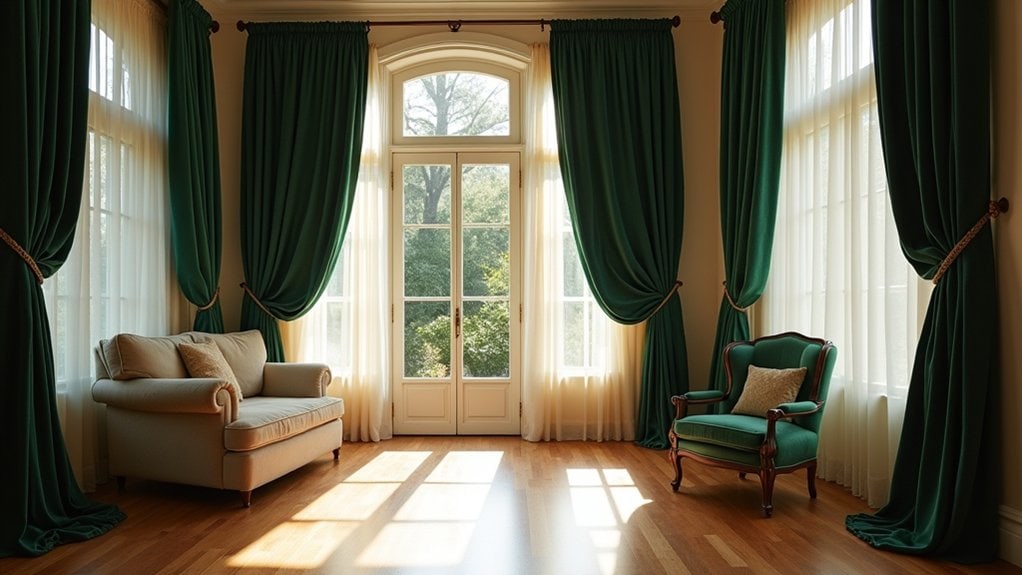
When it comes to creating dimension and visual interest at your windows, layering sheer curtains with other window treatments offers endless possibilities. You’ll find that mixing sheer styles with different textures creates depth that transforms an ordinary window into a design statement. I’ve tried various color combinations myself—neutral sheers with bold drapes really make a room pop!
- Layer sheers behind heavier blackout curtains for versatile light control
- Add sheer panels under roman shades for a soft, filtered effect
- Use complementary sheer colors with existing blinds for subtle dimension
- Combine floor-length sheers with valances for vertical interest
- Try double-layering sheers in different opacities for a gradient look
You’ll be amazed how these simple pairings can change the entire mood of your space throughout the day.
Material Matters: Choosing the Right Fabric for Your Space
When you’re shopping for sheer curtains, you’ll need to balance transparency with privacy—some fabrics let in plenty of light while still keeping prying eyes out, while others are practically see-through. The texture of your sheers matters too, from lightweight voile that barely whispers when the breeze hits it to heavier linen blends that add subtle weight to your windows. You might want to take into account how the fabric will interact with your existing décor—maybe a subtle pattern for a minimalist room, or something with a bit more substance if you’re looking to add visual interest.
Transparency vs. Privacy
How much privacy do you actually need from your sheer curtains? It’s the classic dilemma—you want that gorgeous light diffusion that makes your space feel airy, but you don’t want neighbors seeing you dance around in pajamas. The level of transparency affects both privacy and visual aesthetics.
Consider these factors when choosing your sheers:
- Fabric density: Higher thread counts provide more privacy
- Distance from neighbors: Maybe you can go more transparent if you’re not ground level
- Layering potential: Pairing sheers with blackout curtains gives flexibility
- Daytime vs. nighttime needs: Sheers that look private during day might become transparent at night
- Room function: Your bedroom probably needs more privacy than your living room
You can always test samples first—I’ve hung swatches in windows to check transparency in different lighting before committing.
Texture and Weight
Beyond privacy concerns, the physical qualities of your sheer curtains dramatically shape how they function in your space. You’ll notice weight variations can completely transform a room’s feel—lighter fabrics billow and dance with the slightest breeze, while heavier sheers hang more deliberately, creating a sense of substance without blocking light.
Texture contrasts matter just as much. Maybe you’ve seen those cotton voile curtains at your friend’s place? They diffuse light differently than polyester or linen blends. I’ve found that nubby linen sheers add casual warmth, while silk sheers bring a subtle elegance that’s hard to match.
When shopping, always touch the fabric. How does it drape? Will it hold its shape over time? Your curtains’ texture and weight aren’t just practical considerations—they’re design choices that affect your daily experience.
Beyond White: Exploring Color Options in Sheer Curtains
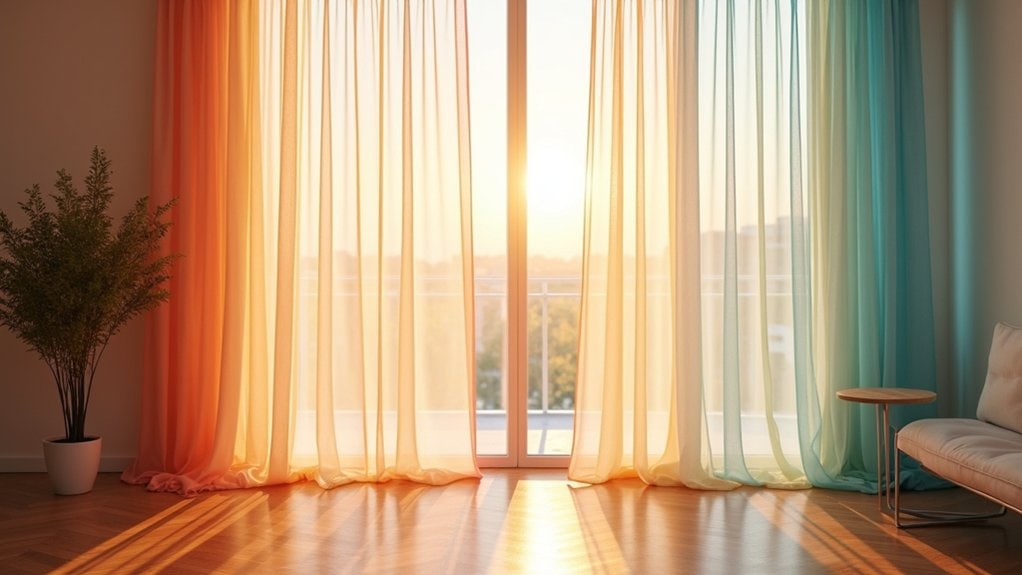
Many homeowners mistakenly believe white is the only option for sheer curtains. But the world of sheer window treatments actually offers a stunning color palette that can transform your space while still letting that gorgeous natural light filter through.
You’ll find numerous options to match your style:
- Soft pastels that add subtle warmth without overwhelming the space
- Bold jewel tones creating dramatic light effects when sunlight passes through
- Neutral grays and beiges for a modern, sophisticated look
- Ombré sheers that shift from light to dark
- Patterned sheers with delicate motifs or geometric designs
Sheer patterns can create interesting shadows on your floors and walls throughout the day. I’ve noticed my blue sheers cast the most beautiful glow in my living room during sunset. Maybe you need that splash of color too?
Hanging Techniques That Maximize Visual Impact
While selecting the perfect sheer curtains matters, the way you hang them can completely transform your windows and elevate your entire room’s aesthetic.
Try mounting your curtain rods 4-6 inches above the window frame—or even higher if you’ve got the wall space. This hanging height trick instantly makes ceilings appear taller and adds drama to ordinary windows. You’d be surprised how many people place their rods too low, which, well… it just doesn’t have the same effect.
For wider windows, extend your rods about 6-10 inches beyond each side of the frame. This allows your sheers to frame the view without blocking light when pushed aside. I’ve found this works especially well in living rooms where you want that airy feel but also some definition around the window.
Seasonal Adaptability: Sheers Throughout the Year

How do sheer curtains adapt to different seasons when most people think of them as strictly summer window treatments? Actually, these versatile window coverings work year-round with some thoughtful adjustments. You might be surprised by their seasonal styles and fabric variations that make them practical in any weather.
- Layer sheers behind heavier drapes in winter for added insulation while maintaining daytime light
- Switch to lightweight cotton or linen sheers in summer for maximum airflow
- Try colorful sheers in fall—maybe amber or russet tones to complement the changing leaves outside
- Double up sheers in spring for a dreamy, layered look that filters pollen
- Consider UV-protective sheers for rooms that get intense sunlight, regardless of season
You’ll find that with the right fabric weight and thoughtful layering, sheers can be your go-to window treatment all year.
Small Spaces, Big Potential: Using Sheers to Expand Visual Space
Living in a small space doesn’t mean you’re stuck with cramped, closed-off rooms. Sheer curtains can transform your tiny apartment or compact room by creating space illusions that trick the eye into perceiving more depth.
Hang your sheers from ceiling to floor—even if your windows don’t reach that high—to create vertical emphasis that draws the eye upward. This simple trick makes your ceilings appear higher than they actually are.
You’ll notice how light filters through, softening boundaries between indoor and outdoor spaces. I’ve found that white or light-colored sheers work best for this. Maybe try layering them with heavier curtains that you can pull back during the day.
Want your small room to feel airier? Position sheers a few inches wider than your actual window frame.
Care and Maintenance for Long-Lasting Elegance

To maintain the ethereal beauty of your sheer curtains for years to come, you’ll need more than just an occasional shake-out. Proper fabric care makes all the difference between curtains that look fresh for a decade and ones that yellow within months.
I’ve found these cleaning methods work best:
- Gentle machine washing on cold with mild detergent (no bleach!)
- Hand washing delicate fabrics in your bathtub with lukewarm water
- Regular dusting with a microfiber cloth or vacuum attachment
- Spot-cleaning small stains immediately with diluted soap
- Air-drying completely before rehanging to prevent mildew
You’ll want to check the care label first, though. My sister once ruined her silk sheers by washing them incorrectly. Remember that different fabric types need different treatment—polyester sheers are practically indestructible, while natural fibers require more attention.
Frequently Asked Questions
How Do Sheer Curtains Affect Energy Bills?
You’ll find sheer curtains impact your energy bills both ways. They’re letting natural light in, reducing electricity needs for daytime lighting. Nevertheless, they offer minimal insulation, potentially decreasing your energy performance and limiting cost savings.
Can Sheers Provide UV Protection for Furniture?
You’ll get minimal UV blocking from standard sheers. For real furniture protection, look for specialized sheers with UV-resistant fabric types. They’re not as effective as blackout curtains but still offer decent protection.
Are Sheer Curtains Suitable for Rooms With High Humidity?
You’ll want to choose sheer curtains with moisture resistance for humid spaces. Opt for synthetic fabric types like polyester or nylon instead of natural fibers. They’ll resist mildew and maintain their appearance longer in high humidity.
How Do Sheers Impact Indoor Plant Growth?
Sheers provide ideal light filtration for your plants, allowing enough sunshine while preventing harsh burns. You’ll notice improved plant health as they receive diffused natural light that supports photosynthesis without overexposure.
What Are the Installation Costs Compared to Other Window Treatments?
You’ll find sheer curtains offer lower installation costs compared to blinds or shutters. You’re looking at minimal materials expense and reduced labor costs since they’re simpler to hang than complex window treatments.
Final Thoughts
You’ll be amazed at how sheer curtains can transform your home with minimal effort. They’re not just window coverings—they’re light managers, space expanders, and mood setters. Try playing with different fabrics, colors, or hanging techniques. Maybe layer them with heavier drapes for versatility? Whatever your style, sheers offer that perfect balance of privacy and brightness. What room will you transform first with this simple upgrade?