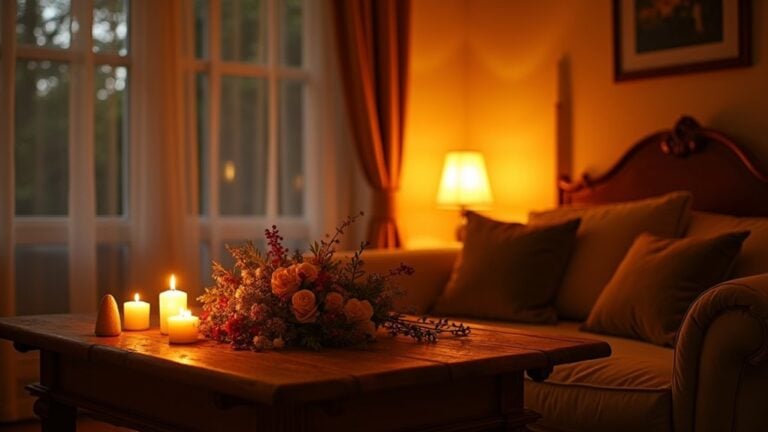
Create a romantic ambience by layering multiple light sources at different heights. Warm-toned bulbs (around 2700K) mimic candlelight and instantly set the mood. Try grouping candles of varying heights, hiding string lights behind furniture, or using dimmers to control intensity. Soft, indirect lighting helps blur imperfections and creates intimacy while reducing stress responses. Even simple adjustments like draping a scarf over a lamp can transform your space into something truly magical for your next special evening.
The Essentials
- Cluster candles of varying heights (3-5 inches difference) to create focal points and intimate conversation areas.
- Install quality dimmers with warm-toned bulbs (2700K-3000K) for a soft, golden glow that enhances relaxation.
- Layer 3-4 subtle light sources at different heights, avoiding harsh overhead lighting.
- Conceal light sources behind furniture or plants for a mysterious, indirect glow.
- Use smart lighting systems to program and save specific romantic “scenes” with warm amber or soft red tones.
The Psychology Behind Soft Lighting and Romance
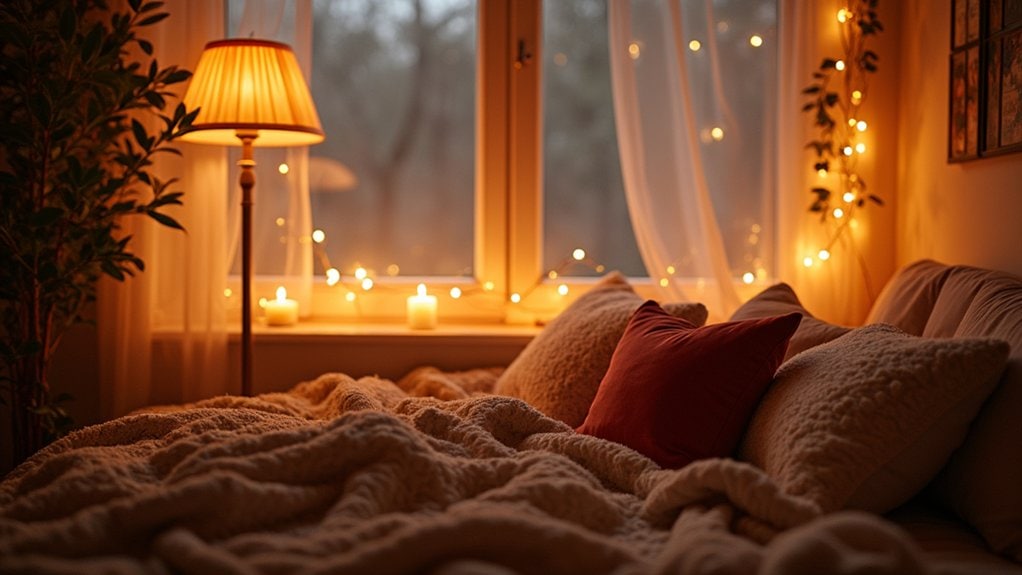
When you dim the lights in a room, something almost magical happens to the atmosphere. It’s not just your imagination – there’s real psychology behind why soft lighting enhances romance. The gentle illumination creates a soft focus effect that literally blurs imperfections and creates a sense of intimacy that bright lights simply can’t match.
You’ve probably noticed how you feel more relaxed and open in dimly lit settings. That’s because harsh lighting can trigger stress responses, while softer light allows you to let your guard down. This subtle shift helps foster emotional connection between people sharing the space.
Think about your last truly romantic evening – wasn’t the lighting part of what made it special? Our brains associate low light with privacy, safety, and closeness – the perfect backdrop for meaningful moments together.
Mastering the Art of Candle Placement
You’ll find that candles transform a room not just through their light, but also through their arrangement. Strategic grouping creates focal points that draw the eye—try clustering three or five candles of varying heights on a coffee table or mantel for instant ambiance. Playing with height variation adds depth to your lighting scheme, where taller candles can provide gentle overhead illumination while shorter votives cast a warm glow closer to the surface.
Strategic Grouping Techniques
Three strategic candle groupings can transform an ordinary room into a romantic haven. First, try clusters of three or five candles at varying heights on your coffee table or dining surface—odd numbers always look more natural, trust me. When grouping furniture, pull pieces slightly closer together to create an intimate conversation area bathed in that warm glow.
Second, consider wall-based arrangements using sconces or wall-mounted holders that frame your seating area. I’ve found this works really well for small spaces where table space is limited.
Finally, don’t forget about selecting colors that complement your decor. Maybe go with cream candles for neutral rooms, or try deep burgundy or navy for a bolder statement. You know what? Sometimes contrasting colors create the most interesting shadows and light play when candles are grouped together.
Height Variation Magic
Now that we’ve covered grouping techniques, let’s explore the magic of height variation in your candle displays.
Playing with different heights creates depth and visual interest that flat arrangements just can’t match. You’ll want to position taller candles toward the back or center, with shorter ones in front – this height balance design prevents blocking anyone’s view across the table.
Try using candlesticks of varying heights, maybe 3-5 inches apart in elevation. Or stack books under some candle holders for an easy height variation tip that costs nothing.
I once arranged candles on my staircase, each step creating natural height differences. The shadows danced up the wall, and well… it definitely impressed my date.
Don’t worry about perfect symmetry. Actually, slight unevenness often looks more natural and inviting.
Dimmable Lighting: Setup and Selection Guide
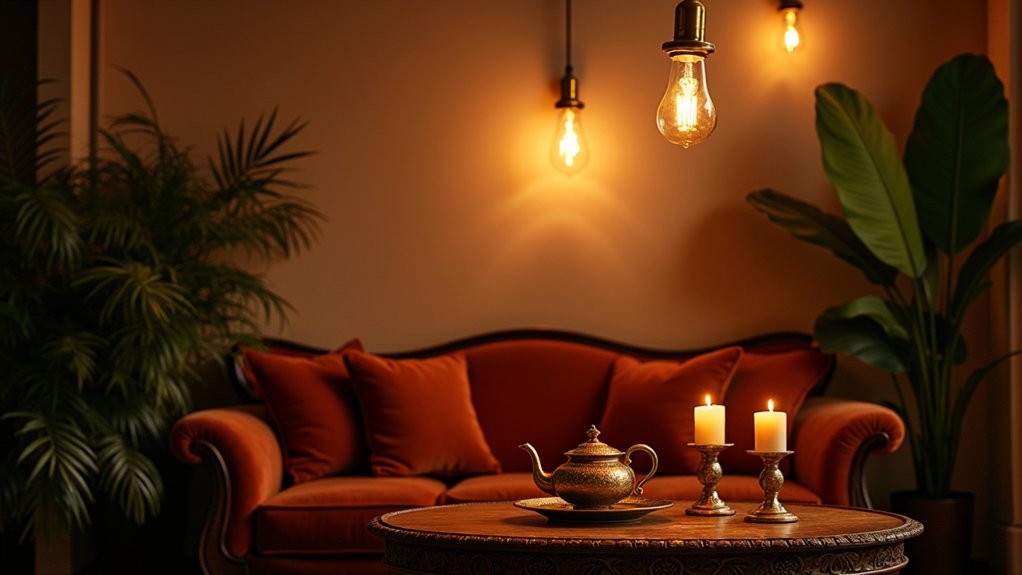
When it comes to creating romantic ambiance, dimmable lighting stands as perhaps the most powerful tool in your arsenal. You’ll want to invest in quality dimmer switches that offer smooth shifts without that annoying buzzing sound some cheaper models make. Trust me, nothing kills the mood faster than technical lighting glitches mid-evening.
For lighting fixtures, look for options with warm-toned bulbs—around 2700K works beautifully. Maybe consider installing dimmers in zones rather than controlling everything from one switch. This way, you can adjust your living room lights while keeping that subtle kitchen glow.
I’ve found that smart bulbs are worth the extra cost for romantic settings. You can control them from your phone, adjust brightness levels precisely, and even set automated dimming schedules for those special evenings you’ve planned ahead.
String Lights and Fairy Lights: Beyond Holiday Decor
Dimmable lights excel at creating ambiance, but let’s explore another lighting option that’s often overlooked outside of December.
String light designs have evolved far beyond those traditional Christmas tree strands. You’ll find copper wire versions, globe bulbs, and even vintage-inspired Edison bulbs that give off this really warm glow. I think they’re perfect for framing doorways or draping along headboards.
Fairy light placements make a huge difference in transforming ordinary spaces. Try placing them inside clear vases with some natural elements—maybe pebbles or dried flowers? Or weave them through bookshelves for a subtle glow.
What spaces in your home could use that soft, twinkling effect? These lights add texture and depth to rooms where regular lamps might feel too harsh or formal.
Light-Filtering Techniques Using Fabric and Lampshades

Beyond the twinkling charm of string lights, fabric offers another dimension to your romantic lighting strategy. You can transform harsh overhead lighting by draping sheer fabrics over fixtures—I’ve seen this work wonders in dining areas where you want that soft, diffused glow.
Lampshade styles matter more than you might think. Try swapping out stark white shades for ones with warmer tones like amber or cream. Maybe experiment with textured fabrics like linen that scatter light in interesting patterns.
For a quick fix, drape a scarf over a table lamp. This little trick saved a dinner date at my place once when the lighting felt too bright. The fabric filtering creates this gentle, flattering light that, well, makes everyone look their best. Don’t you think the right lighting can completely change how comfortable we feel?
Creating Ambient Glow With Indirect Lighting Sources
Indirect lighting might be your best friend when you’re trying to create that perfect romantic vibe. You’ll want to conceal your light sources behind furniture, plants, or architectural features—this creates a mysterious glow that doesn’t obviously reveal where it’s coming from. Try layering multiple subtle light sources at different heights around your space instead of relying on just one bright lamp, and you’ll notice how the overlapping pools of gentle illumination make everything (and everyone) look more flattering.
Concealed Light Placement
While mood lighting creates instant atmosphere, the source of that light can make all the difference in crafting a truly romantic setting. Nobody wants to stare at harsh bulbs or distracting fixtures when they’re trying to connect.
The magic happens when you tuck those light sources away. Try placing concealed fixtures behind furniture, under cabinets, or along baseboards. You know what works really well? Those little battery-operated LEDs hidden behind plants or tucked into bookshelves.
I once placed string lights inside a large glass vase behind my couch, and my partner couldn’t figure out where that soft glow was coming from. Hidden sources create intrigue and depth without revealing themselves. Maybe experiment with uplighting behind your headboard? The indirect illumination makes everyone look their best.
Layering Light Sources
Have you ever wondered why some spaces instantly feel intimate while others leave you cold? It’s often about the ambient layers of light working together.
When creating a romantic setting, don’t rely on just one light source. Try placing a soft lamp in one corner, maybe some candles on the coffee table, and string lights draped over a bookshelf. This light balance creates depth and interest.
You’ll want to avoid harsh overhead lighting completely. Instead, aim for 3-4 different sources at varying heights. I’ve found that floor lamps paired with tea lights can transform even my tiny apartment bathroom into a spa-like retreat.
The trick is creating zones of gentle illumination rather than flooding the space. Your eyes should wander comfortably between these warm pools of light, never settling on anything too bright or jarring.
Smart Lighting Systems for Programmable Romance

As technology continues to transform our homes, smart lighting systems have emerged as powerful tools for creating romantic ambiance on demand. With just a few taps on your phone, you can set the perfect mood without fumbling with multiple switches or dimmers.
Most smart tech platforms like Philips Hue or LIFX let you save lighting “scenes” for different occasions. Maybe you want soft amber for dinner dates and deeper reds for, well, after dinner. You know what I mean.
Lighting automation takes it further by scheduling these scenes to activate at specific times. Envision this: your partner walks in after a long day and the lights automatically shift to a warm, inviting glow. I tried this last Valentine’s Day and honestly, it made me look way more thoughtful than I actually was.
Color Temperature Selection for Maximum Intimacy
Color temperature might be the single most overlooked aspect of romantic lighting. When you’re setting the mood, those bright white LEDs you’ve got in your reading lamp? Yeah, they’re working against you.
Warm light benefits your romantic efforts in surprising ways. Lights between 2700K and 3000K create that soft, golden glow that makes everyone look better. I’ve noticed people actually relax more under these warmer tones – something about how our brains associate them with sunset and winding down.
Try experimenting with color temperature effects in different areas. Maybe use slightly warmer bulbs in table lamps than overhead fixtures. You’ll see the difference immediately. And don’t be afraid to go extra warm for special occasions – around 2200K gives that candle-like ambiance that makes ordinary evenings feel like something worth remembering.
Frequently Asked Questions
How Can I Create Romantic Lighting Without Electricity?
You’ll create romantic lighting without electricity by using candle alternatives like lanterns, oil lamps, or fairy lights with batteries. Position these near reflective surfaces or harness natural light through sheer curtains at sunset for a magical glow.
Can Soft Lighting Help Mask Imperfections in My Home’s Decor?
Yes, you’ll find soft lighting creates gentle shadows that mask imperfections brilliantly. It’s a smart decor enhancement technique that downplays flaws while adding warmth and character to your space. Try it tonight!
What Lighting Works Best for Romantic Outdoor Settings?
For romantic outdoor settings, you’ll find string lights woven through trees create magical canopies overhead. Place candle lanterns along pathways or tables for intimate warmth. They’ll cast a gentle glow that enhances any evening together.
How Do I Prevent Soft Lighting From Causing Drowsiness?
To avoid drowsiness with soft lighting, you’ll want to balance ambient light with brighter focal points. Don’t dim everything equally. Add candles at eye level and include subtle uplighting for soft lighting tips that energize spaces.
Are Certain Lighting Colors More Flattering for Different Skin Tones?
Yes, lighting temperature affects how your skin appears. Warm lighting (2700-3000K) flatters yellow/golden undertones, while cooler lighting (3500-4100K) complements pink/blue undertones. You’ll look best when lighting matches your skin undertones.
Final Thoughts
You’ve got everything you need to transform ordinary spaces into something truly special. Remember, lighting isn’t just functional—it’s emotional. Play around with these techniques until you find what works for your space, and don’t be afraid to mix methods. Sometimes the best romantic atmosphere comes from the simplest setups. What matters most is how the lighting makes you feel when you’re with someone you care about.