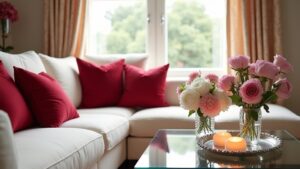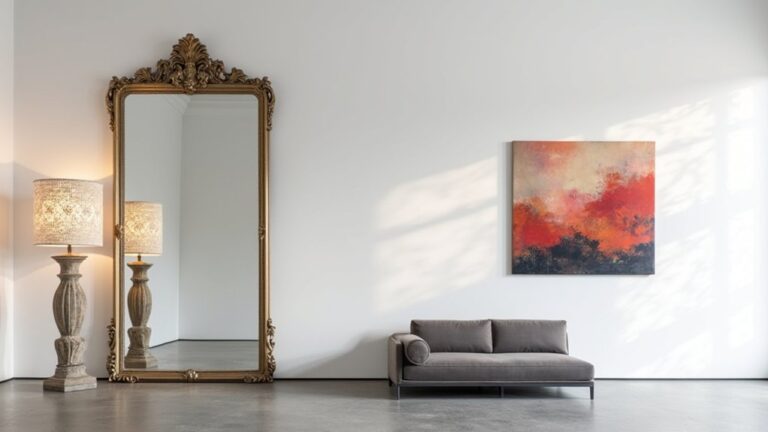
Statement pieces transform your space by setting distinct moods without major renovations. Position large mirrors opposite windows to double visual space and bounce natural light. Choose lamps with warm tones (2700K-3000K) for relaxation areas and cooler temperatures for work spaces. Select art that complements each room’s function—calming scenery for bedrooms, bolder pieces for social areas. Limit yourself to one or two statement items per room to avoid visual clutter. These strategic choices can completely change how you feel in your home.
The Essentials
- Large mirrors positioned opposite windows amplify natural light and create visual expansion in small spaces.
- Layered lighting with varying temperatures (2700K-3000K for coziness, 4000K+ for alertness) dramatically influences room ambiance.
- Artwork selection should match room purpose—calming scenes for bedrooms, bold pieces for social areas.
- Statement pieces create maximum impact when paired with minimalist furnishings and given adequate breathing space.
- Strategic placement of mirrors, lamps, and art can define conversation zones and serve as natural focal points.
How Mirrors Create Visual Expansion in Compact Spaces
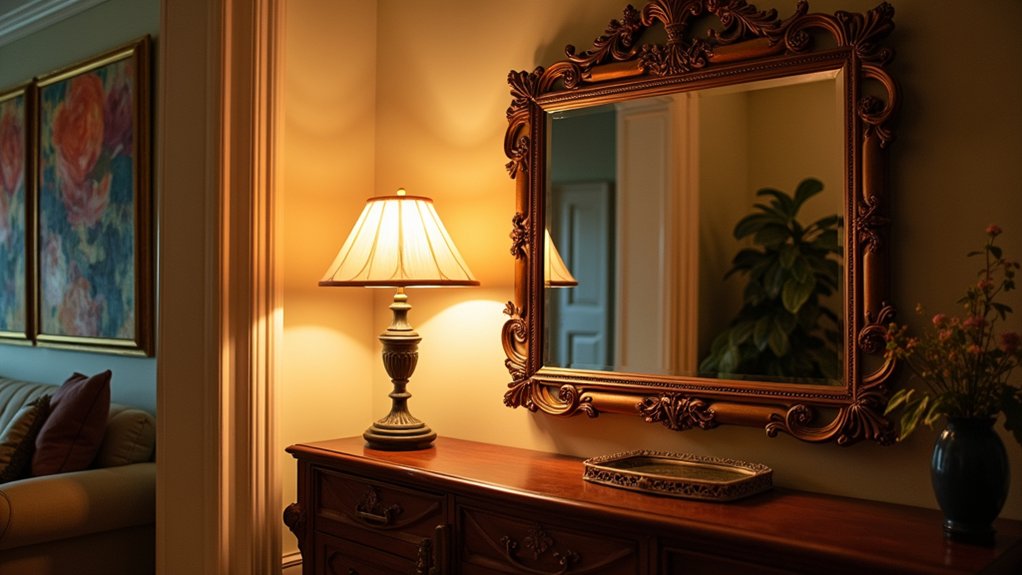
When you’re dealing with a small room, mirrors can be your secret weapon for making the space feel noticeably larger than it actually is. Their reflective properties fundamentally double your visual space, creating depth where there was none before.
Try positioning a large mirror opposite a window to capture natural light and bounce it around the room. The mirror reflections multiply both the light and perceived square footage. You know that feeling when you catch glimpses of another room through a doorway? That’s the same kind of space illusion mirrors create.
I’ve found that even small, strategically placed mirrors can work wonders. Maybe try a collection of different sized mirrors on one wall? It’s not just about function—these reflective surfaces become artwork themselves.
The Psychology of Light: Choosing Lamps for Emotional Impact
The lamps you choose for your home aren’t just about function—they’re actually shaping your emotional state through warm or cool illumination. You’ll notice a real difference in how you feel when you layer your lighting strategically, maybe using a mix of floor lamps, table lamps, and overhead fixtures rather than relying on just one source. Your body’s natural rhythms respond to light patterns too, so picking lamps that can adjust brightness throughout the day helps maintain your circadian rhythm and, honestly, might even improve your sleep quality.
Warm vs. Cool Illumination
Light temperature profoundly affects our mood, making it possibly the most overlooked element in home design. When you’re selecting lamps, think about what feeling you want in each space. Warm color temperatures (around 2700K-3000K) create cozy, intimate atmospheres that help you unwind—perfect for bedrooms and living rooms where you relax after a long day.
Cool color temperatures (4000K and above) promote alertness and concentration. You’ll want these in your home office or kitchen where tasks require focus and precision.
I’ve noticed my productivity skyrockets under cooler lights when I’m working, but they feel almost harsh when I’m trying to relax. Maybe experiment with both? Try a lamp with adjustable temperature settings for versatility. What mood are you trying to create in your favorite room?
Layered Lighting Strategies
Three essential layers of lighting can transform your home from flat and uninspiring to rich and emotionally resonant. Think of ambient layering as creating the foundation of your room’s atmosphere—it’s what sets the overall mood. You’ll want to build from there, adding dimension with each new light source.
When planning your lighting strategy, consider these key layers:
- Base lighting – Overhead fixtures that provide general illumination (maybe recessed lights or a central pendant)
- Mid-level accent lighting – Table lamps, sconces, or picture lights that highlight specific areas
- Task lighting – Focused illumination for reading, cooking, or working
I’ve found that most people forget about that middle layer, but it’s actually what creates depth. Without proper ambient layering, even good task lighting can make a room feel strangely institutionalized.
Circadian Effects Matter
While you might not realize it, your body responds to light in ways that go far beyond simple illumination. Your circadian rhythms—those internal clocks that regulate sleep and wakefulness—are profoundly influenced by the light sources in your home.
Consider placing warmer, softer lamps in spaces where you unwind before bed. I’ve found that switching to amber bulbs in my bedroom actually helps me fall asleep faster. For morning areas like your kitchen or home office, brighter, cooler lights can spark alertness and focus.
This isn’t just about function—it’s about mood enhancement too. Maybe try adjustable lamps that shift from energizing daylight tones during work hours to relaxing warm glows in the evening. Your body will thank you, and you’ll probably notice the difference in how you feel throughout the day.
Art Selection Strategies for Different Room Functions
When selecting art for your home, you’ll want to match the function of each room with pieces that enhance that purpose — maybe calming sceneries for bedrooms but bolder, conversation-starting works for social spaces. The colors in your art choices aren’t just about matching your sofa; they actually influence how you feel in the space, with blues and greens promoting relaxation while reds and oranges energize. Your art placement should consider both practical viewpoints (like avoiding direct sunlight) and the emotional impact you want visitors to experience when they enter the room.
Functional Art Placement
Choosing art for your home isn’t just about finding pieces you love—it’s about placing them where they’ll enhance the function of each space. Functional art creates visual harmony when positioned thoughtfully. I’ve found that artwork can truly transform how you use a room when it’s placed strategically.
Consider these placement principles:
- Hang art at eye level in conversation areas to create natural focal points
- Place smaller pieces in transitional areas like hallways where they’ll be viewed while moving
- Use larger, bolder works in rooms where you want to encourage lingering or contemplation
Maybe you’ve noticed how art positioned near lighting seems to change throughout the day? That’s part of the magic. Think about sightlines too—what will you see from different seats or when entering the room?
Color Psychology Impact
The colors in your art don’t just complement your décor—they actively shape how you feel and function in each room. Consider color associations when selecting pieces for different spaces. Blues and greens in your office might help you focus, while warmer tones like reds and oranges create energy in gathering spaces.
I’ve noticed my own emotional responses shift dramatically when I changed the artwork in my bedroom from a lively abstract to a soft scenery. Sleep came easier, honestly.
You’ll want to match your art’s palette to the room’s purpose. Maybe try cooler tones in spaces where you need calm and clarity, warmer hues where conversation flows. What feelings do you want to evoke as you move through your home? Your art selections can guide those changes, making each room serve its unique function.
Pairing Statement Pieces With Minimalist Furnishings
Masterful interior design often hinges on balance, which is why pairing bold statement pieces with minimalist furnishings creates such enchanting spaces. You’ll notice that when surrounded by clean, simple lines, your statement lamp or oversized artwork truly gets to shine. I’ve found that minimalist designs actually amplify the impact of your standout pieces rather than competing with them.
When creating statement balance in your home, consider:
- Focus on contrast – place a colorful accent chair against an otherwise neutral room
- Mind the spacing – leave breathing room around statement pieces (I learned this the hard way!)
- Limit your statement items to one or two per room – maybe three if they’re smaller
You’ll be amazed at how much more powerful your special pieces feel when they’re not fighting for attention.
Seasonal Rotation: Refreshing Your Space Without Renovation
As seasons shift outside your windows, your home can undergo beautiful changes without requiring a single contractor or major expense. You’d be surprised how swapping out a few statement pieces can transform your living space and enhance the mood to match the world outside.
Maybe rotate your artwork quarterly, switching from lively summer prints to richer, warmer tones when fall arrives. Or try seasonal decor accents that reflect what’s happening in nature—lighter fabrics and floral elements in spring, heavier textiles and metallic touches for winter.
I’ve found that simply changing throw pillows, table runners, and even lampshades can make a room feel completely refreshed. What about moving that statement mirror from the hallway to your dining area? Sometimes just relocating pieces you already love creates an entirely new perspective.
Budget-Friendly Statement Pieces That Make Maximum Impact
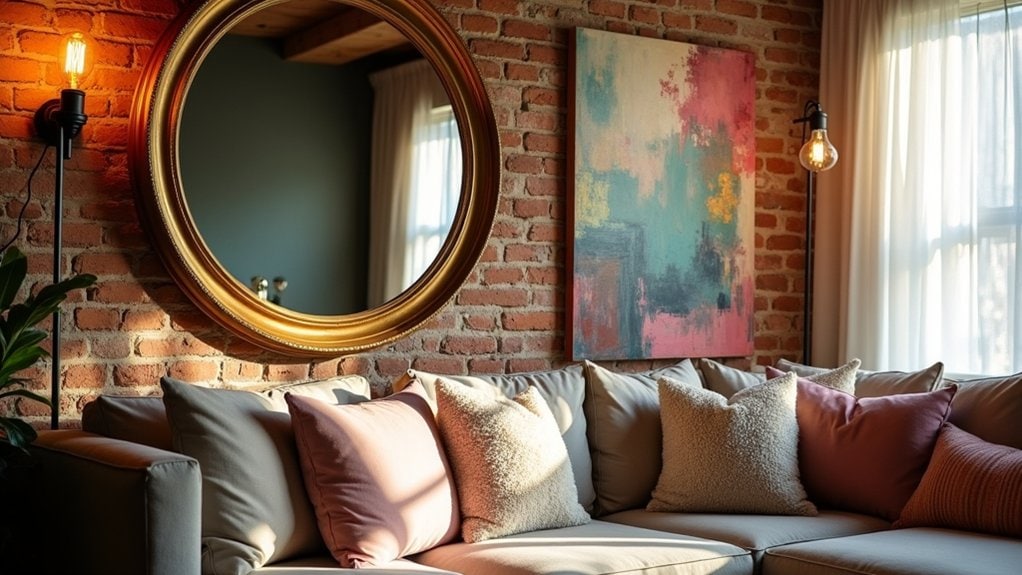
When decorating on a tight budget, you don’t need to sacrifice style or impact—quite the opposite. Sometimes the most affordable pieces create the boldest statements in your home. I’ve found that thoughtfully selected budget decor can transform a room more effectively than expensive furniture.
Try these budget-friendly yet impactful accessories:
- Oversized canvas art from discount stores or online marketplaces – just look for bold colors that complement your space
- Dramatic floor lamps with interesting shapes (those $40 ones at Target? They look way more expensive)
- Statement throw pillows with unexpected textures or patterns – maybe swap these seasonally for a fresh look
The key is placement. You want your guests’ eyes to land on that perfect piece, not be overwhelmed by too many competing elements.
Creating Conversation Zones Around Focal Elements
Now that you’ve identified those affordable statement pieces, let’s think about how they can anchor your social spaces.
Every great conversation zone needs a focal point that draws people in. Maybe it’s that vintage mirror you found at a flea market, or the oversized floor lamp that casts the perfect glow. Position your seating to face these elements—you’ll notice guests naturally gravitate toward them.
I’ve found that leaving some breathing room around conversation starters works best. Too crowded, and they lose their impact. My friend arranged her sectional to frame her statement bookcase, and now everyone hangs out there during parties.
Try pulling chairs slightly closer than you think they should be. This creates intimacy that encourages people to talk, while your statement piece quietly does the work of breaking the ice.
Frequently Asked Questions
How Do Statement Pieces Affect Home Resale Value?
Statement pieces boost your home’s resale value by enhancing home staging and positively impacting buyer perception. They’ll create memorable impressions, making potential buyers feel emotionally connected to your space and more likely to pay premium prices.
Can Statement Pieces Help With Sound Acoustics in Open Spaces?
Yes, you’ll find that certain statement pieces double as acoustic panels. Textured wall art, plush area rugs, and fabric-covered furniture offer sound absorption benefits while enhancing your open space’s aesthetic appeal.
How Do Statement Pieces Interact With Smart Home Technology?
You’ll love how your statement pieces work with smart home technology. Your art can conceal sensors while lamps offer smart lighting opportunities. Through tech incorporation, mirrors and decorative elements become functional parts of your connected home.
Are There Cultural Considerations When Selecting Statement Pieces?
When selecting statement pieces, you’ll want to respect cultural symbolism and honor your personal aesthetic preferences. Consider what meanings objects carry in different traditions before making them focal points in your space.
How Do You Incorporate Inherited or Sentimental Pieces as Statements?
Highlight your inherited pieces by giving them a central location where they’ll shine. You’ll honor their sentimental value while creating visual interest, even if inheritance aesthetics don’t perfectly match your decor. Balance tradition with personal style.
Final Thoughts
You’ve got the tools now to transform your space without major renovations. Mirrors make rooms feel larger, lamps affect your mood, and art tells your story. Mix these elements thoughtfully—maybe start with just one piece that really speaks to you. Remember, your home should reflect who you are, not just what’s trending. What statement piece might you add this weekend? Trust your instincts and have fun with it.