If you’ve got a patio or balcony that’s basically just sitting there, you’re leaving usable space on the table. A lot of people treat outdoor areas like an afterthought, but with a few intentional choices, yours can actually function like a room you want to spend time in. The question is where to start, because buying furniture before thinking through your layout is usually where things go sideways.
The Essentials
- Measure your space and sketch a floor plan to ensure furniture fits without crowding movement or blocking doors.
- Use mirrors and reflective surfaces to create depth and enhance natural light in smaller patios or balconies.
- Repeat your indoor color palette outdoors using cushions, rugs, and materials like teak to create visual harmony.
- Layer weather-resistant textiles such as jute rugs, patterned cushions, and canopies to add comfort and coziness.
- Combine string lights and ambient lanterns with well-chosen plants and decor accents to create a warm atmosphere.
Make Your Layout Work Before You Buy Anything
Before you spend a single dollar, take a few minutes to measure your space — and I mean actually measure it, not just eyeball it.
Furniture arrangement fails most often because people skip this step. A loveseat that looks small in a store can eat up half a narrow balcony.
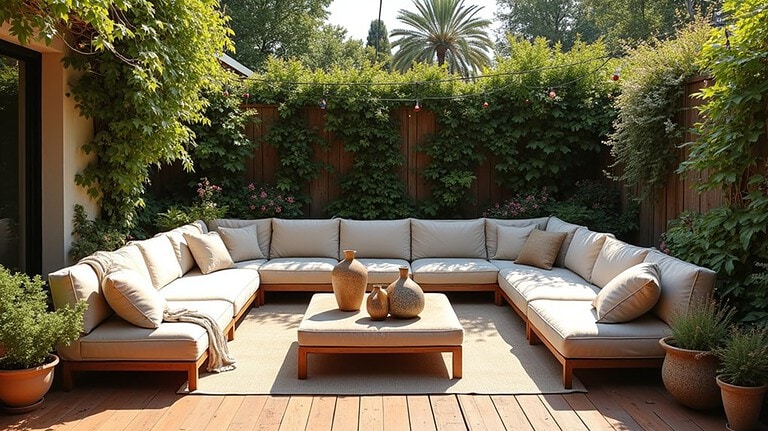
Sketch a rough floor plan. Nothing fancy — even a quick drawing on your phone notes app works. Mark where the door swings, where the railing sits, how much clearance you actually have.
Layout planning isn’t just about fitting furniture in. It’s about how you’ll move through the space. Can two people sit comfortably without bumping knees?
Think about what you actually want to do out there. That shapes everything else.
How Do You Make a Small Balcony Feel Spacious?
If your balcony feels cramped, a mirror mounted on the wall can trick your eye into thinking there’s more space than there actually is—it’s a simple fix that makes a real difference. You’ll also want to think vertically, because wall-mounted shelves or a tall plant stand pull the eye upward and keep your floor clear. Less clutter on the ground usually means the whole space just *feels* bigger, even if nothing technically changed.
Mirrors Expand Visual Space
One of the easiest tricks for making a small balcony feel bigger is adding a mirror—or even just one well-placed mirror.
Reflective surfaces bounce light around and create visual depth, which makes your eye think there’s more space than there actually is. It’s a pretty simple concept, but it works.
You don’t need anything fancy. A weather-resistant mirror mounted on a wall or fence can genuinely change how the whole area feels.
Think about where you’d naturally look when you sit outside. That’s probably where you’d want to hang it.
Outdoor mirrors aren’t always easy to find, but they exist—and some people just use indoor mirrors with a protective backing. Does it hold up perfectly over time? Not always. But the effect is worth trying.
Vertical Storage Saves Room
Another thing worth thinking about is vertical storage—going up instead of out when floor space is tight. Small balconies don’t leave you much room to work with, so why not use the walls?
Wall organizers can hold plants, tools, or even small baskets without eating into your floor space. You’d be surprised how much you can store once you start thinking vertically.
Shelving solutions work really well here too. A few floating shelves can hold candles, books, or whatever you actually use outside. It’s not about filling every inch—it’s more about being intentional with what goes where.
Do you need everything at ground level? Probably not. Moving some items up can make the whole space feel less cramped and honestly just easier to move around in.
Choose Patio Furniture That Matches Your Indoor Style
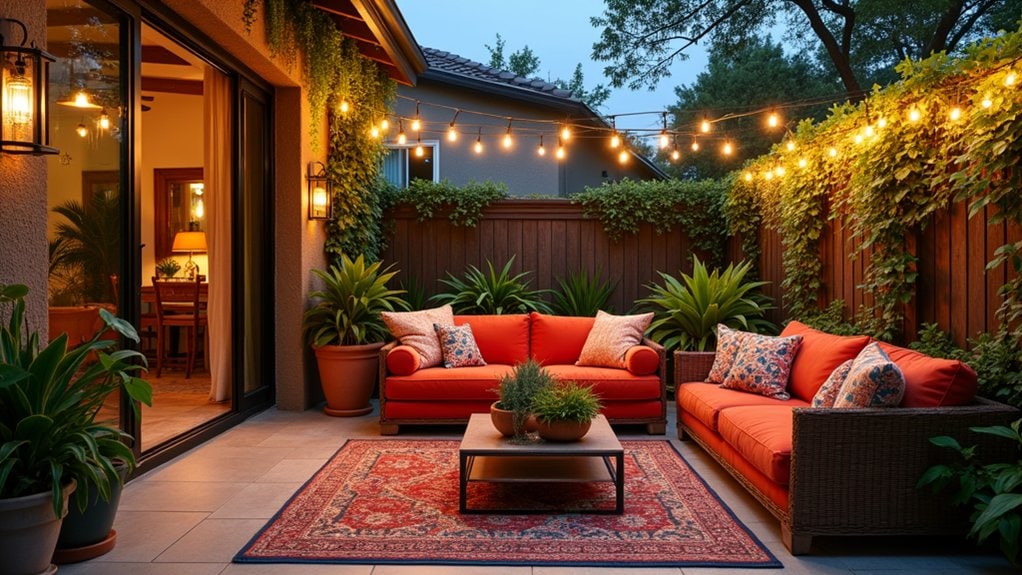
Your patio should feel like a natural extension of your home, not some disconnected afterthought. If your living room leans toward warm wood tones and neutral fabrics, try carrying those same materials and colors outside—think teak furniture or linen-textured cushions that echo what’s already inside. It doesn’t have to match perfectly, but does your outdoor space currently feel like it belongs to the same home?
Mirror Indoor Design Elements
When it comes to decorating your patio or balcony, think about what’s already working inside your home. If your living room leans toward a coastal vibe or a more minimalist setup, carry that same feeling outside.
Some easy ways to mirror indoor design elements:
- Repeat your indoor color palette using outdoor cushions or rugs
- Use reflective surfaces like metallic planters or glass-top tables to add depth
- Try mirror placement near a fence or wall to visually expand a small balcony
- Echo your indoor textures—if you have wood tones inside, bring in teak or bamboo outside
What details in your living room do you actually love? Start there. You don’t need to overthink it—just look around and let your indoor space guide you.
Match Materials And Colors
Choosing the right patio furniture really comes down to 3 things: material, color, and how well it connects to what you’ve already got going on inside.
If your living room leans modern with clean lines and neutral tones, bring that same energy outside. Material harmony matters more than people think. A rattan chair next to a sleek concrete table just… doesn’t quite work.
Color coordination doesn’t mean matching everything exactly. It means pulling a tone from inside and repeating it out here. Maybe your couch has warm gray cushions. Use that same gray outside.
What materials do you already have indoors? Wood? Metal? Work from there.
Even small consistency between inside and outside makes the whole space feel more intentional. Not perfect. Just connected.
Layer in Rugs, Cushions, and Textiles for Comfort
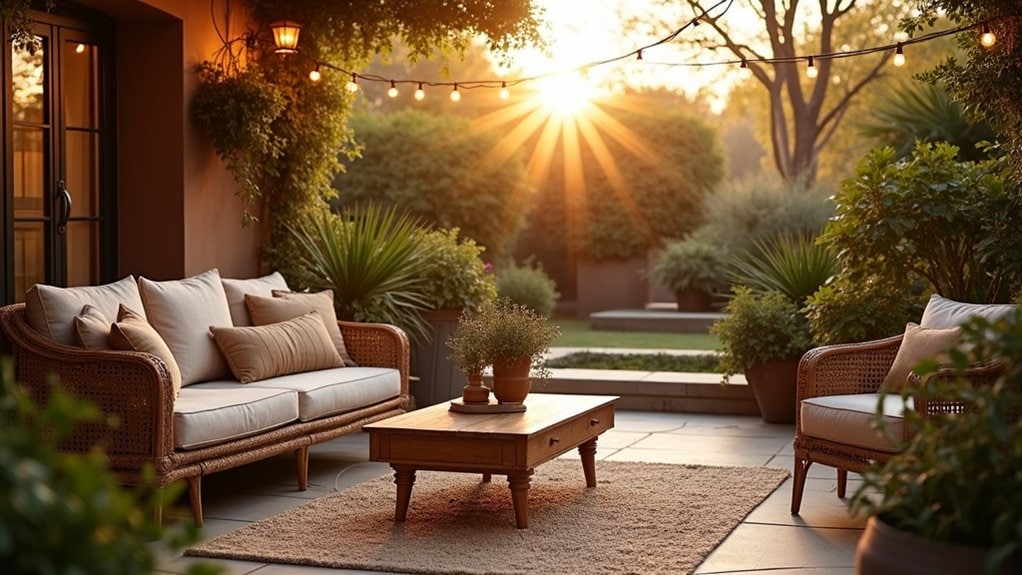
Soft textiles are honestly one of the easiest ways to make a patio feel less like an afterthought. You don’t need much—just a few intentional choices that add warmth without overwhelming the space.
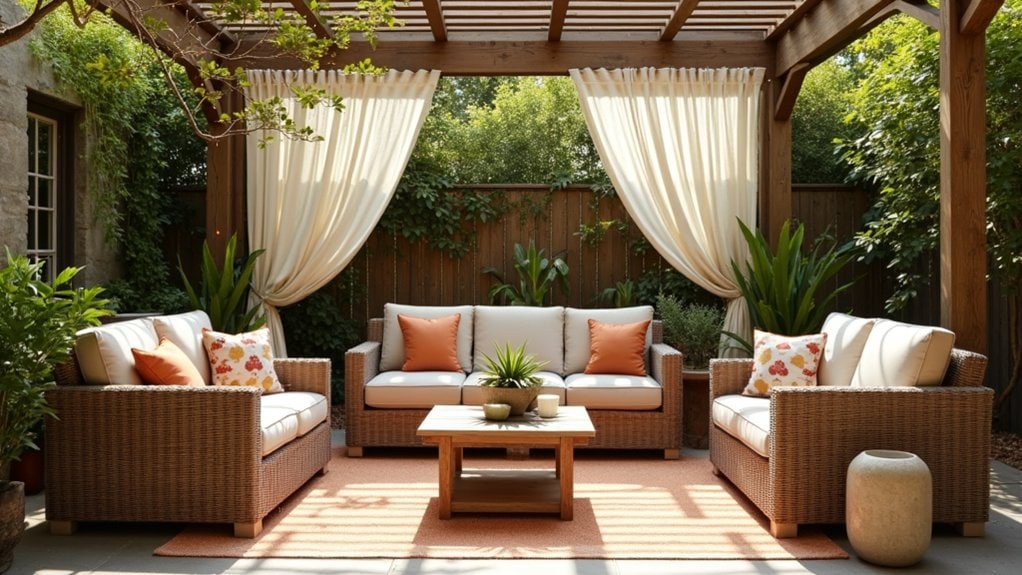
Think about mixing textile textures rather than keeping everything uniform. A jute rug under a seating area already changes how the whole space reads. Then layered patterns on cushions—stripes with something geometric, maybe—can make it feel considered without trying too hard.
A few things worth adding:
- Outdoor-rated throw pillows in two or three complementary colors
- A weather-resistant rug sized correctly for your seating area
- A lightweight throw blanket for cooler evenings
- Curtain panels or a canopy for softness and some privacy
Does the space feel lived-in yet? That’s really the goal here.
Set the Mood With Outdoor Lighting
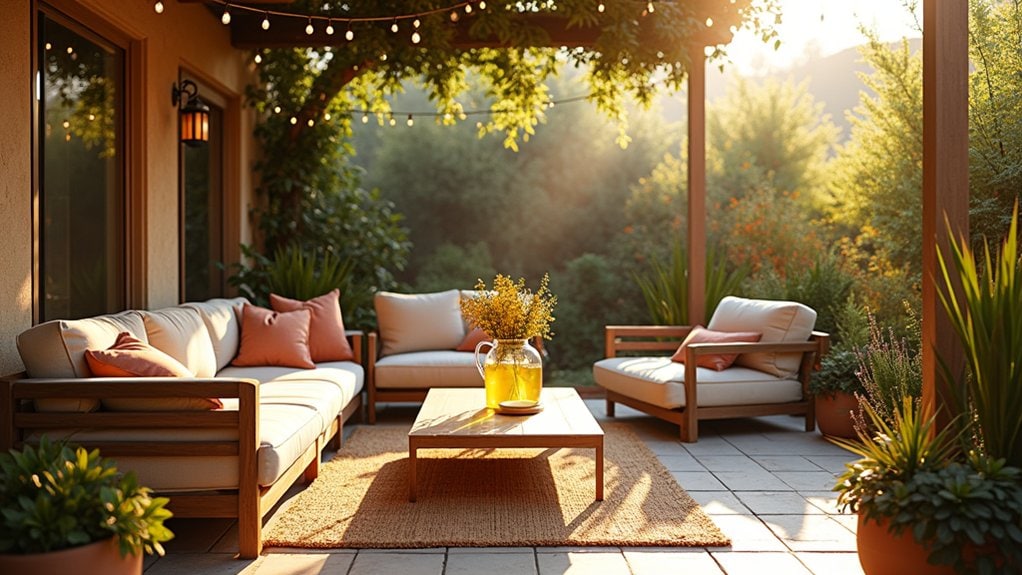
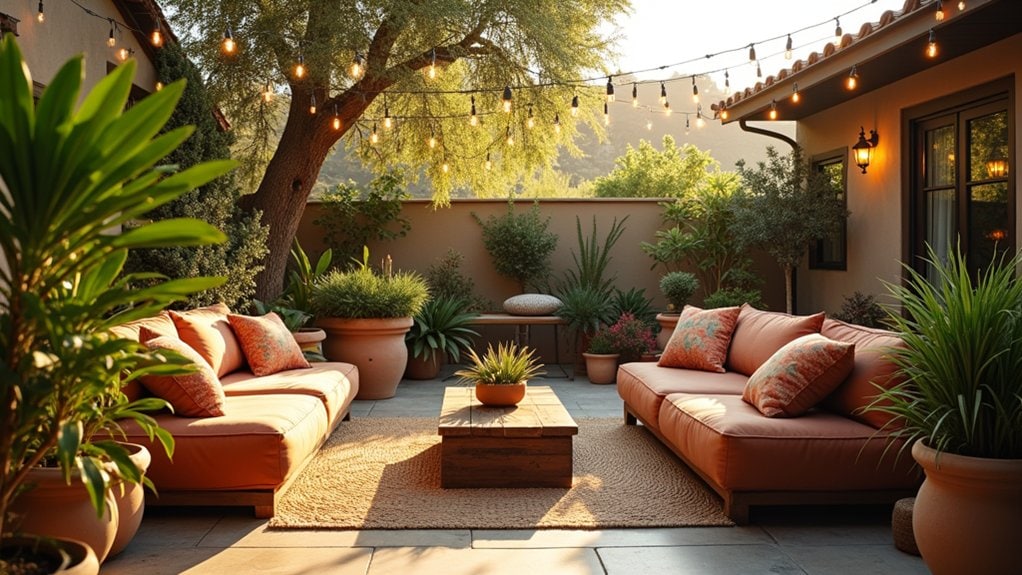
Lighting is honestly one of those things that can completely change how a patio feels once the sun goes down. String lights are probably the easiest starting point — drape them across a pergola or along a fence line and you’ve already shifted the whole vibe.
But don’t stop there. Ambient lanterns on a side table or tucked into a corner add something warmer, more grounded. Think about where you actually sit most. Is that spot lit, or does it disappear into darkness after 8pm?
You don’t need a lot. A few well-placed sources beat a dozen random ones. Mix heights if you can — something low, something overhead. It creates depth without you having to overthink it too much.
Add Plants, Accessories, and Decor That Complete the Look
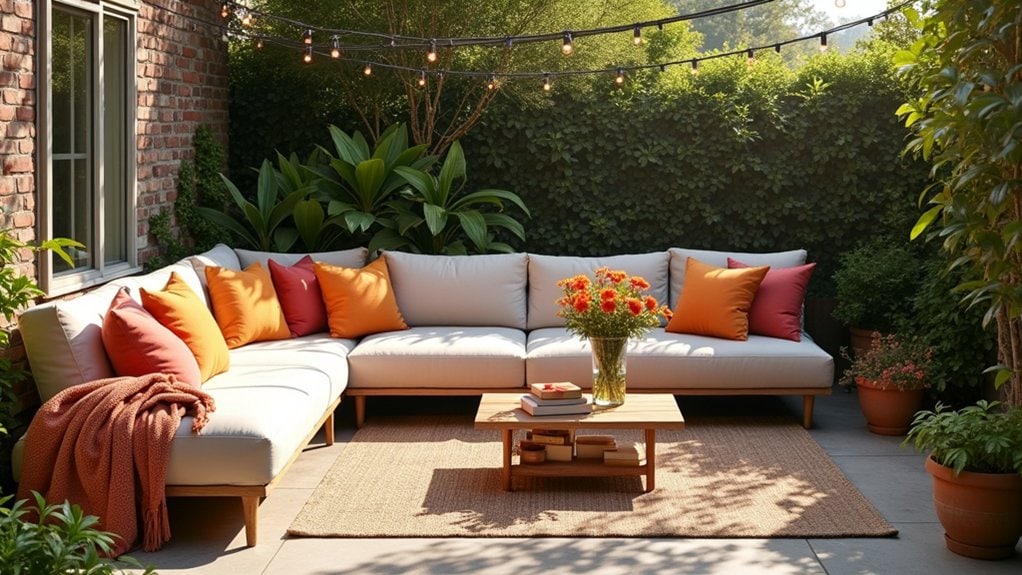
Once you’ve got the lighting sorted, plants and accessories are where things start to feel like yours. Plant selection matters more than people think—a few well-chosen plants do more than a dozen random ones.
Consider what actually survives your specific conditions:
- Succulents and herbs for sunny, dry spots
- Ferns or peace lilies if you’ve got shade
- Trailing plants that soften hard edges on railings
- A single statement plant that anchors the whole space
Decorative accents pull it together—think a textured throw, a small side table, maybe a candle or two. Nothing too precious.
What do you actually want to feel when you’re out there? That question drives every choice. Don’t overthink the accessories, but don’t skip them either.
Frequently Asked Questions
How Do I Weatherproof My Patio Furniture During Winter Months?
Use furniture covers to protect your pieces from harsh weather. You’ll want to clean everything thoroughly before covering it. For extra protection, consider winter storage in a garage or shed to prevent damage from freezing temperatures.
What Permits Do I Need for Permanent Balcony Structures?
You’ll need a building permit for permanent balcony structures. Check your local balcony regulations, as requirements vary by location. Always guarantee structural integrity by hiring a licensed contractor, and consult your HOA if applicable.
Can I Install a Ceiling Fan on My Covered Patio?
Yes, you can install a ceiling fan on your covered patio! You’ll enjoy ceiling fan benefits like airflow and comfort. For installation tips, make certain you’re using a UL-rated outdoor fan and hire a licensed electrician for safe wiring.
How Do I Manage Privacy From Neighbors on My Balcony?
You can boost balcony privacy using privacy screens, outdoor curtains, planter boxes, or decorative trellises. They’ll block neighbors’ sightlines while adding style, turning your balcony into a cozy, secluded retreat you’ll love spending time in.
What Weight Limits Should I Consider for Balcony Furniture?
Check your balcony’s load capacity, typically 40-60 lbs per square foot. You’ll want to prioritize lightweight furniture materials like aluminum or resin, and consider weight distribution by spreading pieces evenly to avoid stressing any single structural point.
Final Thoughts
You don’t need a complete overhaul to make your patio feel livable. Start small — maybe just a rug and a couple of cushions — and see how the space starts to shift. What would actually make you want to sit out there more? That’s probably your answer. Build from that. It doesn’t have to be perfect or finished all at once.