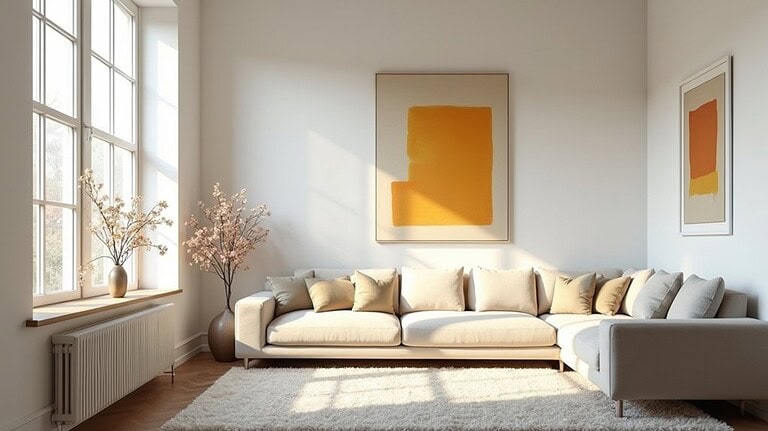
You’ve probably hung art before and felt like something was just… off. Maybe it looked fine in the moment, but later the room felt awkward and you couldn’t figure out why. Most people make the same mistake without realizing it, and it has nothing to do with the art itself. It’s all about placement. Understanding one simple rule changes everything, and it’s worth knowing before you put another nail in the wall.
The Essentials
- The most common mistake is hanging art too high; the center of the artwork should sit 57–60 inches from the floor.
- Galleries standardize art at 57 inches to achieve eye-level viewing, creating visual balance and comfort for the viewer.
- Art hung above furniture should span two-thirds of that furniture’s width for proper scale and proportion.
- When grouping pieces, maintain 2–3 inches of spacing and treat the entire arrangement as one single unit.
- Always account for hanging hardware placement and check for hidden pipes or wiring before drilling into walls.
The Most Common Art Hanging Mistake (And How to Fix It)
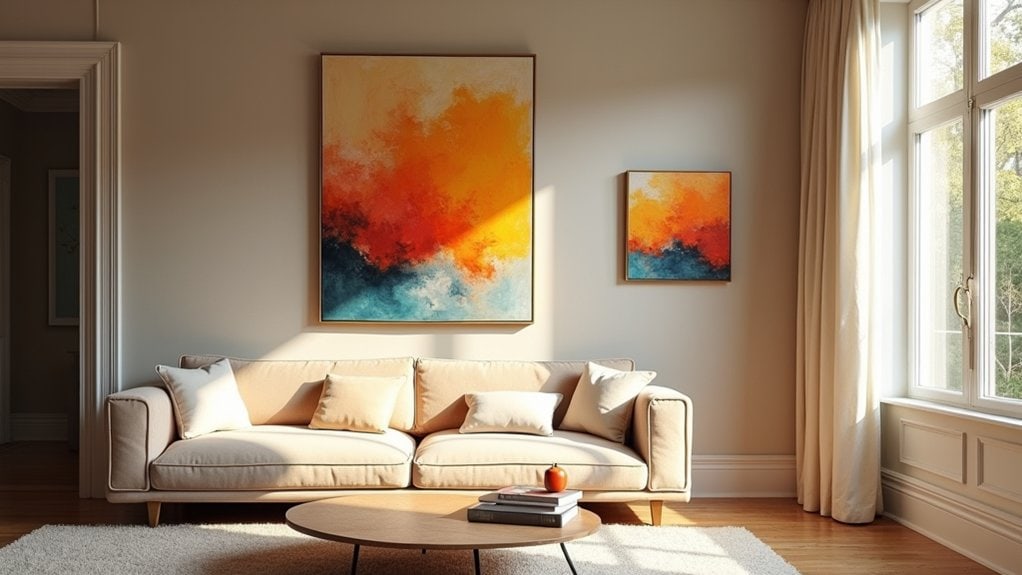
If there’s one mistake almost everyone makes when hanging art, it’s placing it too high on the wall.
It happens constantly. You hang something, step back, and it just feels… off. Too distant. Like it’s floating away from everything else in the room.
The fix is simpler than you’d think. Art placement works best when the center of the piece sits around 57 to 60 inches from the floor. That’s roughly eye level for most people.
So before you grab the hammer, measure first. A quick height adjustment saves you extra holes and frustration.
Ask yourself — are you hanging it for the wall, or for the person standing in front of it?
That small shift in thinking changes everything about how you approach it.
The 57-Inch Rule for Hanging Art Correctly
Most galleries hang their art at 57 inches from the floor to the center of the piece — and it’s not arbitrary. That number reflects the average human eye level, and it’s the standard museums have used for years.
Here’s how you apply it. Measure 57 inches up from the floor and mark that spot lightly with a pencil. That’s where the center of your artwork should sit.
Getting the art height right creates visual balance in a room. It feels natural without you even knowing why.
You’ll need to account for the hanging hardware on the back of the piece too — that part trips a lot of people up.
Does your current art hit that mark? It’s worth checking.
Which Walls Work Best for Different Art Sizes
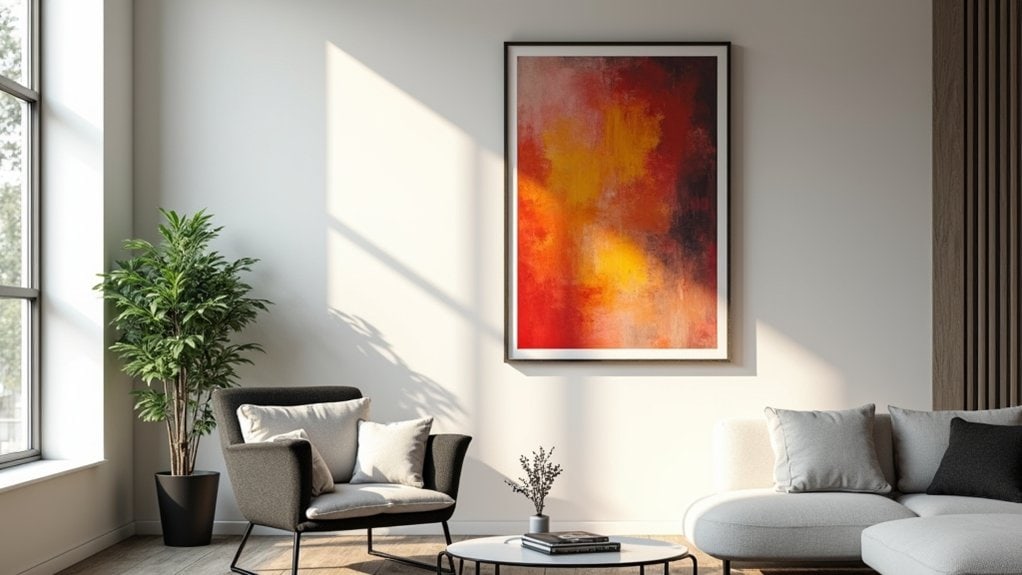
Once you’ve nailed the height, the next thing worth thinking about is whether the wall you’ve chosen actually suits the size of the piece you’re hanging.
Art size considerations matter more than most people realize. A small 8×10 frame on a massive open wall just kind of… floats there awkwardly. It needs something nearby—furniture, a shelf, another piece—to anchor it visually.
Wall type compatibility works the other way too. Large statement pieces actually need breathing room. A narrow hallway wall can overwhelm a big canvas fast.
Ask yourself: does the wall space feel proportional to what you’re hanging?
Wide walls suit larger groupings or oversized pieces. Smaller walls, like those above a desk or between windows, genuinely work better with compact, simpler frames.
How to Get Scale and Spacing Right When Hanging Art
Getting the scale right is honestly one of the trickier parts—too small, and your art looks like a postage stamp on the wall. A good starting point is making sure your piece spans roughly two-thirds the width of the furniture it’s hanging above, whether that’s a sofa, dresser, or bed. And if you’re grouping multiple pieces, aim for about two to three inches of space between each one so they feel connected but not crammed.
Choosing the Right Art Size
Choosing the right size art for a wall can feel surprisingly tricky, even when you think you’ve got a good eye for it.
A piece that looks bold in the store can disappear on a large wall at home. That’s an art proportion problem, and it happens more than you’d think.
A general rule—art should fill roughly two-thirds to three-quarters of the wall or furniture it hangs above. Not exact, but close enough to work.
Visual balance matters here too. A tiny frame above a wide sofa just looks lost. Ask yourself: does the art feel like it belongs, or does it feel like an afterthought?
Sometimes going bigger than feels comfortable is actually the right move.
Spacing Art Pieces Correctly
Size gets you halfway there, but once you’ve landed on the right piece, spacing is where a lot of people quietly go wrong.
Your art arrangement falls apart when pieces sit too far apart or too close together. Visual balance depends on the gaps between frames feeling intentional—not random.
A few spacing rules worth keeping:
- Aim for 2–3 inches between pieces in a gallery wall
- Treat a grouped arrangement as one unit on the wall
- Step back often—your eye catches problems faster than a measuring tape
- Keep consistent spacing throughout, even if sizes vary
- Center the arrangement to the furniture below, not the entire wall
Does the spacing feel connected or scattered? That question alone will tell you if your arrangement is working.
The Right Picture Hanging Hardware for Every Wall Type
Once you’ve picked the perfect spot for your art, the next thing to figure out is what hardware will actually hold it there — and that depends almost entirely on what your walls are made of.
Drywall, plaster, brick, concrete — each one calls for something different.
For drywall, standard picture hooks work fine for lighter picture frame types. Heavier frames usually need anchors or stud mounting.
Brick and concrete? You’ll need masonry anchors and a drill. It’s more work, but it holds.
Wall material considerations matter more than most people realize. The wrong hardware pulls right out, and your art ends up on the floor — sometimes damaged.
How to Hang Art Without Damaging Your Walls
Getting the right hardware sorted is half the battle — but even with the perfect anchor or hook, you can still mess up your walls if you’re not careful. Good wall protection techniques matter more than most people think.
Here’s what actually helps:
- Use painter’s tape to mark your spot before drilling
- Keep a level handy — eyeballing it almost never works
- Apply wall protectors or felt pads behind frames
- Choose the right art hanging tools for your specific wall material
- Patch small holes immediately, before they spread or crack further
Are you checking for pipes or wiring before you drill? That step gets skipped constantly. Take it slow, double-check your measurements, and you’ll avoid most of the damage people complain about later.
How to Build a Gallery Wall That Actually Works
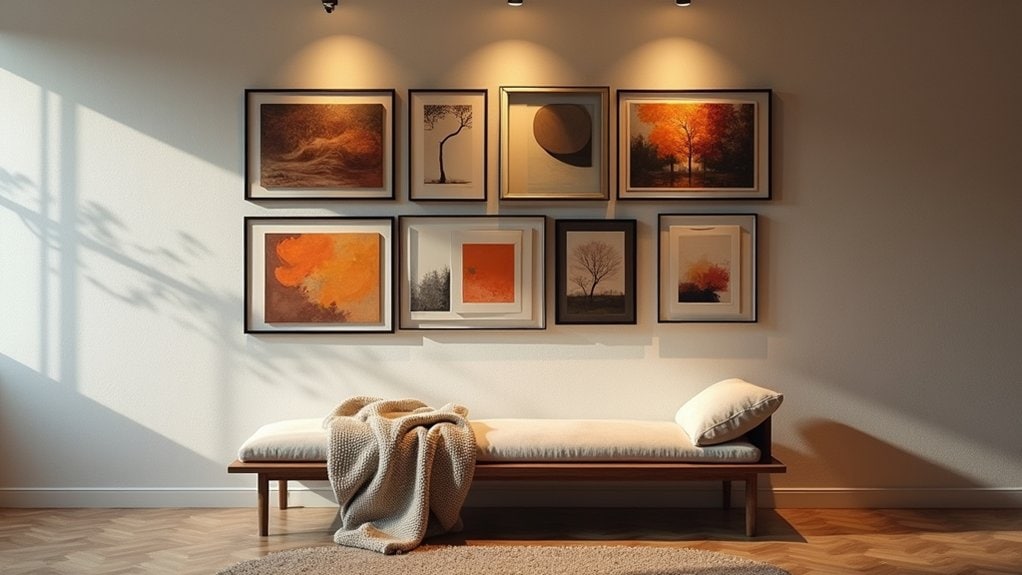
Before you start hammering anything, lay your frames out on the floor first — it sounds obvious, but a lot of people skip this step and regret it.
Arrange them until the spacing feels right. Take a photo for reference.
Think about gallery wall themes early. Are you doing family photos, prints, a mix? Having a loose direction helps you avoid that random, thrown-together look. Not everything needs to match, but something should connect the pieces.
Color coordination matters more than people admit. Frames don’t need to be identical, but clashing finishes can make the whole wall feel restless.
What’s the mood you’re actually going for?
Start with your largest piece as an anchor, then build outward. Eyeball the gaps — equal spacing sounds good in theory, but sometimes it just looks stiff.
Small Details That Make Your Art Look Professionally Hung
Getting the layout right is honestly half the battle — but once the frames are on the wall, the smaller stuff starts to matter a lot more than you’d expect.
A few things worth paying attention to:
- Art height affects how the whole room feels — eye level isn’t always the right answer
- Frame choice and material selection should connect visually, not just individually look nice
- Color coordination between your art and surrounding walls quietly pulls everything together
- Lighting effects can completely change how a piece reads — natural versus directed light hits differently
- Theme consistency keeps your art placement from feeling scattered
Also check your wall texture — rough surfaces can throw off hanging hardware more than people realize. Small stuff, but it shows.
Frequently Asked Questions
Can Outdoor Art Be Hung Using the Same Techniques as Indoor Art?
You can’t hang outdoor art using the same techniques as indoor art. You’ll need to use outdoor materials like rust-resistant hardware, and you must factor in weather considerations like wind, moisture, and temperature changes.
How Do You Hang Art Safely in a Child’s Bedroom or Nursery?
When hanging art in a child’s bedroom, you’ll want to prioritize child safety by securing pieces firmly into wall materials using anchors. Avoid heavy frames, choose shatterproof glazing, and mount artwork well above reach to prevent accidents.
Should Art Style Match the Room’s Interior Design Theme?
You don’t have to match art style exactly, but you’ll create interior harmony when you consider thematic consistency and color coordination. Let your art complement the room’s vibe without feeling overly rigid or forced.
How Does Lighting Affect the Way Hung Artwork Looks Overall?
Lighting dramatically transforms how your artwork appears. You’ll notice that lighting intensity can wash out colors or deepen them, while poorly positioned lights create distracting artwork shadows that distort the piece’s true visual impact and overall aesthetic appeal.
Is It Okay to Hang Original Artwork in Humid Bathroom Spaces?
You should avoid hanging original artwork in bathrooms, as humidity effects can warp, fade, and damage it permanently. Instead, make smart material choices by opting for prints or reproductions that’ll withstand moisture without risking irreplaceable pieces.
Final Thoughts
Getting art right takes a bit of practice, honestly. Start with the 57-inch rule, check your hardware, and don’t overthink the spacing too much. You’ll probably adjust things a few times — that’s normal.
The biggest thing? Stop hanging everything so high. It’s the one mistake that’s easy to fix once you notice it.
Take your time, step back often, and trust what looks right to you.