You’ve probably noticed how certain lights make you feel something without really understanding why. That warm amber glow from older bulbs does something different than the harsh white LEDs at the office. It’s not just preference or nostalgia, though those play a part. Your brain actually processes different light temperatures in distinct ways, triggering specific emotional responses. And once you understand what’s happening, you can use it intentionally to shape how your space feels during the holidays.
The Essentials
- Warm white lights (2700-3000K) activate emotional centers in the brain, reduce cortisol levels, and evoke nostalgic memories of safety.
- Layer ambient, task, and accent lighting while leaving unlit corners to create depth and make illuminated areas feel special.
- Adjust light intensity throughout the evening—bright for arrivals, dimmed for dinner—to enhance comfort and shift atmosphere naturally.
- Position reflective decorations near windows to maximize natural winter sunlight, creating dynamic interplay between seasonal daylight and artificial glow.
- Balance energy-efficient LEDs for outdoor displays with warm incandescent bulbs indoors to preserve emotional warmth while reducing consumption.
The Psychology of Warm Light: Why Our Brains Respond to Golden Tones

When you flip on a string of warm white Christmas lights, something happens in your brain that goes beyond simple visual processing.
Golden hues trigger your limbic system, the part that handles memory and emotion. Your pupils actually relax slightly when exposed to softer, amber wavelengths compared to harsh blue-white light.
There’s a reason candlelight has calmed humans for thousands of years. Your brain associates warm tones with fire, safety, and evening rituals. It’s partly biological programming.
The emotional response you feel isn’t just nostalgia. Studies show warm lighting (2700-3000K) reduces cortisol levels compared to cooler temperatures. Your body literally registers it as less stressful.
Cool white lights might be brighter, more effective. But they don’t create the same physiological shift. Your nervous system knows the difference.
Candlelight and Fire: Humanity’s Original Holiday Illumination
There’s something deeply hardwired in you that responds to candlelight and firelight in ways that LED bulbs just can’t replicate. When you watch flames flicker and dance, your nervous system actually shifts—you breathe slower, your shoulders drop, and the space around you feels smaller and more protected. It’s not nostalgia doing this work (though that’s part of it)—it’s thousands of years of evolution teaching your brain that fire means safety, warmth, and the people you trust most gathered close.
Primal Warmth and Comfort
A candle flame flickers in the corner of your vision, and something ancient in your brain relaxes.
There’s actual science behind this. Your nervous system recognizes fire as survival—warmth, safety, the end of a cold day. When you light candles during Christmas, you’re tapping into thousands of years of human memory.
The warm glow doesn’t just look different from electric lights. It feels different. You probably reach for cozy blankets without thinking about it. The nostalgic scents from beeswax or pine-scented candles layer onto that primal comfort.
Your shoulders drop. Your breathing slows.
Fire creates a gathering point too. People naturally move closer to it, faces softened by the gentle light. It’s not about nostalgia or tradition exactly—though those matter. It’s deeper than that.
Flickering Flames Create Intimacy
But here’s what makes fire even more powerful than basic comfort.
Candlelight doesn’t just illuminate. It moves. Those flickering shadows on the wall create something you can’t get from LEDs or string lights—they draw people closer together.
Think about your last dinner party with candles on the table. Everyone leaned in a bit more, didn’t they? The light only reaches so far, so you naturally create these little circles of warmth. That’s not accidental.
Fire forces intimacy because it’s contained. You gather around it. You share its limited glow.
For intimate gatherings during Christmas, this matters more than you’d think. A few candles scattered around a room change how people interact. They lower voices. They sit closer. They actually look at each other instead of their phones.
The Color Temperature Spectrum: Understanding Kelvin Ratings for Christmas Displays

You’ve probably noticed that some Christmas lights feel cozy and inviting while others seem harsh or clinical, and that difference comes down to color temperature measured in Kelvin. The scale runs from warm (around 2000-3000K, think traditional incandescent bulbs) to cool (5000K and above, which looks more like daylight or even bluish). Understanding where your lights fall on this spectrum lets you create the exact mood you’re after—whether that’s a nostalgic glow or something more modern and crisp.
Warm vs. Cool Whites
Light temperature changes everything about how your Christmas display feels, even though most people don’t realize they’re responding to it.
Warm light sits around 2700K. It leans yellow, orange, almost amber. You know that cozy feeling you get from candlelight? That’s warm light doing its work. It makes spaces feel intimate, lived-in, nostalgic.
Cool light climbs to 5000K or higher. It’s crisp, almost blue-tinted. More modern. Some people find it energizing, others think it feels clinical.
Here’s what matters: warm light softens edges and creates depth in traditional displays. Cool light sharpens everything, works better with contemporary designs or icy themes.
You can mix both, but it takes restraint. Too much variety and your display starts feeling confused rather than intentional.
Kelvin Scale Explained Simply
When someone throws around “2700K” or “5000K,” they’re talking about the Kelvin scale, which measures the color of light rather than how hot it actually is.
Lower numbers on the kelvin temperature scale give you that cozy, amber glow—think candlelight around 1800K or traditional incandescent bulbs at 2700K. As you climb higher, light shifts toward blue-white, like noon sunlight at 5500K.
Your light perception changes everything about how a room feels. A string of 2200K lights creates intimate warmth, while 4000K feels more… clinical? Sterile, maybe?
For Christmas, most people gravitate toward 2200K-3000K because it matches firelight and nostalgia. But you might actually prefer cooler temperatures if you’re going for an icy, winter wonderland vibe outside.
There’s no wrong choice, really. Just what feels right to you.
Creating Layers: Combining Ambient, Task, and Accent Lighting
As you start planning your Christmas lighting scheme, think about how different types of light work together in the same room. You need ambient light as your base—overhead fixtures or wall sconces that fill the space. Then add task lighting where you actually do things: reading by the tree, wrapping gifts at the table, preparing food in the kitchen.
Accent lighting is where Christmas really shines. String lights highlighting garland. Spotlights on your tree. Candles on the mantel.
The trick with layering techniques isn’t using every light at once. You’re creating lighting combinations that shift throughout the evening. Bright when guests arrive, dimmed during dinner, just the tree glowing later. Which layers do you actually need right now?
The Nostalgia Factor: How Vintage Bulbs Trigger Emotional Memory

There’s something about those old-fashioned bulbs—the ones with the warm, almost amber glow—that pulls you straight back to being seven years old again. You can’t quite explain it, but that particular quality of light feels like it carries memory inside it, like your brain has filed away “Christmas” under that exact color temperature. It’s not just nostalgia for nostalgia’s sake; the glow itself becomes a trigger, and suddenly you’re remembering things you didn’t even know you’d forgotten.
Warm Light, Warm Memories
Nostalgia lives in the glow of an old-fashioned Christmas bulb. You see that amber light and something shifts inside you. It’s not just the warmth hitting your face.
Those vintage bulbs recreate something specific. They pull you back to childhood evenings when everything felt safer, smaller. The nostalgic scents of pine and cinnamon help, sure, but it’s really the light doing the heavy lifting.
Glowing memories attach themselves to certain wavelengths. You can’t fake that with LED replicas, not really. The filament bulbs create shadows differently. They flicker in ways that feel almost alive.
Think about your grandmother’s tree. Was it perfectly lit? Probably not. But you remember it as magical anyway.
That’s what warm light does. It softens edges. Makes imperfection feel intentional, even beautiful.
Childhood Associations With Glow
Something happens when you see that particular orange-yellow glow through a frosted window. Your brain doesn’t just register light. It pulls up specific childhood memories you didn’t know you’d filed away.
Those vintage bulbs work differently than LEDs. They flicker just slightly. They cast shadows that move. And somehow that imperfection connects you back to glowing traditions from decades ago.
You remember sitting under the tree, maybe. Or driving through neighborhoods with your parents, pointing out houses with “the good lights.”
It’s not really about the bulbs themselves. It’s about what your younger self experienced when those lights were everywhere. That’s why people pay extra for the old-style bulbs now. They’re chasing something they felt before they had words for it.
Shadow Play: Why Darkness Matters as Much as Brightness
When you flood every corner of your home with light during Christmas, you’re actually working against yourself.
Shadow aesthetics matter more than most people realize. Those darker spaces between your light sources create depth. They make the bright spots feel brighter by contrast.
Think about candlelight. It only works because of what stays dim around it. The shadows give the glow somewhere to reach toward.
Light symbolism in Christmas relies on this tension. Light means something because darkness exists. If everything’s equally bright, nothing stands out. Nothing feels special.
Try leaving some corners unlit. Let your tree glow against a darker wall instead of competing with overhead lights. The shadows aren’t empty space. They’re doing half the work.
Natural Light Through Winter Windows: Working With Shorter Days
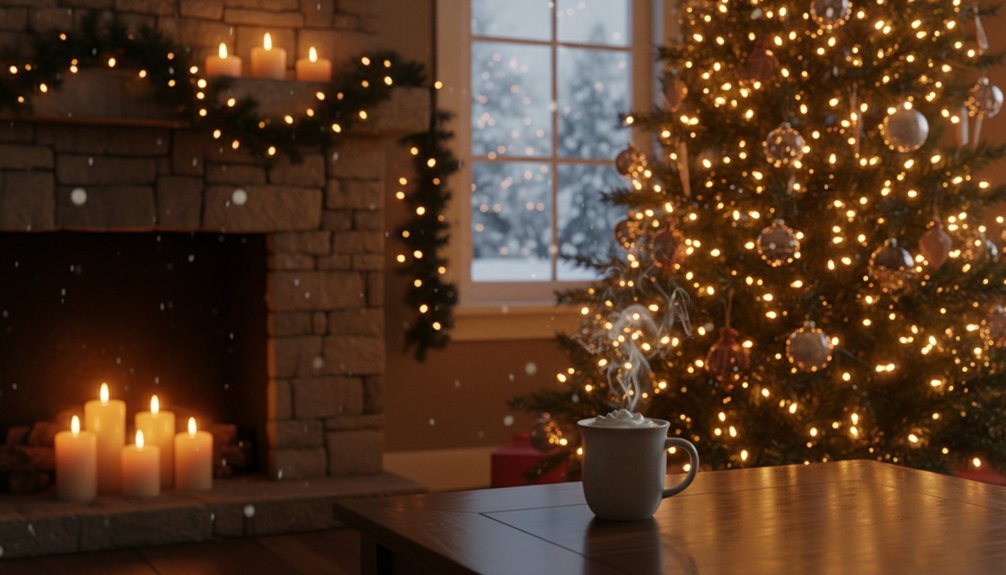
Winter daylight does something different to your Christmas decorations than artificial light ever could. The low angle of seasonal sunlight creates light reflections you can’t replicate with bulbs. Your ornaments catch it differently during those shortened daylight hours.
You’ll want to make seasonal adjustments to your window treatments. Pull back heavy curtains during peak light times—usually late morning through early afternoon. Natural light streaming through winter windows brings visual warmth that enhances indoor brightness without electricity.
Consider light diffusion too. Sheer panels soften harsh rays while maintaining atmosphere enhancement throughout the room. Position reflective decorations near windows where they’ll catch that angled winter sun.
The trick is working with what you’ve got during these shorter days. Maybe rearrange furniture to optimize those precious daylight hours? It’s worth experimenting.
LED vs. Incandescent: The Emotional Trade-offs of Modern Technology
Although LEDs have become the practical choice for most holiday decorating, you’re probably noticing they don’t feel quite the same as those old incandescent bulbs. There’s something about the warmth comparison that matters more than we expected.
The energy effectiveness makes sense on paper, obviously. But the sensory experience? That’s where things get complicated. LED advancements have improved color consistency and brightness perception, yet emotional resonance still leans toward those filament bulbs.
You’re stuck finding a nostalgia balance. Maybe you use LEDs for outdoor displays where practicality wins, then splurge on a strand of incandescents for one special indoor spot. The tree, perhaps. Or that window everyone sees from the street.
It’s not about being anti-technology. It’s about acknowledging what actually makes you feel something.
Color Psychology in Holiday Lighting: Beyond Red and Green

Why do we default to red and green every single year without questioning it?
You might be surprised how other holiday hues shape your mood differently. Blue lights create calm, almost melancholic spaces. They slow things down. White lighting feels elegant but can read as cold if you’re not careful about warmth elsewhere in the room.
Gold and amber tones actually make people linger longer in spaces. There’s research on this, though I’m forgetting the exact study. The emotional effects aren’t just about tradition.
Try purple mixed with warm white. Or copper tones if you can find them. Your space doesn’t need to scream “Christmas” to feel festive.
What atmosphere do you actually want? Start there, then pick your colors.
Dimming and Control: Adjusting Intensity Throughout the Evening
When the sun sets around 4:30 PM in December, you’re dealing with artificial light for most of your waking hours at home. Light dimming becomes essential for managing that long stretch.
Think about evening changes in stages. Full brightness works during dinner prep around 5 or 6 PM. But do you really need that intensity at 9 PM when you’re winding down?
Dimmer switches let you drop intensity gradually. Your eyes adjust without that jarring on-off feeling. Smart bulbs offer scheduling if you want automation, though honestly, manual control often feels more intuitive.
Try reducing Christmas lights to maybe 40% after 8 PM. The glow still registers, but it’s less stimulating. Less… insistent, maybe? Your space shifts from active to restful without going completely dark.
Architectural Considerations: Highlighting Space and Structure
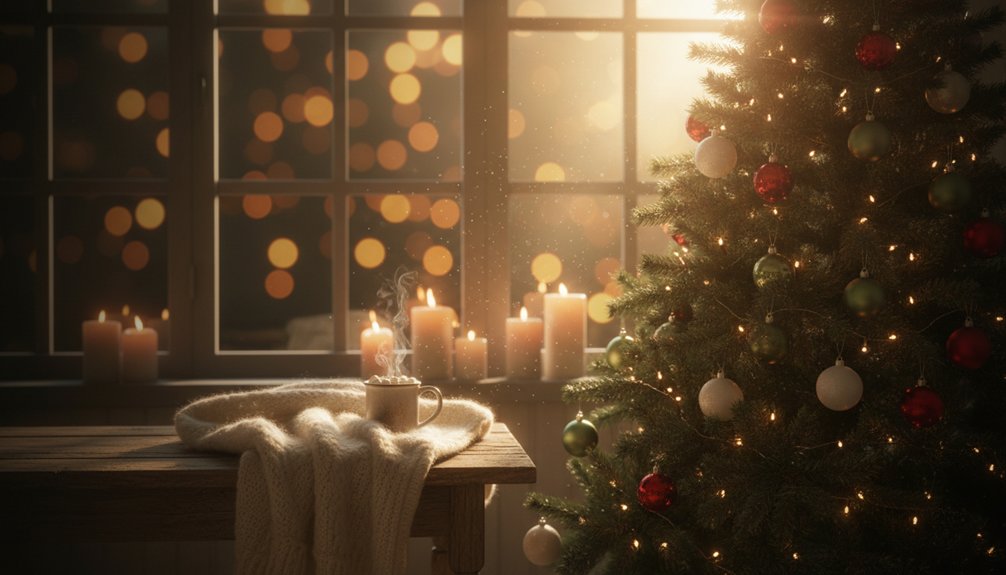
Brightness levels matter, but so does where you actually put the light.
Think about your room’s architectural features. A string of lights draped along a mantel does something different than the same string tucked behind a bookshelf. You’re not just decorating—you’re working with spatial interactions, whether you realize it or not.
Crown molding? Perfect for uplighting that makes ceilings feel higher. Windows? Framing them with lights draws the eye outward, then back in. Even a simple archway becomes a focal point when you outline it.
You don’t need a fancy space for this to work. What matters is recognizing the bones of your room. Where do lines naturally lead your eye? That’s where light amplifies what’s already there, or honestly, distracts from what isn’t.
Outdoor Lighting Principles: Extending Warmth Beyond the Threshold
Once you step outside, the rules shift a bit because you’re no longer contained by walls. You’re working with a much bigger canvas, and honestly, it can feel overwhelming at first.
The key is thinking about outdoor warmth as something you create through layers. A string of lights along your porch railing does more than illuminate—it draws people in. You want that festive atmosphere to feel like an invitation, not a spotlight.
Try lighting pathways with soft lanterns or wrapping tree trunks near your entrance. Don’t go overboard though. Too much and you lose that cozy feeling you’ve built inside.
What matters most? Creating continuity between indoors and out. Your exterior lighting should whisper the same welcome your living room does.
Sustainable Ambiance: Energy-Conscious Approaches to Atmospheric Lighting
Although you’re creating something magical with all these lights, there’s no escaping the fact that Christmas can be an energy hog. But here’s the thing—you don’t have to choose between atmosphere and responsibility.
LED strings use about 80% less power than traditional bulbs. That’s significant when you’re running lights for hours each evening. Timers help too, maybe more than you’d think. Set them to turn off after midnight when nobody’s really watching anyway.
Energy-saving designs matter, but so does restraint. Do you need every window lit? Sometimes less creates more impact.
Ambient sustainability isn’t about guilt or sacrifice. It’s about being intentional with what you’re already doing. Solar-powered pathway lights work surprisingly well now. Battery-operated candles give you flexibility without constantly drawing power.
Small adjustments add up.
Frequently Asked Questions
What’s the Best Light Color for People With Seasonal Affective Disorder?
You’ll want warm white light for seasonal affective disorder, as it mimics natural sunlight and boosts your mood. Avoid blue light in evenings since it disrupts sleep. Bright, warm-toned lights during daytime hours work best for combating SAD symptoms.
Can Christmas Lighting Affect Sleep Patterns or Circadian Rhythms?
Yes, Christmas lighting can disrupt your sleep patterns. Bright, blue-toned lights at night suppress melatonin production, causing circadian disruption. You’ll sleep better if you dim decorative lights several hours before bedtime and avoid direct exposure to colorful displays.
How Do Pets Respond to Different Types of Holiday Lighting?
Pets respond variably to holiday lighting—some remain calm while others show anxiety. You’ll notice pet behavior changes like hiding, excessive barking, or restlessness around blinking lights, which can contribute to holiday stress in sensitive animals requiring gradual exposure.
Are There Safety Concerns With Leaving Christmas Lights on Overnight?
You’ll want to contemplate fire hazard precautions when leaving lights on overnight. Modern LED lights reduce risks considerably, but you should still follow energy consumption tips like using timers and checking for frayed wires regularly.
What Lighting Works Best for Photographing Holiday Gatherings?
You’ll get the best holiday gathering photos by combining natural light from windows with ambient lighting from your Christmas decorations. This blend creates warm, authentic moments while avoiding harsh shadows. Don’t use direct flash—it’ll flatten your images.
Final Thoughts
You’ve got all these tools now. The warm tones, the layering techniques, the dimmer switches waiting to be used.
But here’s the thing—don’t overthink it. Start with one strand of lights you actually like. See how it makes your space feel. Adjust from there.
The best lighting setup isn’t the most complex one. It’s whatever makes you want to stay in the room a little longer.