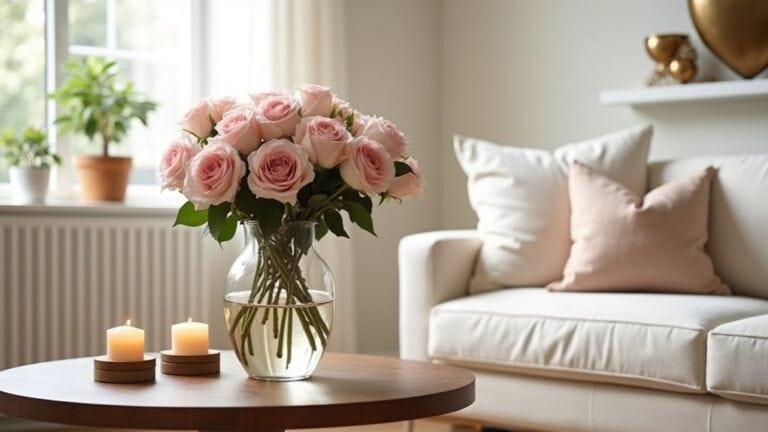
You’ll find modern Valentine’s decor doesn’t need hearts and bright pinks everywhere. Try softer hues like blush, terracotta, and muted lavender paired with organic materials—think branches, unbleached linens, or pressed flowers. Layer textures with cashmere throws or silk runners for warmth. Create ambiance with strategic lighting: string lights behind sheer curtains or candles at varying heights. Personal touches like vintage teacups for chocolates or meaningful photos will tell your unique love story better than any mass-produced decoration.
The Essentials
- Opt for muted color palettes with blush, terracotta, and lavender tones instead of bright reds and pinks for sophisticated romance.
- Incorporate organic materials like branches, dried flowers, and unbleached linens to create warmth and natural elegance.
- Layer contrasting textiles such as rough linen with silk elements for depth that feels both intentional and effortless.
- Create ambient lighting with blush-tinted string lights, candles at varying heights, and strategic placement behind translucent objects.
- Curate meaningful personal vignettes with shared mementos, vintage items, and collected objects that tell your unique story.
Muted Palettes: Beyond Red and Pink
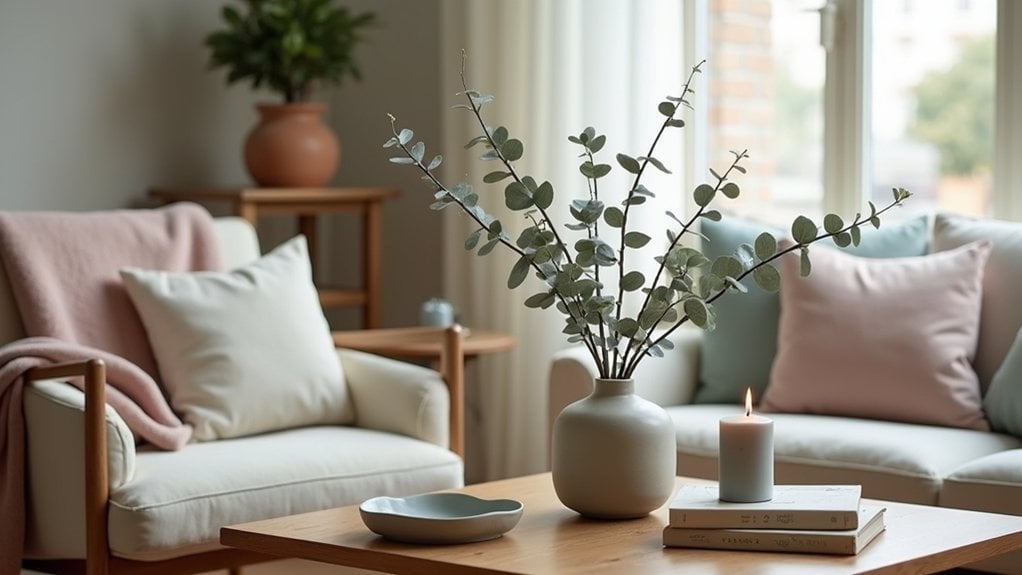
While traditional Valentine’s Day decor often bombards us with bright reds and hot pinks, there’s something to be said for taking a subtler approach this season.
You might consider exploring soft neutrals like blush, terracotta, or even muted lavender that still evoke warmth without overwhelming your space. These gentler tones actually create a more sophisticated backdrop for romantic moments—and honestly, they’ll shift better into spring decor afterward.
Color psychology suggests these softer hues can still evoke feelings of affection and intimacy, maybe even more effectively than their lively counterparts. I’ve found that cream-colored candles and dusty rose accents create a welcoming atmosphere that doesn’t scream “holiday theme.”
What about mixing in some unexpected earthy tones? Soft sage green paired with blush creates a fresh take on Valentine’s ambiance.
Organic Materials and Natural Elements
The warm, unrefined beauty of organic materials brings an earthy authenticity to Valentine’s Day decor that mass-produced items simply can’t match. You’ll find that incorporating branches, dried flowers, and unbleached linens creates a thoughtful atmosphere that feels genuinely romantic, not commercial.
Try wrapping gifts in kraft paper tied with jute twine and tucking in a sprig of eucalyptus. Natural textures like wooden serving boards paired with stone candle holders create subtle depth without trying too hard.
I’ve found that earthy accents—think clay pots filled with wheat grass or small potted herbs—last longer than traditional bouquets. You might even press flowers between glass frames for wall art that’ll stick around past February. What could be more meaningful than Valentine’s decor that grows or transforms with your relationship?
Minimalist Tablescapes for Intimate Dining
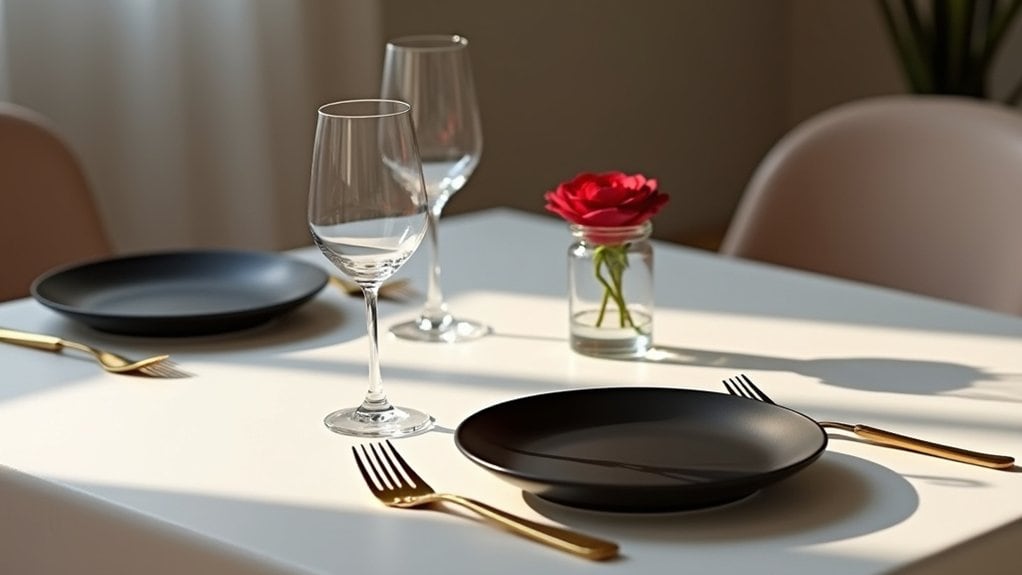
For your Valentine’s table, you’ll find that working with muted colors creates a surprisingly dramatic effect when you’re keeping things minimal. You can focus on just two or three elegant pieces—maybe a slender vase with a single bloom and unscented candles in varying heights. Remember, your tablescape doesn’t need to scream romance to be effective; instead, the negative space actually heightens the intimacy, giving you and your date room to connect without visual clutter.
Muted Colors, Maximum Impact
Beyond traditional reds and pinks, minimalist Valentine’s tablescapes can create powerful moments through subtlety and restraint. You’ll find unexpected color psychology at work when you choose muted tones—dusty rose, sage green, or even a soft terracotta—that carry emotional resonance without overwhelming the senses.
Try layering different shades within the same color family. A pale blush napkin against a slightly deeper mauve placemat creates dimension without fuss. I’ve found that adding just one metallic accent—maybe a brass candlestick or copper flatware—brings the perfect amount of warmth.
What about texture? It’s essential when working with quieter colors. Linen napkins, matte ceramics, and unpolished wood all add tactile interest that makes your table feel considered, not sterile. Sometimes the quietest statements are the ones people remember.
Less Is More
Those quiet elements I mentioned before naturally lead us into something I’ve grown to appreciate over years of entertaining: minimalist tablescapes.
You don’t need much to create timeless elegance at your Valentine’s dinner. Try a single bud vase with three stems, maybe a pink ranunculus or whatever’s in season. I’ve found that uncluttered settings actually make conversations flow better.
Last year, I placed just one white candle and a small arrangement on our oak table—that’s it. My partner actually noticed the understated charm more than when I’ve gone all-out with decorations.
For your plates and linens, stick with neutrals and add just one romantic touch—perhaps vintage crystal glasses or hand-written place cards. Sometimes I wonder if we overthink these occasions when simplicity is what we’re really craving.
Subtle Textile Touches for Romantic Ambiance
While statement-making art and bold floral arrangements might steal the spotlight, subtle textile touches often create the most lasting romantic ambiance in your Valentine’s décor.
Consider textile layering with items you probably already own. Drape a soft cashmere throw over your sofa’s arm or layer a small silk runner across your dining table. These simple additions bring warmth without screaming “Valentine’s Day.”
Fabric contrasts can elevate your space too. Maybe pair rough linen napkins with silky tapered candles, or add velvet pillows to a leather chair. I’ve found that mixing textures creates depth that feels intentional yet effortless.
What about your bedroom? A fresh set of sheets or even just swapping out pillowcases can transform the mood. Nothing too obvious—just thoughtful touches that make your space feel more intimate.
Sculptural Alternatives to Traditional Floral Arrangements
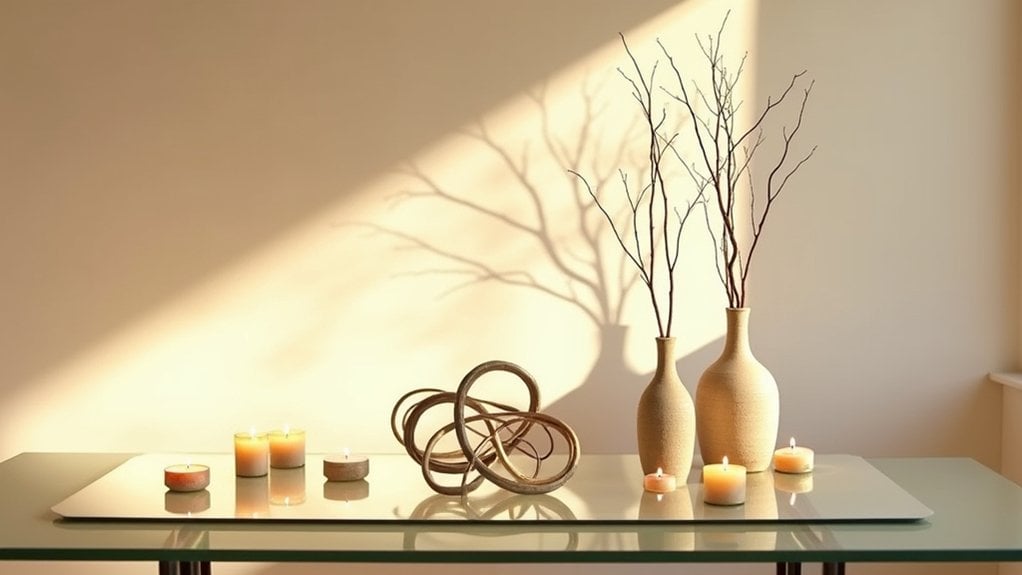
Moving from textiles to another dimension of Valentine’s décor, let’s contemplate what might replace those predictable red roses. Sculptural centerpieces offer an elegant, lasting alternative that won’t wilt after a week. You might actually save money in the long run with something you’ll keep out year-round.
Modern installations can transform your space without screaming “Valentine’s Day!” I recently switched to a small brass sculpture that catches light beautifully on my dining table. It feels special without being seasonal.
Some options to contemplate:
- Wire or metal heart sculptures that cast interesting shadows
- Abstract ceramic pieces in blush tones or deep burgundy
- Carved wooden forms that introduce warmth and texture
These alternatives create conversation pieces that feel more intentional—and honestly, more like your actual taste—than traditional flower arrangements.
Artful Lighting to Transform Everyday Spaces
You can transform your everyday living space with a pulsing rosy glow that creates instant romance without the typical Valentine’s clichés. Try positioning blush-tinted string lights behind translucent curtains or around mirrors where they’ll reflect and multiply the warm effect. The real magic happens when you experiment with shadow play—placing candles or small light sources at different heights creates dancing shadows that make even familiar corners feel mysterious and maybe a little magical.
Pulsing Rosy Glow
Light transforms a room’s energy like nothing else can. For Valentine’s Day, a pulsing warmth doesn’t need to scream romance—it can whisper it. You might find that soft illumination creates the perfect mood without the typical heart-shaped overload. I’ve noticed that rosy hues feel more sophisticated when they’re understated, maybe washing just one wall or creating gentle pools of light.
Try incorporating these simple lighting ideas:
- Replace standard bulbs with pink-tinted ones in existing fixtures for an ambient glow that feels intentional
- Arrange tea lights in frosted glass vessels scattered across surfaces for depth
- Use a simple dimmer switch on lamps you already own—lower light instantly creates intimacy
The beauty is in restraint. When you create atmospheric lighting, the rest of your decor doesn’t need to work as hard.
Shadow Play Romance
While the right color of light sets the mood, shadows can transform ordinary corners into mysterious, romantic spaces that intrigue the eye. You don’t need elaborate setups—just place candles strategically behind objects to cast shadow silhouettes against walls. I’ve found that vintage wine glasses work surprisingly well here.
Try positioning a small light source behind a vase of flowers or a sculptural object. The romantic reflections that dance across your walls create dimension without the kitsch of typical Valentine’s decorations.
Maybe experiment with paper cutouts? Last year, I placed delicate cutout patterns in front of a small lamp, and the results were actually better than I expected. The shadows tell stories that solid objects simply can’t—they’re ephemeral, suggestive, and, well, much more sophisticated than heart-shaped anything.
Thoughtful Vignettes: Curating Meaningful Moments
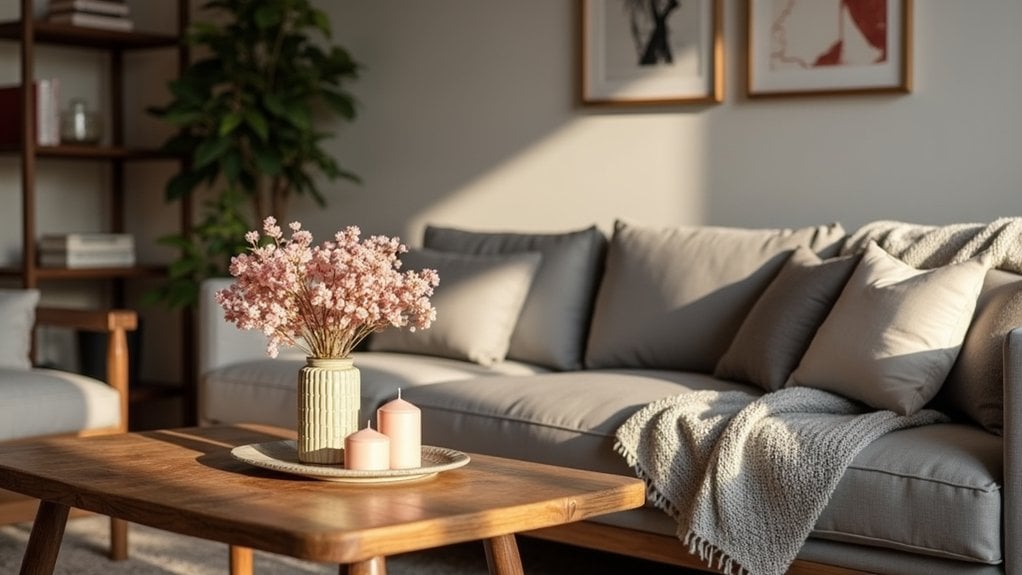
Instead of scattering Valentine’s decorations randomly throughout your home, creating thoughtful vignettes allows for moments of connection and reflection. Consider arranging curated collections of meaningful mementos in strategic locations—perhaps a nightstand with a love letter and dried flowers from a special date, or a coffee table with photos that tell your story together.
These intentional groupings work better than sprawling decorations, I think. They create little moments of pause in your daily routine.
- A vintage teacup holding small chocolates beside a handwritten note
- Books about love stacked under a bud vase with a single bloom
- A collection of shells or stones gathered during trips together
You’ll find these personal touches resonate more deeply than mass-produced Valentine’s merchandise. They’re conversation starters, too—little portals to shared memories.
Frequently Asked Questions
How Early Should I Begin Setting up Valentine’s Decor?
You’ll want to contemplate timing considerations and start setting up Valentine’s decor one to two weeks before the holiday. This gives you enough time to enjoy it while avoiding decor storage issues later.
Can Understated Valentine’s Design Work in Small Apartments?
You’ll find minimalist arrangements work wonderfully in compact spaces. Try space-saving ideas like floating wall hearts, tiny bud vases, or string lights that add romance without overwhelming your apartment’s limited square footage.
What’s the Budget Range for Design-Conscious Valentine’s Decor?
You’ll find design-conscious Valentine’s decor across all price points. Affordable options start around $15-50 for quality pieces, while luxury splurges can exceed $100 for artisanal items that double as year-round accents.
How Do I Incorporate Valentine’s Elements in a Masculine Space?
You’ll maintain a masculine space by introducing subtle accents in deeper tones. Use a color palette of burgundy, navy, or forest green rather than pink. Leather, wood, and metal valentine’s elements create sophistication without femininity.
Are There Child-Friendly Options for Sophisticated Valentine’s Decor?
You’ll find plenty of child-friendly crafts that maintain sophistication. Try paper heart garlands, playful accents in muted tones, or framed kid artwork. Natural materials and simple shapes create Valentine’s décor everyone appreciates.
Final Thoughts
You’ll find that your most authentic Valentine’s expressions don’t need to scream romance. Trust your design instincts—mix in those ceramic vessels you already love, drape that perfect linen, dim the lights a bit.
It’s really about creating space for the connection that matters, not ticking holiday decor boxes. Wonder what might happen if you let your personal style lead the way? Your home tells your story, even on Valentine’s Day.