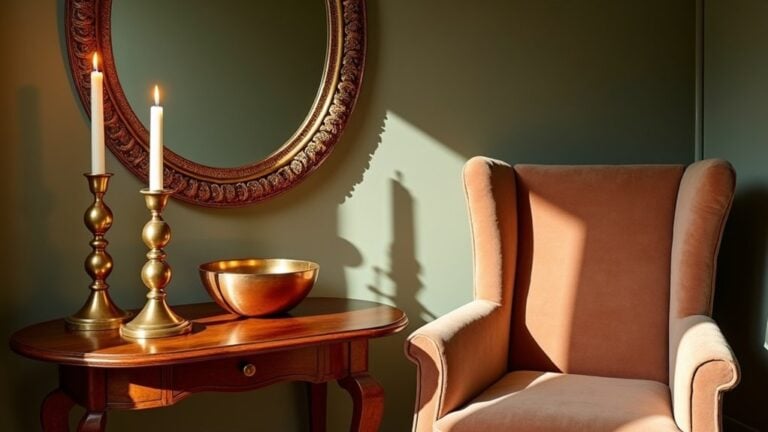
Warm metallics like brass, copper, and gold can transform your space with minimal effort. You’ll find these accents add both luxury and comfort—something I’ve noticed even small additions like a brass lamp can accomplish. They catch light differently: brass glows, copper radiates warmth, and gold gleams. Try starting with one statement piece and balance with smaller accents. The strategic placement of these metals might just create the perfect mood you’ve been looking for.
The Essentials
- Warm metallics create emotional comfort while adding luxury through their connection to historical wealth symbols and natural warmth.
- Brass develops a rich patina over time, copper offers antimicrobial properties, and gold provides unmatched reflective qualities.
- Strategic placement of metallic accents creates high-impact focal points through mirrors, lighting fixtures, and decorative objects.
- Mix metals by selecting one dominant metal (60-70%) and complementary secondary metals with varied textures and finishes.
- Regular maintenance with appropriate cleaners and selecting sustainable, recycled metals ensures longevity and environmental responsibility.
The Psychological Impact of Warm Metallics in Living Spaces
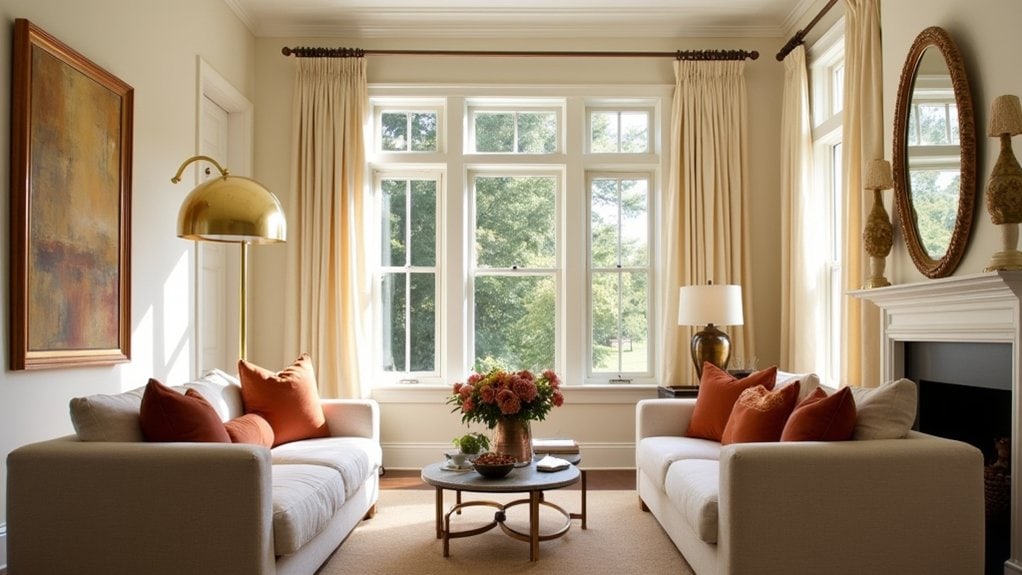
When you walk into a room adorned with warm metallic accents, something subtle yet powerful happens to your mood. The rich tones of brass, copper, and gold create an immediate sense of emotional warmth that’s hard to replicate with other materials.
Color psychology suggests these warm metallics trigger associations with sunshine, hearth fires, and even wealth—all things that make you feel secure and uplifted. You’ll notice your shoulders relaxing in spaces where these elements catch the light.
I’ve found that even adding just a small brass lamp or copper planter to a room can transform the energy. It’s interesting how these materials feel both luxurious and comforting at once.
What warm metallic piece might you introduce to your space? Maybe start with something small and watch how it affects your daily experience.
Historical Evolution of Brass, Copper, and Gold in Home Design
The appreciation we feel for these warm metals today comes from a rich lineage spanning thousands of years. When you look at your brass lamp or copper cookware, you’re connecting with materials that adorned Egyptian tombs and Roman temples.
Brass, an alloy of copper and zinc, gained popularity in the 18th century for its durability and warmth. You might notice how its historical significance shows in traditional doorknobs and hardware still mimicked today.
Copper’s material origins trace back to ancient civilizations where it transformed daily life. From cooking vessels to decorative elements, it’s maybe one of our oldest metallic companions in the home.
Gold, of course, has always symbolized luxury. Even a tiny gold accent in your space carries the weight of millennia of human fascination with this precious metal.
Distinguishing Characteristics: Brass vs. Copper vs. Gold Finishes
Selecting these metals for your home requires understanding their distinct personalities beyond their warm undertones.
Brass properties include a yellowish-gold appearance that develops a rich patina over time. It’s an alloy of copper and zinc that’s more affordable than pure metals, yet still offers that timeless charm. You’ll notice it darkens beautifully with age.
Copper durability is legendary – it’ll last generations while developing that gorgeous green-blue patina. It’s naturally antimicrobial too, which is why I think it works so well in kitchens.
Gold luster stands apart with its unmistakable shine and reflective quality. While true gold is rarely used in home décor, gold-toned metallic finishes capture that luxury feel without the price tag.
The way these metals catch light differs dramatically – brass glows, copper radiates warmth, and gold gleams.
Strategic Placement: Where to Incorporate Metallic Accents
When you’re adding those gorgeous warm metallics to your home, placement is everything – too little and they’re overlooked, too much and your space risks looking like King Midas had a field day. Try creating high-impact moments with brass pendant lights or a striking copper vase as a focal point, while layering different metallic finishes in complementary tones throughout the room for cohesion. Even in smaller spaces, you’ll find that thoughtfully placed metallic accents – maybe a gold-framed mirror or brass drawer pulls – can add warmth and dimension without overwhelming the room.
High-Impact Focal Points
Strategic placement of warm metallic accents creates dramatic focal points that can transform an ordinary room into something extraordinary. Consider hanging a large brass mirror above your fireplace or positioning a copper pendant light over your dining table. These impactful accents immediately draw the eye and anchor your space.
Look for unexpected opportunities too. Maybe that plain coffee table could use a cluster of gold candlesticks, or your bookshelf might benefit from brass bookends. I’ve found that even smaller focal point ideas can make a big statement—like swapping out those basic cabinet pulls for hammered copper ones.
What’s your room missing? Sometimes it’s that one perfect metallic piece that ties everything together. Just remember, focal points work best when they’re not competing with each other.
Layering Different Metallics
While focal points draw the eye to a single statement piece, the magic happens when you layer multiple metallic accents throughout your space. Think about creating depth with varying sizes—maybe a large brass mirror anchoring a wall, complemented by medium copper planters and small gold picture frames nearby.
The key to successful layering techniques isn’t matching everything perfectly. It’s about finding metallic harmony through thoughtful placement. You might group brass and gold together since they share warm undertones, then add copper as a subtle contrast.
I’ve found that layering works best when you stick to a ratio—like 70% of your dominant metal, 20% secondary, and 10% accent. This creates balance without feeling chaotic. What dominant metal would anchor your space most effectively?
Small-Space Metallic Magic
Many of us worry that adding metallic accents to a small space will overwhelm it, but that’s actually where these elements can shine brightest. The trick is strategic placement.
In tight quarters, try hanging metallic wall art at eye level to draw attention upward, creating the illusion of height. I’ve found that a simple brass-framed mirror can make my tiny hallway feel twice its size.
You’d be surprised how stylish storage with metallic details can transform a cramped area. Those copper baskets I picked up last year? They hold everything from magazines to throw blankets while adding warmth to my apartment’s limited square footage.
Maybe place just one or two gold accents on your coffee table rather than clustering them. You want these pieces to breathe, especially when space is tight.
Mixing Metals: The Art of Balancing Different Tones
You might think mixing metals like brass, copper, and gold would break some design rule, but trust me, it’s all about balance and intention. When combining different warm metallics in your space, choose one dominant metal (maybe brass) for about 60-70% of your accents, then sprinkle in secondary metals for visual interest. Consider the visual weight of each piece—larger items draw more attention, so your heavier metallic elements should probably share the same finish while smaller accents can mix things up.
Rules For Successful Combining
When thoughtfully combined, different metal finishes create a rich, layered look that elevates any space beyond what a single metal tone could achieve. The key to metallic harmony isn’t matching everything perfectly—it’s about creating intentional contrast while maintaining some coherence.
Start by choosing a dominant metal (maybe 60-70% of your space) and add one or two accent metals. You’ll want to spread each finish throughout the room rather than clustering them in corners. Color coordination matters too—consider your existing palette when selecting warm or cool-toned metals.
Remember that texture plays a huge role. Brushed brass looks different from polished brass, even though they’re technically the same metal. What’s your favorite metal combination? I’ve found that brass and matte black create amazing contrast in my kitchen.
Visual Weight Considerations
Three essential factors determine how metals visually “weigh” in your space. First, the size of metallic elements matters—larger pieces naturally command more attention. Second, finish affects presence—shiny surfaces reflect more light and appear heavier than matte ones. Third, color intensity plays a role, with deeper golds feeling weightier than light brass.
When mixing metals, think about visual balance throughout your room. You’ll want to distribute that weight strategically—maybe anchor one end with a substantial copper floor lamp while balancing the other with a collection of smaller brass objects. I’ve found that rooms feel most natural when the visual weight distribution isn’t perfectly even but still feels intentional.
Have you considered how your metals might look different as daylight shifts? That’s something worth testing before finalizing your arrangement.
Lighting Effects: How Metallics Transform Under Different Light Sources
One of the most magical qualities of warm metallics lies in their remarkable ability to shift and change under different lighting conditions. You’ll notice how brass fixtures appear rich and saturated under warm accent lighting but take on a more subdued glow in natural daylight. The reflective surfaces of copper catch light differently throughout the day, sometimes creating unexpected shadow effects on nearby walls.
Light temperature dramatically impacts how these metals present in your space. Under cooler artificial light, gold accents might lose some warmth, while ambient lighting with a yellow undertone enhances their natural radiance.
Maybe try placing your metallic pieces near windows or under varied light sources to see this change firsthand. I’ve found that thoughtful placement of a brass lamp can create mood lighting that changes the entire feel of a room.
Maintenance and Care for Long-lasting Metallic Fixtures
You’ll need the right cleaning products to keep your warm metallics looking their best—I recommend investing in a good metal polish specifically formulated for brass, copper, or gold-plated fixtures. Preventing tarnish and oxidation isn’t just about regular cleaning but also about applying a protective wax or lacquer coating when possible. The extra effort you put into maintenance now will pay off later, especially when your brass doorknobs or copper pendant lights continue to gleam warmly while your neighbor’s have long since dulled and darkened.
Cleaning Products Worth Investing
Anyone who’s invested in beautiful brass, copper, or gold fixtures knows that maintaining their warm glow requires some dedicated care. While regular dusting helps, you’ll need specific cleaners for those deeper cleans.
Consider investing in eco-friendly cleaners specially formulated for metals. Wright’s Copper Cream has saved my vintage lamp more than once, and it lasts forever. Multi-surface solutions like Method’s all-purpose cleaner work well for quick touch-ups between deep cleans.
Don’t waste money on harsh chemical polishes—they often do more harm than good. A microfiber cloth set is probably your best investment, honestly. I keep one near each metallic fixture in my home for quick buffing.
What about those homemade solutions? Lemon and salt work in a pinch for copper, but maybe skip the ketchup trick. It’s messy.
Preventing Tarnish and Oxidation
While regular cleaning is essential, preventing tarnish and oxidation in the first place will save you countless hours of maintenance down the road. Look, I’ve learned this the hard way after my favorite brass lamp turned an unpleasant greenish-brown within months. Now I’m all about tarnish prevention from day one.
Try these oxidation solutions that actually work:
- Apply a thin layer of Renaissance wax or microcrystalline wax to create a protective barrier against moisture and air
- Keep metallic fixtures away from humidity zones like bathrooms or near windows that might collect condensation
- Consider using lacquer sprays for items you don’t handle frequently—though maybe test on an inconspicuous spot first
You’ll notice your brass, copper and gold accents maintain their warm glow much longer when you take these preventative steps.
Sustainable Approaches to Metallic Design Elements
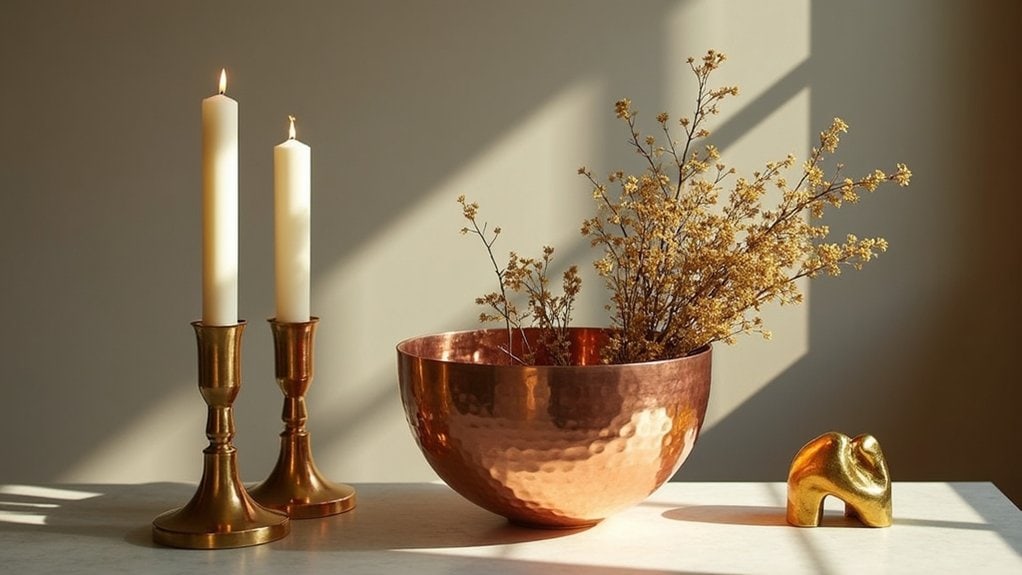
As our collective consciousness around environmental impact grows, the world of interior design is experiencing a necessary shift toward sustainability—even in the domain of metallic accents.
You don’t need to sacrifice style for ethics. Look for recycled metals when shopping for new pieces—many artisans now create stunning hardware from materials that might’ve ended up in landfills. Sustainable sourcing matters too; ask where your brass or copper comes from and how it’s processed.
I’ve found that eco-friendly materials often develop more character over time. Maybe it’s psychological, but there’s something deeply satisfying about a recycled copper pendant that tells a story. Ethical design isn’t just about materials either—it’s about longevity. Choose quality pieces you’ll keep for decades rather than following every fleeting trend.
Small-space Solutions: Metallics in Apartments and Compact Homes
When living in a compact apartment or tiny home, every design choice must earn its keep twice over. That’s particularly true with warm metallics like brass, copper, and gold. You’ll want pieces that look amazing while actually serving a purpose. Reflective metallic textures can bounce light around, making your space feel larger than it really is.
Consider these smart applications:
- Floating brass shelves that provide storage while adding a touch of luxury to neutral color palettes
- Copper pendant lights that draw the eye upward, creating the illusion of height
- Small gold-framed mirrors that expand visual space while warming up your walls
Maybe try starting with just one or two metallic accents. I’ve found that even a simple brass tray on a coffee table can transform a tiny living room without overwhelming it.
Seasonal Updates: Rotating Metallic Accents Throughout the Year
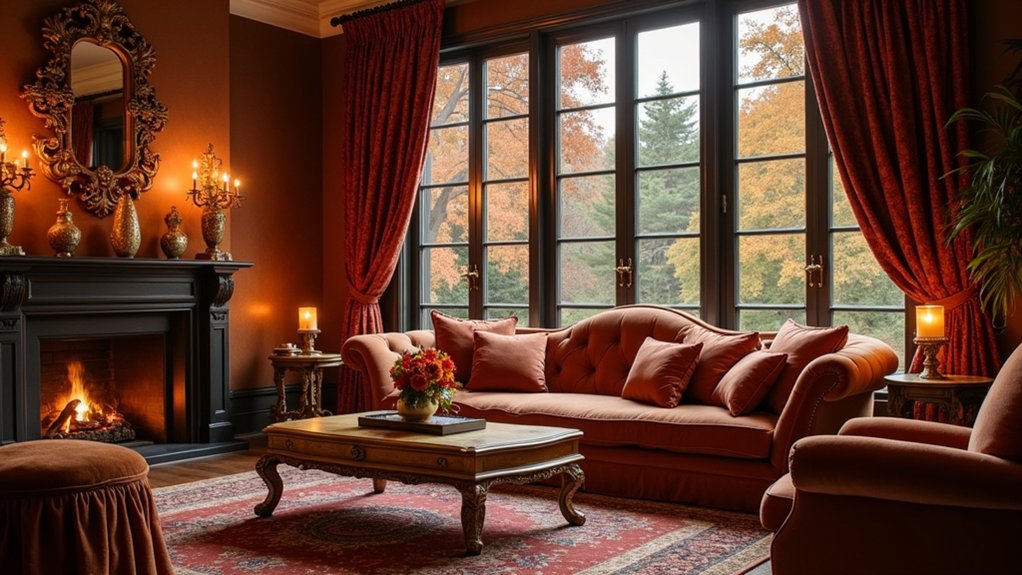
Just as your space can evolve throughout the seasons, your metallic accents should adapt too. In winter, try pairing copper candleholders with deep greens and blues for a cozy feel. When spring arrives, lighten things up by swapping in brass picture frames alongside pastels.
Summer’s the perfect time to let gold accents shine—maybe place a few small gold-dipped vases with bright flowers around your living room. I’ve found that mixing in some white ceramic pieces creates a really fresh look.
As fall approaches, copper and bronze tones work beautifully with the seasonal trends of amber and burnt orange. You don’t need to replace everything! Just rotate a few key pieces and adjust your color pairings to refresh your space without breaking the bank.
Designer Insights: Professional Tips for Working With Warm Metals
Interior designers who’ve mastered metallics will tell you that balance is everything when incorporating brass, copper, and gold into your home. Too much shine can overwhelm a space, while too little might go unnoticed. When working with warm metals, consider the existing color combinations in your room—earthy tones complement brass, while blues create striking contrast with copper.
- Mix different metallic textures (hammered, brushed, polished) within the same space to add depth without feeling matchy-matchy
- Limit yourself to 2-3 metallic finishes per room to avoid visual chaos
- Start small with easily swappable pieces like picture frames or vases if you’re unsure
I’ve found that warm metals work best when they’re thoughtfully placed rather than scattered everywhere. Maybe try clustering your metallic accents in vignettes for maximum impact?
Frequently Asked Questions
Are Warm Metallics Suitable for Homes With Small Children?
Yes, they’re suitable for homes with children. You’ll appreciate their design durability, as they withstand daily wear. Consider child safety by choosing pieces with rounded edges and avoiding small decorative elements that could detach.
How Do Warm Metallics Perform in Humid Environments Like Bathrooms?
You’ll need to contemplate humidity resistance when using warm metals in bathrooms. They’ll require regular bathroom maintenance to prevent tarnishing. Sealed finishes perform better, while raw surfaces develop a natural patina over time.
Can Warm Metallics Work With Industrial or Minimalist Design Styles?
Yes, you’ll find warm metals bring industrial warmth to harsh concrete and steel spaces. They’re perfect for minimalist elegance too—just a brass pendant or copper handles can soften clean lines without compromising simplicity.
What’s the Price Range Difference Between Genuine and Imitation Metallic Finishes?
In your genuine vs imitation metallic finish cost comparison, you’ll find genuine metals typically cost 3-5 times more than imitations. You’re paying for durability and patina development that imitations can’t authentically replicate.
Do Warm Metallics Show Fingerprints and Smudges More Than Cooler Metals?
Yes, you’ll notice fingerprint visibility is higher on warm metallics compared to cooler tones. Wipe them regularly with a microfiber cloth and apply a protective wax coating as essential maintenance tips for keeping them pristine.
Final Thoughts
You’ve got a lot to think about as you bring warm metallics into your home. Remember, there’s no right or wrong way to do this—trust your instincts. Start small with a brass lamp or copper planter, then build from there. Your space should feel like you, not a catalog.
How might these golden touches reflect your personality? That warmth isn’t just in the metal—it’s in what these accents mean to you.